Updated
Which 128-port SIM bank fits your gateway deployment?
The compatible ecosystem is the first selection filter.
Confirm the bank, gateway and controller combination before comparing prices. Stored SIM capacity matters only when the system supports the assignments and services your team needs.
The useful procurement question is what changes operationally after the bank is installed. It may centralize cards, allow remote assignment or make inventory easier to administer. Those benefits need a supported bank/controller/gateway chain and a test of the required service, not a throughput rating derived from the card count.
Telarvo Store sells SIM banks, SIM pools and cellular gateways and is included in this comparison. The shortlist uses identifiable product documentation and compares ecosystem fit, not independent performance scores. Treat published capabilities as a basis for a proof of concept rather than evidence that different vendors’ equipment interoperates.
This page addresses procurement for an existing or planned gateway estate. If the goal is simply more simultaneous calls, adding SIM storage may not solve it. If the goal is centralized card handling or remote allocation, a compatible bank can be relevant even when the radio-channel count remains unchanged.
A documented shortlist instead of an arbitrary top ten
The products below have identifiable 128-slot offerings in the sources reviewed. They serve different ecosystems, so a lower price does not make one a substitute for another. The order is not a performance ranking, and missing specifications should be requested rather than filled with assumptions.
| Product or listing | Documented capacity | Published ecosystem or purpose | Procurement question |
|---|---|---|---|
| Telarvo SIMBANK128 | 128 SIM slots | Centralized SIM management for GoIP equipment | Which GoIP models and firmware are supported? |
| Telarvo SK SIMPOOL 128 | 128 SIM slots | SIM storage for the SK gateway ecosystem | Which SK gateways and controller version are required? |
| OpenVox Simbank-128 | 128 SIM slots | Remote SIM access for OpenVox wireless gateways | Does the exact SWG model support the proposed mapping? |
| EJOINTECH 128 SIM Cards SIM Pool | Up to 128 SIM cards | Remote management for EJOINTECH SMS gateways | Which gateway models and software licences are included? |
| China Skyline SMB128 listing | 128 SIM cards | Remote SIM assignment to GoIP channels | Is the supplied revision compatible with your gateway and controller? |
Telarvo’s SIM bank collection and SIM pool collection represent different accessory families. Do not assume the SK SIMPOOL and SIMBANK128 are interchangeable because both hold 128 cards.
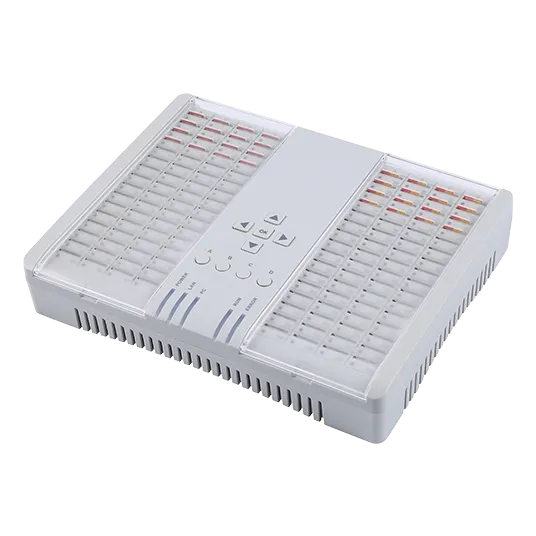
The OpenVox product page documents dynamic allocation, SIM groups and pairing with its wireless gateways. EJOINTECH’s 128-card listing describes its own gateway ecosystem. The China Skyline SMB128 page describes manual and scheduled GoIP assignment plus standalone and SIM-server management.
Similar wording, appearance or product names across suppliers do not prove that products are identical or independently manufactured. Obtain the model label, hardware revision and supported firmware matrix from the seller. No independent performance scores are assigned here.
Should you buy a SIM bank, SIM pool or more gateways?
Buy the resource that resolves the actual bottleneck.
A bank addresses identities and allocation; more gateways add radio capacity. Verify the actual architecture behind a SIM pool label before deciding which resource to purchase.
Write the operational problem before selecting an accessory: too much onsite card handling, too few simultaneously reachable numbers, insufficient call capacity or fragmented administration. These problems may share symptoms, but they need different remedies. A larger bank can reduce physical card movement without increasing the number of live cellular connections.
For a new deployment, sketch where the cards, radios and controller will sit. Mark which component requires uninterrupted IP connectivity to another and which component attaches to the mobile network. Compare that topology with a gateway containing local SIM slots. The additional controller and remote link may be justified for centralized administration, but also become dependencies that need monitoring.
Do not assume “SIM pool” always means the same design across vendors. Ask whether it is a remote card store, an integrated gateway with multiple cards per radio, or a software-controlled inventory arrangement. Obtain a diagram for the quoted configuration and make the required continuously reachable numbers explicit. That prevents buying 128 stored cards when the actual requirement is 128 active receiving paths.
Why 128 SIM slots do not mean 128 concurrent calls
SIM inventory and radio-channel capacity are separate resources. A bank provides access to stored cards; the connected cellular gateway supplies the modems that register on mobile networks and carry traffic. Selecting another SIM changes the identity available to a channel, not the number of radios installed.
Consider a hypothetical deployment with one 16-channel voice gateway and a compatible 128-slot bank. It has 128 stored SIMs but at most 16 simultaneous cellular calls before accounting for carrier, hardware or operational restrictions. If 16 SIMs are assigned, the other 112 are stored inventory rather than 112 additional live voice paths.
The same distinction matters for incoming SMS. Do not assume every stored number remains continuously reachable: ask how many SIMs are concurrently attached, how allocation works and what happens to messages for an unassigned SIM. Queuing, retention and reattachment delays are not equivalent to immediate delivery.
A SIM bank has no basis for a standalone “128,000 SMS per hour” claim unless that figure includes a defined gateway configuration and test method. Request the active radio count, network generation, message length, delivery measurement and carrier limits behind any system throughput figure.
For procurement, distinguish three measures: cards installed, cards assigned to active radios and successfully completed traffic. A supplier should be able to show all three for the proposed system. If a quote says “128 ports,” ask what the port counts. A SIM connector, modem channel and SIP registration identity are not interchangeable capacity units.
Verify the whole compatibility chain
A standard physical SIM interface does not imply a standard remote-SIM interface across vendors. The bank, controller and gateway must agree on provisioning and assignment. Cellular compatibility adds another layer, determined primarily by the gateway’s modem, bands and carrier acceptance.
Ask suppliers to confirm the following in writing:
- Exact bank and gateway hardware revisions, not just family names.
- Required controller application, version and licence limits.
- Supported gateway firmware and upgrade sequence.
- Maximum simultaneously assigned SIMs and gateways.
- Supported card sizes, voltages and any adapter restrictions.
- Network topology requirements, including routing and remote-site access.
- Whether management and remote-SIM traffic are encrypted, and by which supported mechanism.
If you already run GoIP equipment, begin with the GoIP collection and a model-specific compatibility check. If you operate SK gateways, begin with the SK SIMPOOL family. Buying the bank first and assuming integration can be solved afterwards can leave you with unusable inventory.
The ETSI UICC-terminal interface specification addresses the card-terminal interface, including physical and electrical characteristics. It does not establish interoperability between vendors’ proprietary remote-SIM controllers. Ask for a supported combination rather than treating a standard SIM card as evidence of a standard end-to-end system.
“4G compatible” or “5G ready” on a bank is not proof that a gateway supports LTE voice or the bands used in your country. Ask which function the label describes, and obtain confirmation for the actual modem and carrier combination.
Define the assignment policy before comparing automation
Allocation is useful when the rules match an authorised operating workflow. Start by grouping SIMs according to carrier, site, account owner and permitted service, then decide which gateways may access each group. A controller that can move a card anywhere is not necessarily configured to move it safely.
For voice, decide whether reassignment is allowed only while the radio channel is idle. For inbound SMS, decide which numbers must remain assigned continuously and which can be activated on demand. Define what happens when a preferred gateway is unavailable, whether an alternative has spare radio capacity and who can override the mapping.
Request logs that connect each allocation change to a slot, gateway channel, reason and timestamp. Test manual changes as well as scheduled rules. An operator should be able to explain why a number is currently assigned to a particular radio, especially when investigating an unreachable line.
Separate operational scheduling from attempts to imitate consumer behaviour or evade carrier controls. The useful procurement questions are whether allocation is predictable, observable and permitted, not whether a vendor promises immunity from blocking. An approved SIM plan and traffic agreement remain necessary regardless of the controller’s scheduling features.
Evaluate allocation, monitoring and recovery separately
Automatic allocation can reduce manual card handling, but it does not guarantee seamless failover. Reassigning a SIM may require the receiving gateway to register on the carrier network again. An established voice call may still drop, and an incoming SMS may be delayed.
Define the expected behaviour for each event before the proof of concept:
| Event | Behaviour to test | Useful evidence |
|---|---|---|
| Bank loses power | Active and new-call behaviour; restoration process | Gateway status and timestamps |
| Controller stops | Whether assigned channels remain usable | Assignment state before and after restart |
| Remote IP link fails | Timeout, alarms and reattachment | Link logs and registration timeline |
| One gateway fails | Spare capacity and reassignment rules | Successful calls on the replacement gateway |
| A SIM becomes unavailable | Per-SIM alarm and authorised replacement | Allocation log and resulting service status |
Keep recovery targets realistic. SIM reassignment is not preservation of a live call, and hot-swapping one card is not proof that all traffic is unaffected. Record the time to detect the fault separately from the time needed to assign a replacement and restore cellular registration. A quick alarm is useful even when restoration takes longer; merging both into one “failover time” can conceal the limiting step. Ask for measured interruption times under the same firmware and topology you will use.
Secure the controller and remote-SIM network
A remote-SIM system extends the consequences of an administrative mistake across several gateways. Protect management access and allocation control as separate functions, and define which operators may read status, change assignments or install firmware. A shared administrator password makes those responsibilities harder to enforce.
Ask which traffic is encrypted: the browser management session, the controller link, remote-SIM communications, or all of them. A statement that the unit has HTTPS says something about one interface, not necessarily the full system. TLS 1.3 is specified in RFC 8446, but citing that standard does not prove any listed bank implements it.
Where supported native protection is insufficient, evaluate a controlled routed VPN and restrict reachable peers. Establish how configuration backups and support access are handled, and remove temporary remote access after troubleshooting. Confirm whether backup files contain SIM inventory identifiers or credentials before distributing them.
For multiple sites, give each remote gateway a stable identity and an explicit permitted bank/controller path. Test the effects of a link interruption and certificate or VPN credential expiry if those components are used. Security controls should support the assignment workflow while keeping failures visible, rather than introducing an undocumented dependency.
Compare total cost, including the equipment around the bank
The chassis price covers only part of a working remote-SIM system. A bank with an inexpensive purchase price may require new gateways, a licensed controller or more integration work. Compare suppliers using the same bill of materials and support scope.
Use this planning formula:
First-year cost = bank + compatible gateways + controller/licences + installation + network/security + power/support + SIM subscriptions.
Compare two architecture options using the same active channel requirement and receiving obligations. A quote for a bank alone should not be compared with a quote for gateways, software and integration. Keep one-time purchase costs separate from recurring subscriptions and support so the buyer can see where future commitments arise.
Use cost per stored slot only to compare storage configurations with equivalent functionality. Use cost per active channel for concurrency planning, and cost per successfully completed transaction only after measuring the full system. A bank’s slot count cannot establish either of the latter metrics.
Ask whether software updates, remote assistance, replacement shipping and licensing for additional gateways are included. Record stock status and the quote date. Current checkout pricing should be checked when ordering; this guide does not present historical prices as guaranteed current offers.
Run a pilot before filling all 128 slots
Begin with a small number of authorised SIMs and one gateway. Prove assignment, cellular registration, inbound and outbound service, access control and restart recovery before expanding. A successful login to the bank’s management page is not an acceptance test for the telecom service.
Document the baseline, then test one failure at a time. Monitor registration, per-channel activity, mapping changes and administrative access. Follow the equipment manual for power, cooling and card handling rather than universal maintenance intervals or unsupported temperature limits.
Carrier terms and local requirements also govern the deployment. SIM switching does not create permission to operate bulk messaging or voice termination, and it should not be used as a substitute for an approved traffic arrangement. Obtain the appropriate carrier agreement and messaging permissions for your use case.
Prepare an RFQ that suppliers can answer consistently
A useful request for quotation fixes the system boundary. Provide the existing gateway models and firmware, number of remote sites, intended carrier services, stored card count and maximum active assignments. State whether inbound numbers must remain reachable continuously and whether voice, SMS or both are in scope.
Ask every supplier to return the same evidence: supported hardware matrix, proposed topology, software/licence schedule, installation scope, update policy and pilot acceptance criteria. Request clarification of any missing feature rather than assigning an assumed score. Record whether a statement applies to the quoted revision or a different product in the same family.
Use a gated evaluation. First reject configurations that cannot demonstrate essential compatibility. Then compare the remaining options on administration, recovery, network protection and total cost. Finally run the intended workload and fault tests. This order prevents a favourable price or an attractive management screen from compensating for an unusable gateway interface.
Define what a passing pilot authorises: the tested configuration and carrier combination, not every future site or firmware release. Preserve the acceptance record with the quote so substitutions and upgrades can be reviewed against the same requirements.
Choose a bank by system fit, not a slot-count promise
A 128-slot bank can centralize SIM inventory and reduce manual handling, but the value depends on a compatible gateway/controller chain. Radio channels, continuously reachable numbers and completed traffic remain separate acceptance measures. The strongest purchase case shows which operational problem the bank solves and how the deployment will recover when one dependency fails.
Before approving the order, require an identifiable hardware revision, a complete bill of materials, a supported mapping policy and a measured pilot. Treat missing interoperability or licence details as unresolved requirements rather than benefits implied by a product name. Choose among compatible systems using the workload and operating cost your team can document.
Request a Telarvo compatibility review with your gateway estate, active channel requirement and receiving workflow. Ask for the supported accessory family and a pilot plan before committing to the full SIM inventory.
FAQ
Can one SIM be active on two gateways simultaneously?
Do not treat a physical SIM as a shareable live credential. The supported allocation model and carrier rules determine where it may be attached, and conflicting assignments can disrupt service. Ask how the controller prevents duplicate mappings, clears stale ownership after a failure and reports the current active channel. If a supplier proposes simultaneous use, require explicit technical and carrier support for that arrangement rather than assuming that two gateways can simply read the same stored card.
What should happen when a controller licence expires?
The behaviour is product-specific and should appear in the quotation or licence terms. Ask whether existing assignments remain active, new mappings are blocked, management becomes read-only or the service stops entirely. Include recovery after renewal and access to configuration backups. A perpetual hardware purchase does not prove that every related software function is perpetual. Test or obtain a documented answer before relying on the system for continuously reachable numbers or unattended remote sites.
Can a physical SIM bank manage eSIM profiles instead?
Not merely because both involve subscriber identities. A physical card bank and an eSIM provisioning system use different operational mechanisms, even where a vendor offers both in one portfolio. Specify whether the requirement is storing physical cards, downloading profiles to an eUICC or selecting among already provisioned profiles. Obtain the supported provisioning workflow, carrier approval and gateway compatibility for the actual requirement. Avoid treating an eSIM label on another product as a capability of the quoted bank.
How should procurement handle a replacement hardware revision?
Compare the replacement against the accepted compatibility matrix, not only its nominal slot count. Confirm controller support, gateway firmware, power requirements, mapping behaviour and configuration import. Repeat the relevant pilot tests if the interface or recovery behaviour changes, and keep a rollback or spare-equipment plan. Ask the supplier to identify substitutions before shipment. A replacement that holds the same number of SIMs may still alter the dependencies or operating assumptions established during the original evaluation.