The choice between a modular SMS gateway and an all-in-one SMS server is usually presented as a port-count decision. It is really a decision about failure domains, and it becomes visible only after the estate has grown.
This article compares the two architectures on the four things that change with growth: what a fault takes with it, what scaling costs at each step, how each one handles a changing SIM estate, and how serviceable each is when a single component fails. It closes with a decision table rather than a recommendation.
What do modular SMS gateway and all-in-one SMS server actually mean?
One divides capacity into units; the other concentrates it.
A modular architecture distributes ports and radios across separate units or slots, while an all-in-one server concentrates a large capacity into a single chassis with a single management point.
The distinction is about boundaries rather than about size. A modular estate can be built incrementally, with each added unit bringing its own management interface, its own power and its own failure domain. An all-in-one server presents one system with one interface and one set of dependencies, which simplifies operations while concentrating risk.
Both architectures sit on the same standards. Message delivery depends on the short message service centre described in ETSI TS 123 040 and 3GPP TS 23.040, and the subscription states that each unit passes through on the way to service are defined in 3GPP TS 24.301. What differs is how many places those standards are implemented in, and that number determines most of the operational consequences below.
| Property | Modular | All-in-one |
|---|---|---|
| Failure domain | One unit or slot | Entire capacity |
| Scaling step | Incremental | Step change |
| Management points | Several | One |
| Spare strategy | Spare unit or slot | Spare chassis or service contract |
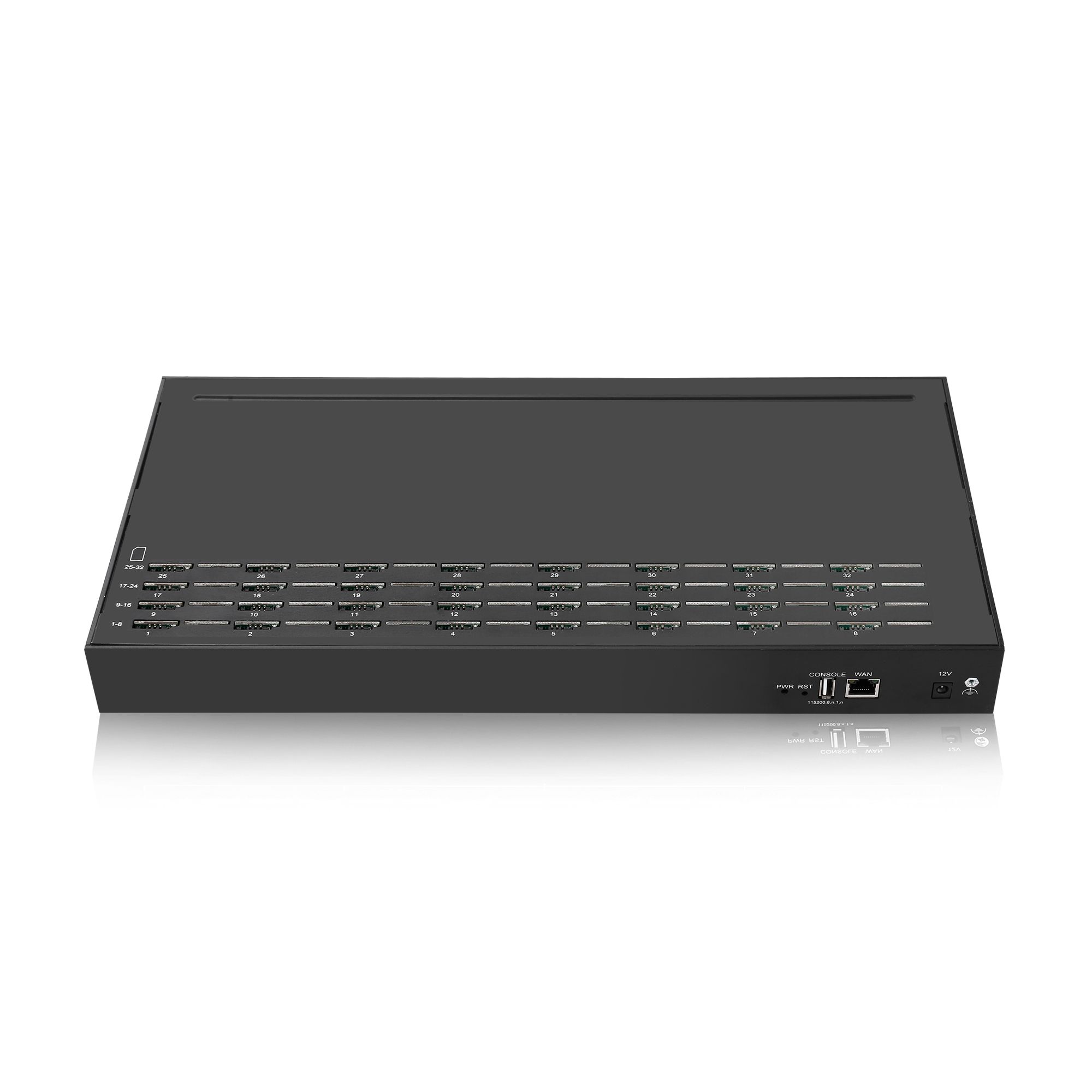
What does a fault take with it?
A fraction, or everything, depending on the architecture.
The failure domain is the single most consequential difference, because it determines whether a hardware fault is an incident or an outage.
Where capacity is distributed, the failure of one unit reduces throughput and leaves the estate delivering. Where capacity is concentrated, the same component failure stops everything, and the recovery time includes whatever the service process requires. Neither is automatically better: a well-run all-in-one with a tested spare and a documented replacement procedure may recover faster than a modular estate whose units are managed inconsistently. What matters is that the failure domain is chosen deliberately rather than inherited from a purchase.
Fault management concepts including thresholds and clearing conditions are organised in ITU-T M.3400, and they are a useful structure for deciding what to monitor, because the failure domain determines which alarms matter. In a distributed estate, the useful alarm is the one that identifies a single degraded unit; in a concentrated one, the useful alarm is the one that fires before the whole capacity is affected.
Scaling cost at 8, 32 and 64 ports
The cost curve is different at each step.
Small deployments usually scale more cheaply on separate units, while larger ones reach a point where a single chassis is cheaper per port but exposes more capacity to one fault.
Three considerations shape the curve. The first is granularity: adding eight ports to a modular estate costs one unit, while adding eight ports to a concentrated one may require a larger chassis because the smaller step does not exist. The second is overhead: each unit brings its own power, management and spares, so the per-port overhead of a modular estate falls only slowly. The third is the point at which the estate becomes an operational problem rather than a technical one, which is where the number of management points starts to cost more than the hardware.
Published list prices make the comparison concrete rather than theoretical. Within the SK-SMS Gateway range, the ladder runs from the 4-4 model at $238 through the 16-16 at $645 and the 32-32 at $1,160 to the 64-64 at $1,880, and the same family carries SIM-bank and SIM-pool accessories that can be added without changing the gateways. Comparing a modular ladder with a single large unit at the same port count is the exercise that shows whether the granularity is worth the management overhead in a specific deployment.
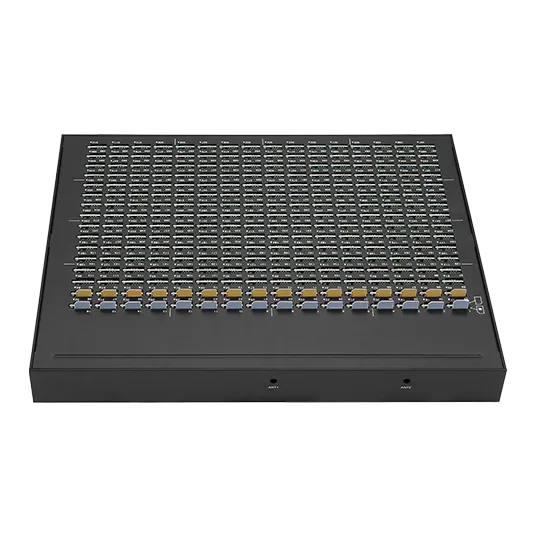
SIM estate flexibility in each architecture
Distributed radios make SIM logistics the deciding factor.
Where cards are spread across units, changing the estate means moving cards; where they are centralised, it means changing an allocation.
A concentrated server usually pairs with centralised SIM storage, which makes reassignment an administrative action and removes the physical work of moving cards between units. That is a genuine operational advantage at a few hundred cards and a decisive one at a thousand. The cost is that the central store becomes a dependency: if the link between the store and the radios is unavailable, the cards are present and unusable.
A distributed estate avoids that dependency and pays for it in administration. Every change of allocation is a physical task, and every physical task is an opportunity for the register to fall out of date. Where the estate is small and stable, the trade is reasonable; where it changes weekly, the administrative cost becomes the dominant one.
The practical answer for many deployments is a mixture: cards centralised for the majority of the estate, with local cards where the link dependency is unacceptable. Writing down which sites follow which pattern is what prevents a new site from being added to the wrong one.
Serviceability and spare strategy
Spares are the cost that appears after the purchase.
A modular estate is serviced by replacing a unit or a slot, while a concentrated one is serviced by replacing a chassis, using a service arrangement, or both.
The serviceable question is how long the estate can operate at reduced capacity. In a modular design, a spare unit of the most common type covers the most likely failure and can be kept on site. In a concentrated design, the equivalent cover is a second chassis, which is expensive, or an agreement with a defined response time, which is a commitment rather than an asset. Both are legitimate, and the choice should follow the availability target rather than the purchase price.
Maintenance arrangements are recognised control objectives, and the structure used in NIST SP 800-53 Rev. 5 is a workable frame for deciding what has to be in place. The practical test is the same in both architectures: if the most likely failure happened tomorrow, what would the estate deliver while the replacement is arranged?
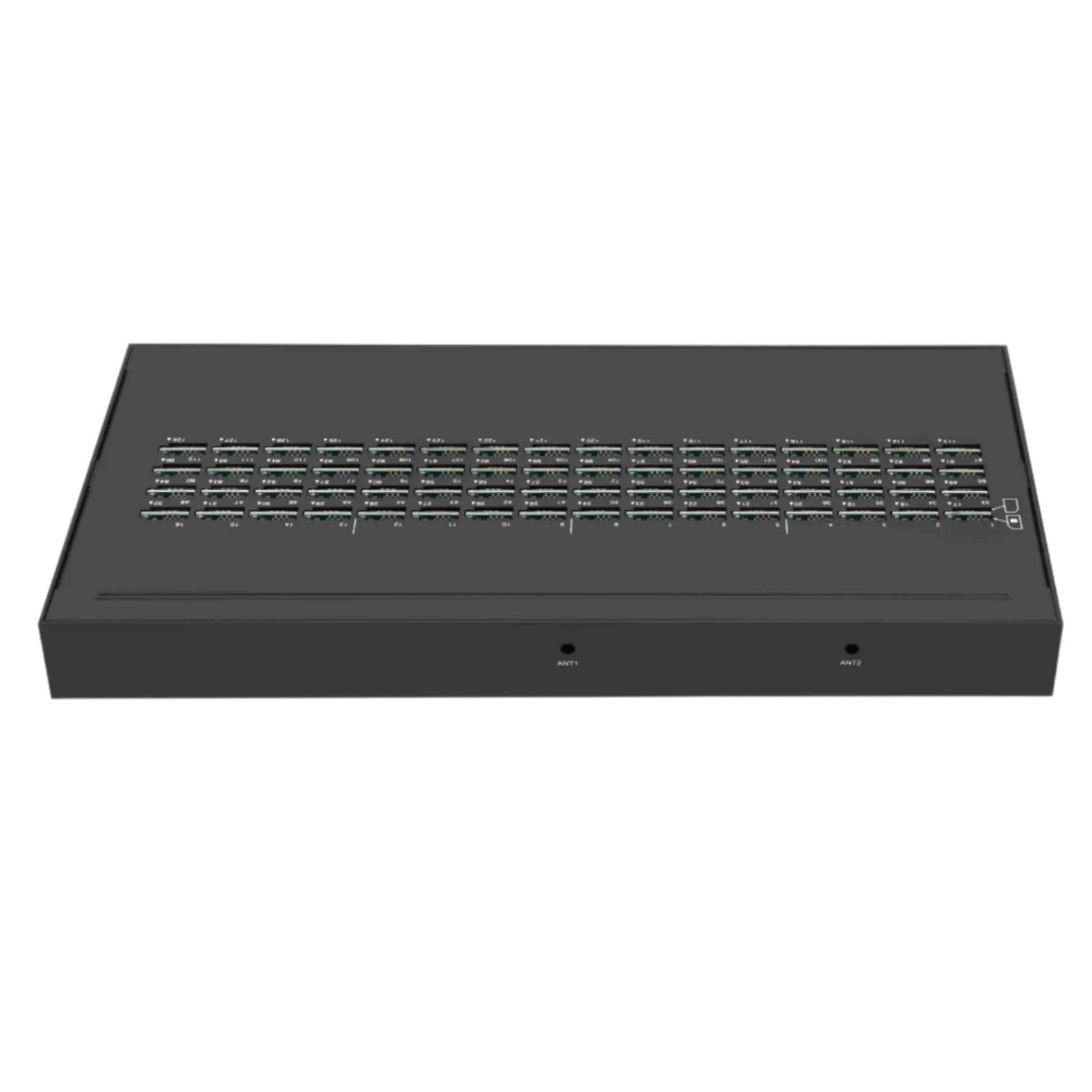
What does each architecture do to your operations workload?
Management overhead scales differently.
A distributed estate multiplies the work that has to be done per unit, while a concentrated one multiplies the impact of every action taken on a single system.
In a modular estate, monitoring, configuration and firmware work are performed per unit unless they are automated, and the number of units grows with capacity. The workload is predictable but linear, and it is the reason management interfaces and scripting support matter more in a distributed design than in a concentrated one. In a concentrated system, the same work happens once, but an error applies to everything at once, so change control has to be correspondingly stricter.
The second half of the workload is reporting. A distributed estate produces several sets of records that have to be joined before a question can be answered, while a concentrated one produces a single set that may be easier to query and harder to compare historically. Both are manageable, and the architecture that suits a team is the one whose workload the team can actually sustain at the size the estate is expected to reach.
Which architecture suits which growth pattern?
Match the architecture to the growth pattern.
Steady incremental growth with frequent changes of SIM allocation favours a modular ladder; a large one-off capacity with centralised administration favours a concentrated system.
Growth that arrives in steps rather than smoothly tends to favour the architecture that can absorb a step without stranding capacity, which is usually the modular one. Where demand is forecast accurately and the estate is expected to stay stable once built, the concentrated design’s lower management overhead is worth more than the granularity it gives up.
A third pattern is worth naming: an estate that is small today and expected to be large later. For that pattern the decision often turns on the migration path rather than on either endpoint, and the question to ask is whether capacity built now can be reused as the estate grows, or whether it becomes redundant. Session and bearer behaviour that constrains how gateways are combined is described in ETSI TS 123 018, and it is a useful reference when assessing whether two architectures can coexist in one estate.
Whichever architecture is chosen, the deciding question is the same: what does the estate deliver while a failure is being fixed? Answering it requires the failure domain, the spare strategy and the recovery time to be documented together, which is what turns an architecture decision into an operational one.
Choose the failure domain before you choose the port count. Send your growth forecast, SIM change frequency and availability target to service@telarvo.com, or review the published configurations on the SK-SMS Gateway range and the SIM pool range. Telarvo publishes the SIMBANK and SIMPOOL ranges on its product pages, and the configurations referenced above come from those listings.
FAQ
Which is more reliable, modular or all-in-one?
Neither is inherently more reliable; they distribute risk differently. A modular estate loses a fraction of capacity when a unit fails, while a concentrated one loses everything and recovers at whatever speed its replacement arrangement allows. Compare the two on the failure you expect and on how long the estate can operate while it is being fixed. The spare strategy is part of that comparison rather than a separate decision.
Does an all-in-one server cost less per port?
It often does at high port counts, because the power, management and enclosure overhead is shared across more ports. That advantage shrinks when the comparison includes the cost of a spare chassis or a service agreement, and it disappears where the granularity of a modular ladder allows capacity to be added only when it is needed. Model the three-year total rather than the purchase price.
Can the two architectures be mixed?
They can, and many estates do mix them, with a concentrated system for the bulk of the traffic and modular units for sites with specific constraints. The requirement is that the routing and queueing logic sits above both, so that a failure in either is handled by the layer that survives it. A design where the queue lives inside one of the two is not a hybrid.
Is SMS becoming obsolete, and does that change the decision?
It has not, and the growth of verification and notification traffic has continued alongside messaging apps. What has changed is the mix of use cases rather than the volume. Treat architecture as a decision about the traffic you actually carry, and revisit it if the mix changes materially rather than on a prediction. The mix is measurable from your own delivery records.
{
“@context”: “https://schema.org”,
“@type”: “FAQPage”,
“mainEntity”: [
{
“@type”: “Question”,
“name”: “Which is more reliable, modular or all-in-one?”,
“acceptedAnswer”: {
“@type”: “Answer”,
“text”: “Neither is inherently more reliable; they distribute risk differently. A modular estate loses a fraction of capacity when a unit fails, while a concentrated one loses everything and recovers at whatever speed its replacement arrangement allows. Compare the two on the failure you expect and on how long the estate can operate while it is being fixed. The spare strategy is part of that comparison rather than a separate decision.”
}
},
{
“@type”: “Question”,
“name”: “Does an all-in-one server cost less per port?”,
“acceptedAnswer”: {
“@type”: “Answer”,
“text”: “It often does at high port counts, because the power, management and enclosure overhead is shared across more ports. That advantage shrinks when the comparison includes the cost of a spare chassis or a service agreement, and it disappears where the granularity of a modular ladder allows capacity to be added only when it is needed. Model the three-year total rather than the purchase price.”
}
},
{
“@type”: “Question”,
“name”: “Can the two architectures be mixed?”,
“acceptedAnswer”: {
“@type”: “Answer”,
“text”: “They can, and many estates do mix them, with a concentrated system for the bulk of the traffic and modular units for sites with specific constraints. The requirement is that the routing and queueing logic sits above both, so that a failure in either is handled by the layer that survives it. A design where the queue lives inside one of the two is not a hybrid.”
}
},
{
“@type”: “Question”,
“name”: “Is SMS becoming obsolete, and does that change the decision?”,
“acceptedAnswer”: {
“@type”: “Answer”,
“text”: “It has not, and the growth of verification and notification traffic has continued alongside messaging apps. What has changed is the mix of use cases rather than the volume. Treat architecture as a decision about the traffic you actually carry, and revisit it if the mix changes materially rather than on a prediction. The mix is measurable from your own delivery records.”
}
}
]
}