Updated
How does a GSM-to-SIP gateway bridge mobile calls?
It connects cellular call service to the SIP voice system.
The gateway handles the mobile-side call through its SIM and radio, exchanges SIP call-control messages with the PBX, and carries IP-side audio through a supported media path.
A GSM-to-SIP gateway bridges mobile-network calls and an IP telephony system. Its cellular modules use SIM-backed carrier service, while its SIP interface exchanges call-control messages with a PBX or softswitch. Audio typically travels over RTP on the IP side. Available radio channels determine simultaneous mobile calls, independently of stored SIM capacity.
“GSM gateway” is also used commercially for equipment with newer cellular modules. Verify whether a particular unit provides 2G voice, LTE voice through VoLTE, or another supported mode. A device advertised as 4G for data or SMS is not automatically a VoLTE voice gateway.
The gateway is a boundary between services. The PBX normally manages users, queues, IVR and calling permissions; the gateway provides cellular channels and the SIP/media interface. Some devices support direct routing, but their capabilities should be verified rather than assuming they replace a full PBX.
When is a cellular gateway preferable to another trunk?
Choose it when permitted SIM-backed voice is required.
Existing mobile numbers or a required cellular path can justify the equipment. For scalable IP calling alone, compare hosted SIP and other carrier services before purchasing.
Compare the complete operating arrangements. A cellular gateway requires coverage, suitable modules, active SIM plans, local power and support for the equipment. A hosted trunk introduces its own provider, number and connectivity dependencies. Neither architecture is automatically cheaper or more resilient for every destination and traffic pattern.
Describe the requirement in terms of inbound numbers, outbound destinations, concurrent calls and recovery. If the existing mobile number must remain on a particular subscription, verify whether gateway use is approved. If number portability or a hosted service meets the need, compare that alternative before committing to cellular hardware.
For backup service, define which failure the gateway is intended to survive. It may provide a different carrier path, but it can still share power, LAN equipment or PBX dependencies with the primary trunk. A secondary route is useful only when the failure model and tested call permissions make it available at the moment it is needed.
How incoming and outgoing calls cross the gateway
An incoming mobile call reaches the SIM-backed cellular channel and is presented to the PBX as a SIP call. The gateway’s destination mapping determines which PBX extension or route receives it. In the other direction, the PBX sends an authorised call to the gateway, which selects a permitted cellular channel and places the mobile call.
Inbound:
Caller → mobile network → SIM + cellular module → gateway
       → SIP call control / RTP audio → PBX → extension or IVR

Outbound:
Extension → PBX route → SIP call control / RTP audio → gateway
          → selected cellular module + SIM → mobile network → recipient
SIP’s specification describes session control; RTP’s specification describes the media transport commonly used on the IP side. This distinction explains why a registered SIP endpoint can still have missing audio. Registration, call signaling and media need separate acceptance checks.
Do not describe GSM voice as an analog signal that the gateway simply digitizes. GSM is a digital cellular system, and modern cellular voice can use other network mechanisms. The equipment interworks call control and media across those systems according to its supported modules and firmware.
For outbound caller ID, the mobile carrier controls what number is presented and which values are allowed. Setting a SIP From header does not establish permission to show an arbitrary mobile number.
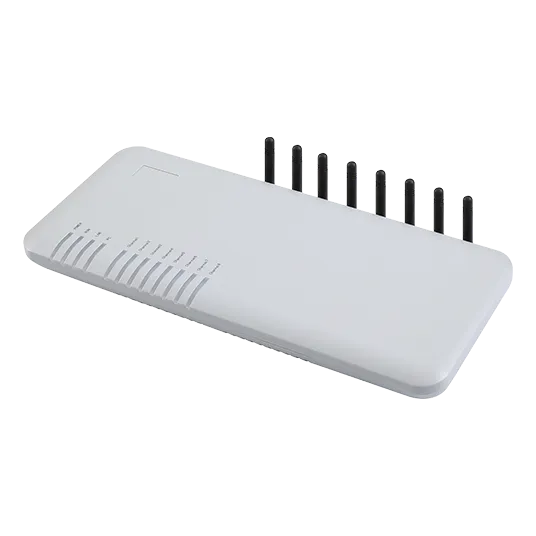
Choose cellular compatibility before channel count
The best-configured SIP trunk is useless if the cellular modules cannot obtain permitted voice service. Confirm the country, carrier, supported bands, network generation and gateway voice mode before comparing capacity. A generic “global coverage” claim is not a compatibility matrix.
Ask for written answers to these procurement questions:
- What cellular module and hardware revision are supplied?
- Which bands are supported by that exact module?
- Does it support VoLTE on the intended operator, including provisioning requirements?
- Is the proposed SIM plan approved for gateway use and the intended traffic?
- What happens when the local 2G or 3G network is retired?
- Does remote SIM equipment support this gateway and firmware combination?
Where only LTE coverage remains, an older 2G-only gateway cannot be made suitable by changing its SIP settings. Likewise, an LTE modem supporting data does not prove voice interoperability. Request a test on the actual target carrier rather than using the network-generation label as the acceptance criterion.
Capture the modem revision, approved carrier profile and firmware in the purchase specification. Where a vendor offers several radio variants under one enclosure name, require the supplied variant to be explicit. The successful pilot should apply to that bill of materials; substituting a different module later can require another compatibility check even if the gateway has the same number of ports.
How many simultaneous calls does the deployment require?
Size the active radios for the busy-hour workload.
SIM cards provide inventory; radio channels provide concurrent calls. Include inbound reservations, outbound peaks and unavailable channels when specifying the usable capacity the deployment needs.
Channel count describes the number of simultaneous cellular calls the gateway can support under its documented operating limits. SIM inventory describes available subscriptions or identities. A SIM bank expands stored inventory and management options; it does not add radios to a connected gateway.
As a hypothetical example, eight channels with 64 available SIMs still provide no more than eight simultaneous cellular calls before other restrictions. Inbound and outbound calls may compete for the same channels. Reserved inbound capacity, unavailable SIMs and carrier restrictions can reduce the usable number.
For an initial traffic estimate, average offered load is:
Call attempts per hour × average holding time in seconds ÷ 3,600.
If a planned busy hour has 120 calls averaging 180 seconds of channel occupancy, the average offered load is six Erlangs. That does not mean six channels are sufficient: arrival peaks and the acceptable blocking probability still matter. Use busy-hour measurements and a suitable traffic model, then validate queueing and overflow under realistic load.
Include unsuccessful attempts and the gateway’s actual channel-holding behaviour in the measurement. A call that is ringing or awaiting a network response can occupy resources before the conversation begins. Keep average offered load separate from the acceptance target: the procurement requirement should state the allowable blocked or overflowed traffic and how it will be measured.
If incoming calls have priority, reserve or protect their capacity through the supported PBX/gateway policy. If an overflow trunk is available, define which destinations it can serve and whether it preserves the required caller identity. More stored SIMs will not compensate for an unavailable radio at the peak moment.
Do not size solely by daily calls or an arbitrary number of calls allowed per SIM. Daily totals hide bursts, and subscriber-usage limits require carrier approval rather than a universal throughput formula.
Compare Telarvo families by the role they perform
Telarvo lists GoIP and SK VoIP gateway families, as well as separate SIM-management accessories. Begin with the function and supported cellular revision, then choose the required concurrency and inventory arrangement. Listed family names alone do not establish codec, TLS, SRTP or carrier support.
| Family | Published range or role | What to confirm before ordering |
|---|---|---|
| GoIP | GOIP1, GOIP8, GOIP16 | Supplied radio variant, PBX mode and per-channel routing |
| SK VoIP gateways | Models with 4–32 ports and differing SIM capacities | Voice concurrency, cellular module and SMS interfaces |
| SIMBANK128 / SK SIMPOOL | Remote or centralized SIM inventory | Supported gateway ecosystem and active assignment limits |
Review the GoIP products and SK VoIP collection for current listings. The 128-slot SIM bank buying guide explains why accessory compatibility must be checked separately.
No independent HD-voice, latency or uptime result is implied by this comparison. Ask for an end-to-end codec test and the exact bill of materials if those requirements affect the purchase.
Keep voice, SMS and number identity separate
A gateway portfolio may support voice and SMS, but the interfaces and acceptance requirements are different. Establish whether the application needs cellular voice only, inbound SMS, outbound messaging or all three. Then identify the supported interface for each function on the exact model.
RFC 3428 defines SIP MESSAGE, but a SIP voice registration does not prove that a gateway exposes cellular SMS through that method. Another model may use an HTTP API, management application or a different messaging mechanism. Confirm the receiving and sending workflow independently rather than inferring it from the word SIP.
Likewise, distinguish the SIM-backed mobile number, the SIP account identity and the number displayed to the far end. The PBX can use an internal SIP identity to route a call while the mobile carrier applies its own presentation policy. Arbitrary caller-ID text in a SIP header is not an entitlement to present that number on the cellular network.
For an integrated business workflow, specify the required owner and route for each number. A shared gateway can connect several business services, but their credentials, message permissions and call records should be planned deliberately. A successful voice pilot is only one acceptance result, not a blanket validation of every messaging feature.
Integrate the SIP trunk, audio and keypad events
A gateway can register to a PBX, accept a documented peer/trunk relationship, or use another supported mode. Choose the mode intentionally and map incoming destinations to restricted PBX routes. For native Asterisk registration, use the GoIP PJSIP setup guide rather than combining incompatible driver examples.
Confirm a shared codec before testing audio. G.711 PCMU or PCMA can be a practical interoperability baseline where both ends support it, but cannot restore quality lost on a narrowband cellular leg. Transcoding, packet loss, jitter and radio conditions can each affect the final call.
Test IVR digits as a separate function. RFC 4733 specifies RTP telephone events, but the actual gateway and PBX must agree on their supported DTMF mode. An audio conversation that sounds correct can still have unusable keypad events.
For remote deployments, inspect SDP addresses and the RTP path. Use the Asterisk NAT documentation if Asterisk is involved, and configure the real media-port ranges. Registration keepalives do not by themselves solve a blocked media path.
Map business numbers to PBX destinations deliberately
Each incoming SIM-backed number needs an intended PBX destination, such as a user, team queue or IVR. Define that mapping before installing the cards so gateway channel order does not become the accidental business-routing policy. Record what the gateway sends as the SIP called destination and how the PBX recognises it.
For outbound calls, decide which authorised users may use each cellular route and how the gateway selects an available channel. A per-port registration design and a shared-trunk design can expose different controls. Test that the intended SIM is used, not merely that a call reaches the recipient through any available radio.
Include busy and unavailable conditions. If the target number’s channel is in an outbound call, decide whether an incoming call is rejected, handled by carrier voicemail or processed through another supported arrangement. If a SIM is reassigned, consider what happens to its inbound availability during registration at the new radio.
Keep employee access and number ownership clear when the equipment serves several teams. Removing a PBX user should remove the relevant calling permissions without requiring an undocumented gateway change. Preserve the routing map with the configuration backup so a replacement device can restore the intended business behaviour rather than only its network settings.
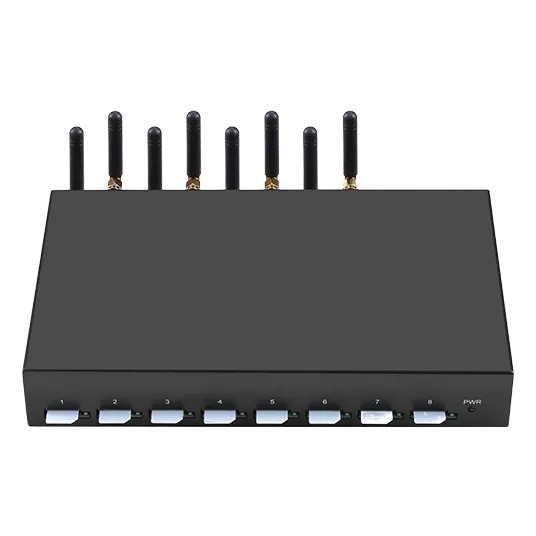
Test the service at each layer before production
A useful acceptance test records what was observed rather than simply stating that “the trunk works.” Begin with one channel and expand only after routing, audio and cellular service are confirmed. Keep the carrier and firmware combination in the test record so later changes can be compared.
| Layer | Acceptance observation | Failure to investigate |
|---|---|---|
| Cellular | SIM registers and can place/receive permitted calls | Coverage, plan, bands or voice provisioning |
| SIP | Peer/registration healthy; expected call responses | Credentials, routing or endpoint identification |
| Routing | Incoming number reaches intended destination | Called-number mapping and context |
| Media | Both directions have usable audio | RTP path, SDP, codecs or cellular quality |
| IVR | Digits recognized accurately | DTMF mode or event negotiation |
| Recovery | Service restores after an authorised restart | Registration, allocation or controller dependency |
Also test busy channels, caller ID, hangup from each end, inbound calls during outbound load and the intended overflow route. A spare SIM is not a replacement for spare channel capacity. A backup IP connection is not a replacement for an unavailable mobile carrier.
Compare cost and resilience using the same service requirement
Define the expected inbound numbers, call destinations and peak concurrency before comparing a gateway with a hosted trunk. Include the approved SIM plans, hardware, installation, network access, power, support and spare capacity. Compare the same service scope rather than a local call tariff with an all-inclusive provider quote.
Separate fixed purchase costs from recurring operations. A low equipment price can be outweighed by integration and support work; a higher subscription price may include services the internal team would otherwise provide. Use the actual intended calling pattern and carrier agreement rather than extrapolating savings from one favourable destination rate.
For resilience, identify common dependencies. A backup gateway beside the primary unit can still lose the same power source, switch or mobile carrier. Conversely, a remote alternative may add a controller or IP link that requires its own recovery plan. State which component failures must be tolerated and test those cases.
Do not convert redundancy into an uptime claim without the supporting design and measurement. A spare card, spare radio and alternate carrier route protect different resources. The appropriate purchase includes the resources and operating procedure needed to restore the specific service, with clear responsibility for monitoring and replacement.
Protect the trunk and its operating permissions
A compromised voice route can create chargeable calls, so access restrictions belong in the deployment design. Limit management access, use unique credentials, isolate the gateway network and grant outbound permissions only to authorised users. Encryption capability must be verified for the model; do not infer it from the word “enterprise.”
Set limits appropriate to the authorised users and destinations, and review failed authentication attempts and unexpected calling patterns. Restrict support access to a defined maintenance period and remove it when the work is complete. Confirm which configuration files or logs contain credentials before sharing diagnostic material.
The equipment also does not grant a licence for voice termination or permission to bypass carrier rules. Check the applicable service agreements, number use and recording requirements for the deployment. Do not treat SIM rotation or device-identity changes as a substitute for an authorised service arrangement.
Release a gateway against a written specification
The selection sequence is cellular compatibility, active channel requirement, number routing and end-to-end acceptance. SIM inventory is a separate planning dimension, and SIP registration is only one part of a working call. Those distinctions should appear in the RFQ as well as the installation notes.
Request the supplied cellular revision, supported carrier arrangement, PBX mode and channel-selection method. Define the voice and messaging functions separately, then require evidence for audio, DTMF, hangup, busy behaviour and restoration. Avoid approving a purchase solely because a family name or nominal port count looks suitable.
The resulting release should identify what was tested and what changes require revalidation. Retain the topology, routing map, firmware and acceptance observations with the purchase record. That gives operations a useful baseline when a carrier, number assignment or software update changes the behaviour later.
Request a Telarvo gateway feasibility review with your country, carrier, busy-hour workload, PBX version and number-routing requirements. Ask for the exact supported configuration and a pilot scope before ordering.
FAQ
Can a GSM-to-SIP gateway guarantee HD voice?
No. End-to-end quality depends on the cellular service, gateway media handling, negotiated codecs and the remaining voice path. A wideband codec selected by the PBX cannot restore information lost on a narrowband cellular leg. Ask which codec combinations are supported by the supplied radio revision and test representative calls on the actual carrier. Include packet loss, jitter and radio conditions in the investigation if quality varies; do not treat a product-family HD-voice label as a complete acceptance result.
Can a SIM bank preserve a call after a gateway fails?
Do not assume so. A bank can make a stored SIM available to another supported gateway, but reassignment does not preserve the failed radio’s established call. The replacement may need to attach to the carrier before new service becomes available. Define separate requirements for active-call continuity and restoration of subsequent calls. Test the controller, replacement channel capacity and re-registration sequence so the recovery claim describes the actual system rather than an accessory’s generic failover feature.
Can the gateway replace the company’s emergency-calling service?
Only after the intended service, routing, location handling and continuity requirements have been verified for the deployment. Ordinary outgoing calls do not establish emergency-call availability, correct location information or operation during a power or network failure. Assign that assessment to the responsible telecom administrator and carrier, and preserve a suitable supported alternative where needed. Do not infer the function from the presence of a SIM slot or from a successful SIP registration to the PBX.
What should be retested after a cellular module or firmware change?
Repeat the acceptance checks affected by the change: carrier registration, permitted voice service, inbound number mapping, outbound channel selection, audio, DTMF and hangup. Also check restoration after a restart and any SMS interface used by the application. Keep the old and new hardware/firmware identities in the record. A replacement with the same enclosure and channel count can still alter codec support, carrier compatibility or SIP behaviour, so nominal capacity alone is not enough to preserve the original release decision.