Hospital reminders are three different workflows wearing one name. An appointment reminder, a preparation instruction and a follow-up check-in have different timing, different sensitivity and different consequences when they fail.
This article sets out the three types and their timing, what must not go into a message, how patient preference is handled, and what the delivery commitment means for a workflow where a missed instruction has a clinical consequence.
What are the three hospital reminder types, and what timing must SMS hardware meet?
Appointment, preparation and follow-up.
Each has its own send window, and treating them as one campaign is what produces messages that arrive too early to be useful or too late to be acted on.
An appointment reminder is usually sent at a fixed interval before the visit, chosen to be close enough that the patient has not forgotten and early enough that a cancellation can be refilled. A preparation instruction is different in both timing and consequence: it may need to arrive with enough lead time for the patient to act, and a message that arrives late can mean a cancelled procedure. A follow-up check-in is sent after the visit and is usually about continuity of care rather than about attendance.
Because the three have different windows, they should be separate message categories in the platform rather than one reminder stream. The message layer is the same in all three cases, defined in ETSI TS 123 040, and the difference lies in the schedule and in what the message is permitted to say.
| Type | Typical timing | Consequence of failure |
|---|---|---|
| Appointment reminder | Fixed interval before the visit | Missed appointment, unfilled slot |
| Preparation instruction | Early enough for the patient to act | Procedure cancelled or repeated |
| Follow-up | After the visit, per pathway | Continuity of care affected |
| Change or cancellation | As soon as the change is known | Patient travels for nothing |
What must not be included in a message?
Anything that identifies a condition to the reader.
A message names a sender and a clinic, and the combination with the recipient identifies that person as a patient of a service even when the text says nothing clinical.
The safest pattern is a message that carries only what the patient needs in order to act: a reference, a time, and a contact for questions. Preparation instructions are the difficult case, because they may need to convey something specific. Where that is unavoidable, the message should describe the action rather than the reason, and the reason should be available through a channel the patient authenticates into. The distinction between what the message may contain and what the record may contain is one the compliance owner should set rather than the engineer.
Two further items belong on the exclusion list. A message should not ask the patient to reply with clinical information, because replies arrive in an unmanaged channel. And it should not contain a link that a patient is expected to act on without being able to verify the sender, because that pattern is indistinguishable from a phishing message. Where the processing falls within the European framework, the reference points are the regulation on EUR-Lex and the guidance collected by the European Data Protection Board; other markets have their own framework and their own interpretation of what a health message may contain.
Consent and patient preference handling
Preference is not a single switch.
Patients commonly want appointment reminders and may not want follow-up messages, and a record that captures one preference for all categories forces an unwanted choice.
The workable arrangement is a preference record per category, with the categories defined by the hospital and explained to the patient when the number is captured. A withdrawal from one category should suppress that category immediately and leave the others intact, and the suppression should survive a change of platform because the obligation follows the patient rather than the system. Where the patient has never given a preference, the default should be the most conservative one that still lets the clinical workflow function.
Retention belongs in the same record. A number collected for an appointment and never updated becomes stale data with no purpose, and the hospital’s policy on removing numbers for patients who have moved on should be documented rather than assumed. Record-keeping practice for consent and suppression records is covered in NIST SP 800-92, and the control families that structure the surrounding access management are organised in NIST SP 800-53 Rev. 5.
Delivery commitment for clinical workflows
A preparation message is time-critical; a reminder is not.
The delivery commitment should be set per workflow rather than per deployment, because the consequences of a delay differ by an order of magnitude.
Three levels are worth distinguishing. Appointment reminders tolerate hours and can be sent in a batch. Change and cancellation notices need to arrive promptly, because the patient may be travelling. Preparation instructions need to arrive with enough lead time for the patient to act, which means the schedule has to account for delivery time rather than assuming it. Setting one commitment for all three produces either an expensive infrastructure for reminders or an inadequate one for instructions.
Where a workflow is genuinely time-critical, the deployment needs a route around a failure rather than a faster queue. A second path, or a fallback to a call for the affected patients, is the practical answer, and the decision belongs with the clinical owner rather than with the infrastructure team. The subscription states that affect delivery timing are defined in 3GPP TS 24.301.

Integration with scheduling systems
The appointment record is the trigger, and it should remain the source of truth.
Sending infrastructure should read the schedule rather than hold its own copy, so that a change in the scheduling system takes effect in the messages.
Three integration points matter. Booking and rescheduling, which create and modify the events that generate messages. Cancellation, which has to suppress a scheduled reminder rather than leave it queued. And attendance, which closes the loop by recording whether the patient arrived, and is the input for the follow-up categories. In each case the messaging platform needs a stable identifier for the appointment rather than only for the patient, so that a rescheduled appointment is a change rather than a new event and an orphaned reminder.
The interface used to submit messages and to receive their outcomes is standardised in ETSI TS 123 040, and the reconciliation between the schedule and the delivery record is the same join described for any messaging workflow: an identifier generated by the hospital, carried through the send and matched against the appointment.
The same discipline extends to the record. A delivery log that links a patient number to an appointment time is identifying data even when the message itself is minimal, and its retention deserves the same decision as the message content. Hospitals that review the message and forget the log are reviewing half of the data flow.
Keep the agreed positions with the workflows they describe. A hospital that records what each reminder category may contain, who set the retention window and when it was last reviewed has an answer ready for the next review, and the answer costs minutes to produce rather than days.
Reporting that supports service improvement
Report the workflow, not the person.
Reminder volume, delivery rate, attendance and cancellation refill are workflow measures that improve the service without ranking staff or patients.
Three figures are worth keeping per workflow. The delivery rate, which shows whether the channel is working. The attendance rate against reminded and unreminded cohorts, which is the measure the clinical owner cares about. And the refill rate for cancelled slots, which is what turns a cancellation from a loss into a manageability problem. None of the three requires identifying individuals in the report.
A fourth figure is worth keeping for infrastructure rather than for clinical purposes: the delivery time distribution per channel and per market, which shows whether the schedule has enough lead time. The privacy framework published by NIST offers a structure for organising an inventory of the data involved, and it is a reasonable reference for a hospital reviewing what each workflow actually holds.
A workflow outline
The outline covers the reminder categories and the handling each one needs, from the selection of recipients to the record that the message was sent. It is written around the clinical boundaries, because what may appear in a message is decided there rather than in the messaging platform.
- Define the three reminder categories and the send window for each.
- Agree with the compliance owner what each category may contain, and what it must never contain.
- Define a preference record per category, with a conservative default.
- Set the delivery commitment per workflow rather than for the deployment as a whole.
- Connect the scheduling system so that reschedules suppress rather than duplicate.
- Generate an appointment identifier and carry it through the send and the record.
- Report delivery, attendance and refill as workflow measures.
- Review the record against current workflows on a schedule, with an owner and a review date.
Scope note: this article describes engineering data flows and workflow design, not clinical or legal advice. What a message may contain, how long a record may be kept and what consent is required depend on the jurisdiction and on the service, and those decisions belong with the hospital’s compliance and clinical owners.
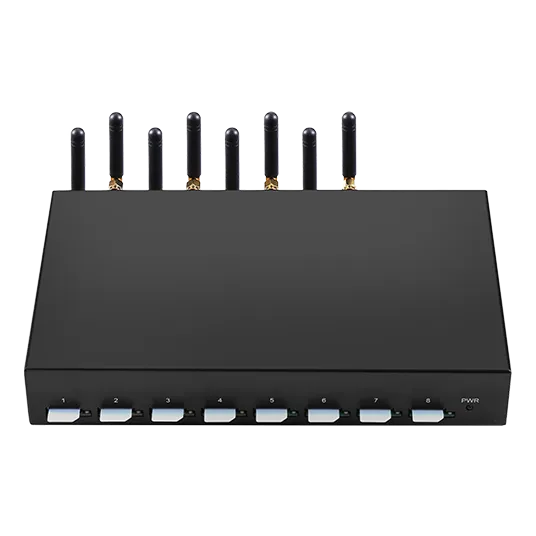
Agree what a message may contain before designing the workflow. Send your reminder categories, channels and retention requirements to service@telarvo.com, or review the published configurations on the SMS gateway solution page and the SK-SMS Gateway range. Telarvo publishes the SK-SMS gateway range, the TYH modem pools and the TGW SMS machine on its product pages, and the configurations referenced above come from those listings.
FAQ
Are text appointment reminders HIPAA compliant?
That depends on the arrangement rather than on the channel, and the applicable framework differs by jurisdiction. The engineering contribution is to keep clinical detail out of the message, restrict the record to what is needed, and let the compliance owner decide whether a given arrangement satisfies the rules that apply to the hospital. The decision belongs with the clinical governance function.
Is SMS itself compliant for patient messaging?
No channel is compliant by itself. What matters is what the message contains, who can see it, how the record is protected and how long it is kept. A message carrying only a reference and a time is a different proposition from one naming a department or a condition, on the same channel. Content is the variable that can be controlled.
What does SMS stand for in healthcare?
The same short message service as elsewhere; the abbreviation is also used for unrelated clinical and administrative terms, which is a common source of confusion in hospital documentation. Where the term appears in a policy, it is worth confirming which meaning is intended. Treating the two meanings as the same has caused real procurement mistakes. Confirm the intended meaning in the policy document before building a workflow around it.
How should a hospital message a patient?
From a sender the patient can recognise, with the minimum content needed to act, and with a route for questions that the patient authenticates into. Keep instructions about the action rather than the reason, avoid asking for clinical replies, and record the preference category the message relies on. The record is what evidences the arrangement afterwards. Test the wording with a small group before it reaches patients, because the wording is the part they experience.
{
“@context”: “https://schema.org”,
“@type”: “FAQPage”,
“mainEntity”: [
{
“@type”: “Question”,
“name”: “Are text appointment reminders HIPAA compliant?”,
“acceptedAnswer”: {
“@type”: “Answer”,
“text”: “That depends on the arrangement rather than on the channel, and the applicable framework differs by jurisdiction. The engineering contribution is to keep clinical detail out of the message, restrict the record to what is needed, and let the compliance owner decide whether a given arrangement satisfies the rules that apply to the hospital. The decision belongs with the clinical governance function.”
}
},
{
“@type”: “Question”,
“name”: “Is SMS itself compliant for patient messaging?”,
“acceptedAnswer”: {
“@type”: “Answer”,
“text”: “No channel is compliant by itself. What matters is what the message contains, who can see it, how the record is protected and how long it is kept. A message carrying only a reference and a time is a different proposition from one naming a department or a condition, on the same channel. Content is the variable that can be controlled.”
}
},
{
“@type”: “Question”,
“name”: “What does SMS stand for in healthcare?”,
“acceptedAnswer”: {
“@type”: “Answer”,
“text”: “The same short message service as elsewhere; the abbreviation is also used for unrelated clinical and administrative terms, which is a common source of confusion in hospital documentation. Where the term appears in a policy, it is worth confirming which meaning is intended. Treating the two meanings as the same has caused real procurement mistakes. Confirm the intended meaning in the policy document before building a workflow around it.”
}
},
{
“@type”: “Question”,
“name”: “How should a hospital message a patient?”,
“acceptedAnswer”: {
“@type”: “Answer”,
“text”: “From a sender the patient can recognise, with the minimum content needed to act, and with a route for questions that the patient authenticates into. Keep instructions about the action rather than the reason, avoid asking for clinical replies, and record the preference category the message relies on. The record is what evidences the arrangement afterwards. Test the wording with a small group before it reaches patients, because the wording is the part they experience.”
}
}
]
}