The TGW chassis is sold primarily as a messaging platform, and its voice capability is a question buyers ask after they have chosen it. The useful answer separates what the chassis provides from what it does not, and then applies the same generation decision that applies to any cellular voice deployment.
This guide covers the TGW voice case specifically: what the chassis provides, how 2G and 4G differ for voice on it, what it does not provide, how to choose a generation, when a dedicated voice device is the better answer, and what to verify at acceptance.
What voice capability does the TGW chassis provide?
Channels with SIM slots, in one chassis.
The chassis provides the radio and channel infrastructure, and the voice platform is something it connects to rather than something it contains.
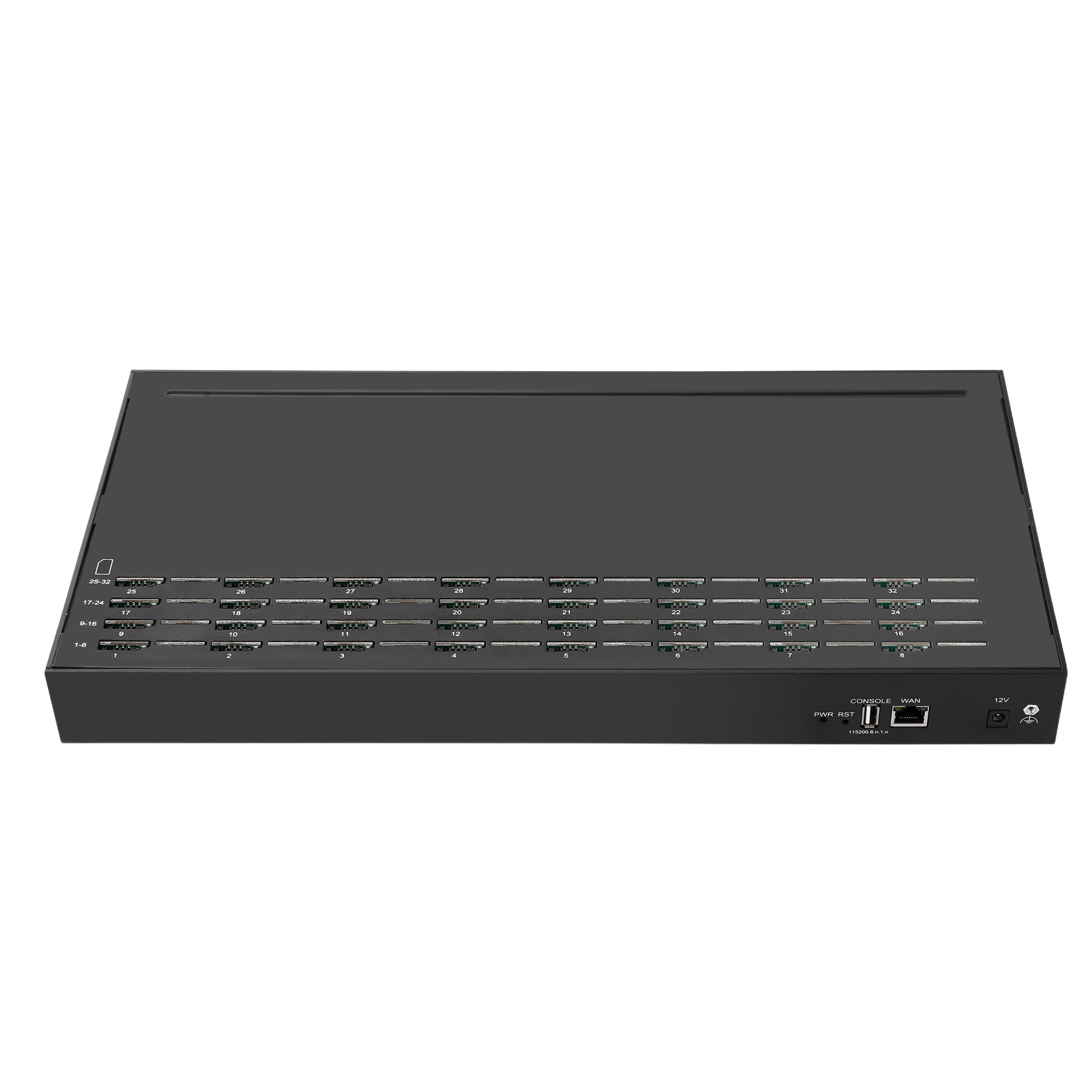
Three elements are present. Channels, which carry calls and which set the simultaneous ceiling. SIM slots, which determine how many numbers the estate holds and how widely traffic can be distributed. And an interface, which presents the calls to whatever platform you operate, whether that is a private branch exchange or a voice platform.
The published TGW-SMS Gateway 64-64 at $1,715.00 provides 64 ports and 64 SIM slots. Read as a voice specification, that is 64 concurrent calls at most and 64 numbers available for distribution, which is a substantial estate but still a chassis rather than a service.
How do 2G and 4G differ for voice on this chassis?
4G carries voice as data, which changes failure modes.
The difference is not in audio quality but in how the call degrades and what that implies for diagnosis.
On 2G, a call degrades gradually as signal weakens, and the user reports a poor call before it fails. On 4G, voice is carried over the packet network, so quality depends on conditions a circuit-switched call did not depend on, and degradation is more abrupt. The symptom reported by a user is therefore more often a dropped call than a poor one, which shifts the diagnostic emphasis from codec settings to signal conditions and site placement.
The second difference is negotiation. A 4G device negotiates codecs with the network rather than using a fixed cellular coding scheme, which increases the chance of transcoding somewhere in the path. Where that happens, capacity falls below the nominal channel count and the effect appears only under sustained load, which is why measurement rather than specification is the way to establish it.
The cellular standards behind both behaviours are published as 3GPP specifications, which is the reference to consult when a claim about what a network supports has to be verified rather than accepted.
What does the chassis not provide?
It is a chassis, not a complete voice platform.
Three capabilities belong to the layers around it, and assuming otherwise leads to a deployment that is short of something.
Call routing is a platform function, so number translation, extension mapping and failover are configured there rather than on the chassis. Codec strategy depends on what the platform negotiates, so it is a joint decision rather than a device setting. And observability beyond the device log — call detail records, recordings, reporting — is a platform capability that the chassis cannot supply.
The practical consequence is that the chassis should be specified after the platform rather than before it, because the platform determines the interface, the codec expectations and the failover model. A chassis purchased first constrains the platform choice to whatever matches it.
How do you decide between generations?
From the remaining service life in each market.
The comparison that matters is the network’s remaining service life against the depreciation period of the equipment.
Three responses follow. Where retirement is announced and imminent in a market, specify the surviving generation for that market. Where it is announced but distant, a dual-generation configuration defers the decision without another purchase. Where no timetable is published, dual-generation is the safer position, because an announcement can arrive with less notice than a procurement cycle.
The cost of being wrong is asymmetric, and that asymmetry is the argument for the generation check rather than for a general preference. Buying 4G capacity slightly early costs the price difference between two configurations. Buying 2G-only capacity and losing the network early costs the full capital value plus an unplanned replacement project, and the voice part of the deployment is the part where an interruption is most visible to customers.
Where the estate spans several markets with different timetables, the fleet will be mixed by necessity rather than by accident. Keeping the management model identical across generations — the same naming, the same log export, the same acceptance tests — is what allows a market to be migrated without changing any process around it.
How does it compare with a dedicated voice device?
A dedicated device removes channel contention.
The difference is architectural rather than a matter of capacity, and it appears when both workloads are busy.
Where one chassis carries voice and messaging, the two compete for the same channels. A call occupies a channel for its duration, and a message occupies one briefly but at a moment it cannot choose, so at peak the two workloads delay each other. Where the voice workload has a concurrent-call commitment and the messaging workload has a delivery window, the contention appears as a missed commitment on whichever side loses.
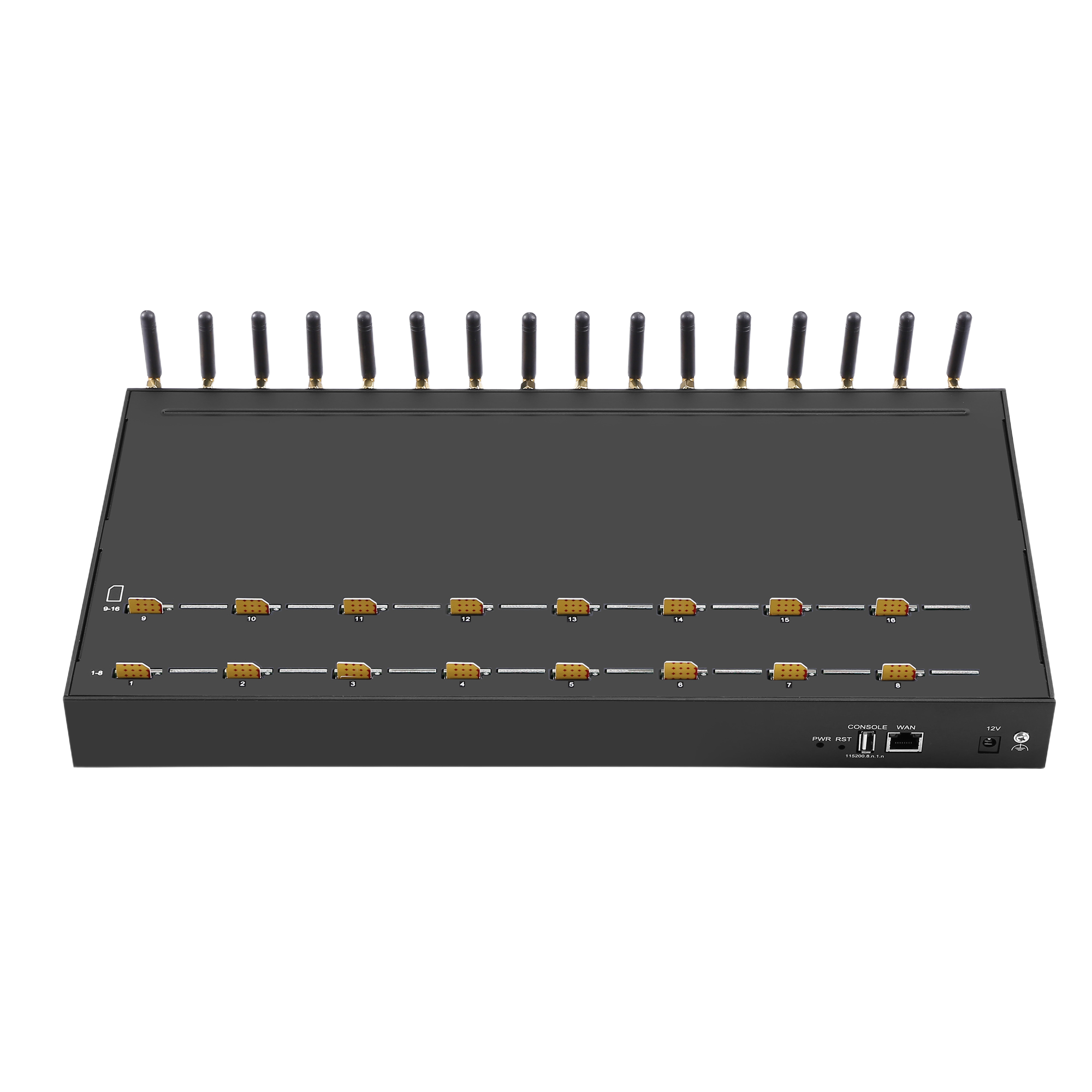
A dedicated voice device removes the question rather than managing it. The published SK VOIP Gateway range runs from the 4-port model at $260.00 to the 32-port eSIM model at $3,100.00, and the range uses the same endpoint model across the tiers, which means keeping voice and messaging within one product family while separating the hardware.
Where the two workloads genuinely peak at different times and neither carries a commitment, a shared chassis is economical and the contention is theoretical. Where either carries a commitment, the arithmetic that decides the question is the sum of the two peaks compared against the chassis, and the answer is frequently a second device.
What should the acceptance test cover?
Registration, both directions, digits, failure path.
A voice test that confirms a single successful call establishes very little about a deployment.
- Registration. Confirm a completed registration in the platform log rather than a series of attempts.
- Both call directions. Place and receive a call, and confirm each reaches the intended destination.
- Audio both ways. Confirm audio flows in each direction, which is a separate check from signalling.
- Digit signalling. Dial a menu-driven service and press keys during the prompt.
- Codec and transcoding. Read the negotiated codec and confirm whether transcoding occurs.
- Concurrency and failure path. Drive the deployment to the concurrent calls the busiest hour requires, and remove a SIM from service to confirm the documented behaviour.
Items three, four and six are the ones most often skipped. A call that connects without audio is a media path problem a signalling test will not reveal, digits that do not register are a signalling method problem, and a failure path that has never been exercised is an assumption rather than a capability.
Where the deployment operates in a facility with an environmental specification, the guidance published by ASHRAE is the normal reference for the operating envelope, the environmental test standards published by the International Electrotechnical Commission cover the equipment side, and the ETSI standards catalogue covers the network side.
What should be recorded at handover?
Generation, ports, SIM estate, versions, results.
The record is what makes a later generation decision a comparison rather than a fresh exercise.
| Item | What to record |
|---|---|
| Generation | The network generations in use, per market |
| Channels and slots | Port count, SIM estate, and the port-to-SIM ratio |
| Retirement position | The announced timetable per market at the date of purchase |
| Platform integration | Interface, codec negotiated, and where translation happens |
| Versions | Chassis firmware and platform version at acceptance |
| Test results | Both directions, audio, digits, concurrency, and the failure-path result |
The retirement position row is the one that makes the record worth keeping. An announcement that arrives after purchase is a change in the market rather than a mistake in the procurement, and recording the position at the date of purchase is what makes that distinction demonstrable. The numbering conventions a recipient sees are standardised under the ITU Recommendation E.164 numbering plan, while registration requirements remain a matter for each national framework.
Where the two workloads are separated, the acceptance tests stay identical and the handover record differs only in which device each row refers to. Keeping the same test set across both devices is what makes a later comparison between them meaningful rather than a reconstruction.
Conclusion
The TGW chassis provides voice channels and SIM slots and connects to a platform rather than containing one, so it should be specified after the platform rather than before it. The generation decision is the same one that applies to any cellular voice deployment: compare the remaining network service life against the depreciation period, and prefer a dual-generation configuration where the timetable is uncertain.
Where one chassis carries voice and messaging, the two compete for channels and whichever workload has a commitment will lose at peak. A dedicated voice device removes the question rather than managing it, and the published SK VOIP Gateway range from $260.00 upward uses the same endpoint model, which allows the workloads to be separated while keeping them within one product family.
Choose the platform before the chassis. Send your voice requirement, markets and messaging volumes to service@telarvo.com, or review the published models on the VoIP gateway solution pages.
FAQ
Does the TGW chassis provide a complete voice service?
No. It provides channels, SIM slots and an interface, and connects to a platform you operate. Call routing, codec strategy and observability beyond the device log are platform functions. That is why the chassis should be specified after the platform, since the platform determines the interface, the codec expectations and the failover model rather than the other way round.
Is 4G voice better than 2G?
Audio quality is comparable on a well-provisioned link. The difference is in how a call degrades: a circuit-switched call weakens gradually, while a packet-carried call can degrade abruptly and present as a dropped call. That shifts the diagnostic emphasis to signal conditions and site placement rather than codec settings, and it makes measurement under load the way to establish capacity.
Should voice and messaging share one TGW chassis?
Only where the two workloads peak at different times and neither carries a commitment. Both use the same channels, so at peak they delay each other and whichever has a commitment will miss it. Where either has one, separate hardware within the same product family removes the question rather than managing it.
How do I decide which generation to buy?
Compare the announced retirement date for each market against the depreciation period you intend to use. Where retirement falls inside that period, buy the surviving generation; where it falls outside, dual-generation configuration keeps the decision open without another purchase. Record the position at the date of purchase so a later change is visible as a market change rather than a procurement error.