A wholesale order is a portfolio decision rather than a product decision. What is specified across the order, how it is packed and how it is supported after delivery determine whether the margin survives the first year.
This article covers how to specify across a mixed order, how pricing typically steps with volume, what documentation a destination market may require, and how packaging, sampling and after-sales obligations fit together.
What to specify across a mixed order from an SMS modem manufacturer for wholesale export
A portfolio order needs a specification that works for the smallest item as well as the largest.
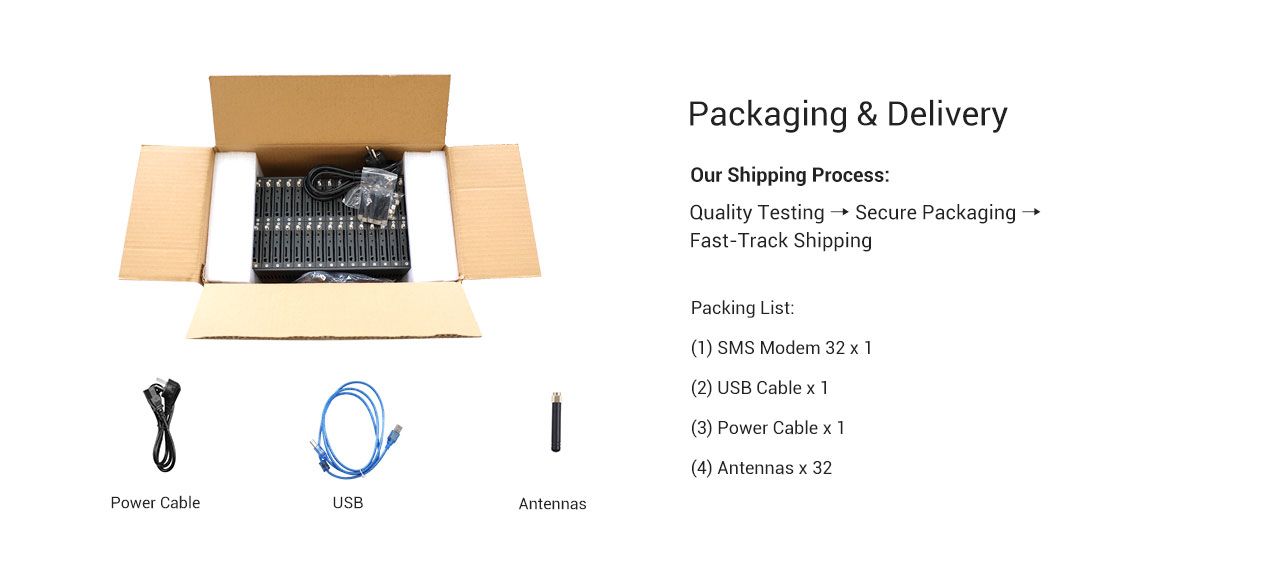
Wholesale orders in this category are usually mixed: several port counts of modem and gateway hardware, sometimes several variants within a family, and often accessories such as antennas, power supplies and mounting hardware. Specifying that as a list of model numbers is a recipe for mismatched deliveries, because the accessories are the items most easily substituted and the ones whose absence is discovered at the customer rather than at the warehouse.
The practical approach is a specification table with one row per line item, stating the model, the port or slot count, the region or band variant where relevant, and the accessories included with each unit. Two columns are worth adding: the published list price for reference, since discounts are negotiated rather than published, and the firmware version expected on delivery, because a mixed order can otherwise arrive with several versions in circulation across the same model.
One item deserves to be specified separately rather than assumed: the power supply. Mains plugs and voltage ranges differ between markets, and an order that arrives with the wrong plug type or the wrong certification for the destination is not usable without either replacement or adapters. Stating the requirement explicitly, and confirming it in the order acknowledgement, removes an entire category of dispute.
| Line item field | Why it is needed |
|---|---|
| Model and port or slot count | The base specification, and the unit of comparison |
| Region or band variant | Determines whether the unit works in the destination market |
| Included accessories | The item most often substituted or omitted |
| Power supply type | Plug type and voltage must match the destination |
| Firmware version expected | Avoids several versions circulating in one order |
| Published list price reference | Discounts are negotiated, so the list price anchors the comparison |
Volume tiers and how pricing typically steps
Published list prices are the reference point, and volume terms are negotiated around them.
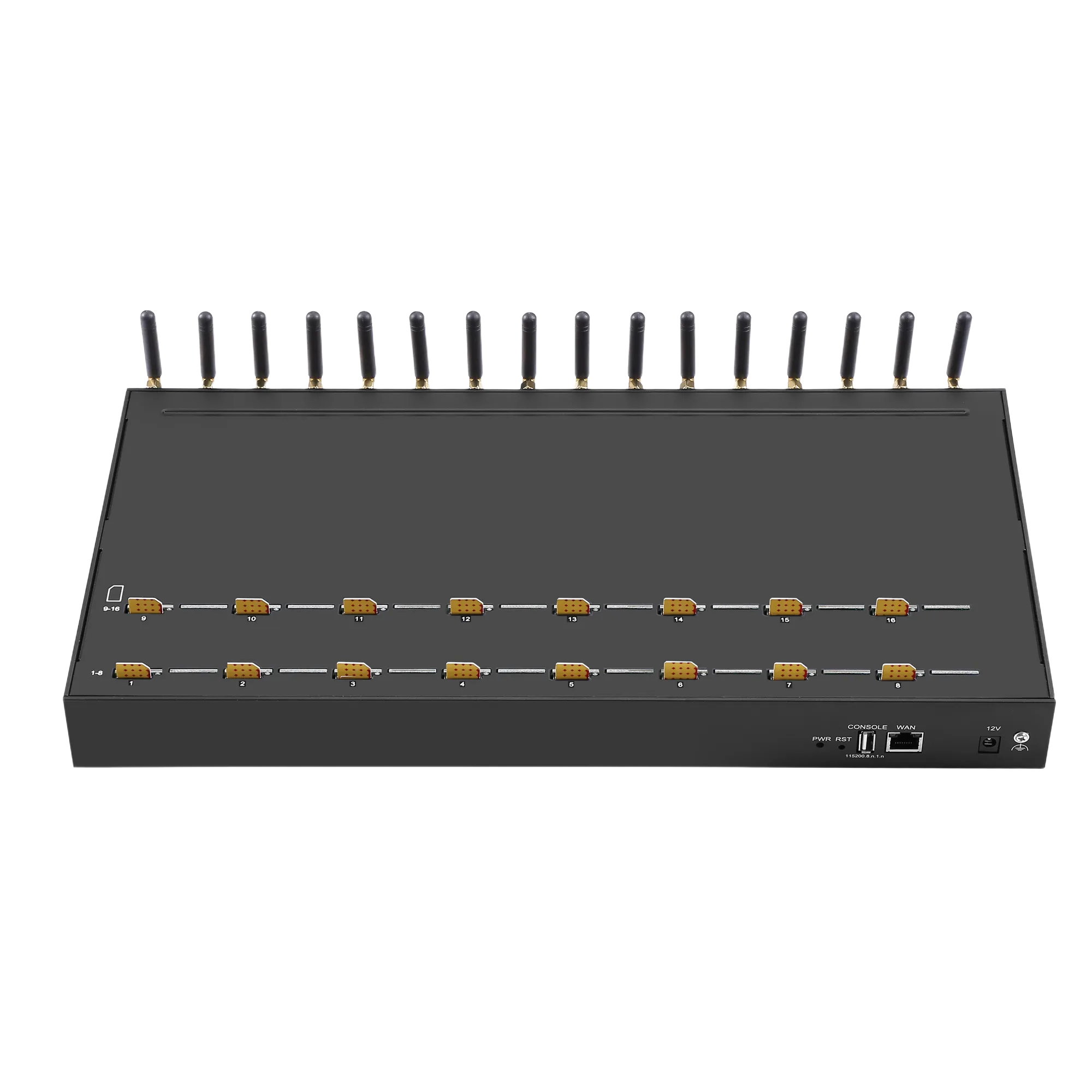
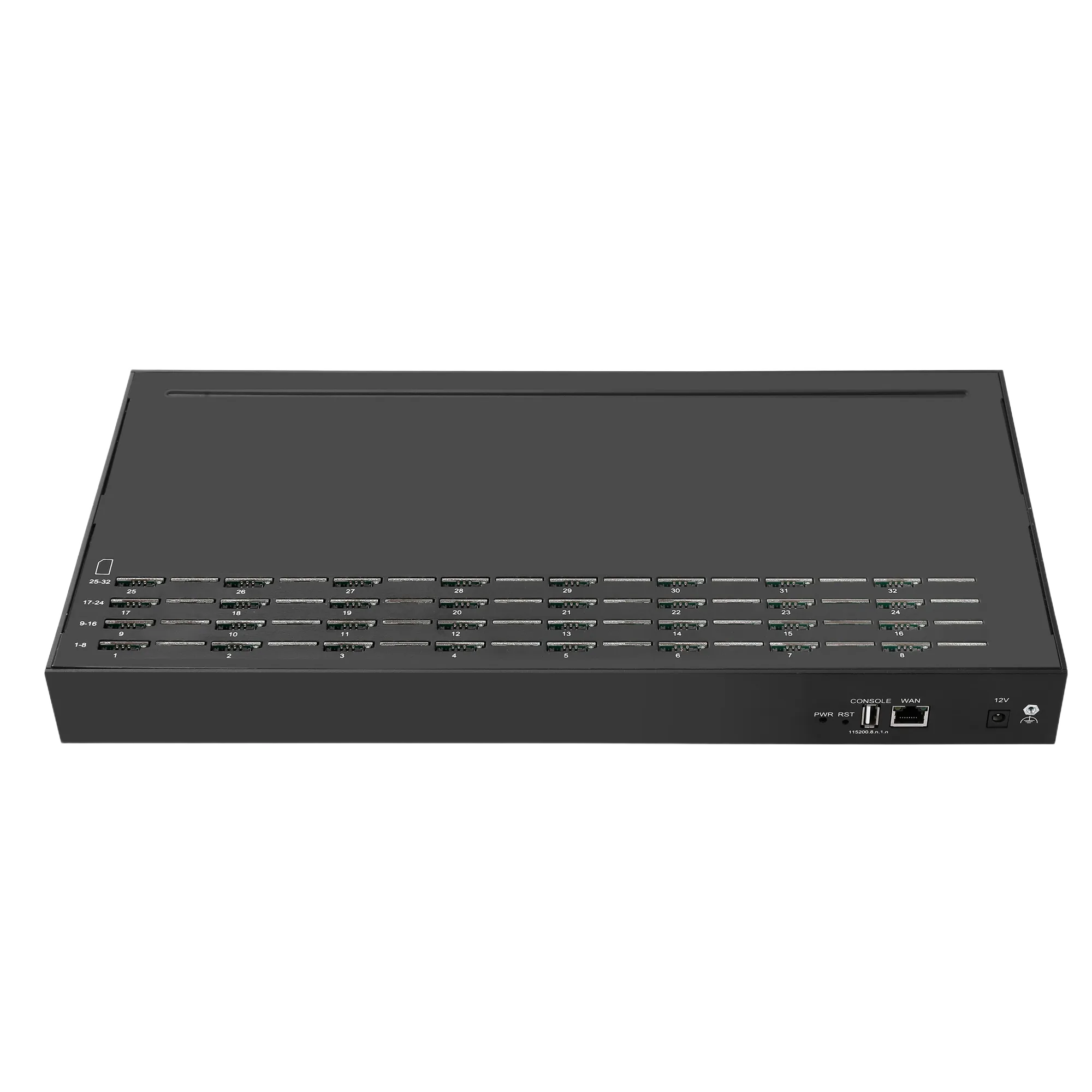
The list prices displayed on the site provide the anchor for a wholesale conversation. The SMS modem family is published from $113 for eight ports through $148 for sixteen, $270 for thirty-two and $579 for sixty-four. The SMS gateway family runs from $238 for the 4-4 model to $1,880 for the 64-64. The SIM bank and SIM pool products are published at $1,600 and from $1,800 upward respectively. Those figures are what a buyer starts from; the terms that apply to a specific volume are agreed with the supplier rather than derived from a published schedule.
Three characteristics of volume pricing are worth knowing in advance. Discounts usually step at quantities rather than sliding continuously, so there are thresholds rather than a curve. Mixed orders frequently qualify differently from single-model orders, because the manufacturer’s cost depends on whether a production run is being scheduled or stock is being drawn down. And the terms that matter as much as the price are payment schedule, lead time and the point at which risk transfers, all of which are part of the commercial package rather than separate from it.
The mistake to avoid is comparing quotations on unit price alone. A quotation with a lower unit price and a longer lead time, or with risk transferring at the factory gate, is a different proposition from one that includes delivery to a port of destination. Reducing the comparison to a single number is how a favourable quotation becomes an unfavourable project.
Documentation and certification for the destination market
The destination determines what the shipment needs, and the requirement is not the manufacturer’s to decide.
Requirements for placing radio equipment on a market vary, and they cover both the product and the paperwork. On the product side, a declaration against relevant technical standards is the usual starting point; the environmental classification for fixed installations is defined in ETSI EN 300 019-1-3, one of the ETSI standards, and resistibility expectations for equipment connected to telecommunications networks are described in ITU-T K.20. On the paperwork side, market entry frequently requires documentation that is separate from the customs paperwork, and both sets have to be complete before the shipment moves.
Two practical points recur in export procurement. The first is that certification attaches to a model, a firmware version and often a production site, so an order that draws on more than one site may need more than one set of documents. The second is that an importer is usually the party responsible for placing the product on the market, which means the compliance obligation sits with the buyer rather than with the manufacturer. Both are questions for the importer’s compliance adviser, and both are cheaper to settle before an order than after a shipment clears customs.
Where the order includes accessories, those may carry their own requirements, and the power supply is the usual example. The general engineering practice behind consistent, verifiable product documentation is maintained by organisations including ITU-T and ATIS, and the systems practice for keeping records that can be relied on is described in NIST SP 800-123; neither substitutes for the market-specific requirement, but both describe the kind of documentation a well-run supplier should be able to produce.
Packaging, labelling and shipping terms
Damage in transit is a manufacturing claim that nobody can prove.
Export packaging has to survive handling that domestic packaging does not, and the components most vulnerable are the antenna connectors and the card trays. Specifying the packaging in the order, including the carton strength, the internal protection for connectors, and the way units are stacked on the pallet, is cheaper than absorbing the returns. Where units are shipped in individual retail packaging, that packaging has to survive the same journey as well as the wholesale carton.
Labelling requirements vary by destination and typically cover the product marking, the country of origin and any market-specific conformity marking. The requirement is set by the destination, and the responsible step is to state it in the order specification so that the supplier can confirm what it can provide. Where a supplier is unsure, that is useful information: it means the importer should be checking the requirement independently rather than relying on the supplier’s assumption.
Shipping terms determine who resolves a damaged shipment, and they should be agreed explicitly rather than left to convention. The same applies to the documentation that travels with the goods, including the commercial invoice and any certificate of origin, because a shipment that arrives with incomplete paperwork can be delayed for reasons that have nothing to do with the hardware. Neither is an engineering question, and both belong in the order specification rather than in a follow-up conversation.
Quality control and acceptance sampling
A wholesale order needs a way to establish that the goods are what was ordered.
Acceptance sampling is the standard mechanism: a defined number of units drawn from the shipment and inspected against the specification, with an agreed criterion for accepting or rejecting the lot. The details matter less than the principle, which is that the check happens against written criteria rather than against an impression. The inspection that is most informative in this category is not a full functional test, which is impractical at shipment scale, but a set of checks that catch the systematic problems: model and port count, accessories present, power supply type, connectors undamaged, firmware version readable, and the serial numbers recorded.
Recording serial numbers matters more than it appears. An order whose units can be traced to a batch is one where a later defect can be correlated with a production date, and where a warranty claim can be tied to a specific unit rather than described in general terms. Where the supplier provides batch information, the serial list and the batch reference should be stored together.
The quality documentation that supports the order is worth requesting at the same time. What the manufacturer’s production test consists of, and what proportion of units are checked before packing, are answers that distinguish a supplier with a process from one without one. Neither answer is a guarantee, and both are better than the absence of an answer.
After-sales obligations across a portfolio
A portfolio magnifies every term that applies to a single unit.
Four obligations should be settled before a wholesale order. The warranty terms for each product line, since they may differ. The process for handling a batch defect, which is the case a mixed order most often produces. The spares arrangement, including which parts are available and how quickly. And the shipping responsibility in each direction, which for a wholesale buyer can be substantial in aggregate even when it is modest per unit.
Two portfolio-specific considerations are worth raising. Where the same defect appears across several product lines, the buyer needs a single point of contact rather than a separate conversation per line. And where the buyer resells into a market with its own consumer protection rules, the obligations it passes on may be more extensive than the ones it receives, which is a mismatch to identify before the order rather than at the first customer claim.
Keeping a record of the terms per order, rather than per supplier, is the practice that makes this manageable. Over several shipments the record becomes the basis for comparing suppliers on the terms that actually cost money, rather than on the unit price alone.
A wholesale order checklist
The checklist covers a mixed order from the specification to the terms that apply after delivery. Each item is written so that the answer is recorded in the order rather than settled in conversation, which is what makes two quotations comparable.
- Specification table with a row per line item, including accessories and power supply type.
- Region or band variant stated for every model in the order.
- Firmware version expected on delivery, and how it will be readable on the unit.
- Volume terms agreed: quantity thresholds, payment schedule, lead time and risk transfer.
- Documentation and certification for each destination market, with responsibility identified.
- Packaging specified, with protection for connectors and card trays.
- Labelling and market marking requirements stated in the order specification.
- Acceptance sampling method agreed, and the check list defined against the specification.
- Serial numbers and batch references recorded on receipt.
- Warranty, batch defect process, spares and shipping responsibility per product line.
Specify the accessories and the power supply, not just the model number. Send your order composition, destination markets and packaging requirements to service@telarvo.com, or review the published configurations on the SMS modem range and the about page. Telarvo publishes the SK-SMS gateway range, the TYH modem pools and the TGW SMS machine on its product pages, and the configurations referenced above come from those listings.
FAQ
How does wholesale pricing work for SMS modems?
Published list prices are the anchor: the TYH modem family runs from $113 for eight ports to $579 for sixty-four, and the SMS gateway family from $238 to $1,880. Volume terms are negotiated rather than published, and they usually step at quantities rather than sliding continuously. Mixed orders often qualify differently from single-model orders, so compare quotations on payment schedule, lead time and risk transfer as well as on unit price.
What documentation does an export order need for the destination market?
That depends on the market, and the requirement is set by the destination rather than by the manufacturer. Product-side documentation usually starts with declarations against relevant technical standards, while market entry frequently requires paperwork separate from the customs set. Since the importer is normally the party responsible for placing the product on the market, the compliance obligation sits with the buyer and should be settled before the order.
How should I inspect a wholesale shipment of SMS modems?
By acceptance sampling against written criteria rather than a full functional test. The checks that catch systematic problems are model and port count, accessories present, power supply type, connectors undamaged, firmware version readable and serial numbers recorded. Recording serial numbers against the batch reference is what allows a later defect to be correlated with a production date. Record the requirement per market, because the answer differs and the difference decides the order.
What after-sales terms should be agreed for a portfolio order?
Warranty terms per product line, since they may differ; the process for handling a batch defect; the spares arrangement including availability and lead time; and shipping responsibility in each direction. Also establish a single point of contact for a defect that spans several product lines, and check whether the obligations you pass to your own customers are more extensive than the ones you receive.
{
“@context”: “https://schema.org”,
“@type”: “FAQPage”,
“mainEntity”: [
{
“@type”: “Question”,
“name”: “How does wholesale pricing work for SMS modems?”,
“acceptedAnswer”: {
“@type”: “Answer”,
“text”: “Published list prices are the anchor: the TYH modem family runs from $113 for eight ports to $579 for sixty-four, and the SMS gateway family from $238 to $1,880. Volume terms are negotiated rather than published, and they usually step at quantities rather than sliding continuously. Mixed orders often qualify differently from single-model orders, so compare quotations on payment schedule, lead time and risk transfer as well as on unit price.”
}
},
{
“@type”: “Question”,
“name”: “What documentation does an export order need for the destination market?”,
“acceptedAnswer”: {
“@type”: “Answer”,
“text”: “That depends on the market, and the requirement is set by the destination rather than by the manufacturer. Product-side documentation usually starts with declarations against relevant technical standards, while market entry frequently requires paperwork separate from the customs set. Since the importer is normally the party responsible for placing the product on the market, the compliance obligation sits with the buyer and should be settled before the order.”
}
},
{
“@type”: “Question”,
“name”: “How should I inspect a wholesale shipment of SMS modems?”,
“acceptedAnswer”: {
“@type”: “Answer”,
“text”: “By acceptance sampling against written criteria rather than a full functional test. The checks that catch systematic problems are model and port count, accessories present, power supply type, connectors undamaged, firmware version readable and serial numbers recorded. Recording serial numbers against the batch reference is what allows a later defect to be correlated with a production date. Record the requirement per market, because the answer differs and the difference decides the order.”
}
},
{
“@type”: “Question”,
“name”: “What after-sales terms should be agreed for a portfolio order?”,
“acceptedAnswer”: {
“@type”: “Answer”,
“text”: “Warranty terms per product line, since they may differ; the process for handling a batch defect; the spares arrangement including availability and lead time; and shipping responsibility in each direction. Also establish a single point of contact for a defect that spans several product lines, and check whether the obligations you pass to your own customers are more extensive than the ones you receive.”
}
}
]
}