At scale the questions change. A manufacturer that supports a handful of units in an office is not necessarily able to support a fleet, and the differences show up in density, address handling, logging volume and the support model.
This article sets out what a large deployment needs from a manufacturer, how to assess the scaling path, what to require of address management and logging, and the verification steps worth completing before a commitment.
What a proxy gateway manufacturer for big data has to provide at scale
Consistency across units, a stated ceiling, and a maintenance function.
Four requirements distinguish large-scale supply from ordinary procurement. The first is consistency: units of the same model purchased at different times should behave the same way, share the same management interface and accept the same configuration. The second is a stated scaling path, so that growth is a purchase rather than a redesign. The third is a maintenance function, because a fleet of devices multiplies every defect by the number of units. The fourth is a support model that works at fleet scale, which means documentation and tooling rather than a conversation for each unit.
Those requirements are structural rather than technical, and they are visible in the way a manufacturer describes its product. A manufacturer with a fleet in mind will talk about configuration across units, version control, and what happens when a device is replaced; one with a single-unit mindset will talk about the specifications of the unit. The distinction matters because retrofitting fleet management onto a large deployment is expensive, while specifying it in advance costs nothing.
It is worth stating the boundary at the outset. Proxying is a standard networking technique, and this article describes the engineering requirements for operating it at scale. Whether a particular deployment is permitted, and what rules apply to the data it handles, is a question for the compliance owner and the relevant regulator rather than for a hardware vendor.
| Requirement | What it looks like | Why it matters at scale |
|---|---|---|
| Consistency | Same interface and configuration format across batches | Avoids per-batch documentation and training |
| Stated scaling path | A defined ceiling and how density increases | Growth becomes a purchase, not a redesign |
| Maintenance function | A release history and a defect process | A defect is multiplied by the fleet size |
| Fleet support | Automation, bulk configuration, exportable logs | A support conversation per unit does not scale |

Port density and the scaling path
The ceiling matters more than the current model.
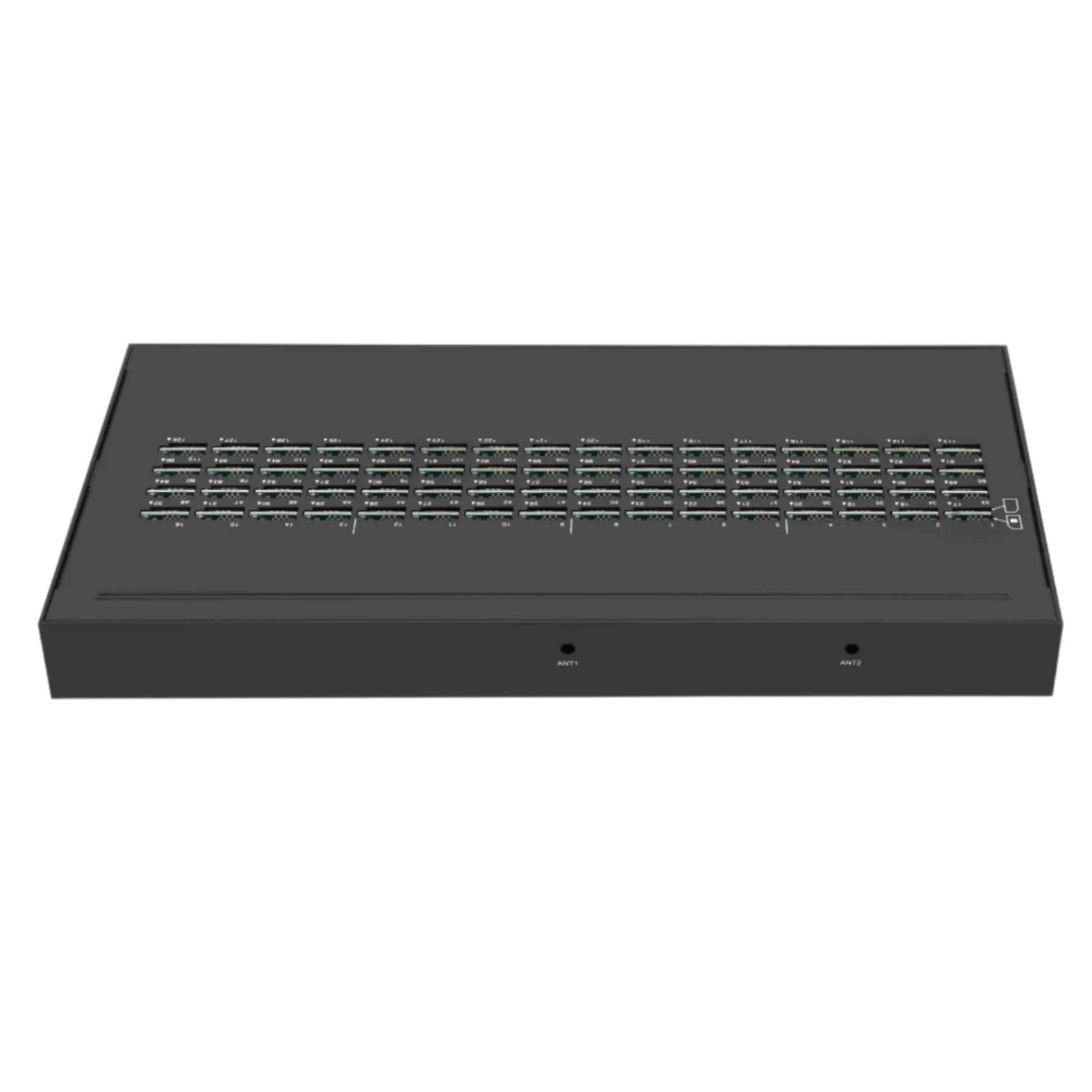
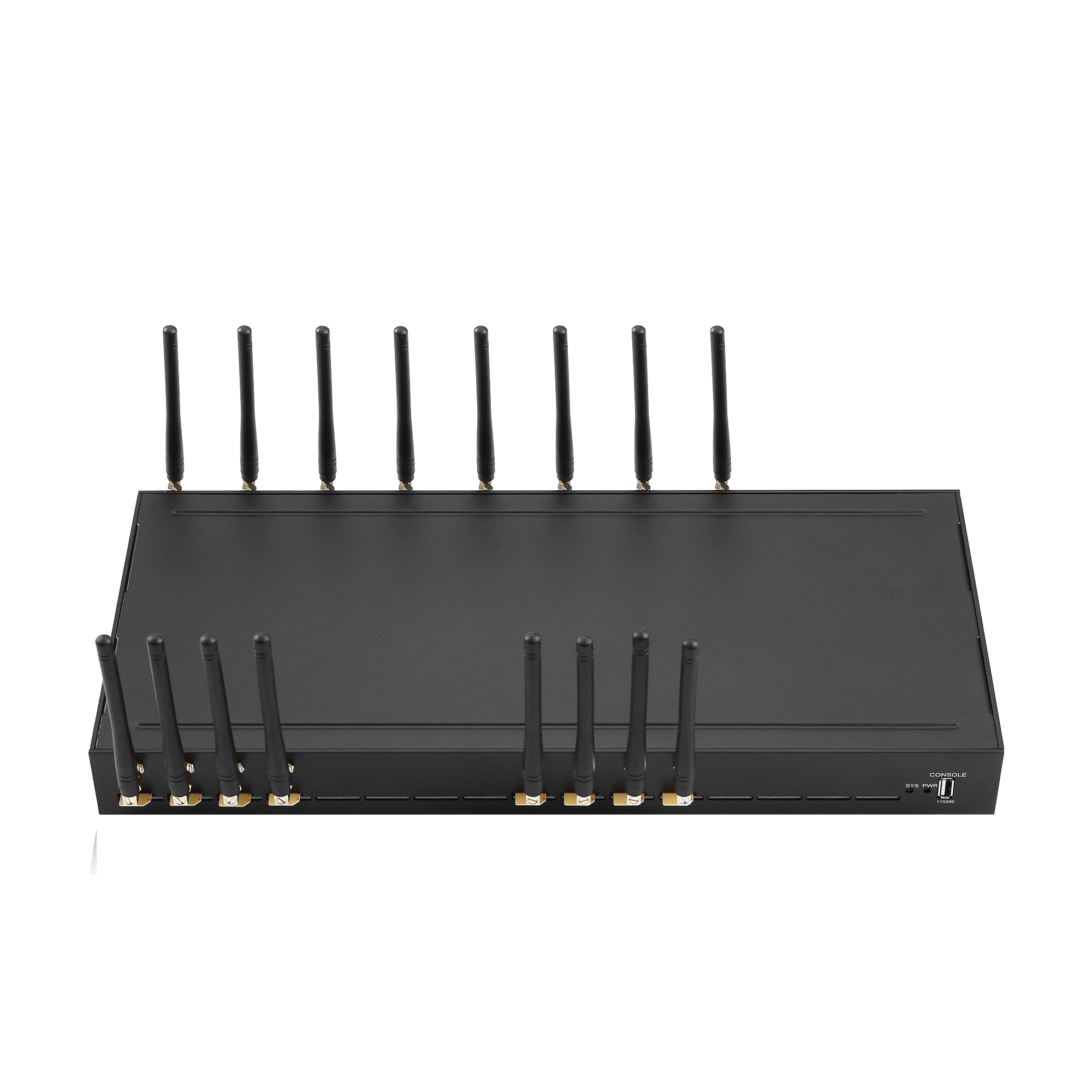
Density determines how much capacity fits in a rack, and the rack determines the cost of the space, the power and the cooling that the deployment requires. In a large operation those costs accumulate with the footprint, so a manufacturer whose product line stops at a low density forces the deployment into more racks than necessary, with the associated electrical and thermal consequences. The published range in this category runs from a 4-port model at $410 through an 8-port at $760 to a 16-port at $1,380, and the ceiling of the family is a concrete point of comparison.
The scaling path is the second half of the question and the more consequential one. Three patterns exist. Growth within the same unit, where capacity is added by configuration or by adding modules. Growth by adding units of the same model, which scales linearly and requires the management approach to scale with it. And growth that requires a different product line, which is a migration rather than an expansion. Where the deployment is expected to double within two years, establishing which pattern applies is worth doing before the first order rather than at the point of the second.
Thermal and power planning follow from the density decision and are frequently the constraint. A rack full of high-density units produces concentrated heat, and the room has to be able to remove it; the environmental class the equipment expects is defined for fixed installations in ETSI EN 300 019-1-3, one of the ETSI standards, and the room has to meet it. Where the room cannot, adding density makes the deployment less reliable rather than more efficient.
Address management and rotation capabilities
At scale, address handling is a policy question expressed as a configuration question.
Three capabilities are worth specifying. Whether the assignment of outbound addresses is deterministic, so that a given service can be mapped to a known address and the mapping recorded. Whether assignment policy can be configured centrally and applied consistently across units, rather than set per device. And whether the device records which address carried which session, because without that record the deployment cannot answer a question about a specific session later.
Rotation, where it is used, should be treated as a policy parameter rather than as a feature to be maximised. A deployment that rotates addresses frequently produces logs that are difficult to correlate with anything, and it makes attribution harder for the operator as well as for anyone asking a question. Where rotation is required, the useful properties are that the policy is explicit, that it can be applied consistently across a fleet, and that the resulting mapping is recorded so that a session can be traced afterwards.
The controls around the management plane matter more at scale than the rotation policy, because a fleet is managed through a small number of interfaces and those interfaces control everything. Restricting them to a dedicated segment, requiring authentication per administrator, and logging administrative sessions are the controls that determine what happens when someone reaches the console. The control families that describe administrative access and boundary protection are catalogued in NIST SP 800-53 Rev. 5, and they apply to a fleet in the same way they apply to a single host.
Logging volume and export format
A large deployment produces logs faster than it produces anything else.
Three properties determine whether those logs are usable. The export format has to be machine-readable and stable, so that a pipeline can be built once rather than adapted per firmware release. The volume has to be manageable, which in practice means that the level of detail is configurable and that the deployment can choose to record what it needs for its retention period rather than everything it could. And the export has to be able to leave the device continuously, because exporting on demand from a fleet is a manual process with a fleet-sized cost.
The retention decision is a policy matter with a technical implementation. Too short and the record is gone before the question is asked, since investigations usually happen weeks after an event. Too long and the deployment accumulates data it has no continuing reason to hold, which is a liability as well as a cost. A stated period with a reason, agreed with the compliance owner and enforced by automatic deletion, is the arrangement that satisfies both. The practice for protecting and retaining such records is described in NIST SP 800-92.
Where the deployment records personal data, the retention period and the protection of the records are not purely engineering choices, and the decision belongs to the data protection owner. Establishing that before the first unit is deployed is considerably easier than retrofitting a retention rule across a running fleet.
Support model at scale
A fleet needs a support model that works without a conversation per unit.
Four elements make the difference. Documentation that covers the whole product line rather than a single model, so that a mixed fleet can be operated from one reference. Bulk configuration and export, so that a change can be applied across units and verified. A spares arrangement sized against the fleet rather than against one unit, since the failure rate scales even when the individual rate is low. And a named escalation path, because the problems that stop a fleet are not the problems that stop a single device.
The support model should be assessed against the failure arithmetic rather than the device count. If a model has a low annual failure rate, a fleet of hundreds still produces a steady stream of replacements, and the process for handling them determines the operational burden. A manufacturer who can describe how replacements are handled for a fleet customer is describing a support model; one who describes a single-unit warranty is describing a retail arrangement.
The systems around the fleet need the same discipline, and the hardening expectations described in NIST SP 800-123 apply to the management hosts as much as to the devices. Where the management plane runs on general-purpose servers, those servers are part of the deployment’s exposure, and they are frequently the weakest point in a large installation.
Verification steps before commitment
Five checks reduce the risk of a fleet-sized mistake.
Test one unit against the documented configuration and record every point of ambiguity, because each one will be repeated across the fleet. Verify that a configuration exported from one unit can be restored onto a second, since fleet management depends on it. Measure the log volume produced at the intended load, and confirm that the export format is machine-readable and stable across a firmware version. Verify the management interface can be restricted to a dedicated segment and that authentication is per administrator rather than shared. And confirm in writing the scaling path, the ceiling of the family and the spares arrangement.
The fifth check is the one most often skipped and the most expensive to discover late. A manufacturer whose product line ends at the density the deployment already uses has made the next expansion a migration, and that fact is knowable before the first order. Asking the question in writing, and keeping the answer, is a small piece of work with a large consequence.
The organisational framing for the whole exercise is useful if the deployment has to be justified to a management audience. The controls described in the NCSC 10 Steps to Cyber Security map onto the decisions above, and the transport protections for the management interface, specified in RFC 8446, apply to every unit in the fleet.
An evaluation framework
The framework compares manufacturers on what a fleet deployment depends on rather than on the specification of a single unit. Each item produces evidence that can be checked before a commitment, and the sequence follows the order in which a fleet decision is usually made.
- Consistency of interface and configuration format across production batches.
- Published port density range, and the ceiling of the product family.
- Scaling pattern: growth within a unit, by adding units, or by migration.
- Address assignment policy, whether it is centrally configurable, and whether the mapping is recorded.
- Log export format, stability across firmware versions, and achievable volume.
- Retention period agreed with the compliance owner and enforced automatically.
- Management interface restricted to a dedicated segment, with per-administrator authentication.
- Bulk configuration and export capability, tested on two units.
- Spares and replacement process sized against the fleet, not a single unit.
- Documentation covering the product line rather than one model.
Specify for the fleet, not for the first rack. Send your target density, growth expectation and logging requirements to service@telarvo.com, or review the published configurations on the proxy gateway range and the proxy gateway solution page. Telarvo publishes the SK Multi WAN proxy gateway models on its product pages, and the configurations referenced above come from those listings.
FAQ
What should a large deployment require from a proxy gateway manufacturer?
Four things: consistency of interface and configuration across production batches, a stated scaling path with a known ceiling, a maintenance function that produces fixes rather than replacements only, and a support model that works at fleet scale through documentation, bulk configuration and exportable logs. Those requirements are structural, and retrofitting them onto a large deployment is expensive. Confirm which of the four the manufacturer can evidence, because the rest is a promise rather than a capability.
How important is port density in a proxy gateway?
It determines the rack footprint, and therefore the cost and the thermal load of the space the deployment occupies. The published range runs from a 4-port model at $410 to an 8-port at $760 and a 16-port at $1,380. Density is only useful if the room can remove the heat, so the environmental class of the room has to match what the equipment expects.
What logging properties matter at scale?
Three: a machine-readable export format that stays stable across firmware versions, a configurable level of detail so volume stays manageable, and continuous export rather than export on demand. The retention period should be a stated decision with a reason, agreed with the compliance owner and enforced by automatic deletion. Investigating a large deployment is not possible from logs read one device at a time.
How does address rotation affect a large deployment?
It should be treated as a policy parameter rather than a feature to maximise. Frequent rotation makes logs harder to correlate and attribution harder for the operator as well as for anyone asking a question. Where rotation is used, the useful properties are that the policy is explicit, configurable centrally across the fleet, and recorded so a session can be traced afterwards.
{
“@context”: “https://schema.org”,
“@type”: “FAQPage”,
“mainEntity”: [
{
“@type”: “Question”,
“name”: “What should a large deployment require from a proxy gateway manufacturer?”,
“acceptedAnswer”: {
“@type”: “Answer”,
“text”: “Four things: consistency of interface and configuration across production batches, a stated scaling path with a known ceiling, a maintenance function that produces fixes rather than replacements only, and a support model that works at fleet scale through documentation, bulk configuration and exportable logs. Those requirements are structural, and retrofitting them onto a large deployment is expensive. Confirm which of the four the manufacturer can evidence, because the rest is a promise rather than a capability.”
}
},
{
“@type”: “Question”,
“name”: “How important is port density in a proxy gateway?”,
“acceptedAnswer”: {
“@type”: “Answer”,
“text”: “It determines the rack footprint, and therefore the cost and the thermal load of the space the deployment occupies. The published range runs from a 4-port model at $410 to an 8-port at $760 and a 16-port at $1,380. Density is only useful if the room can remove the heat, so the environmental class of the room has to match what the equipment expects.”
}
},
{
“@type”: “Question”,
“name”: “What logging properties matter at scale?”,
“acceptedAnswer”: {
“@type”: “Answer”,
“text”: “Three: a machine-readable export format that stays stable across firmware versions, a configurable level of detail so volume stays manageable, and continuous export rather than export on demand. The retention period should be a stated decision with a reason, agreed with the compliance owner and enforced by automatic deletion. Investigating a large deployment is not possible from logs read one device at a time.”
}
},
{
“@type”: “Question”,
“name”: “How does address rotation affect a large deployment?”,
“acceptedAnswer”: {
“@type”: “Answer”,
“text”: “It should be treated as a policy parameter rather than a feature to maximise. Frequent rotation makes logs harder to correlate and attribution harder for the operator as well as for anyone asking a question. Where rotation is used, the useful properties are that the policy is explicit, configurable centrally across the fleet, and recorded so a session can be traced afterwards.”
}
}
]
}