The number of ports you need is a peak question, not a daily total, and most small offices answer it with the wrong number. This article gives a counting method you can run on a single sheet of paper before ordering anything.
It covers how to count simultaneous use rather than volume, why messaging and voice have to be counted separately, how much headroom to add, and how to tell in advance whether the next step up will be a purchase or a rebuild.
Sizing an 8-port gateway for a small office: count simultaneous usage, not daily volume
A port is occupied only while it is doing something.
The number that matters is how many ports are busy at the same moment during the busiest minute of the busiest hour, because a port that is idle between operations is available to the next one. Daily volume answers a different question, which is how much work the office does, and it can be very large while the peak concurrent count stays small. A thousand messages spread over a working day is a modest requirement; a thousand messages submitted in one call at nine in the morning is a different one.
The practical way to find the peak is to divide the volume in the busiest hour by the average handling time of one operation, and then to look at how the arrivals are distributed inside that hour. If a burst of three hundred messages arrives in the first two minutes of the hour, the peak is set by the burst and not by the hourly rate, and the arithmetic that uses the hourly average will underestimate it. Where the office does not have the data yet, the safest approach is to take the worst plausible minute of the busiest known day and to design for that.
Voice and messaging behave differently here and the difference matters. A short message occupies a port for a few seconds including the network exchange, while a voice call occupies a channel for the whole conversation, so three simultaneous calls take three channels for minutes at a time. That is why the two workloads cannot be added together as though they were the same kind of load.
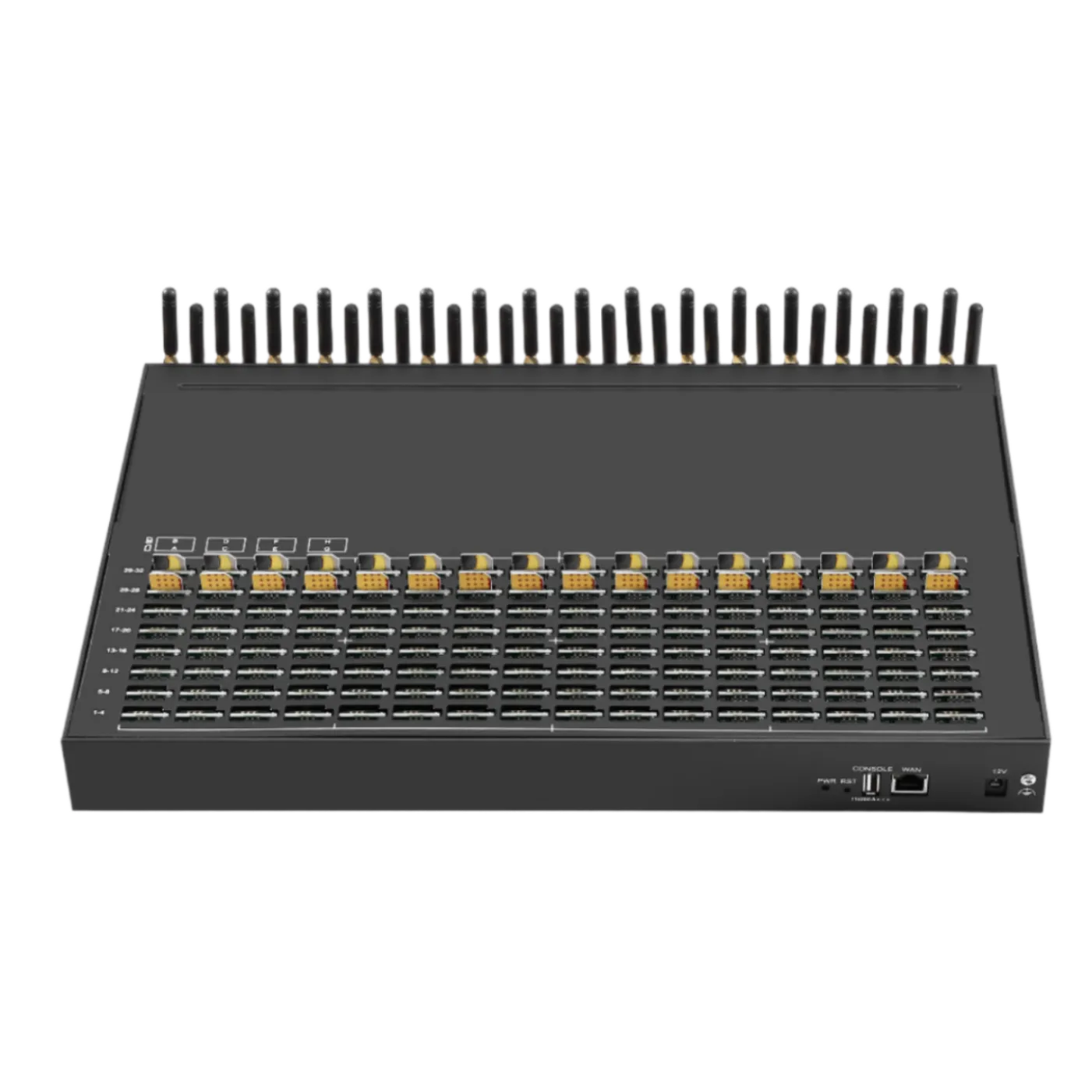
Messaging and voice counted separately
The two loads occupy ports in different ways and should be sized apart.
For messaging, the load is a rate. The relevant figures are the peak submissions per minute, the average time a port takes to complete one exchange including any retry, and the concurrency limit the subscriptions will accept. Where the subscriptions tolerate only a few messages per second each, the pool size is set by the number of subscriptions rather than by the send rate, which is a constraint that surprises deployments that assumed otherwise. The command interface used to submit and read results is standardised, and the field definitions are described in 3GPP TS 27.005 with its ETSI TS 127 005 equivalent. The identity carried by each card is defined in ITU-T E.212, and keeping that identity consistent is what makes a per-subscription rate limit enforceable rather than nominal.
For voice, the load is a concurrency. The relevant figure is the number of calls that can be in progress at once, and the design target is that a caller is not refused during the peak. The reference for how much delay a speech path can carry before users describe it as poor is ITU-T G.114, and it is why voice capacity is planned against concurrency rather than against an average. Where a call is refused, the reason is reported as a cause code, and the set of standard causes is defined in ITU-T Q.850; reading that code is how a capacity problem is distinguished from a configuration problem.
The two workloads can share a device only where the device supports both, and even then the separation has to be kept in the counting. An eight-channel device carrying four simultaneous calls has four channels left for messaging, not eight.
Headroom for teardown and re-registration
A port is not free the instant the operation appears to finish.
Between operations there is work that does not appear in the message count: the module confirms the exchange, clears its state, and returns to a mode where it can accept the next command. Under load that interval matters, and a pool sized exactly to the peak will produce failures at the peak because the ports are not yet available when the next operation arrives. A margin of twenty to thirty per cent on the peak concurrent figure absorbs that interval without changing the size of the purchase in most cases.
Re-registration is the larger effect and the one that is usually missed. When a module restarts, or loses and regains coverage, it re-registers before it can carry traffic, and during that window it contributes nothing while still being counted as capacity. Where a pool is sized to the peak with no margin, a single re-registration can tip the deployment into failure at exactly the moment it is busiest. Recording how long re-registration takes at the site, for each operator, gives the number needed to size for it rather than to guess.
| Counting step | What to record | Why it changes the answer |
|---|---|---|
| Peak concurrent operations | Busy ports at the busiest minute | This is the figure the device has to cover |
| Handling time per operation | Seconds from submit to confirmed | Converts a rate into concurrent ports |
| Burst shape | How arrivals cluster inside the hour | An hourly average hides the real peak |
| Voice concurrency | Simultaneous calls during the peak | Calls hold a channel for minutes |
| Re-registration time | Seconds to regain service after a restart | Capacity that is unavailable is not capacity |
| Margin | Twenty to thirty per cent | Absorbs teardown gaps and short outages |
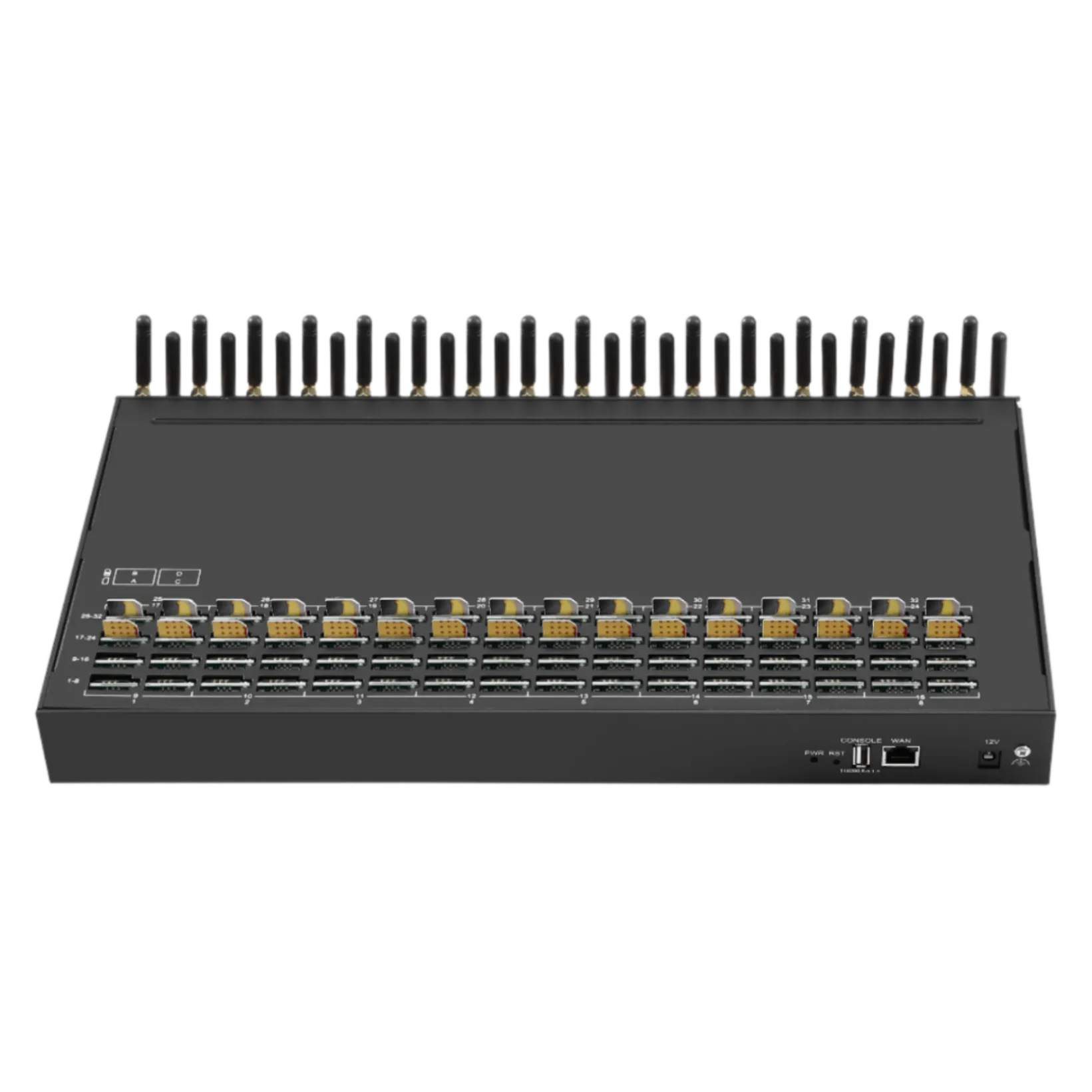
When eight channels is generous
For a great many small offices, eight is more than enough.
The profile that fits is an office where messaging is transactional rather than campaign-based: verification codes for a customer portal, appointment reminders generated as bookings happen, and notifications to staff. Those workloads produce a steady trickle with a gentle peak, and eight channels absorb them with room to spare. The same applies to a small voice deployment where three or four concurrent calls is the realistic maximum, such as a single reception desk with a handful of extensions.
A second profile that fits well is the deployment where the peak is long but shallow. Where the busiest hour carries a large volume spread evenly, the concurrency requirement is low even though the daily total is high, and eight channels on a device with good queue handling will work through it without difficulty. Capacity that looks modest by volume can be ample by concurrency.
The third case is the pilot. A deployment whose purpose is to establish whether the use case works is better sized small and measured than sized optimistically and under-used, and the measurement from a small deployment is the input to the next purchase.
When eight channels is insufficient
Three patterns make eight ports the wrong answer.
The first is a sharp campaign peak, where a large batch is submitted at one moment. The concurrency requirement is set by the batch, so the device has to be sized for the burst even though the rest of the day is quiet. The second is verification traffic with a strict time expectation, where a code that arrives two minutes late has already caused the user to retry; the relevant figure is not throughput but the concurrency required to meet a response time, and the two produce very different port counts.
The third is growth that is already planned. Where a second product or a second office is due within the year, sizing to today’s requirement produces a purchase that has to be repeated, and the second purchase usually arrives without the benefit of planning. Counting the expected peak after the known change, rather than the peak today, is the cheaper habit.
Two smaller effects also matter. Where the office must keep working while one device is out of service, the effective capacity is reduced by the amount held in reserve, so an eight-port device with a spare is not eight ports of continuous capacity. And where several operators are needed for resilience, the ports have to be divided among them, which reduces the capacity available to any one.
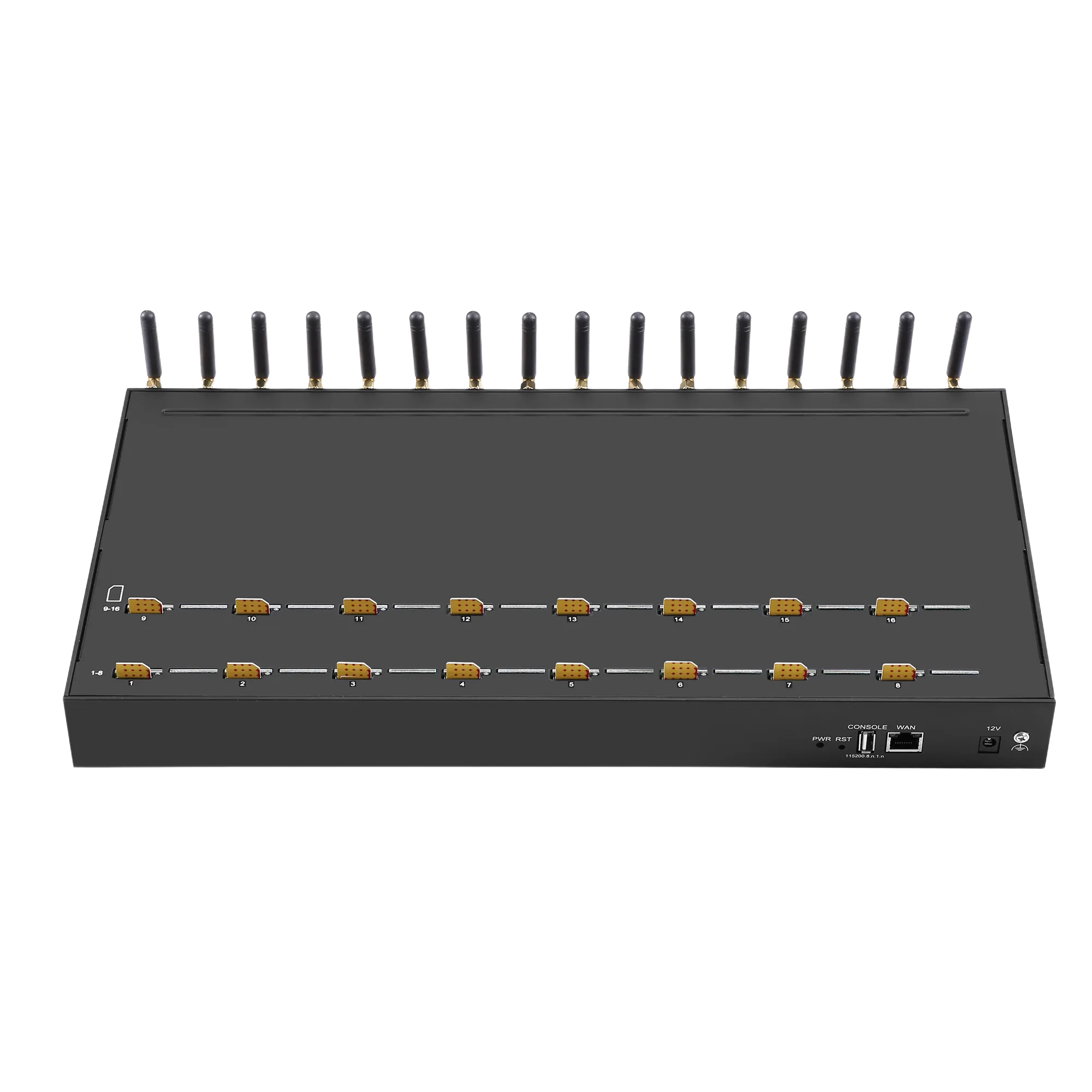
The cost of stepping up later
Stepping up is cheap when the product family was designed to expand.
Where capacity is added by moving to a larger model in the same family, the cost of the step is the price difference between the two models plus the new subscriptions and their tariffs. As displayed on the site, the TYH modem family runs from $113 for eight ports to $148 for sixteen and $270 for thirty-two, so the hardware difference for a step within that range is small relative to the operating cost of the subscriptions behind it. Anchoring the comparison on published list prices and confirming them at purchase is the honest way to budget.
The step that is expensive is the one that changes the rack rather than the model. A device with no further capacity, a power arrangement without headroom, a rack with no space, each turns an expansion into a project. That is the reason to check the growth path of a product line before the first purchase rather than after the second: the question is not whether eight ports is enough today, but whether the answer can change without rebuilding anything.
There is also a commercial argument for buying slightly ahead where the step is cheap. Where the next model up costs a modest amount more and removes the risk of a mid-year replacement, the difference is usually smaller than the operational cost of doing the work twice, though the principle from the earlier section still applies: the growth being planned should be committed rather than imagined.
A counting worksheet
The worksheet converts an observed workload into a port count by way of the peak rather than the daily total. Each line is a measurement or a stated policy choice, and the result is a figure that can be re-derived at the next review from the same inputs.
- Busiest hour of the busiest day, in messages and in calls, recorded separately.
- Peak concurrent messaging operations, taken from the busiest minute rather than the hour.
- Average handling time per message, including any retry, in seconds.
- Peak simultaneous voice calls, and the number of channels each one occupies.
- Per-subscription rate limit, and the number of subscriptions needed to reach the peak.
- Re-registration time measured at the site, per operator.
- Margin of twenty to thirty per cent on the peak concurrent figure.
- Reserve held for a device out of service, if continuous operation is required.
- Expected peak after any change already scheduled within the year.
Run the worksheet once and the port count stops being a guess. Run it again after the deployment has been live for a month, using the observed peak rather than the estimate, and the next purchase decision is made on evidence instead of on the vendor’s smallest and largest options.
Count peak concurrency, then choose the model. Send your peak minute, handling time and required response window to service@telarvo.com, or review the published configurations on the SMS gateway range and the SMS gateway solution page. Telarvo publishes the SK VOIP gateway range and the GoIP models on its product pages, and the configurations referenced above come from those listings.
FAQ
How many ports do I need for a small office SMS gateway?
Start from the number of ports busy at the busiest minute rather than from daily volume. Divide the peak volume in the busiest hour by the average handling time of one message, then check how arrivals cluster inside that hour, because a burst sets the requirement. Add twenty to thirty per cent for teardown gaps and re-registration. For most transactional small-office workloads that lands well inside eight ports.
Is an 8-port gateway enough for a small office?
It is generous for transactional messaging, such as verification codes and appointment reminders, and for voice deployments where three or four simultaneous calls is the realistic maximum. It becomes insufficient when a large batch is submitted at one moment, when verification traffic has a strict response-time expectation, or when growth is already scheduled within the year. The worksheet is only useful if the same figures are used again at the next review.
How much headroom should I add to the port count?
Twenty to thirty per cent above the peak concurrent figure is a reasonable starting point. The margin covers the interval after an operation appears to finish but before the port is available again, and it absorbs the loss of capacity while a module re-registers. Where a device is held in reserve for continuous operation, the reserve has to be counted separately, because a spare is not simultaneous capacity.
How much does it cost to move up a size later?
Within a family designed to expand, the hardware cost is the list price difference between the two models plus the new subscriptions and their tariffs. As displayed on the site, the TYH modem family runs from $113 for eight ports to $148 for sixteen and $270 for thirty-two. The expensive step is the one that changes the rack or the power arrangement rather than the model, which is why the growth path is worth checking before the first purchase.