The cheapest way to start is rarely the cheapest way to run, and the difference is decided by how the first step is shaped. This article works through the entry configuration, the cost of the first expansion, and the point at which renting capacity becomes the better answer.
It is written for founders and small operations who need messaging capacity they can grow into, rather than a platform sized for a volume they have not yet reached.
What the smallest useful modular expansion configuration looks like, and what it costs startups
Small does not mean temporary, and it does not mean improvised.
A useful entry configuration has four parts: a device that holds a handful of subscriptions, a small set of SIM cards from more than one operator, a power arrangement that survives a normal interruption, and a way to send and to see what happened. The device is the visible part, but the other three decide whether the setup is usable in production. A single-operator entry point, for example, means the first time that operator has an issue, the service stops, so two operators at entry is worth more than a larger device.
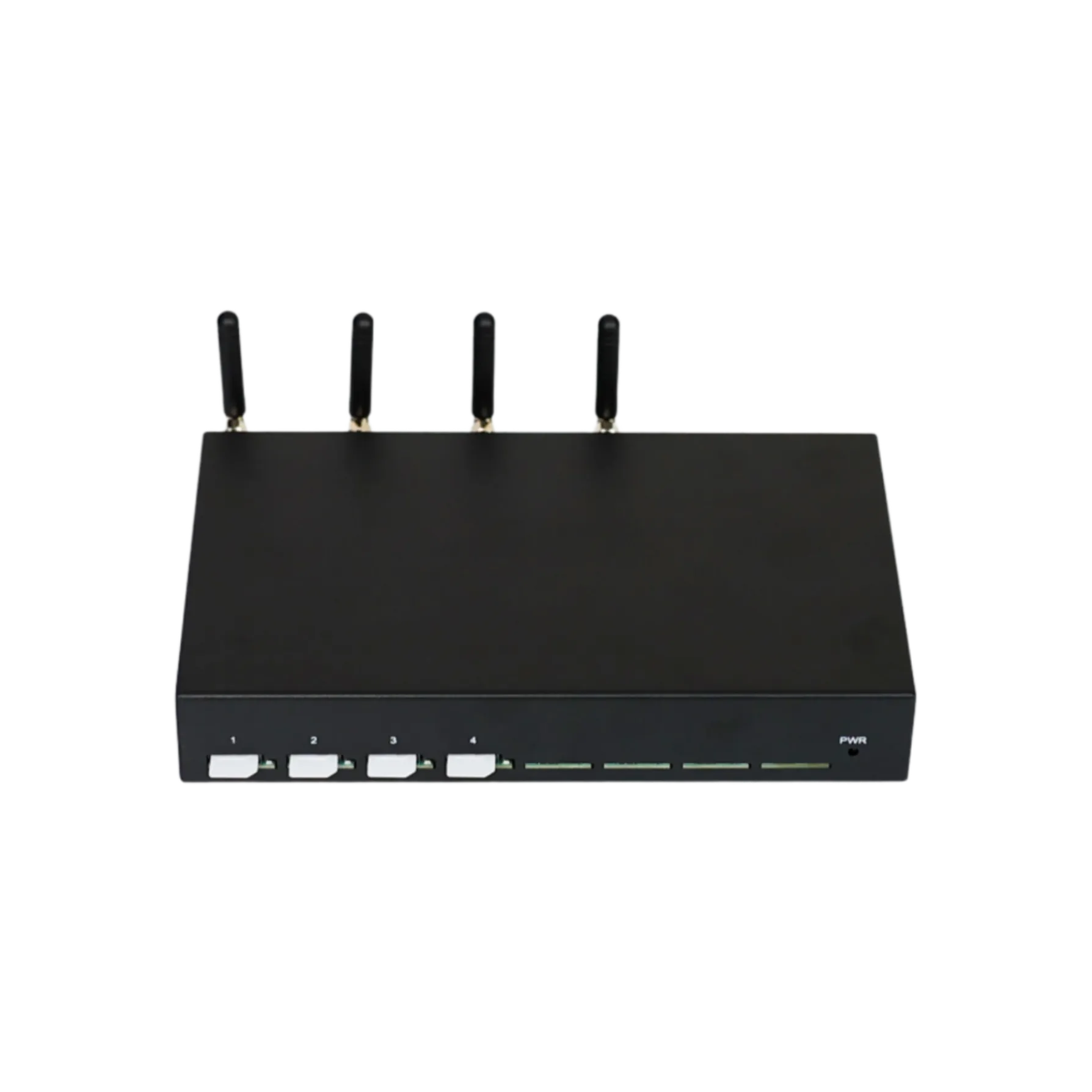
The visible part is genuinely cheap at this scale. A GoIP1 is published at a list price of $100, and an 8-port SMS modem in the TYH family is published at $113. An SK-SMS Gateway with four ports and four SIM slots is published at $238. Those are the entry points, and the difference between them is not really cost; it is whether the device is built to be left running and managed.
| Entry option | Published list price | Carries |
|---|---|---|
| GoIP1 | $100 | A single channel, useful for validating a use case |
| TYH 8-port SMS modem | $113 | Eight ports for messaging at low volume |
| SK-SMS Gateway 4-4 | $238 | Four ports with managed operation |
Entry price and what it carries
The purchase price is the smallest of the four costs.
Adding up a running system means the device, the SIM cards and their recurring tariffs, the power and network arrangement, and the time to operate it. Of those, the SIM tariffs are usually the largest recurring item, and they scale with the number of subscriptions rather than with the number of ports. That has a practical implication for expansion planning: going from eight ports to sixteen does not double the subscription cost unless it also doubles the number of active cards.
Time is the cost that gets left out and then dominates. A small operation that spends three hours a week on manual retries and reconciliations is spending roughly a working month a year on a task that better tooling would remove. That is the comparison to run before deciding whether the cheapest device is the cheapest choice, and it usually shows that the entry device should be the one with an interface you can automate against rather than the one with the lowest list price.
The subscription identifiers involved are standardised, which matters when cards are bought from several sources: the subscriber numbering used for routing is defined in ITU-T E.164, and the subscriber identity carried by the card is defined in ITU-T E.212. Buying cards that can be identified and tracked consistently is what makes a growing pool auditable rather than a drawer of unlabelled plastic.
The cost of the first expansion step
The first step is the one that reveals whether the design was modular.
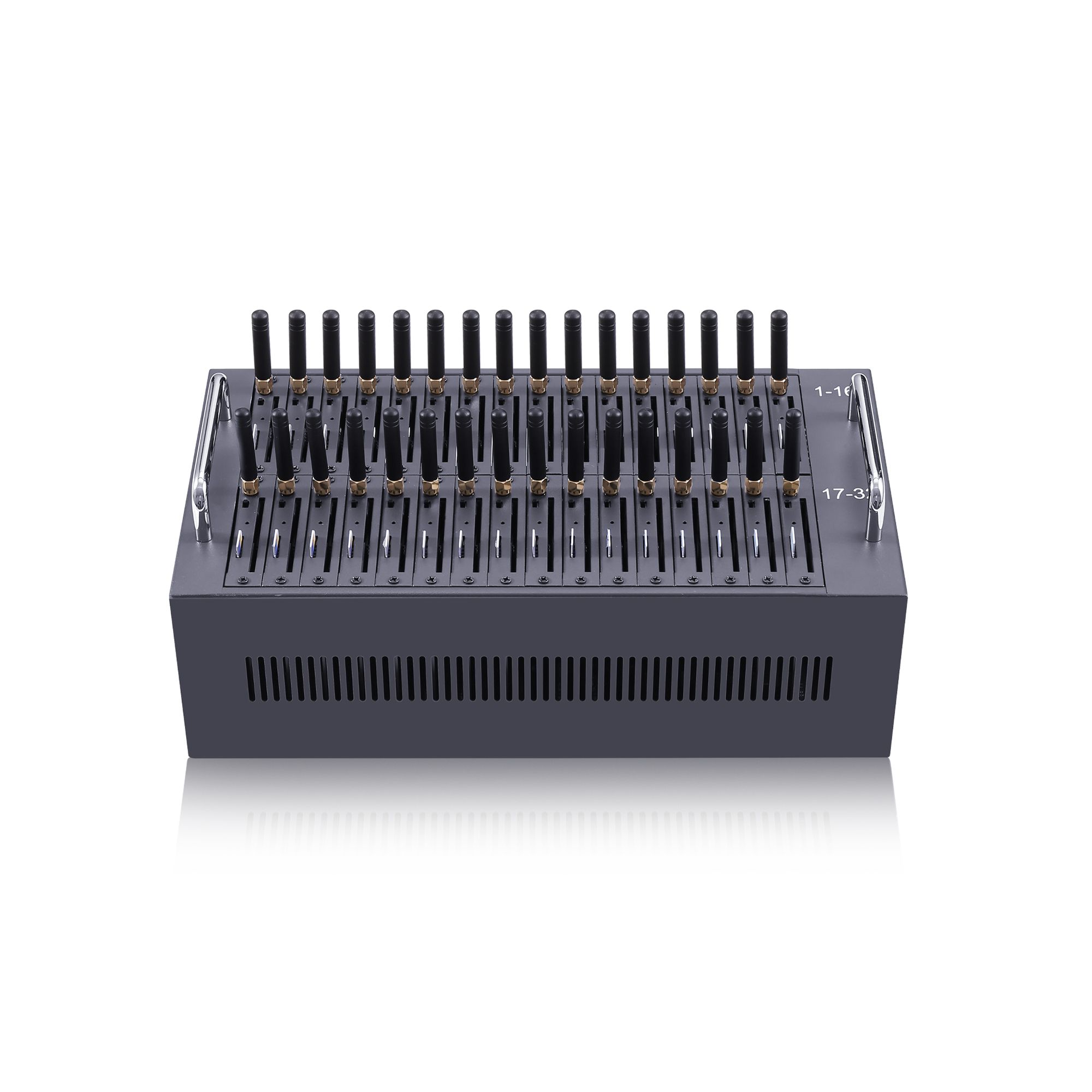
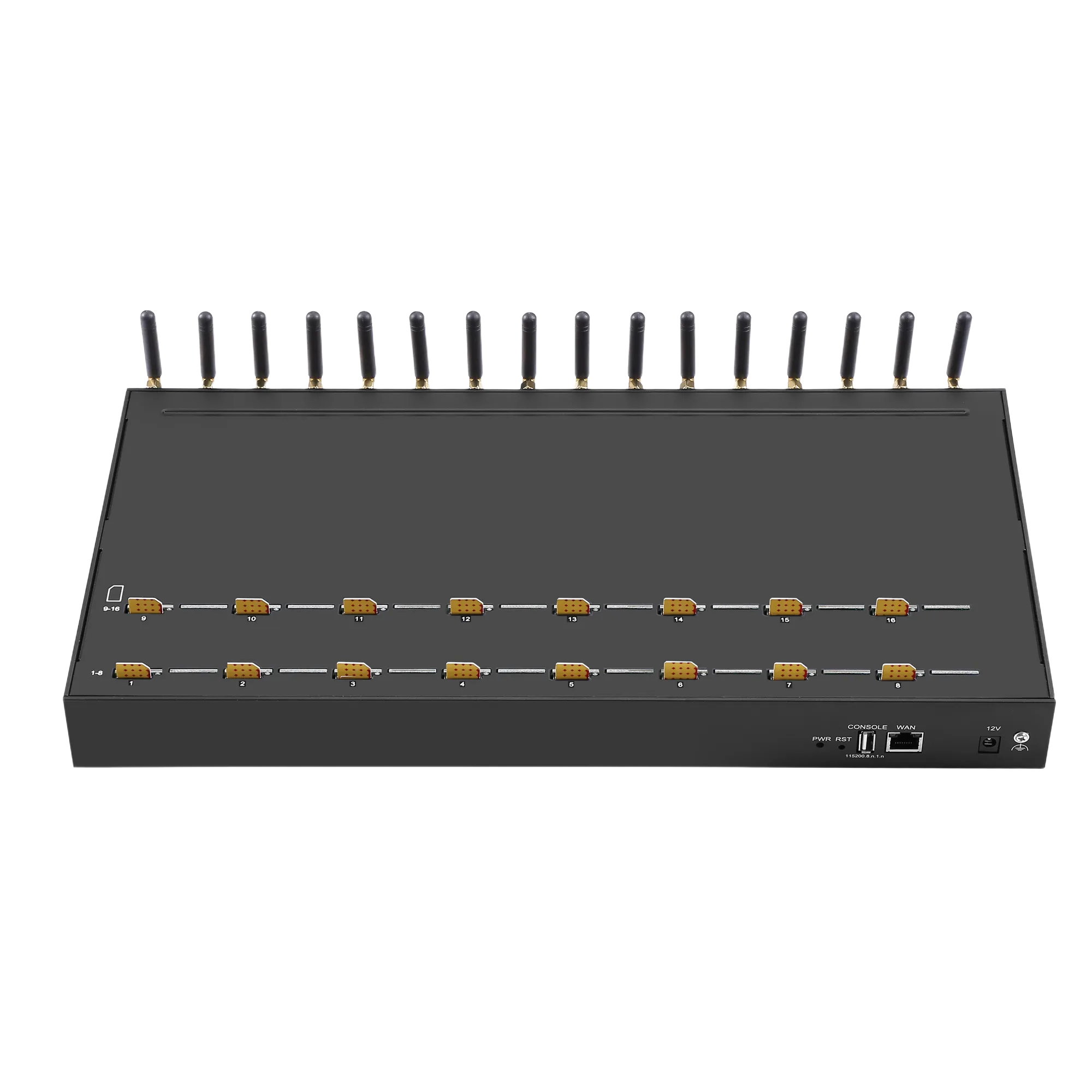
Where capacity is added by adding subscriptions to existing hardware, the marginal cost is the price difference between the models plus the new cards and their tariffs. In the TYH modem family the published list prices run from $113 for eight ports to $148 for sixteen and $270 for thirty-two, so moving from eight ports to sixteen is a difference of $35 at list. In the SK-SMS gateway family the published range runs from $238 at 4-4 to $1,880 at 64-64, and the intermediate models sit between those endpoints.
The alternative, adding a second device rather than a larger one, changes the shape of the cost. Two smaller units usually cost slightly more than one larger unit at the same total port count, but they remove a single point of failure and they can be added one at a time as demand justifies. For a startup whose volume is still rising, the two-device path is often the better financial profile because each purchase is funded by demand that already exists.
The expansion that is genuinely expensive is the one that requires re-engineering: a chassis with no further slots, a power arrangement with no headroom, a rack with no space. Those costs appear as a project rather than as a purchase, and they are the reason to check the growth path of a product line before buying the entry model. Where a family is designed to expand within the same form factor, the second purchase is a purchase; where it is not, the second purchase is a rebuild.
When renting capacity beats buying
Renting wins when volume is unpredictable and the use case is not yet proven.
A hosted messaging service converts capital into a per-message cost and removes the operational work entirely, which is exactly the right trade while demand is unknown or intermittent. Buying hardware converts a recurring cost into a fixed one, which is the right trade once the volume is stable and predictable. The crossover is not a fixed number of messages; it is the point at which the monthly tariff for the capacity you own becomes lower than the per-message cost for the same volume, and the point at which you are willing to carry the operational work yourself.
Two considerations complicate a purely financial comparison. The first is control: an owned device keeps the subscription set and the message path inside your own environment, which matters when the content is sensitive or the identity of the sender is part of the service. The second is reliability: a hosted service is somebody else’s problem to keep running, and an owned device is yours. Neither consideration is decisive on its own, but both belong in the decision rather than in the accounting.
A hybrid is common at this stage and is often the sensible answer. Keep a small owned device for the traffic that must stay in-house, use a hosted path for the peaks or for the traffic that carries no sensitivity, and revisit the split when the volume is stable enough to make the comparison meaningful.
Operational overhead at small scale
The overhead does not disappear, it just gets smaller than the visible costs.
Four tasks have to be done whatever the size of the deployment: keeping subscriptions valid, watching delivery outcomes, handling failures, and keeping records. At eight ports these take minutes a day; at thirty-two they take more, and the growth is not linear, because reconciliation work grows with the number of distinct cards and operators rather than with the number of messages.
Automating the first of those is usually the highest-value step. A device with a command interface that can be scripted lets a routine credit and validity check run on a schedule instead of by hand, and the interface used for this kind of interaction is standardised, as described in 3GPP TS 27.005 and its ETSI TS 127 005 equivalent. The second highest is a log that can be queried, because it converts a support question from a search through a terminal into a lookup.
If the application sending the messages runs on a server of your own, the hardening questions for that host are the ordinary ones, and NIST SP 800-123 is a compact reference for them. The accounting side has its own long-established framework in ITU-T M.3400, which is useful mainly as a reminder that cost and usage accounting are a defined management function rather than a spreadsheet somebody maintains.
A three-step growth plan
Plan the steps in advance and each purchase stays small.
The first step is validation: one small device, two operators, and a manual process, with the objective of proving the use case rather than minimising the invoice. The second is consolidation: replace manual routine work with scheduled checks, move to a device whose capacity can grow without changing the rack, and start recording the baseline figures that make later decisions evidence-based. The third is scale: add capacity in the increments demand justifies, and at that point re-run the rent-versus-buy comparison with real numbers rather than estimates.
The plan is deliberately ordered so that each step is funded by the step before it. That is the practical meaning of modular expansion, and it is a better protection against over-investment than any forecast, because it ties each purchase to demand that has already arrived.
| Step | Objective | Typical shape |
|---|---|---|
| 1. Validate | Prove the use case | One entry device, two operators, manual process |
| 2. Consolidate | Remove routine manual work | Scheduled checks, growable device, recorded baseline |
| 3. Scale | Meet demand already seen | Capacity added in funded increments, comparison re-run |
A cost outline
The outline lists the costs that behave differently at small scale, including the ones usually left out. Each line is written to be filled in with a figure from your own operation, and the sequence is intended to be repeated when the volume changes rather than kept as a one-off calculation.
- Device: the published list price of the model that matches current volume.
- Subscriptions: cards plus recurring tariffs, which scale with cards rather than ports.
- Power and network: a modest recurring cost that rarely dominates.
- Operational time: the cost that is invisible until it is measured for a month.
- Expansion delta: the list price difference to the next model up in the same family.
- Contingency: the cost of the step that requires re-engineering, avoided by checking the growth path first.
Size the first step to the demand you can see. Send your current volume, growth rate and per-message economics to service@telarvo.com, or review the published configurations on the SMS modem range and the SMS gateway solution page. Telarvo publishes the SK-SMS gateway range, the TYH modem pools and the TGW SMS machine on its product pages, and the configurations referenced above come from those listings.
FAQ
What is the cheapest way to start bulk SMS?
As displayed on the site, the lowest published entry points are a GoIP1 at $100 and a TYH 8-port SMS modem at $113, with an SK-SMS Gateway 4-4 at $238. The cheapest device is not automatically the cheapest start, however, because a device with a command interface you can script removes routine manual work that otherwise becomes a recurring time cost.
How much does a modular expansion step cost?
Where the family is designed to grow, the hardware cost is the list price difference between models, which at published rates is $35 to move from an eight-port to a sixteen-port TYH modem and larger steps further up the range. The rest of the step is the new subscriptions and their tariffs. The expensive expansion is the one that needs re-engineering rather than a purchase.
When should a startup rent messaging capacity instead of buying hardware?
While the volume is unknown or intermittent. A hosted service converts capital into a per-message cost and removes the operational work, which is the right trade until demand is stable. Buying becomes the better answer when the monthly cost of owned capacity is lower than the per-message cost at the same volume, and when you are ready to carry the operational work yourself.
What operational costs should a small deployment plan for?
Four. Keeping subscriptions valid, watching delivery outcomes, handling failures and keeping records. At eight ports these take minutes a day, and the work grows with the number of distinct cards and operators rather than with message volume. Automating the subscription check is usually the first step that pays for itself, because it replaces a routine manual task. Revisit the sequence whenever demand changes, because the funded step is what keeps the plan honest.