The eSIM versus physical SIM decision for a gateway fleet is usually framed as a technology question and settled by logistics. What changes is not the radio but who handles a card, where it has to be, and how long a change takes.
This article sets out what each option changes operationally, where physical SIM logistics actually costs money, what remote provisioning moves to the operator’s side, the failure modes each carries, and the fleets for which physical cards remain the better answer.
What does eSIM remote provisioning versus physical SIM logistics change operationally?
Where the profile lives, and who can change it.
A physical SIM is an object that has to be delivered, installed and moved, while a remotely provisioned profile is a record that can be assigned and reassigned without shipping anything.
That is the whole difference, and its consequences are operational rather than technical. With physical cards, adding capacity means ordering cards, receiving them, recording their identifiers and installing them; changing an operator relationship means moving a physical object. With remote provisioning, those actions become administrative, subject to the operator being able to provision the profile for the device and the market. The message layer is identical in both cases, defined in ETSI TS 123 040, and the subscription states a device passes through do not depend on whether the identity is a card or a profile.
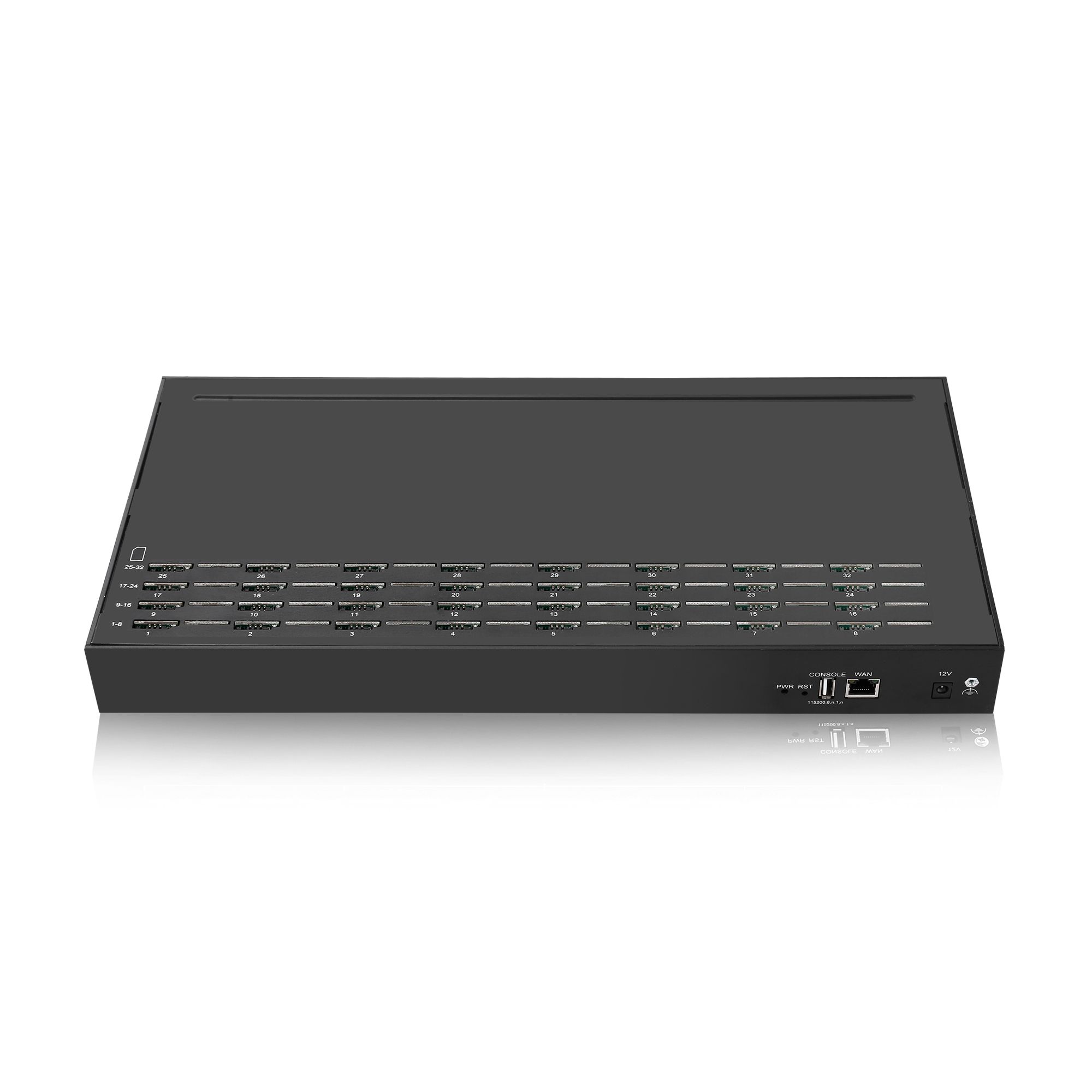
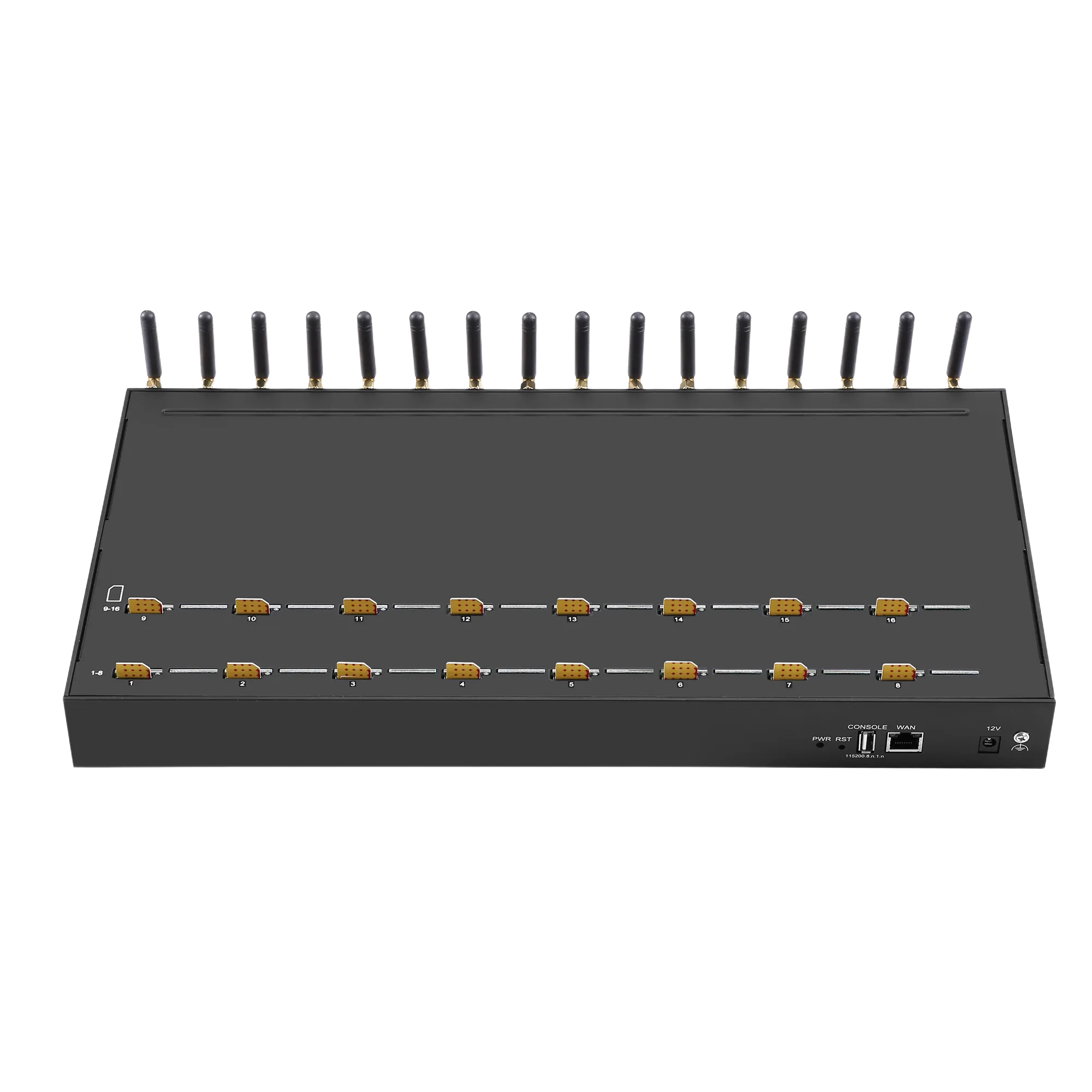
Hardware support for remotely provisioned profiles already exists in the range: the SK-SMS Gateway-32E-SIM is listed at $2,550 and the SK-SMS Gateway-64E-SIM at $4,080, with an equivalent variant in the voice family, the SK-VOIP Gateway-32E-SIM at $3,100. Those are list prices as displayed on the site and should be confirmed at purchase. The relevant question for a buyer is not whether the capability exists but whether the operator relationships in the target markets can supply profiles.
| Operation | Physical SIM | Remote provisioning |
|---|---|---|
| Add capacity | Order, receive, record, install | Assign a profile to a device |
| Change operator | Move a card between slots | Change a profile assignment |
| Replace a failed unit | Move cards to the replacement | Reassign profiles to the replacement |
| Add a market | Source and ship local cards | Confirm operator support for the market |
| Return a card to stock | Physically collect and log it | Release the profile |
Where does physical SIM logistics actually cost money?
In handling, not in the price of the card.
The recurring cost of physical cards is the administrative work around them: receipt, registration, installation, movement, replacement and disposal.
Each of those steps is small and all of them scale with the estate. A fleet of a thousand cards generates thousands of movements a year, and every movement is an opportunity for the register to fall out of step with the equipment. The cost is visible in the effort spent reconciling rather than in an invoice, which is why it is often omitted from a comparison between the two options and why it is usually the largest difference.
Two secondary costs are worth including. Shipping and customs for cards sent to a market take time that a campaign schedule may not allow, and a card lost in transit is a card that has to be replaced while consuming administrative attention. Neither is large per event and both are frequent enough at fleet scale to matter. The identity conventions that make card-level records possible are described in ITU-T E.118 for the card and ITU-T E.212 for the network identity, and a register keyed on both is what keeps the reconciliation tractable.
What remote provisioning moves to the operator side
The profile lifecycle, and the dependency with it.
Assigning and reassigning profiles becomes an operator action, which removes the physical work and introduces a commercial dependency on that operator.
The dependency deserves to be stated plainly rather than treated as an implementation detail. Where a fleet depends on remotely provisioned profiles, the operator controls what can be provisioned, for which devices and in which markets, and the organisation controls the devices. That split is workable and it changes the escalation path for a problem: an issue that looks like a device fault may be a provisioning entitlement issue, and the evidence needed to tell them apart is different.
Coverage is the second consequence. A remotely provisioned profile is only as good as the operator’s arrangements in the market where the device operates, and roaming arrangements differ from local subscriptions in ways that affect both cost and performance. A fleet that spans markets should compare the profile arrangements market by market rather than assuming that a profile works everywhere it is installed.
One operational detail decides whether the framework is usable: the process for returning a subscription to stock. Whether a card is physically collected or a profile is released, the action has to reach the register, or the fleet accumulates identities that nothing can account for. That reconciliation step belongs in the framework rather than in an operations note, because it is the step that keeps a mixed fleet manageable.
Coverage and roaming differences that matter for gateways
A profile is not a subscription; the subscription behind it still decides what is permitted.
What a remotely provisioned profile changes is how the identity is delivered, while what the network permits is still governed by the agreement behind it.
That distinction is the one most often lost in the comparison. A fleet can adopt remote provisioning and still be constrained by the same tariff limits, the same per-number ceilings and the same acceptance behaviour as a physical card, because those come from the subscription rather than from the delivery mechanism. What improves is the speed of an operational change, not the rate the network accepts.
Roaming behaviour is the genuine technical difference worth measuring. A profile that operates across several markets may do so through roaming arrangements, which can differ from local subscriptions in both cost and acceptance characteristics. Where a deployment’s traffic profile is sensitive to acceptance rate, the two arrangements should be measured rather than assumed to be equivalent. The subscription states involved in any case are defined in 3GPP TS 24.301.
Failure modes: lost card, stale profile, blocked SIM
Both options fail, and they fail differently.
A physical fleet loses cards and mismatches registers, while a remotely provisioned fleet can hold a stale profile or lose a provisioning entitlement.
The physical failure modes are familiar and visible: a card removed during maintenance and not recorded, a slot re-cabled to the wrong position, a card damaged in handling. Each is discoverable through reconciliation, because the register and the equipment can be compared. The remote failure modes are less visible and require different evidence: a profile that was superseded but not re-provisioned, an entitlement that lapsed with a contract change, or a device whose profile assignment was never completed. Both fleets experience the third failure mode listed in the heading — a subscription that has been actioned by the operator — because that happens at the subscription level regardless of how the identity was delivered.
The practical consequence for monitoring is that the two fleets need different checks. A physical fleet should reconcile the register against reported slot state on a schedule; a remote fleet should verify profile assignment and entitlement as part of acceptance. Record-keeping practice for the operational logs that support either check is covered in NIST SP 800-92.
A cost comparison framework
The framework compares the two provisioning models on the costs that behave differently, which are the administrative and logistics costs rather than the equipment. Each line is written so the input is a measured figure from your own operation, and it is intended to be re-run when a market changes.
- Count the card movements per year at the current fleet size, including replacements.
- Price the administrative time each movement consumes, not only the card and shipping.
- Confirm, market by market, whether remotely provisioned profiles can be supplied and at what commercial terms.
- Compare the hardware difference for the models in scope, using list prices and confirming them at purchase.
- Measure acceptance and roaming behaviour in each market rather than assuming equivalence.
- Decide which failure-mode checks each option requires and who operates them.
The framework usually produces a mixed answer, with remote provisioning for the markets where profiles can be supplied and physical cards elsewhere. That is a legitimate outcome provided the fleet is documented, because a mixed fleet with no record of which units use which arrangement produces exactly the reconciliation problem both options were meant to remove.
Which fleets should stay physical?
Those with few movements and local supply.
A fleet that is stable, supplied locally and rarely re-configured gains little from remote provisioning, because the administrative cost it removes is small.
Three cases qualify. A single-market fleet with a stable operator relationship and infrequent changes. A fleet where the operator does not offer remote provisioning on acceptable terms. And a fleet whose cards are deliberately local for commercial reasons, such as a tariff that is only available as a physical subscription. In each case the added capability would not be used, and the added dependency would still have to be managed.
The reverse case is equally clear. A fleet spanning several markets, changing operators periodically, or growing quickly accumulates exactly the administrative load that remote provisioning removes, and the dependency it introduces is on a party the organisation already depends on for connectivity. Where the operator relationship can support it, the operational difference is large enough to justify the hardware variant.
Compare the movements, not the cards. Send your fleet size, market list and change frequency to service@telarvo.com, or review the published configurations on the SK-SMS Gateway range and the SIM pool range. Telarvo publishes the SK VOIP gateway range and the GoIP models on its product pages, and the configurations referenced above come from those listings.
FAQ
What is eSIM provisioning and how does it work?
It is the process of delivering a subscriber profile to a device without a physical card, driven by the operator or an entitlement system rather than by shipping an object. Operationally it turns card logistics into an administrative action, while the messaging behaviour above it remains governed by the subscription. The equipment is unaffected, which is why the change appears in operations rather than in performance.
Is eSIM connectivity better than a physical SIM?
Not in coverage terms by itself. What changes is how the profile reaches the device and how quickly an operator change can be made. Coverage and acceptance depend on the arrangement behind the profile and on the market, and those should be measured in each market rather than assumed. Two markets can behave very differently with the same device. Record the measured result per market rather than carrying an assumption from one market into the next.
How long does SIM provisioning take?
It depends on the operator process rather than on the device, and the honest answer is that it should be tested rather than estimated. Provision a spare device through the intended process and record the time end to end, including the entitlement checks, because that figure determines how quickly a fleet can be reconfigured. Include the time to obtain the entitlement as well as the transfer.
Should we move the whole fleet to remote provisioning?
Only where the operator can supply profiles on acceptable terms in every market the fleet operates in. Most fleets that move end up with a mixture: remote provisioning where it is available and physical cards where a local subscription is the better commercial arrangement. Document which units use which, because the mix is what determines the support procedure. Revisit the mix whenever a market changes its rules or an operator changes its terms.
{
“@context”: “https://schema.org”,
“@type”: “FAQPage”,
“mainEntity”: [
{
“@type”: “Question”,
“name”: “What is eSIM provisioning and how does it work?”,
“acceptedAnswer”: {
“@type”: “Answer”,
“text”: “It is the process of delivering a subscriber profile to a device without a physical card, driven by the operator or an entitlement system rather than by shipping an object. Operationally it turns card logistics into an administrative action, while the messaging behaviour above it remains governed by the subscription. The equipment is unaffected, which is why the change appears in operations rather than in performance.”
}
},
{
“@type”: “Question”,
“name”: “Is eSIM connectivity better than a physical SIM?”,
“acceptedAnswer”: {
“@type”: “Answer”,
“text”: “Not in coverage terms by itself. What changes is how the profile reaches the device and how quickly an operator change can be made. Coverage and acceptance depend on the arrangement behind the profile and on the market, and those should be measured in each market rather than assumed. Two markets can behave very differently with the same device. Record the measured result per market rather than carrying an assumption from one market into the next.”
}
},
{
“@type”: “Question”,
“name”: “How long does SIM provisioning take?”,
“acceptedAnswer”: {
“@type”: “Answer”,
“text”: “It depends on the operator process rather than on the device, and the honest answer is that it should be tested rather than estimated. Provision a spare device through the intended process and record the time end to end, including the entitlement checks, because that figure determines how quickly a fleet can be reconfigured. Include the time to obtain the entitlement as well as the transfer.”
}
},
{
“@type”: “Question”,
“name”: “Should we move the whole fleet to remote provisioning?”,
“acceptedAnswer”: {
“@type”: “Answer”,
“text”: “Only where the operator can supply profiles on acceptable terms in every market the fleet operates in. Most fleets that move end up with a mixture: remote provisioning where it is available and physical cards where a local subscription is the better commercial arrangement. Document which units use which, because the mix is what determines the support procedure. Revisit the mix whenever a market changes its rules or an operator changes its terms.”
}
}
]
}