A modem pool that has been running for a year is not the same system that was commissioned, even if nothing has been changed. This article describes what degrades, how it becomes visible, and how to plan replacements instead of reacting to failures.
It covers the components that degrade first, the cumulative effect of thermal history, wear on the SIM side, firmware maintenance over time, and the measurements that indicate a unit is approaching the end of its useful life.
What long-term reliability of modem pools depends on: what degrades first
The components that carry current and heat, and the ones that are touched.
Four items account for most of the change that occurs in the first years of operation. Power supplies degrade because they carry the transmit burst current and have the least thermal mass, and their failure mode is usually a gradual reduction in margin rather than a clean break. Modules degrade through accumulated thermal exposure, which shows first as an increase in retries or a slower response rather than as a total failure. Connectors and the SIM path degrade through thermal cycling and mechanical handling, and they are the components most likely to be disturbed by maintenance. Fans and filters degrade through dust, and the degradation is invisible until the airflow margin is gone.
The useful way to think about it is that nothing in the list fails suddenly. Each item loses margin over time, and the loss only becomes a failure when an additional stress appears, such as a warm week, a burst of traffic, or a maintenance action on a neighbouring unit. That is why failures in mature pools cluster around specific conditions rather than appearing at random, and why the pattern is diagnosable if the history has been recorded.
| Component | How it degrades | Earliest visible sign |
|---|---|---|
| Power supply | Reduced margin under burst current | Intermittent resets or registration drops |
| Module | Accumulated thermal exposure | Slower response, more retries |
| Connectors and SIM path | Thermal cycling and handling | Cards not detected after a disturbance |
| Airflow path | Dust accumulation | Higher temperature at the same load |

Thermal history and its cumulative effect
The important figure is not the temperature today but the temperature the unit has experienced.
Thermal degradation accumulates, which means two deployments of identical equipment can have very different life expectancies depending on the conditions they have run in. A pool that has operated a few degrees cooler than another, for the same period and load, will generally reach any given failure rate later. That is why the temperature recorded at commissioning is a baseline rather than a specification: the meaningful question later is how the temperature has changed at the same load.
Three observations describe the thermal history. The module temperature under a known load, taken at the same point and at the same ambient each time. The difference between that temperature and the intake air, which isolates the device from the room. And the position of the unit in the rack, because the unit at the top has always been running warmer than the one at the bottom and its history is therefore different. Recording all three at an interval, rather than once a year, is what makes a trend visible while it can still be acted on.
Where the environmental class of the room is known, and the equipment’s declared class is recorded from the product documentation, the comparison is a concrete check rather than an impression. The classification for fixed installations is defined in ETSI EN 300 019-1-3, one of the ETSI standards, and a pool operating outside the class its equipment expects accumulates degradation faster than any reliability figure derived for the reference conditions would suggest.
SIM-side wear and card handling
The subscription side has its own wear, and it is usually mechanical.
Three effects appear over the first years. Cards that are inserted and removed during maintenance accumulate wear on the contact surfaces, and a card that is not properly seated can produce intermittent faults that are attributed to the network. Card trays and adapters, where they are used, are the components most likely to be damaged by handling. And the identity of the card needs to stay associated with the right slot and port, which becomes harder to maintain as hardware is replaced; the subscriber identity is defined in ITU-T E.212, and recording it against the slot is what keeps the association verifiable.
Subscriptions also have a lifecycle independent of the hardware. A card may be replaced because a tariff changed, because the operator withdrew a product, or because the number was reassigned, and each of those events changes the pool composition without changing the equipment. Where those changes are not recorded, the inventory of the pool and the record of it diverge, and the divergence appears at the worst time, which is during a fault investigation.
The practical control is a change record kept with the deployment: what was changed, when, by whom and why. It does not need to be elaborate, and it needs to include the changes that seem too small to record, because those are the ones that are remembered incorrectly six months later.
Firmware maintenance over time
The maintenance function behind the firmware determines how the pool ages.
A pool whose firmware has not been updated for three years has accumulated defects that will never be fixed, and it also carries behaviour that no current documentation describes. Both matter, and the second is often the more disruptive: an engineer following current documentation against an older build finds differences that consume time, and the differences are not documented anywhere because they were never a change in the vendor’s sense.
The counter-argument is equally valid and worth stating. Updating firmware on a working production pool carries risk, particularly where there is no maintenance window, and a change that introduces a regression is worse than a defect that has been lived with. The resolution is not to choose between updating and not updating but to manage it: track the versions in service, review what changed, test on one unit, and have a tested rollback before touching the rest.
The operational record is what makes this manageable. Which units run which version, when each was applied, and what the result was are three items that turn an update from an event into a routine. Keeping and protecting that kind of record is described in NIST SP 800-92, and the general operational discipline for the surrounding systems in NIST SP 800-123.
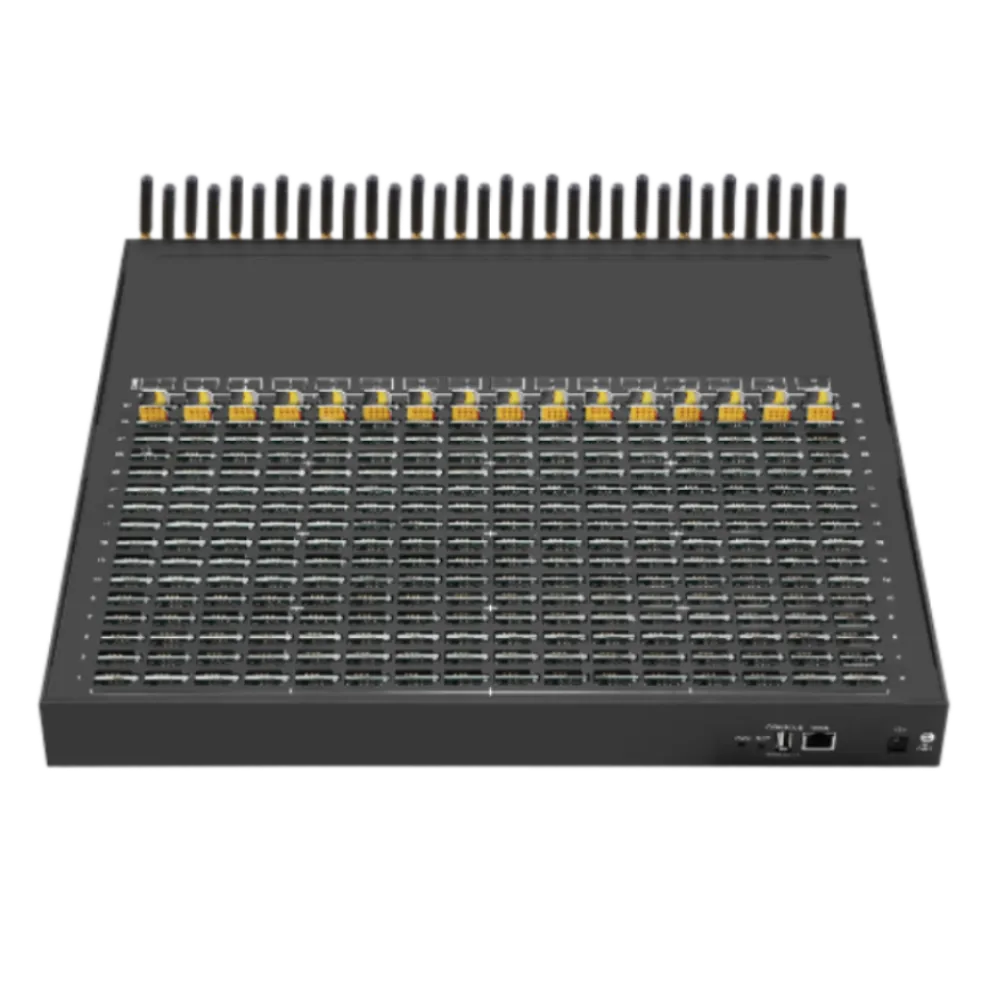
Replacement planning rather than reactive replacement
The difference between the two is whether the replacement happens at a chosen time.
Reactive replacement follows a failure, which means the replacement happens at whatever hour the failure occurs, with whatever capacity is available, and often without the configuration export to hand. Planned replacement follows a trend, which means the work is scheduled, the spare is ready, the configuration is available, and the effect on service is a fraction of capacity for the duration of a swap.
Planning requires two inputs that a reactive deployment does not have: an estimate of how long a unit is expected to last in these conditions, and a record of how long each unit has been running. The first can be obtained from the supplier as a service life figure, understood as an expectation rather than a guarantee, and refined by the deployment’s own observation. The second comes from the commissioning record. Together they produce a list of units approaching the end of their expected life, which is a maintenance plan rather than a surprise.
The spares holding follows from the same arithmetic. Where the replacement lead time is long, the holding needs to cover the interval; where the failure rate is low and the lead time short, a smaller holding is adequate. The resistibility expectations for equipment connected to telecommunications networks, described in ITU-T K.20, are a useful reminder that a proportion of failures in a mature pool are caused by disturbances rather than by wear, and therefore do not follow the expected life pattern at all.
Metrics that predict the end of life
Five measurements move before a unit fails, and all of them are already being produced.
Temperature at a known load, compared with the commissioning figure for the same unit. Handling time per message, compared with the pool average rather than with the unit’s own history, because a unit that has become slower than its neighbours has diverged. Retry and failure rate per port, again compared across the pool. The rate of registration events for each subscription, since a card that re-registers more often than its neighbours is a card with a developing problem. And the current drawn by the unit at the same workload, which is the least commonly recorded and one of the more informative.
What makes those measurements predictive is the comparison rather than the absolute value. A pool of identical units under the same load is its own control group, and a unit that has diverged from its peers is showing something that a threshold alone would miss. The practical rule is to replace on a clear divergence, which is a planned replacement, rather than on a threshold breach, which is often a failure that has already occurred.
The measurement that is easiest to add and most often omitted is the simplest: the date each unit was installed and its position. Without those two facts, a failure pattern cannot be analysed at all, because the question of whether the failures correlate with age or with position cannot be answered.
A lifecycle plan
The plan covers what has to be recorded, reviewed and replaced as a modem pool ages. It is written as a cycle rather than a list, because the value comes from the same measurements being taken at the same load at each review.
- Commissioning record per unit: installation date, position, model and firmware version.
- Baseline measurements at a known load: temperature, handling time, retries, current.
- A review interval, with the same measurements taken at the same load each time.
- Comparison against the pool rather than against a fixed threshold.
- A change record covering subscriptions, firmware and hardware, however small.
- An expected service life per model, understood as an expectation and refined by observation.
- A spares holding sized against the failure rate and the replacement lead time.
- A configuration export and firmware version stored with every spare.
- A planned replacement list, reviewed when the review interval produces a divergence.
Plan replacements from a trend rather than from a failure. Send your pool size, operating conditions and review interval to service@telarvo.com, or review the published configurations on the SMS modem range and the SMS modem solution page. Telarvo publishes the SK-SMS gateway range, the TYH modem pools and the TGW SMS machine on its product pages, and the configurations referenced above come from those listings.
FAQ
What degrades first in a modem pool?
The components that carry current and heat, and the ones that are touched. Power supplies lose margin under the transmit burst current, modules accumulate thermal exposure, connectors and card trays wear through cycling and handling, and airflow paths lose margin to dust. None of them fails suddenly; each loses margin until an additional stress turns the loss into a failure.
Why does thermal history matter more than current temperature?
Because degradation accumulates. Two identical deployments can have different life expectancies if one has run a few degrees cooler for the same period and load. The useful measurements are the module temperature at a known load, the difference between that and the intake air, and the position in the rack, since the top unit has always run warmer and therefore has a different history.
Should I update firmware on a modem pool that is working?
It depends on the risk of the change against the cost of the defect. A pool on firmware that has not been updated for years carries defects that will never be fixed and behaviour that current documentation no longer describes. The practical approach is to manage it rather than choose: track the versions in service, review what changed, test on one unit and have a tested rollback before touching the rest.
How do I predict when a modem module will need replacing?
By comparing it with its peers rather than against a fixed threshold. Five measurements move before a failure: temperature at a known load, handling time per message, retry and failure rate per port, registration events per subscription, and current drawn at the same workload. In a pool of identical units under the same load, divergence from the peers is the usable signal, and replacing on divergence keeps the change planned.
{
“@context”: “https://schema.org”,
“@type”: “FAQPage”,
“mainEntity”: [
{
“@type”: “Question”,
“name”: “What degrades first in a modem pool?”,
“acceptedAnswer”: {
“@type”: “Answer”,
“text”: “The components that carry current and heat, and the ones that are touched. Power supplies lose margin under the transmit burst current, modules accumulate thermal exposure, connectors and card trays wear through cycling and handling, and airflow paths lose margin to dust. None of them fails suddenly; each loses margin until an additional stress turns the loss into a failure.”
}
},
{
“@type”: “Question”,
“name”: “Why does thermal history matter more than current temperature?”,
“acceptedAnswer”: {
“@type”: “Answer”,
“text”: “Because degradation accumulates. Two identical deployments can have different life expectancies if one has run a few degrees cooler for the same period and load. The useful measurements are the module temperature at a known load, the difference between that and the intake air, and the position in the rack, since the top unit has always run warmer and therefore has a different history.”
}
},
{
“@type”: “Question”,
“name”: “Should I update firmware on a modem pool that is working?”,
“acceptedAnswer”: {
“@type”: “Answer”,
“text”: “It depends on the risk of the change against the cost of the defect. A pool on firmware that has not been updated for years carries defects that will never be fixed and behaviour that current documentation no longer describes. The practical approach is to manage it rather than choose: track the versions in service, review what changed, test on one unit and have a tested rollback before touching the rest.”
}
},
{
“@type”: “Question”,
“name”: “How do I predict when a modem module will need replacing?”,
“acceptedAnswer”: {
“@type”: “Answer”,
“text”: “By comparing it with its peers rather than against a fixed threshold. Five measurements move before a failure: temperature at a known load, handling time per message, retry and failure rate per port, registration events per subscription, and current drawn at the same workload. In a pool of identical units under the same load, divergence from the peers is the usable signal, and replacing on divergence keeps the change planned.”
}
}
]
}