The decision to move from 2G to 4G is rarely made on capability. It is made because a market has announced a retirement date, and the equipment that still works today has a known end of service that falls inside the depreciation schedule.
This guide covers the migration decision rather than the technology: what a 4G GoIP gateway changes about voice, how to read a retirement timetable without over-reacting to it, what the price premium actually buys, and how to run a mixed estate while the transition happens market by market.
When does 2G retirement force a hardware decision?
When the retirement date falls inside your planning horizon.
The relevant comparison is the remaining service life of the network against the expected service life of the device, not the device’s condition.
Three situations call for different responses. Where retirement is announced and imminent, buy the generation that remains. Where retirement is announced but distant, buy a device that supports both generations so the decision can be deferred without another purchase. Where no timetable has been published, the safest position is a dual-generation device, because the timetable may appear with less notice than a procurement cycle.
The cost of being wrong is asymmetric. Buying 4G capacity slightly early costs the price difference between two models. Buying 2G-only capacity and losing the network early costs the full capital value of the device plus an unplanned replacement project. That asymmetry, rather than the technology, is the argument for dual-generation hardware in markets with an uncertain timeline.
Where the device carries both voice and messaging, the retirement affects both paths simultaneously, which is worth stating in the business case because it is the point at which the replacement is a project rather than a purchase order.
How does voice behave differently on 4G?
Voice travels as data, which changes the failure modes.
The call is carried over the packet network, so its quality depends on network conditions that a circuit-switched call did not depend on.
In practice the audio on a well-provisioned 4G link is comparable to 2G. What differs is the sensitivity of the path: where a 2G call degrades gradually as signal weakens, a packet-carried call can degrade more abruptly, and the symptom reported by a user is often a dropped call rather than a poor one. Planning for that difference means paying attention to signal quality and site placement rather than to codec settings alone.
The other change is negotiation. A 4G device negotiates codecs with the network rather than using a fixed cellular coding scheme, which increases the chance of transcoding somewhere in the path. Where that happens, capacity drops below the nominal channel count, and the effect is only visible under sustained load. Testing at the installed position for long enough to see it is the only reliable way to know.
The cellular standards behind these behaviours are published as 3GPP specifications, which is the reference to consult when a carrier or vendor makes a claim about what a network supports.
Is the 4G price premium worth it?
It depends on whether you buy headroom or time.
The premium is easiest to justify where the remaining 2G service life is short, and hardest where both generations will be in service for years.
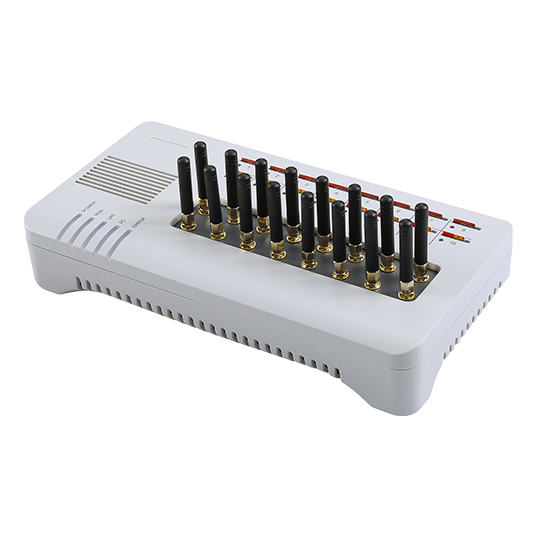
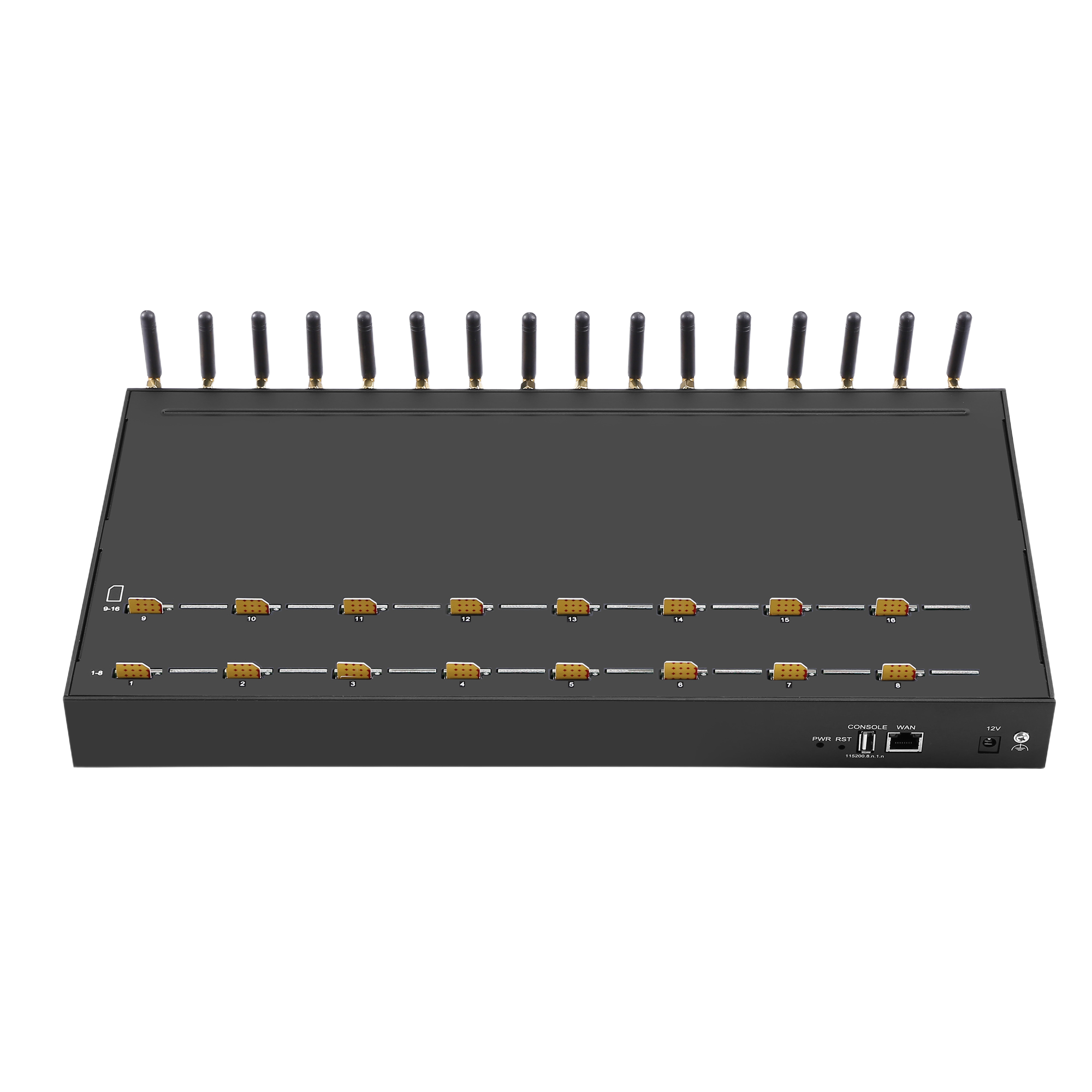
Compare the tiers directly. The GOIP16 at $620.00 provides 16 channels and 16 SIM slots, while the 4G eSIM configurations in the SK SMS Gateway range run to $2,550.00 for the 32-port model and $4,080.00 for the 64-port model. Those are not like-for-like products, so the comparison belongs alongside the port and slot count you actually need rather than against the entry tier.
A more useful way to frame the premium is as insurance against an unplanned replacement. If the remaining 2G service life is shorter than the depreciation period you intend to use, the premium is cheaper than the write-down. If it is longer, the premium buys nothing except the option to move earlier, and that option has a price.
Where the estate spans several markets with different timelines, buying 4G for the ones with announced dates and dual-generation hardware elsewhere usually produces the lowest total cost. That is a portfolio decision rather than a device decision, and it is easier to make once each market’s timetable is written down.
How do you verify band and network support?
Confirm the bands and the generation separately, in writing.
A device described as 4G may support only the bands used in the market it was designed for, and the two checks are independent.
Ask for the datasheet of the exact model and confirm the frequency bands rather than the technology label. Then confirm which generations remain in service in the destination, because a dual-generation device is only useful if both generations still exist. Record both answers against the purchase, since they determine whether the device behaves as planned in that market.
The numbering and identification layer adds a second check. International mobile numbers are assigned under the ITU E.164 numbering plan, and the sender identity presented to recipients should be one the operation can defend. Where a number is used for verification, the identity matters beyond presentation, and the treatment of out-of-band channels described in NIST SP 800-63B is the relevant guidance.
How do you run a mixed 2G and 4G estate?
Keep the management model identical.
The operational risk in a migration is not the radio generation but the emergence of two ways of doing the same job.
The practices that keep a mixed estate manageable are procedural rather than technical. Keep naming consistent across generations, so a SIM is identifiable by role rather than by device. Keep the log collection and export path identical, so reporting does not depend on which device produced a record. Keep the mapping documentation in one place, with the generation recorded as an attribute rather than as a separate register. And keep the acceptance tests identical, so behaviour is comparable between an old and a new unit.
Where the estate is large enough to justify it, migrating a whole site at a time rather than a device at a time reduces the period during which both generations are in production, which shortens the window in which two processes coexist.
What should the migration plan contain?
Dates, dependencies, and a rollback position.
A migration plan that lists only the new hardware leaves the dependencies unmanaged.
- Market-by-market timetables. The published retirement position for each market, with the source recorded.
- Device inventory. Which units are affected, by model and by market.
- SIM position. Whether existing SIMs continue in service on the new generation, or whether re-registration is required.
- Coverage verification. Confirmation that the installed position carries usable signal on the new generation, tested with the actual device.
- Rollback. What the operation does if the new device underperforms in the first week.
Item three is the one that most often delays a migration, because registration depends on a third party. Starting it while hardware is in transit is the single most effective schedule intervention available.
A migration plan should also state what happens to the SIM estate. Where existing SIMs continue in service on the new generation, the migration is a hardware replacement; where re-registration is required, it is a project with a third-party dependency, and the two have very different schedules. Establishing which applies before the hardware is ordered is the single most effective schedule intervention available, because registration depends on the operator rather than on the project team.
Where a market is mid-transition, keeping both generations in service for a period is usually cheaper than converting in one step. Running the old and new devices in parallel lets the new generation be validated on real traffic before the old one is withdrawn, and it means a problem discovered in the first week is a rollback rather than an outage.
The escape route should be documented with the same care as the migration itself. Record which devices serve which estate, so that reverting a site is a configuration change rather than a reconstruction exercise, and confirm that the SIMs in use will still register on the previous generation during the transition window.
Where the deployment has to satisfy a market framework rather than only an internal one, the ETSI standards catalogue covers the equipment and network side, and the operational practice guidance published by M3AAWG is the usual reference for how messaging obligations are expressed.
Conclusion
The move to 4G is a timetable decision rather than a technology decision, and the relevant comparison is the remaining service life of the network against the depreciation period of the device. Voice on 4G behaves differently in its failure modes rather than its audio quality, which makes site placement and signal verification the practical planning tasks. The premium for a 4G or eSIM configuration is best framed as insurance against an unplanned replacement, and where markets differ, buying per market usually produces the lowest total cost.
A mixed estate is manageable provided the management model stays identical across generations. Keeping naming, log export, mapping documentation and acceptance tests consistent means a device can be replaced without changing any process around it, and that is what allows a migration to proceed site by site rather than as a single project. The GoIP gateway solution pages set out the entry tiers, and the SK range covers the higher channel and slot counts where a market requires more capacity than a single GoIP unit provides.
Check the retirement timetable for each market before committing to a generation. Send your destination markets, device inventory and expected service life to service@telarvo.com, or review the published models on the GoIP gateway solution pages.
FAQ
Is 4G voice quality better than 2G?
Audio quality is comparable on a well-provisioned link. What differs is sensitivity: a circuit-switched call tends to degrade gradually as signal weakens, while a packet-carried call can degrade abruptly and present as a dropped call. That makes signal verification at the installed position and careful antenna placement the practical quality controls, rather than codec settings alone.
Should I replace working 2G equipment now?
Compare the announced retirement date with the depreciation period you intend to use rather than with the device condition. Where retirement falls inside that period, buying the surviving generation avoids a write-down. Where it falls outside, the replacement can wait, though dual-generation hardware keeps the option open without another purchase.
Do existing SIMs work on a 4G gateway?
Usually yes, provided the SIM supports the network and the operator permits the traffic, but registration requirements may apply and these depend on the market. Confirm with the operator before the migration rather than during it, because registration is the dependency that most often determines the actual migration date and it depends on a third party.
Can 2G and 4G devices run in the same estate?
Yes, and many deployments do during a transition. Keep naming conventions, log export, mapping documentation and acceptance tests identical across generations so that reporting does not depend on which device produced a record. Migrating a whole site at a time rather than a device at a time shortens the period in which two processes coexist.