The reason to separate SIMs from radios is almost always physical: the rack with the best power and network is rarely the rack with the best signal. Separating them solves that problem and creates two new ones, because the link between the two becomes part of the failure domain and the pairing has to be exact.
This guide covers the deployment side of a paired installation: why the separation is worth the complexity, what the link between bank and gateway actually requires, how pairing is verified, where each element should physically sit, and how to locate a fault when the symptom appears on a call rather than in a log.
Why separate the SIM estate from the radio?
Because signal and access rarely share a location.
The separation converts one physical problem into a network problem, and the network problem is easier to solve.
Three situations justify it. The first is coverage: a device mounted where signal is adequate may be in a location where nobody wants to handle cards. The second is access control: SIMs are a controlled asset, and keeping them in a locked cabinet while radios sit in an equipment room satisfies both requirements at once. The third is consolidation: one bank can serve several gateways, so the same estate supports more radios without adding slots to each device.
The cost is a second element and a link between them. Both elements can fail, the link can fail, and a fault in either element presents as a call or message problem rather than as a hardware alarm. Deployments that adopt the separation without budgeting for that diagnosis find it harder to operate than an all-in-one device.
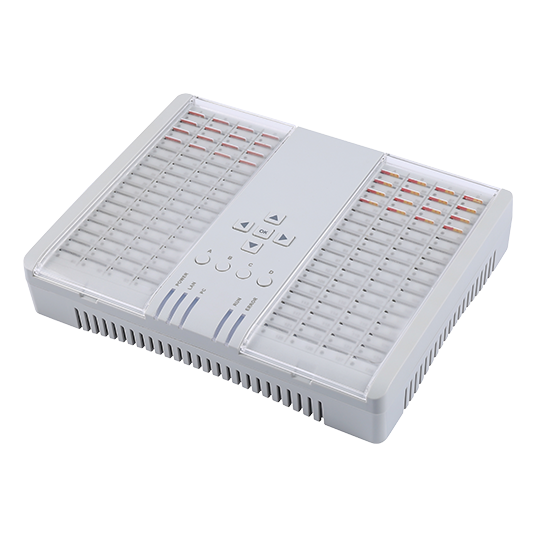
Where the estate is small and the radio location is accessible, keeping the SIMs on board is simpler. The SIMBANK128 at $1,600.00 supports hot-swapping, dynamic SIM allocation and failover for GoIP gateways, and those features are what make the separation worthwhile rather than merely distributed.
What does the link between bank and gateway require?
Bandwidth is trivial; latency and stability are not.
The link carries SIM signalling rather than user traffic, so throughput is not the constraint.
Three requirements matter. Stable latency keeps SIM operations predictable; a link that occasionally stalls produces timeouts that look like SIM faults. Segmentation keeps the SIM signalling path separate from general office traffic, so that a busy network does not affect SIM operations. Physical reliability matters more than speed, because a link that drops causes every SIM behind it to become unavailable at once.
A wired connection on the same switch is the simplest configuration and the one to prefer wherever the two elements are in the same building. Where they are not, a dedicated link with a defined path is preferable to sharing a general-purpose network, because the failure modes of the second are harder to reason about.
Document the topology. When a call fails, the question is whether the fault is the SIM, the bank, the link or the gateway, and a written topology is what allows that question to be answered in order rather than by substitution.
How do you verify pairing?
Confirm visibility, then exercise the SIM.
Visibility and usability are different, and pairing problems usually appear in the second.
The verification sequence is short. Confirm the gateway sees the expected number of SIMs in the bank. Confirm each SIM reports a registration state rather than merely being present. Exercise one SIM per bank slot group with an actual call or message, because a SIM can be visible and registered yet fail to carry traffic if the pairing is wrong for that slot. Then disturb the link and confirm both elements recover without manual intervention.
The third step is the one that catches mispairing. A bank that presents 128 slots may map them to gateway channels in a specific order, and a mismatch between the documented order and the physical order produces traffic from the wrong number without any error at all.
Where should each element be placed?
Radio for signal, bank for access.
Placement decisions are the ones that determine whether the separation delivers its benefit.
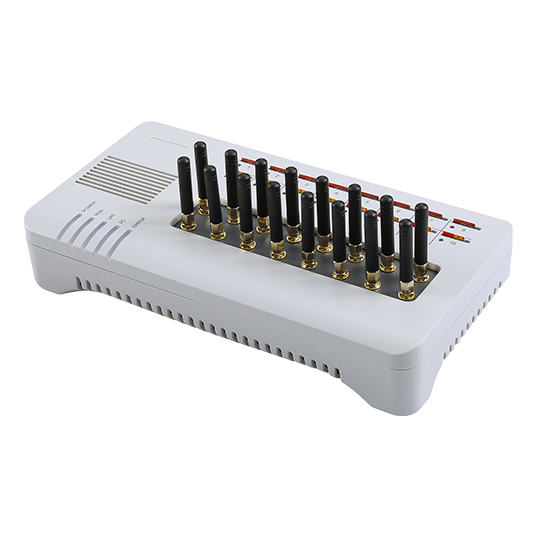
The radio should be placed where signal quality at the installed position is adequate, verified with the actual device rather than a handset and with the enclosure closed. This is the requirement that fails intermittently, because a device that registers inside a metal cabinet may still deliver unreliable service. The SIM bank should be placed where access is controlled and where the link to the radio is short and stable. The two requirements frequently point at different rooms, which is the point of the design.
Two further considerations apply. Thermal conditions matter for both elements, and the environmental guidance published by ASHRAE for data processing environments is a reasonable reference when a specification has to be written. Power should be protected for both elements, because a device that loses power loses its queue, and a bank that loses power removes every SIM behind it simultaneously.
How do you locate a fault in a paired deployment?
Work outwards from the SIM, in a fixed order.
A fixed diagnostic order prevents the substitution approach that consumes spare parts and time.
- Is the SIM visible to the gateway? If not, the fault is at the SIM, the bank slot or the link.
- Is the SIM registered? Visibility without registration points at the SIM or the operator rather than at the pairing.
- Does the paired channel carry traffic? A registered SIM that fails to carry traffic on its paired channel indicates a mapping problem.
- Does the fault follow the SIM or the slot? Moving the SIM to another slot separates the two in one step.
- Does the fault clear when the link is restarted? A fault that clears on restart is a link stability problem rather than a hardware failure.
Step four is the most informative and the least used. It converts an ambiguous symptom into a definite answer about which element is failing, and it takes a few minutes rather than a spare device.
How does the estate expand?
Add bank capacity first, then radio capacity, in that order.
The expansion sequence matters because the constraint moves as the estate grows.
In a small deployment, slots and channels grow together. Past a certain size, SIM capacity becomes the binding constraint, because a per-number traffic policy limits how much traffic each number can carry regardless of how many channels exist. At that point, adding bank capacity is the change that unblocks growth, and adding radios without it simply concentrates more traffic on the same numbers.
The published capacity ladder runs from the SIMBANK128 at $1,600.00 to the SK SIMPOOL 512 at $5,400.00, with the intermediate 256-slot model at $3,000.00. Choosing within that ladder is a question of how many numbers the traffic policy requires, not of how many channels the radios provide.
A final operational note belongs in the expansion plan: the link between bank and radio should be sized for the expanded estate before the expansion, because a link that is adequate for one gateway may not be adequate for three, and the symptom of an undersized link appears as intermittent SIM behaviour rather than as a clear capacity message.
The pairing order deserves a written record rather than an assumption. Where a bank presents 128 slots to several gateways, the mapping between bank slots and gateway channels is fixed by the pairing configuration, and a mismatch between that configuration and the physical order of the cards produces traffic from an unexpected number with no error anywhere. Verifying one slot per bank group against the register, rather than verifying the estate as a whole, is what catches the mismatch while it is still a configuration issue.
A second operational point belongs in the design: the bank and the radios have different maintenance cycles. A bank is touched when cards are replaced; radios are touched when coverage changes. Treating them as one asset means every SIM operation becomes an opportunity to disturb the radio placement, which is the configuration that took the longest to get right.
Where a specification has to cite the underlying standards, the messaging behaviour is specified by 3GPP, the numbering that recipients see follows ITU Recommendation E.164, and the equipment side is covered by the ETSI standards catalogue. Operational expectations for commercial traffic are described by M3AAWG.
Conclusion
Separating the SIM estate from the radio solves a physical problem at the cost of a network dependency, and the dependency is worth managing deliberately. Keep the link short, stable and segmented; place the radio for signal and the bank for access; document the topology so that a fault can be located by elimination rather than substitution; and verify pairing by exercising traffic on each slot group rather than by confirming visibility alone.
Expansion follows the constraint rather than the channel count. Once a per-number policy limits how much traffic each SIM can carry, bank capacity unblocks growth where additional radios would not, and the published ladder from the SIMBANK128 at $1,600.00 to the SK SIMPOOL 512 at $5,400.00 sets out the steps. The pairing documentation for the specific gateway model is the reference to follow during installation, because the mapping between bank slots and gateway channels is where silent errors occur.
Confirm the pairing order before you install. Send your gateway model, estate size and the link topology you intend to use to service@telarvo.com, or review the published models on the GoIP gateway solution pages.
FAQ
Does a remote SIM bank reduce signal quality?
No, and that is the reason to use one. The radio carries the signal and the bank only holds the SIMs, so the radio can be placed where coverage is adequate. The requirement is that the link between them is stable, because an unstable link produces SIM timeouts that present as signal problems even though the radio is unaffected.
How far can a SIM bank be from the gateways?
The practical limit is set by the link rather than by distance. Because the connection carries SIM signalling rather than user traffic, throughput is not the constraint; latency stability and physical reliability are. A short wired connection on the same switch is the simplest configuration, and it is worth preferring whenever the two elements can be in the same building.
What happens when the link between bank and gateway fails?
Every SIM behind that link becomes unavailable at once, so the failure is systemic rather than gradual. Confirm during installation that both elements recover automatically when the link is restored, and include the link in your monitoring rather than monitoring only the gateways. A fault that clears on a link restart indicates a stability problem rather than a hardware failure.
Should the SIM bank be expanded before the gateways?
Where a per-number traffic policy is the binding constraint, yes. Beyond a certain estate size the limit is how much traffic each number may carry rather than how many channels exist, so adding bank capacity unblocks growth and adding radios alone concentrates more traffic on the same numbers. Check the link capacity as part of the same decision.
{
“@context”: “https://schema.org”,
“@type”: “FAQPage”,
“mainEntity”: [
{
“@type”: “Question”,
“name”: “Does a remote SIM bank reduce signal quality?”,
“acceptedAnswer”: {
“@type”: “Answer”,
“text”: “No, and that is the reason to use one. The radio carries the signal and the bank only holds the SIMs, so the radio can be placed where coverage is adequate. The requirement is that the link between them is stable, because an unstable link produces SIM timeouts that present as signal problems even though the radio is unaffected.”
}
},
{
“@type”: “Question”,
“name”: “How far can a SIM bank be from the gateways?”,
“acceptedAnswer”: {
“@type”: “Answer”,
“text”: “The practical limit is set by the link rather than by distance. Because the connection carries SIM signalling rather than user traffic, throughput is not the constraint; latency stability and physical reliability are. A short wired connection on the same switch is the simplest configuration, and it is worth preferring whenever the two elements can be in the same building.”
}
},
{
“@type”: “Question”,
“name”: “What happens when the link between bank and gateway fails?”,
“acceptedAnswer”: {
“@type”: “Answer”,
“text”: “Every SIM behind that link becomes unavailable at once, so the failure is systemic rather than gradual. Confirm during installation that both elements recover automatically when the link is restored, and include the link in your monitoring rather than monitoring only the gateways. A fault that clears on a link restart indicates a stability problem rather than a hardware failure.”
}
},
{
“@type”: “Question”,
“name”: “Should the SIM bank be expanded before the gateways?”,
“acceptedAnswer”: {
“@type”: “Answer”,
“text”: “Where a per-number traffic policy is the binding constraint, yes. Beyond a certain estate size the limit is how much traffic each number may carry rather than how many channels exist, so adding bank capacity unblocks growth and adding radios alone concentrates more traffic on the same numbers. Check the link capacity as part of the same decision.”
}
}
]
}