Channel count is the number buyers compare and the number that least predicts performance. Two devices with the same port count can carry very different call volumes once codec choice, SIM allocation and thermal behaviour are taken into account, and the difference usually appears under sustained load rather than in a demonstration.
This guide compares the 8, 16 and 32 channel tiers on the dimensions that decide a voice deployment: the distinction between channels and concurrent calls, the cost of codec transcoding, the SIM ratio each tier needs, the facility requirements at rack density, and a load test method that produces a number you can defend in a capacity plan.
What is the difference between channels and concurrent calls?
Channels are physical; concurrency is what sustains.
A channel is a cellular path that can carry one call, so a 16-channel device cannot hold more than 16 simultaneous calls regardless of the platform behind it.
The distinction matters because platforms report concurrency as a capacity figure while the physical limit is the channel count, and the lower of the two governs. A platform licensed for 64 concurrent calls behind a 16-channel gateway delivers 16. A 32-channel gateway behind a platform licensed for 16 delivers 16. Matching the two is the first step in capacity planning, and mismatches in either direction waste money.
A second layer complicates the arithmetic: not every channel is available at every moment. A channel occupied by a call in its teardown phase, or briefly unavailable while a SIM re-registers, reduces the practical maximum below the nominal count. That reduction is small in steady operation and larger in a deployment where SIMs rotate or where registration is unstable, which is why the load test described below belongs in the acceptance process rather than in the specification sheet.
How much does codec choice affect capacity?
Transcoding is the common hidden cost.
When the two ends of a call do not share a codec, the device or platform converts between them, consuming processing capacity that reduces the call volume a device can sustain.
The practical rule is to negotiate a single codec end to end wherever the deployment allows it. Where the mobile side imposes a codec the platform does not support, transcoding becomes necessary, and its cost should be measured rather than assumed. On an 8-channel device the effect is usually invisible; on a 32-channel device running near capacity, transcoding can be the difference between meeting a peak and dropping calls during it.
Capacity figures should therefore be quoted with the codec configuration attached. A claim of 32 concurrent calls is meaningful only alongside the codec used, and any comparison between models that omits it is not a comparison. Where a vendor cannot state the configuration behind a capacity number, treat the number as indicative and verify it in your own load test.
The codecs and their negotiation are standardised work, and the 3GPP specifications cover the cellular side while the ETSI standards catalogue covers the equipment and network side. Component documentation from module vendors such as Quectel is a useful reference when you need to know what the radio itself supports before planning codec strategy.
What SIM ratio does each channel tier need?
Enough slots to keep per-number load inside limits.
The SIM ratio determines how much traffic can be distributed across numbers, and it is the specification that most affects operating behaviour.
| Model | Ports | SIM slots | Ratio | List price (USD) |
|---|---|---|---|---|
| SK VOIP Gateway 4-4 | 4 | 4 | 1:1 | $260.00 |
| SK VOIP Gateway 8-8 | 8 | 8 | 1:1 | $480.00 |
| SK VOIP Gateway 8-32 | 8 | 32 | 1:4 | $620.00 |
| SK VOIP Gateway 16-16 | 16 | 16 | 1:1 | $899.00 |
| SK VOIP Gateway 16-128 | 16 | 128 | 1:8 | $1,200.00 |
| SK VOIP Gateway 32-32 | 32 | 32 | 1:1 | $1,550.00 |
| SK VOIP Gateway 32-512 | 32 | 512 | 1:16 | $2,520.00 |
Read the table as two separate purchases. The port count sets the simultaneous call ceiling. The SIM slot count sets how widely you can distribute traffic across numbers, which is a policy choice driven by how much volume you are willing to place from one number. A deployment with modest call volume but a strict per-number policy belongs in the 1:8 or 1:16 row, while a deployment with high call volume and a permissive policy is served by a 1:1 configuration.
The cost difference is substantial: moving from a 16-16 at $899.00 to a 16-128 at $1,200.00 buys eight SIM slots per port for $301.00, whereas moving from 16-16 to 32-32 at $1,550.00 buys twice the channels for $651.00. Choosing the wrong axis wastes more than the difference between models.
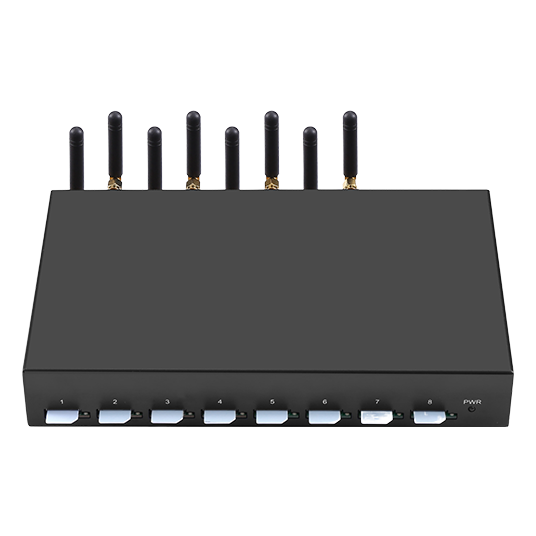
What does rack density require?
Power, thermal headroom and antenna routing, in that order.
The facility requirements scale with channel count, and each of the three produces a failure that looks like a software fault.
Power is the simplest to plan and the most often understated, because the figure quoted is idle consumption rather than consumption under continuous call load. Size the circuit for the loaded figure and leave headroom for the device to draw more when a SIM registers after a power event.
Thermal headroom decides whether the device sustains its rated capacity through a warm afternoon. A device that runs cooler than its limit at moderate load may throttle or behave unpredictably at continuous capacity. The widely used environmental guidance for IT equipment published by ASHRAE and the environmental test standards published by the International Electrotechnical Commission are the normal references when a thermal requirement has to be stated in a procurement document.
Antenna routing is the requirement that fails intermittently. A rack-mounted device enclosed in metal can register on a network and still deliver unreliable audio, and the symptom is intermittent enough to be attributed to the carrier. Decide the antenna position before the device is mounted, and verify signal quality at the installed position rather than at the rack door.
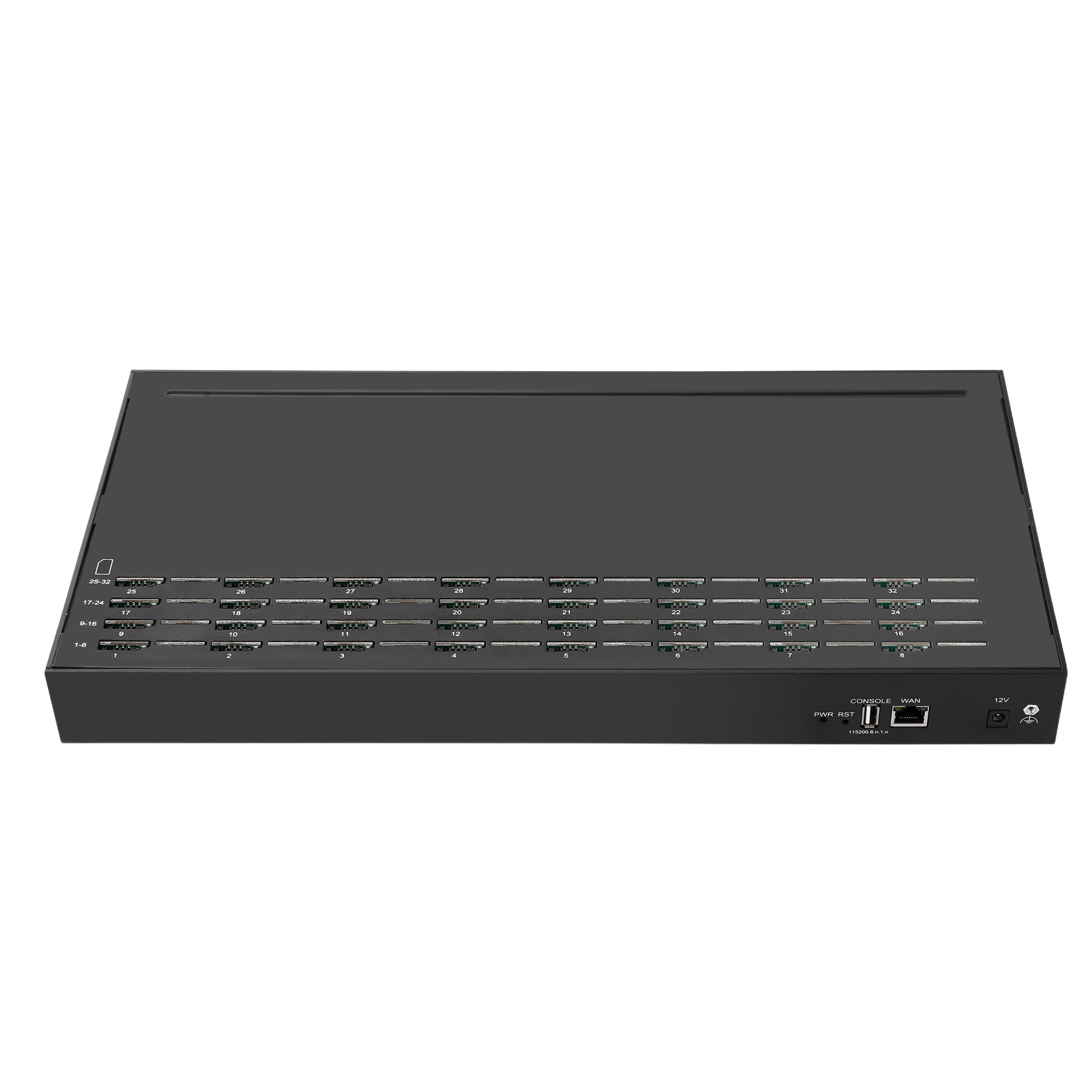
How do you run a load test that produces a usable number?
Drive sustained calls and find where quality breaks.
A capacity figure is only useful if it states the point at which service degrades, because a device that connects 32 calls with unusable audio has not delivered 32 channels.
The method that produces a defensible number has four steps. Establish a baseline with a single call and record audio quality, setup time and the codec negotiated. Increase concurrent calls in defined steps and record the same three measures at each step, noting the point at which setup time rises or audio quality falls. Hold the deployment at that point for a sustained period, because a device that manages a peak for a minute may not manage it for an hour. Finally, repeat the peak run with the SIM estate at the ratio you intend to operate, since SIM behaviour under load is part of the capacity.
The result is a capacity statement with a configuration attached: this many concurrent calls, at this codec, with this SIM ratio, sustained for this duration, before setup time exceeded this threshold. That statement is what a capacity plan needs, and it is also what makes a later dispute about performance resolvable.
When should you add channels instead of SIM slots?
Add channels when calls block; slots when numbers do.
The two symptoms are different and lead to different purchases.
Channel exhaustion shows up as calls that fail to connect while the device is otherwise healthy, and it correlates with call volume rather than with a specific number. SIM exhaustion shows up as pressure on a small set of numbers, visible as a rising share of traffic from one number and, where an operator applies limits, as rejection of specific numbers. Measuring which of the two is happening prevents the common error of buying channels to solve a number problem.
A third signal is worth watching: rising call setup time without call failures. That usually indicates contention rather than exhaustion, and the remedy may be scheduling rather than hardware. Where the peak is brief and predictable, capping concurrency slightly below the maximum can preserve quality at a lower cost than adding a device.
Repeat the load test after any change to codec, firmware or SIM estate, because a capacity figure that is not re-measured after a change describes a configuration that no longer exists. Keep the recorded result with the device serial number and firmware version, so that a later comparison is between two known configurations rather than between two recollections of how the device used to behave.
Conclusion
Channel count sets the ceiling and SIM ratio sets the operating behaviour, and the two should be chosen independently. Concurrency cannot exceed the channel count regardless of platform licensing, and transcoding can reduce what a device sustains below its nominal figure, so any capacity claim needs its codec configuration attached. At rack density, power, thermal headroom and antenna placement determine whether the rated capacity survives a warm afternoon.
The load test that makes the plan defensible records the point at which setup time rises, sustained over an hour at the SIM ratio you will actually operate. With that number, choosing between the 16-port, 128-slot configuration at $1,200.00 and the 32-port, 32-slot configuration at $1,550.00 becomes an arithmetic question rather than a judgement call.
Measure your concurrency before choosing a tier. Send your peak concurrent calls, codec requirement and per-number policy to service@telarvo.com, or review the published tiers on the VoIP gateway solution pages.
FAQ
How many concurrent calls can a 32-channel gateway handle?
At most 32, because each call occupies one channel. The practical figure is usually lower once transcoding, teardown time and brief re-registration gaps are taken into account. Measure the point at which setup time rises rather than the point at which the last call connects, and state the codec configuration alongside the result so the figure can be compared with another model.
Does adding SIM slots increase call capacity?
Not directly, because a SIM slot does not add a channel. Slots determine how widely traffic can be distributed across numbers, which matters where per-number sending or calling limits apply. If calls are being blocked while numbers are not under pressure, the constraint is channels. If numbers are under pressure while calls connect normally, the constraint is slots.
Why does call quality drop at high concurrency?
Three common causes exist: transcoding between codecs the two ends do not share, thermal behaviour under sustained load, and cellular conditions at the installed position. The first is visible in the negotiated codec, the second appears only after a period at load, and the third is intermittent and position dependent. Testing at the installed location for an hour separates them.
Is a higher channel count always better?
Only where the traffic justifies it. Channels that sit idle still consume power, rack space and thermal budget, and a smaller device operated near its capacity often performs more predictably than a larger one operated far below it. Match the tier to the measured peak, and revisit the decision when the peak changes rather than buying headroom you cannot yet use.
{
“@context”: “https://schema.org”,
“@type”: “FAQPage”,
“mainEntity”: [
{
“@type”: “Question”,
“name”: “How many concurrent calls can a 32-channel gateway handle?”,
“acceptedAnswer”: {
“@type”: “Answer”,
“text”: “At most 32, because each call occupies one channel. The practical figure is usually lower once transcoding, teardown time and brief re-registration gaps are taken into account. Measure the point at which setup time rises rather than the point at which the last call connects, and state the codec configuration alongside the result so the figure can be compared with another model.”
}
},
{
“@type”: “Question”,
“name”: “Does adding SIM slots increase call capacity?”,
“acceptedAnswer”: {
“@type”: “Answer”,
“text”: “Not directly, because a SIM slot does not add a channel. Slots determine how widely traffic can be distributed across numbers, which matters where per-number sending or calling limits apply. If calls are being blocked while numbers are not under pressure, the constraint is channels. If numbers are under pressure while calls connect normally, the constraint is slots.”
}
},
{
“@type”: “Question”,
“name”: “Why does call quality drop at high concurrency?”,
“acceptedAnswer”: {
“@type”: “Answer”,
“text”: “Three common causes exist: transcoding between codecs the two ends do not share, thermal behaviour under sustained load, and cellular conditions at the installed position. The first is visible in the negotiated codec, the second appears only after a period at load, and the third is intermittent and position dependent. Testing at the installed location for an hour separates them.”
}
},
{
“@type”: “Question”,
“name”: “Is a higher channel count always better?”,
“acceptedAnswer”: {
“@type”: “Answer”,
“text”: “Only where the traffic justifies it. Channels that sit idle still consume power, rack space and thermal budget, and a smaller device operated near its capacity often performs more predictably than a larger one operated far below it. Match the tier to the measured peak, and revisit the decision when the peak changes rather than buying headroom you cannot yet use.”
}
}
]
}