Most searches for a SOCKS5 proxy end at a subscription page, which is why the hardware question is difficult to answer from search results alone. The two approaches solve different problems: a subscription gives you someone else’s addresses, while a gateway gives you addresses that terminate on your own equipment and behave consistently because nothing about them is shared.
This guide compares the 4, 8 and 16 port configurations of a SOCKS5 proxy gateway on the dimensions that decide a deployment: how the protocol behaves on hardware, how port count translates into concurrent sessions and bandwidth, how addresses are handled and rotated, and what to verify before accepting a device.
How does SOCKS5 behave on dedicated hardware?
It behaves the same; only the endpoint changes.
The protocol itself is fixed, and a gateway implements it over cellular connections that are yours rather than shared with other subscribers.
SOCKS5 is a circuit-level proxy protocol, defined in RFC 1928, which establishes a TCP connection on behalf of a client without interpreting the application protocol. That property is why it handles protocols that an HTTP proxy cannot, and why it is the usual choice where the client is not a browser.
On hardware, the protocol is implemented by the device and the address the far end sees is the one assigned by the mobile network to that SIM. Three consequences follow. The address is not shared with unknown third parties, which is what makes behaviour consistent. The address changes when the network reassigns it, which requires a rotation policy rather than an assumption of permanence. And the address belongs to a specific operator, so its characteristics depend on the network that issued it.
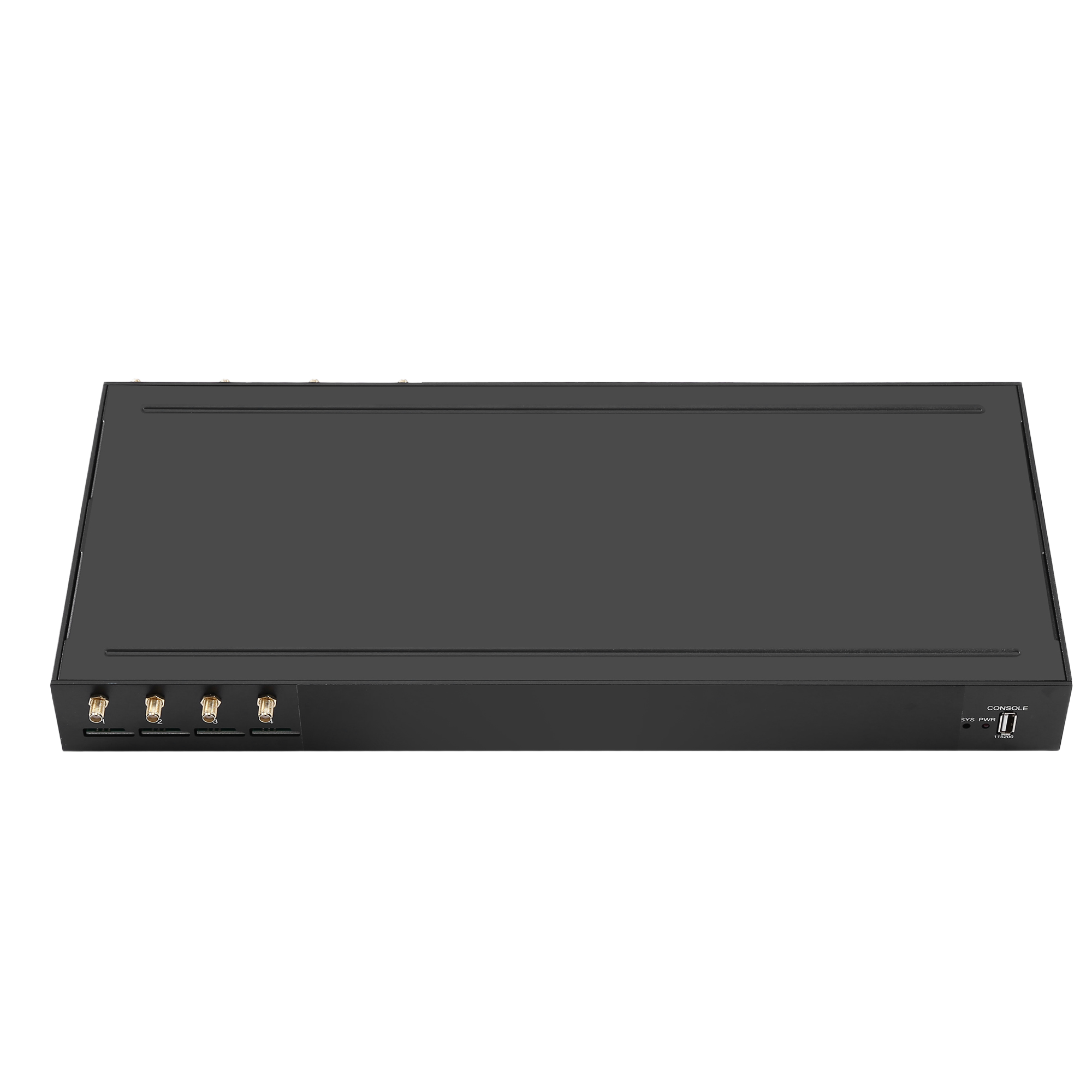
The published SK Multi-WAN proxy gateway range supports SOCKS5 alongside HTTP and HTTPS proxy functions, port forwarding and SMS send and receive, which means one device can serve several integration patterns without a second appliance.
How does port count translate into capacity?
Ports set concurrent sessions, not total traffic.
The number that matters is how many simultaneous connections the deployment must sustain, which is different from how much data it transfers in a day.
| Model | Ports | Network | List price (USD) |
|---|---|---|---|
| SK Multi-WAN 4-Port Proxy Gateway | 4 | 4G | $410.00 |
| SK Multi-WAN 8-Port Proxy Gateway | 8 | 4G | $760.00 |
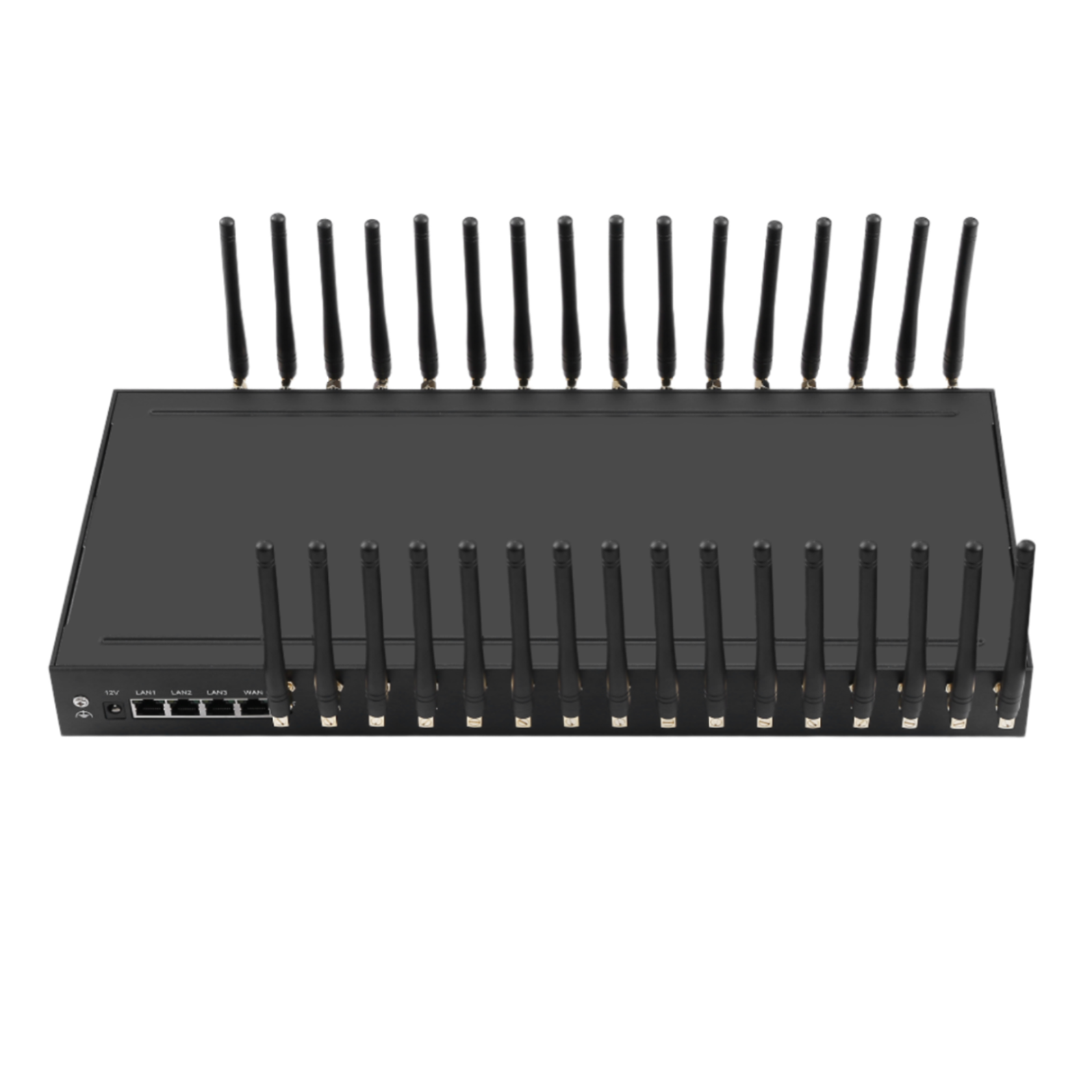
| SK Multi-WAN 16-Port Proxy Gateway | 16 | 4G | $1,380.00 |
The step from four ports to eight costs $350.00 and doubles the number of addresses available simultaneously; the step from eight to sixteen costs $620.00 and doubles it again. Framing the purchase as the cost of an additional concurrent address is more useful than comparing headline prices, because it makes the tier choice arithmetic.
Two qualifications keep the arithmetic honest. A port does not guarantee a fixed throughput, because the mobile network sets that independently, and a deployment driving each address at its ceiling will find that the aggregate is limited by the network rather than by the device. And sessions are not the same as ports: a single port can carry many concurrent TCP connections, so the practical limit is usually the network and the client behaviour rather than the port count.
How large should the outbound path be?
Size it for aggregate peak, not the sum.
Cellular links rarely deliver their theoretical maximum simultaneously, and planning on the sum produces an over-specified and idle circuit.
A workable method is to measure a single port’s sustained throughput on the target network, multiply by a concurrency factor you have measured rather than assumed, and add headroom. The concurrency factor is the part worth measuring, because it depends on how many ports are transmitting at once and how the operator schedules them. On many deployments the factor is well below the port count.
The outbound path also carries management and log traffic, which should be separated. Where it is not, a saturated circuit delays management access precisely when somebody needs to investigate the saturation, and that coincidence is the most common reason a diagnosis takes longer than it should.
Network address translation sits between the deployment and the wider internet, and its behaviour affects what the far end observes. The private address ranges that should not appear on the public path are defined in RFC 1918, and the translation behaviour itself is described in RFC 3022. Both are worth reading when the deployment must guarantee a particular source address behaviour.
How are addresses handled and rotated?
Every address is yours, and rotation is a policy you choose.
Dedicated addresses change the rotation question from whether you can get one to when you should let it change.
Four rotation triggers are practical. Per session rotates after each connection completes, which suits workloads that treat every request independently. Per elapsed time rotates on a schedule, which suits workloads that need a stable address for a defined period. Per failure rotates an address after unsuccessful attempts, which responds to network conditions rather than to a clock. And manual rotation gives an operator control, which is appropriate where changes must be coordinated with a business process.
The constraint on all four is state. Any workload that authenticates, holds a session or maintains a shopping cart depends on the address remaining stable for the duration of that interaction, and rotation that interrupts it is worse than no rotation. Decide per workload which triggers are permissible, and record the decision, because the same device may serve workloads with different requirements.
The device needs to expose enough logging to attribute activity to an address and a time. Where the deployment supports multiple customers or teams, per-port attribution is the minimum, because an address-level report that cannot be tied to a user is not actionable during an investigation.
What are the compliance boundaries for proxy hardware?
Legitimate uses exist, and they are specific.
Proxy hardware is a general-purpose networking tool, and like any such tool its legitimacy depends on what the operator does with it.
The uses that are straightforwardly legitimate are well defined: testing how a service behaves from a particular country, verifying that geo-targeted content resolves correctly, monitoring your own properties as a user in a market would see them, and separating address space for security or reliability reasons within your own infrastructure.
The responsibility that follows is operational rather than technical. Traffic must be authorised by the party affected, authenticated so that access is attributable, and logged so that activity can be reconstructed. These are the same expectations that apply to any shared network service, and industry practice material such as the guidance published by M3AAWG is a reasonable reference for what an accountable operator documents.
What a hardware deployment should therefore include is access control that identifies the user, logging that survives an incident, and a written scope of what the deployment is for. Those three items are cheap to add at design time and difficult to add after an incident.
How do you verify a device before accepting it?
Confirm the protocol on the exact firmware.
A device that advertises SOCKS5 may support it in one direction only, or may support it differently across its ports.
- Protocol check per port. Connect through each port using SOCKS5 and confirm the address observed by a third-party endpoint matches the expected port.
- Authentication. Confirm the authentication method works with your clients and cannot be bypassed by omitting credentials.
- Dual protocol. Confirm SOCKS5 and HTTP proxy functions coexist on the same device without interfering.
- Rotation behaviour. Trigger each configured rotation rule and confirm it fires when documented, and does not fire mid-session where that would be disruptive.
- Logging. Confirm activity can be attributed to a port and a timestamp from the device record alone.
- Thermal behaviour at load. Run all ports concurrently long enough for the enclosure to reach steady state and re-check the protocol tests.
Item six is the one that distinguishes a bench result from a deployment result, particularly at sixteen ports where the enclosure carries the thermal load of every radio at once. A device that passes at idle and degrades under sustained load will present as an intermittent network problem, which is expensive to diagnose.
Where the deployment must satisfy an equipment framework rather than only an internal requirement, the ETSI standards catalogue covers the network and equipment side of the same specification work.
Conclusion
Proxy gateway hardware and proxy subscriptions are different products, not competing tiers of the same one. Hardware gives you addresses that terminate on your own equipment and behave consistently because they are not shared, at the cost of managing the estate, the rotation policy and the compliance obligations that come with operating a shared service. The protocol behaviour is fixed by specification; what varies between models is port count, logging and thermal headroom.
Port count is best understood as the cost of an additional concurrent address: the published range steps from the four-port configuration at $410.00 through the eight-port at $760.00 to the sixteen-port at $1,380.00. Sizing should follow measured concurrency rather than the sum of theoretical rates, and acceptance should include a sustained load run on the exact firmware, because the difference between a device that passes at idle and one that passes under load is the difference between a deployment and a recurring investigation.
Size on measured concurrency, not on the sum of advertised rates. Send your concurrent session requirement, rotation policy and logging needs to service@telarvo.com, or review the published models on the proxy gateway solution pages.
FAQ
Is SOCKS5 better than an HTTP proxy for hardware deployment?
They solve different problems. SOCKS5 operates at the connection level and carries protocols an HTTP proxy cannot, which suits clients that are not browsers. An HTTP proxy understands requests, which suits filtering and inspection. A device supporting both lets one appliance serve different clients, and the verification step is to confirm both functions coexist on the firmware you receive.
How many concurrent sessions does one port support?
A single port can carry many simultaneous TCP connections, so the practical ceiling is usually the mobile network and the client behaviour rather than the port itself. What the port count determines is how many distinct addresses are available at once. Size on the number of addresses your workload requires concurrently, then confirm the achievable session count by measurement.
Do mobile proxy addresses stay the same permanently?
They change, because the mobile network reassigns addresses independently of your equipment. That is why a rotation policy is a design decision rather than a setting. Decide per workload whether rotation may occur mid-session, since any workload that authenticates or holds state depends on the address remaining stable for the duration of that interaction.
What logging should a proxy deployment keep?
Enough to attribute activity to an address, a port and a time, and enough to identify which user or team initiated it. Without that, a complaint cannot be investigated and a normal security review cannot be answered. Access control that identifies the user, logging that survives an incident, and a written scope for the deployment are the three items that are cheap at design time and difficult afterwards.