Expansion decisions go wrong when the constraint is identified by assumption. A deployment that adds gateways because traffic is rising may find that the real limit was the number of SIMs available for distribution, in which case the additional radios carry the same traffic across the same numbers and change nothing.
This guide covers the expansion paths available from a 64-port TGW chassis, how the three paths compare on cost and operational effort, how to establish which constraint actually applies, and what has to be in place before the estate grows.
What are the expansion paths from a 64-port chassis?
Add chassis, add SIM capacity, or add gateways.
Each path addresses a different constraint, and choosing the wrong one is the most common expansion error.
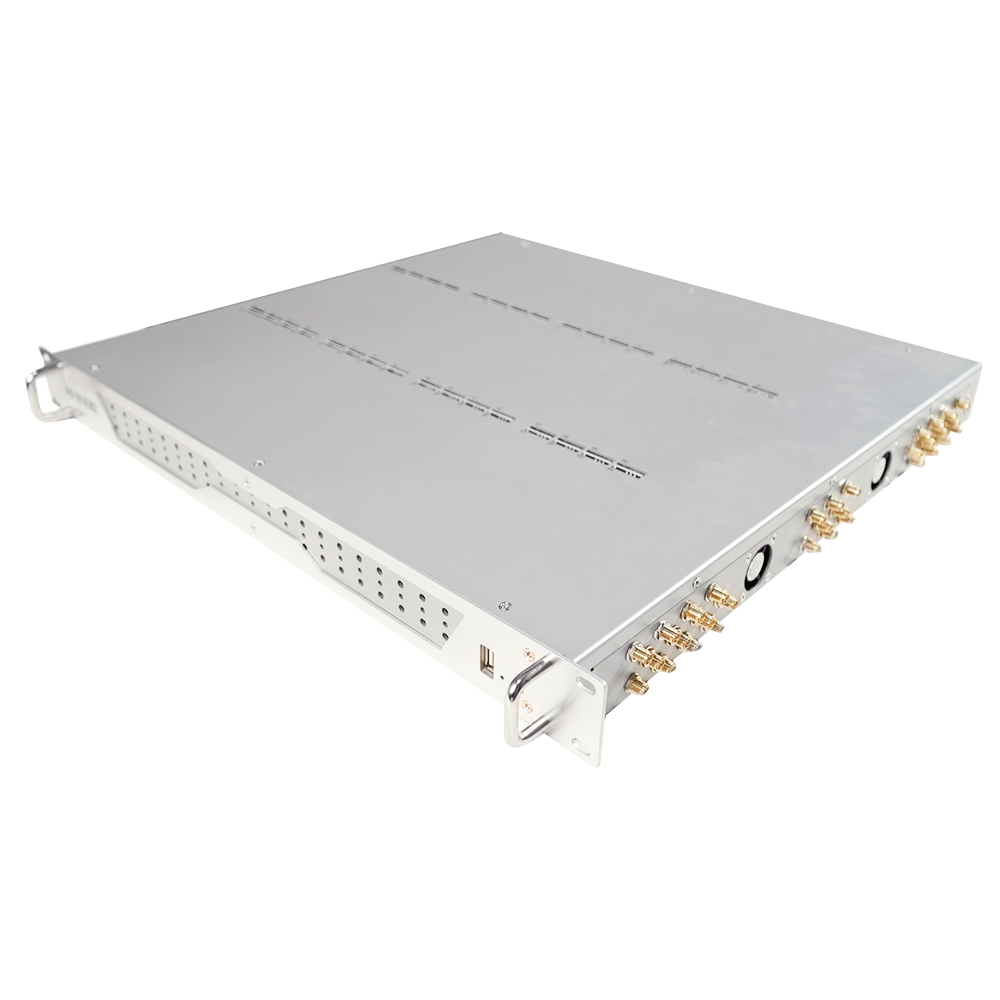
Adding a second chassis increases both ports and slots, which addresses a genuine capacity constraint at the cost of a second device to operate. Adding SIM capacity through a bank or pool increases the numbers available for distribution without adding radio channels, which is correct when a per-number policy is the binding limit. Adding gateways from the broader range increases channels, which suits a deployment whose consumption is limited by simultaneous transmission rather than by the number of available numbers.
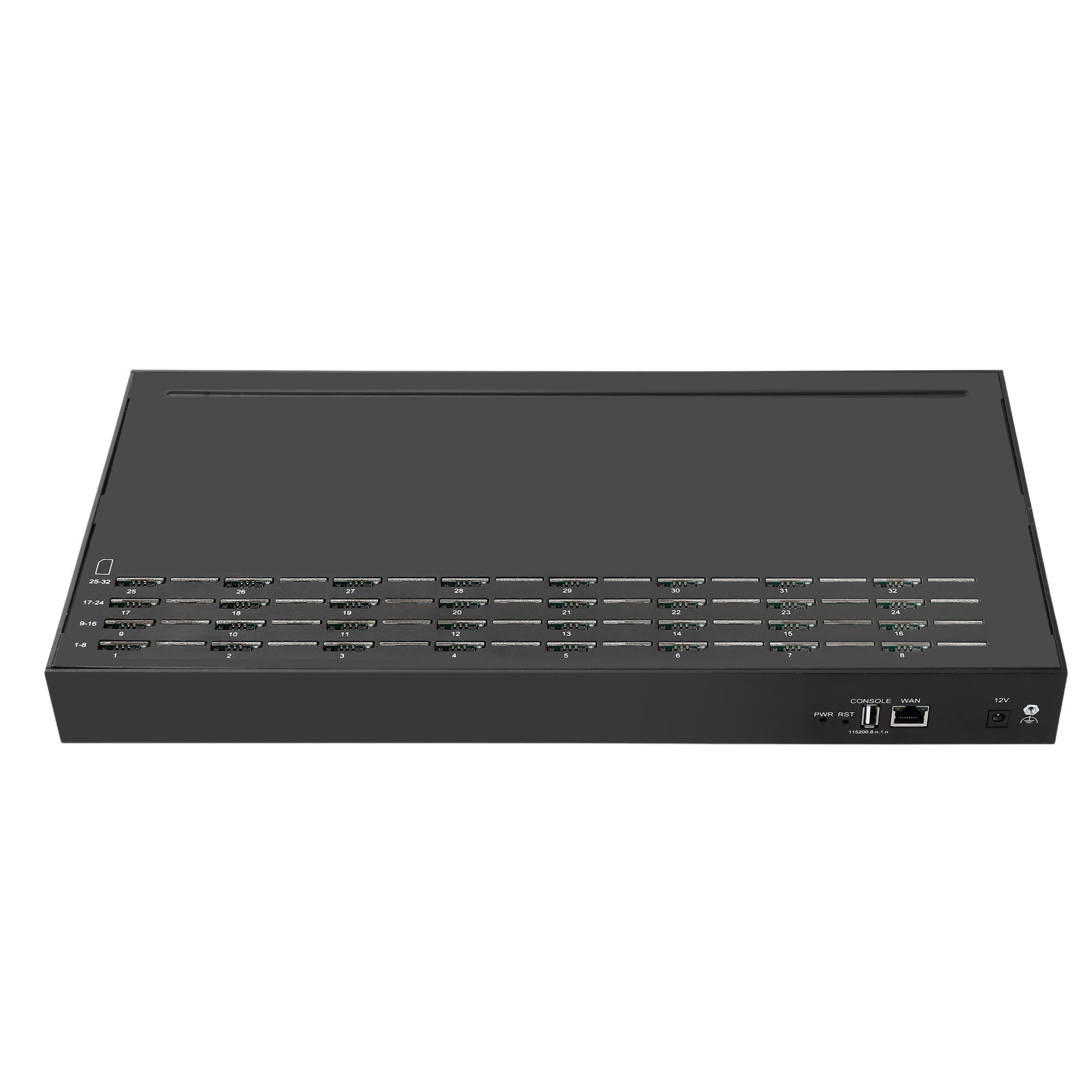
The published TGW-SMS Gateway 64-64 at $1,715.00 provides 64 ports and 64 SIM slots. Scaling the SIM estate beyond that is normally done through the SIMPOOL range, which runs from 128 slots at $1,800.00 through 256 at $3,000.00 to 512 at $5,400.00 with compatibility stated for the SK gateway range, or through the SIMBANK128 at $1,600.00 where the requirement is a bank for GoIP gateways.
How do you identify which constraint applies?
Watch whether channels or numbers limit throughput.
The two constraints produce different symptoms, and the difference is visible in the logs before it is visible in delivery performance.
Where channels are the constraint, submissions queue while individual numbers are not under pressure, and the queue depth correlates with total volume rather than with any particular SIM. Where numbers are the constraint, throughput concentrates on a subset of the estate, a small number of SIMs carry a disproportionate share of the traffic, and delivery problems appear against those numbers rather than across the deployment.
A third signal is worth checking before either: whether the operator is limiting accepted traffic. Where submission completes quickly but delivery reports lag, the limit is outside the estate, and no expansion resolves it. Measuring the accepted rate before expanding prevents a purchase that does not change the outcome.
How do the paths compare on cost and effort?
The cheapest path addresses the real constraint.
Comparing the options on capital alone produces the wrong answer when the operational lines differ.
| Path | Constraint addressed | Entry cost (USD) | Operational change |
|---|---|---|---|
| Add SIM capacity (128 slots) | Number availability | $1,600.00 to $1,800.00 | Estate managed centrally, one more link in the failure domain |
| Add SIM capacity (512 slots) | Number availability at scale | $5,400.00 | Consolidated estate across gateways |
| Add GPS capacity (SK range) | Concurrent channels | From $238.00 | Additional devices to configure and monitor |
| Add a second TGW chassis | Both | $1,715.00 | Second device, mapping documentation extends |
The SIM capacity paths cost more in capital and less in configuration. The channel paths cost less in capital and more in operating effort, because every additional device needs its own naming, monitoring and mapping. Where the team is small, centralising the SIM estate is frequently the change that reduces work rather than adding it.
What has to be in place before expanding?
Mapping documentation, monitoring, and network capacity.
Expansion without documentation converts a manageable estate into an unexplained one.
Three prerequisites apply. The mapping documentation must be current, because every expansion step adds relationships between numbers, slots, channels and destinations that later investigations depend on. The monitoring must report per-SIM state rather than only device presence, because the constraint you are expanding against may not be the constraint that appears next. And the network between any SIM layer and any devices must be sized for the expanded estate rather than the current one, since an undersized link presents as intermittent SIM behaviour rather than as a capacity message.
A fourth item is worth adding where the estate spans sites: confirm the link topology before adding elements, because a design that works for one bank and one chassis may not extend to three of each without a change to the network rather than the equipment.
How should the expansion be sequenced?
Expand the layer under pressure, then re-measure.
Sequencing by measurement rather than by plan avoids paying for capacity that does not address the limit.
- Measure the accepted rate to confirm the limit is inside the estate rather than at the network.
- Identify the constraint by observing whether queueing or number concentration dominates.
- Expand that layer only, and re-measure the same figures afterwards.
- Update the mapping documentation as part of the change rather than as a follow-up task.
- Re-measure after a full load cycle, because some constraints reappear at a different point in the estate.
Step three is where discipline matters. Expanding two layers at once makes the result uninterpretable, because neither the cost nor the benefit can be attributed, and the next expansion decision starts from an ambiguous baseline.
What does the electrical plan for a 512-SIM estate look like?
Power and thermal capacity sized for peak load.
At this scale the electrical plan is part of the deployment rather than a facility detail, and the figures that matter are the ones measured under load.
Power should be sized for the case in which every radio is transmitting, because that is what a batch produces, and it should be supplied from a protected circuit with capacity left for the next expansion. Thermal planning should start from the peak power figure converted to heat rejected into the rack, and it should be verified after the enclosure reaches steady state rather than at the moment the equipment is switched on. The widely used environmental guidance for data processing environments published by ASHRAE is a reasonable reference when the operating envelope has to be stated in a specification, and the International Electrotechnical Commission publishes the environmental test standards that cover the equipment side.
Where the estate is centralised in a SIM bank or pool, the link between the SIM layer and the radios belongs in the same plan. A link sized for the current estate behaves differently once several gateways share it, and the symptom of an undersized link is intermittent SIM behaviour rather than a clear capacity message.
Where the deployment carries commercial traffic, the operational expectations for consent and identification are described by M3AAWG, and the equipment framework that applies in a given market is published through bodies such as the ETSI standards catalogue.
Sizing the SIM estate deserves the same arithmetic as sizing channels. Start from the maximum volume you are willing to place from a single number, divide peak traffic by that figure, and add headroom for numbers removed from service. Where the result exceeds the number of slots the chassis carries, the constraint is the SIM layer rather than the radio, and the expansion decision follows from that.
Where the estate is already centralised, the same arithmetic applies to the pool rather than to the chassis. Adding slots unblocks growth when per-number policy is the limit; adding radios does not, because it concentrates more traffic on the same numbers and produces the same aggregate without changing what any individual number carries.
Where the deployment has to satisfy a market framework, the ITU Telecommunication Standardization Sector publications are a neutral reference for the terminology, and the ETSI standards catalogue covers the equipment side.
A final operational point belongs in the expansion plan: the mapping documentation should be updated as part of the change rather than afterwards. Every expansion step adds relationships between numbers, slots, channels and destinations, and a register that drifts from the physical estate is worse than no register because later investigations trust it. Reconciling the register against the device state after each expansion is a small task that keeps the estate diagnosable.
Where the expansion is driven by a customer commitment rather than by internal growth, record the commitment alongside the capacity figure it produced. A capacity plan that cannot be traced to the requirement it serves becomes impossible to revise when the requirement changes, and the next expansion decision starts from an assumption nobody can locate.
Conclusion
Expansion from a 64-port chassis is a constraint identification exercise before it is a purchasing decision. Where the limit is the number of numbers available for distribution, adding SIM capacity through a bank or pool is the change that unblocks growth; where the limit is simultaneous transmission, additional channels are. Where the limit is the operator’s accepted rate, neither expansion helps.
The published entry points are the TGW-SMS Gateway 64-64 at $1,715.00 for the chassis, the SIMBANK128 at $1,600.00 and the SIMPOOL range from $1,800.00 to $5,400.00 for SIM capacity, and the SK range from $238.00 upward for additional channels. Expanding one layer at a time, re-measuring the same figures afterwards, and keeping the mapping documentation current are what make the result interpretable and the next decision straightforward.
Identify the constraint by measurement before expanding. Send your current throughput, number inventory and queue behaviour to service@telarvo.com, or review the published configurations on the SK-SMS Gateway pages and the SIMPOOL pages.
FAQ
Should I add a second chassis or a SIM bank first?
Identify the constraint first. Where throughput is limited by the number of numbers available for distribution, a bank or pool unblocks growth without adding channels. Where the limit is simultaneous transmission, another chassis or gateway adds channels. Where submission completes quickly but delivery lags, the operator is the limit and neither purchase changes the outcome.
How many SIMs can one chassis support?
The published TGW-SMS Gateway 64-64 provides 64 SIM slots on board, and larger estates are normally built by adding SIM capacity through a bank or pool with compatibility confirmed for the gateway range you operate. Confirm the supported ratio of gateways to SIM hardware at model level rather than assuming it from the product family.
When should the estate be centralised?
When SIM access becomes an operational burden or when several gateways share the same estate. Centralising allows the numbers to sit where access is controlled while the radios sit where coverage is adequate, and it reduces the work of replacing or reassigning a SIM to a configuration change rather than a site visit.
What documentation should be updated during expansion?
The mapping between numbers, slots, channels and destinations, together with the monitoring set and the network topology between any SIM layer and the devices. Updating it as part of the change rather than afterwards is what keeps later investigations tractable; a stale mapping is worse than none because it is trusted.