Remote control converts a physical task into a configuration change, which is the whole of its value and the whole of its risk. The value is that nobody travels; the risk is that a change nobody can see being made is also a change nobody supervises.
This guide covers how to operate a remote SIM pool controller rather than how to specify one: which operations it makes remote, how a change should be applied in groups rather than across the estate, why verification by traffic matters more than a status field, what to record, and what belongs in the acceptance test.
What does remote control actually change?
It turns a site visit into a configuration change.
The change is in the cost and the observability of an operation, not in what the operation does.
Four routine operations become remote. Assigning a SIM to a different gateway is a policy change rather than a physical move. Taking a number out of service is an administrative action rather than a card removal. Redistributing capacity when traffic moves between customers is a reassignment rather than a site visit. And investigating a fault begins from reported state rather than from a physical inspection.
The observability change is the part that needs managing. A person standing at a rack can see what they are doing and a colleague can watch; a remote change is visible only through the interface that performs it. That does not make remote operation unsafe, but it means the controls that a physical visit provides incidentally have to be constructed deliberately, which is what the rest of this guide is about.
Which operations can be performed remotely?
Allocation, suspension, reassignment and inspection.
Each has a different blast radius, and the radius determines how the operation should be applied.
| Operation | Effect | Scope |
|---|---|---|
| Inspection | Reads state without changing it | None |
| Suspension | Takes one SIM or group out of service | One SIM or group |
| Reassignment | Moves a SIM or group to another gateway | One or more gateways |
| Allocation policy change | Alters how the estate is assigned | The whole estate |
The last row is the one to treat with the same care as a platform change. An allocation policy change affects every assignment that depends on the policy, which means its blast radius is the estate rather than the device. Applying it outside a change window, or without a recorded previous state, turns a configuration task into an outage with an unknown starting point.
The first three can be applied incrementally. That distinction — between operations that touch one object and one that touches the rule — is the practical basis for deciding how much ceremony each requires.
How should a remote change be applied?
Make changes in groups and verify by traffic.
The sequence is the same as for any configuration change, with one addition specific to remote work.
- Identify the group the change affects, and confirm the affected SIMs are idle rather than assuming they are.
- Record the current state so the change can be reverted without reconstruction.
- Apply the change to that group only, rather than to the estate.
- Verify by exercising traffic on an affected SIM in both directions, rather than by reading a status field.
- Record the change as part of the operation rather than afterwards.
- Move to the next group only when the previous one is confirmed.
Steps two and four are the ones that make remote operation safe. A recorded previous state is what allows a change to be undone, and traffic verification is what distinguishes a change that has taken effect from one that has been accepted by the interface but not applied to the estate.
Why does a remote change need verification by traffic?
Because a status field reports intent, not behaviour.
The distinction is the same one that applies to any configuration interface, and it matters more when nobody is standing at the equipment.
An interface that accepts a change reports the new state, and the report reflects what the system believes rather than what the estate is doing. Three kinds of divergence are possible: a change that was recorded but not applied, a change that was applied but not yet effective because a re-registration is in progress, and a change that took effect on a different object from the one intended. A status field reports the first as success; only traffic distinguishes the three.
The verification is small. Exercise one affected SIM in each direction and confirm that the number presented or received matches the intended assignment. That single check catches all three divergences, and it takes less time than investigating a fault caused by the change.
Where the deployment carries traffic with a compliance dimension, verification also has an evidentiary value: the check confirms that the sender identity in use is the one the change intended, and the consent and identification expectations described by M3AAWG attach to the identity the recipient sees rather than to the configuration.
How should changes be recorded?
Record the change as part of the operation.
A record written afterwards is a record written from memory, and memory is unreliable at the moment a change appears to have failed.
Four fields make a remote change auditable: what was changed, the state before the change, who performed it, and when. Where the estate serves several customers, a fifth field naming the affected customer is what allows a report to be produced per relationship rather than per device, which is usually the form a customer enquiry takes.
The practice that keeps the record useful is making it part of the operation rather than a follow-up task. In an interface that supports it, the change and its record are the same action. Where it does not, a change ticket closed only after the record is written achieves the same result, because the closure is the trigger.
Where the deployment has to reference an equipment or market framework, the ETSI standards catalogue covers the network and equipment side of the same requirement, and the messaging behaviour behind the traffic is specified by 3GPP.
What are the risks of remote operation?
A change that is not visible cannot be supervised.
The risks are the mirror of the benefits, and each has a specific mitigation.
Blast radius is the first: an allocation policy change affects the whole estate, so it belongs in a change window with a recorded previous state. Silent divergence is the second: an accepted change that has not taken effect, which traffic verification catches. Concurrent operators are the third: two people changing overlapping groups at once, which per-group change ownership prevents. And attribution is the fourth: a change that cannot be traced to a person, which individual credentials address.
None of those is a reason to avoid remote operation. Each is a reason to construct deliberately the controls that a physical visit provides incidentally, and each of the mitigations is a configuration or process decision rather than a technical one.
What belongs in the acceptance test?
Remote operation, group change, verification.
The test should establish that the workflow is operable, not merely that the interface exists.
- Inspection. Confirm reported state matches the estate, by comparing it against a physical check once.
- Suspension and restoration. Suspend one SIM, confirm the effect by traffic, then restore and confirm again.
- Group reassignment. Move a group to another gateway, verify by traffic, and confirm unrelated groups are unaffected.
- Revert. Restore the previous state from the record and confirm the estate returns to its prior behaviour.
- Attribution. From the change record alone, establish who made a change, what it affected, and when.
- Concurrency. Have two operators change different groups at once and confirm neither affects the other.
Item four is the one that converts the record from documentation into a capability, because a recorded state that has never been used is an assumption. Item six is the one that establishes whether the interface supports the way the team actually works.
Where the operation has staff in several time zones, remote control changes the change-window question as well. A change that previously required a person on site during local hours can now be made from anywhere, which removes a scheduling constraint and introduces a coordination one: two operators in different zones can act on the same estate without either knowing.
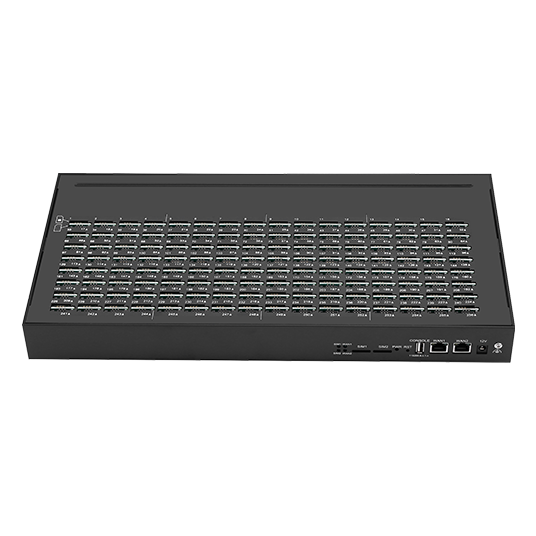
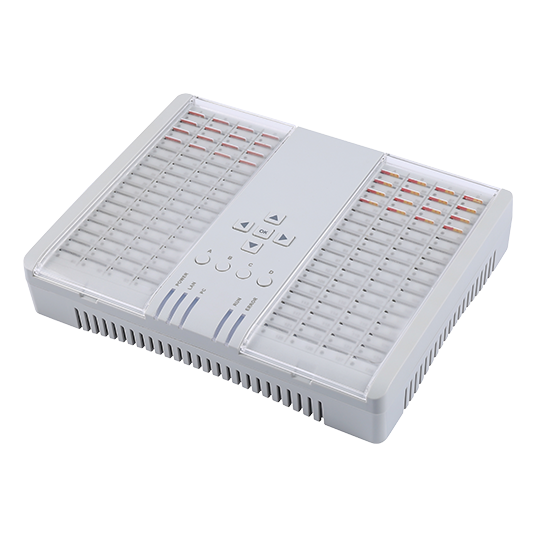
Where the estate spans several configurations, the same workflow applies across the SIMPOOL range, from 128 slots at $1,800.00 to 512 slots at $5,400.00.
Where the deployment carries commercial messaging, the identification expectations described by the CTIA apply to the sender identity a change may alter. Where the change has to be expressed in procurement or security language, the publications of the ITU Telecommunication Standardization Sector provide a neutral reference for the terminology.
Conclusion
A remote SIM pool controller changes the cost and the observability of an operation rather than the operation itself. Allocation, suspension, reassignment and inspection become remote, and the distinction that governs how each is applied is whether it touches one object or the rule that assigns all objects. Policy changes belong in a change window with a recorded previous state; object changes can be applied incrementally.
Verification by traffic rather than by status field is what distinguishes a change that has taken effect from one the interface has merely accepted, and recording the change as part of the operation is what makes it auditable. The controls that a physical visit provides incidentally have to be constructed deliberately, and each of them is a configuration or process decision rather than a technical one.
Verify remote changes by exercising traffic, not by reading status. Send your estate size, change frequency and operator count to service@telarvo.com, or review the published configurations on the SIMPOOL pages.
FAQ
What operations can be done remotely on a SIM pool?
Inspection, suspension, reassignment and allocation policy changes. The distinction between them is blast radius: the first three touch one SIM or one group and can be applied incrementally, while a policy change affects every assignment that depends on the policy and belongs in a change window with a recorded previous state.
Why verify a remote change by traffic rather than by status?
Because a status field reports what the system believes rather than what the estate is doing. A change can be recorded but not applied, applied but not yet effective during a re-registration, or applied to a different object from the one intended. Exercising one affected SIM in each direction catches all three, and it takes less time than investigating a fault caused by the change.
How should changes be recorded?
As part of the operation rather than afterwards, with four fields: what changed, the state before the change, who performed it, and when. Where the estate serves several customers, a fifth field naming the affected customer allows reporting per relationship. A record written afterwards is written from memory, which is least reliable at the moment a change appears to have failed.
Can two operators make changes at the same time?
They can where the interface supports per-group change ownership, and the risk to manage is overlapping groups rather than concurrent access itself. Assign each operator a distinct group, and test the arrangement during acceptance by having two people change different groups at once and confirming neither affects the other.