Operators decide carrier policy compliance for GSM gateways, not the equipment. A deployment can be technically flawless and commercially compliant while still being suspended, because the rules that govern a subscription come from the network that issued it.
This article sets out the three policy areas that actually affect a gateway deployment, the questions worth putting to an operator in writing before the first message is sent, how to record the answers so they survive a change of personnel, and the situations where the right decision is to decline the requirement rather than engineer around it.
Why does carrier policy compliance for GSM gateways come from the operator rather than the hardware?
The subscription contract governs what the network carries.
Hardware defines what a deployment is capable of, while the agreement with the operator defines what the deployment is permitted to do with that capability on that subscription.
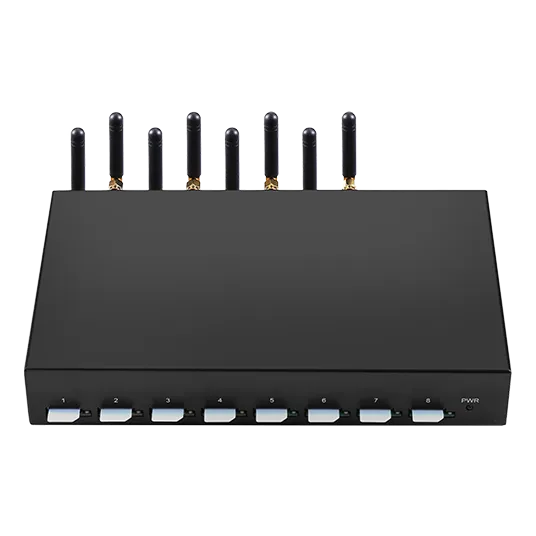
The distinction is easy to lose sight of during procurement, because the capability question has a clear answer in a specification sheet and the permission question usually has a vague answer in a call with a reseller. A gateway can hold many SIM cards, route voice and messaging, and present numeric or alphanumeric sender identities; whether any of that is allowed on a given tariff is a separate question that only the operator can answer.
The network layer enforces its decisions regardless of what the hardware supports. Message delivery depends on the operator’s short message service centre, whose architecture is standardised in ETSI TS 123 040, and subscription behaviour is governed by the session and bearer rules in ETSI TS 123 018. Nothing in a gateway configuration changes either. What a well-run deployment does is document, before purchase, which subscription terms permit the intended traffic pattern.
Numbering adds a second layer of constraint. Sender and recipient identities are structured under the ITU-T E.164 plan, and operators have policies about which identifiers may be presented, because an identifier that misrepresents the sender is a consumer-protection issue rather than a technical one.
Which three policy areas affect a gateway deployment?
Permitted use, sender identity and traffic profile.
Almost every operator question a deployment raises falls into one of those three areas, and each has a different owner inside the buying organisation.
The first area is permitted use: whether the tariff allows commercial messaging, bulk sending, machine-to-machine traffic or voice termination, and whether it distinguishes between them. Consumer tariffs frequently prohibit automated or bulk use, which is why a deployment built on retail subscriptions carries a structural risk that no amount of pacing removes.
The second is sender identity and consent. Operators expect that messages sent over their network are wanted by the recipient and that the sender can be identified. That expectation creates an evidence requirement: the consent record has to be linkable to the number being messaged, and the sender identifier has to be one the sender is entitled to use.
The third is traffic profile. Operators monitor for patterns that indicate abuse or network harm, and a deployment whose sending pattern is indistinguishable from abuse will attract protective action even when its consent records are sound. Pacing, per-number ceilings and honest volume planning are therefore compliance measures rather than performance-tuning measures.
| Policy area | What the operator is protecting | What the deployment has to show |
|---|---|---|
| Permitted use | That the tariff matches the traffic | A written confirmation that the intended use is allowed |
| Sender identity and consent | Recipient protection and sender accountability | A consent record linkable to the recipient number |
| Traffic profile | Network integrity and fair use of shared capacity | Documented pacing, per-number ceilings and volume plans |
What do operators expect on consent, sender identity and opt-out?
They expect to see who sends what, and why it is wanted.
Consent, a truthful sender identity and a working opt-out path are the three things an operator can ask a sender to demonstrate, and all three are easier to produce when they are designed into the platform.
The practical form of that expectation is record-keeping. A consent record that cannot be linked to the number that received a message is not evidence, and the linkage is a data-model requirement rather than a legal one: store the number in normalised form, store the consent event with a timestamp and a source, and keep the two connected. Opt-out handling has a similar shape. The mechanism matters less than the fact that suppression is recorded, applied within a defined window, and survives a change of platform.
Sender identity is where messaging and voice differ. A short code or an alphanumeric sender identifier has its own registration expectations depending on the market, while a numeric sender identifies a subscriber. Where a deployment presents a number that it is not entitled to use, the issue is misrepresentation, and the consequence is normally suspension rather than a warning.
From the hardware side, none of this needs new capability. A gateway that logs per-message status with retry counts already produces the operational half of the record; the compliance half is the consent data that has to sit alongside it. The two are usually maintained in different systems, which is why reviews so often find that neither can produce a complete answer alone.
What should you ask your operator in writing?
Ask six questions and keep the answers.
A short written questionnaire covers permitted use, hardware type, identity rules, protective triggers, escalation contacts and the position on volume, and it takes one conversation instead of months of uncertainty.
The questions that produce the most useful answers are the specific ones. Whether bulk messaging is allowed on the tariff is more useful than whether messaging is allowed. Whether the operator has a policy on gateways and SIM banks is more useful than whether the equipment is “supported”. Whether protective action is applied per subscription or per account changes the blast radius of a single incident, and knowing that in advance is worth the question.
- Does this tariff permit commercial bulk messaging, and is that permission documented?
- Are multi-SIM gateway and SIM bank deployments permitted on this tariff, and under what conditions?
- Which sender identities may be presented, and what registration is required for each type?
- What traffic patterns trigger protective action, and is the action applied per subscription or per account?
- What evidence would the operator ask for if a complaint is received about this traffic?
- Who is the technical escalation contact, and what is the process for reinstating a suspended subscription?
Ask the same questions of every market you send into, because the answers differ between them. That is not a reason to avoid the exercise; it is the reason the answers belong in a document rather than in someone’s memory.
Documenting the answer so it survives a change of staff
Record the answer in a form that a new colleague can act on. The minimum set is the market, the operator, the tariff name, the date of the written confirmation, the name and role of the person who confirmed it, the specific wording that constrains the deployment, and the conditions under which the confirmation expires. A tariff change is the most common trigger for a policy change, so tie the record to the tariff rather than to the deployment.
Keep the constraints as text rather than as a summary. Paraphrasing a policy is how a permitted use becomes a prohibited one after two hand-overs, because the summary loses the conditions and keeps the headline. Where the confirmation arrived by email, archive the message rather than a note about it.
Reconfirm on a schedule and after any change to volume. Policy is stable for long periods and then changes in a single notice, and a deployment that doubled its volume since the last confirmation is a different risk from the one that was approved.
When should a deployment be declined?
Decline when the goal is to defeat an operator control.
If the business case only works because the traffic must not be identifiable, there is no configuration that makes the deployment durable, and the risk sits with the operator of the equipment rather than with the supplier.
Three situations justify a refusal rather than an engineering answer. The first is a requirement to alter device identity or otherwise misrepresent the equipment to the network; in most markets that is a regulatory matter, not a setting. The second is a business that cannot evidence consent for the numbers it messages, because the deployment will eventually be judged on that evidence. The third is a plan that depends on a verbal assurance from a reseller rather than a documented position from the operator, particularly where the volume involved would make a suspension material.
Declining is usually cheaper than absorbing the consequence. A suspended account costs the hardware utilisation, the customer relationships and the engineering time spent diagnosing a decision that was never technical. The same effort applied to a compliant deployment with documented confirmation produces a lower delivery ceiling but a durable one.
Network-side refusal reasons are communicated with standardised cause codes, and ITU-T Q.850 is the reference for the vocabulary. Understanding them is useful for the conversation with the operator, though the conversation itself is a commercial one.
Recording policy per market
A per-market record turns a recurring research task into a maintained table. Each row should carry the market, the operator, the tariff, the confirmation date and reference, the permitted uses, the identity rules, the escalation contact and the review date. A completed row is what allows a deployment to expand into a new market without starting the analysis from the beginning.
Two fields are worth keeping even when they are empty. The first is the name of the regulator for the market, because a licensing question that the operator cannot answer usually belongs there. The second is the date of the last failed confirmation attempt, because an unanswered question is itself information: it tells you the deployment has no documented position, which is the state most likely to be misread internally as approval.
Where a market has a specific instrument that constrains messaging, note it against the row rather than in a separate document. In the United Kingdom, for example, the framework includes the Communications Act 2003 and the Privacy and Electronic Communications Regulations 2003; in Australia the regulator is the Australian Communications and Media Authority. Recording where to look is more useful than recording a summary that will be out of date within a year.
Scope note: this article describes how to establish and record an operator’s position; it does not state the licensing or messaging rules of any particular market. Confirm those with the operator and the regulator for each country before you deploy.
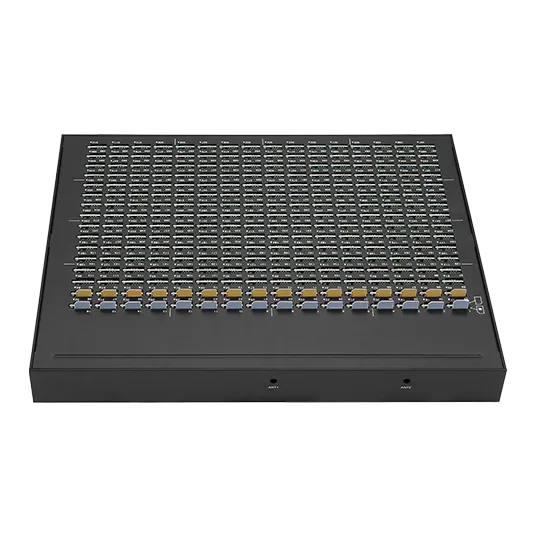
Confirm the position before the hardware is racked. Send your target markets, port count and intended traffic profile to service@telarvo.com, or review the published configurations on the SMS gateway solution page and the contact page. Telarvo publishes the SK-SMS gateway range, the TYH modem pools and the TGW SMS machine on its product pages, and the configurations referenced above come from those listings.
FAQ
Do carriers allow SIM-based gateways at all?
It depends on the tariff and the market, which is why the answer belongs in writing. Some tariffs permit multi-SIM equipment for specific uses, and others prohibit automated or bulk traffic entirely. The equipment capability is not the question; the subscription terms are. Ask before deployment rather than after a suspension, and keep the confirmation with the deployment record so that a later review starts from a document.
Does a hardware purchase differ from a traffic agreement?
No. Buying hardware transfers equipment, not permission. Where a supplier also provides routes and traffic capacity, the agreement covering that traffic is separate from the hardware order, and the two carry different obligations. Keep both documents with the deployment record so the distinction is visible during a review. When a question arises, the operative document is the one covering the traffic rather than the one covering the equipment.
What happens if the operator changes its policy mid-deployment?
Protective action or a tariff change usually arrives without much notice. A deployment that holds documented confirmations can negotiate a transition window; one that cannot has no basis for the conversation. Reconfirm after any volume change and keep the confirmation tied to the tariff so a change is detected early. Set a review date on the confirmation and treat the absence of a reply as a question rather than as consent.
How much does a GSM gateway cost, and does price affect what is allowed?
Price and permission are unrelated. As displayed on the site, list prices in the SK-SMS Gateway family start at $238 for the 4-4 model and $355 for the 8-8, rising with port and SIM density. A higher price does not change the subscription terms, and a low price does not make a prohibited use acceptable. The permission comes from the operator and the tariff, so it is documented separately from the purchase.