The answer is not that appliances are inherently secure; it is that an appliance moves several responsibilities into one box and makes them somebody’s job. Whether that is an improvement depends on who is doing the job today.
This article compares a dedicated proxy appliance with software running on infrastructure you harden yourself, across exposure, segmentation, authentication, logging, updates and the case where the two are equivalent. It describes engineering structure only; whether a particular use of proxying is permitted is a question for your compliance owner and the relevant regulator.
What dedicated proxy hardware changes about security exposure
It reduces the number of things running on the same box as the thing facing the network.
A software proxy shares a host with an operating system, a package manager, an SSH daemon, monitoring agents and whatever else was installed over time. Every one of those is a potential path to the proxy process and to the credentials it holds. A dedicated appliance runs one purpose, usually on a hardened and minimal system, so the attack surface is the proxy service and its management interface rather than the whole host.
That reduction is genuine and measurable, and it is the strongest argument for the appliance. The counter-argument is that a well-maintained general-purpose server with nothing else on it achieves much the same reduction, at the cost of doing the maintenance yourself. The difference is therefore less about the form of the hardware than about who is responsible for keeping it minimal.
| Dimension | Dedicated appliance | Software on your own host |
|---|---|---|
| Attack surface | Purpose-built and minimal | Depends entirely on what you install and remove |
| Update responsibility | Vendor supplies firmware and guidance | Yours, including the operating system and libraries |
| Segmentation | Separate physical device | Requires deliberate network design |
| Configuration drift | Bounded by the appliance’s settings | Unbounded without discipline |
| Forensic clarity | One log source with a known format | Multiple sources to correlate |
Segmentation and the management path
Most proxy compromises arrive through the management interface rather than the proxy service.
An appliance helps here because separation becomes a physical decision. The device can sit between two networks with its management interface on a third, reachable only from a management segment, and that arrangement is easy to describe and easy to audit. Software on a general-purpose host can achieve the same separation, but only if it was designed that way before the host was deployed; retrofitting it usually means the management path shares a network with something else.
The management path also determines who can change policy. Where the interface that controls routing is reachable from the same network as the traffic, a compromise of any host on that network is a potential change to how traffic is routed. The control families that describe this kind of boundary, including how to restrict administrative access and separate functions, are catalogued in NIST SP 800-53 Rev. 5, and the access control and boundary protection sections map closely onto the decisions an appliance forces you to make.
Where the appliance terminates encrypted management connections, the protocol and deployment guidance in RFC 8446 and RFC 7525 applies exactly as it does to any other interface. Nothing about the form factor changes what a good configuration looks like.
Authentication and attribution
Attribution is what turns a proxy into infrastructure you can defend.
The operational value of a proxy is that outbound traffic appears to originate from a controlled point. The security value is that you can say who used it. That requires per-user or per-service authentication rather than a single shared credential, and it requires the identity to be recorded with the connection. An appliance that supports individual credentials and logs them alongside the session produces evidence; one that supports a shared password produces an open relay with a nice case.
Two details decide whether attribution survives an incident. The first is whether authentication is verified at the point that actually forwards traffic, rather than at a component in front of it. The second is whether the identity is recorded at connection time rather than reconstructed from a separate system afterwards, since reconstruction depends on clocks that may not agree. Where several services share an appliance, per-service identities make it possible to revoke one without disrupting the rest.
Logging and retention
The log is the product of the deployment, in a security sense.
A proxy that cannot produce a record of which identity used which destination, at what time, is difficult to operate responsibly and difficult to defend if a question arises. The fields that matter are the authenticated identity, the destination, the time, the volume, and the outcome. The practice for retaining and protecting those records is the same as for any other audit trail, and NIST SP 800-92 is a practical reference for log management that is short enough to actually be applied.
Retention is a decision with two sides. Too short and the evidence has gone by the time a question is asked, because incidents are usually investigated weeks after they occur. Too long and the deployment accumulates personal data that it has no continuing reason to hold. The defensible position is a stated period with a reason, agreed with the compliance owner, and an automatic deletion that implements it rather than a policy that depends on somebody remembering.
Storage location deserves a mention because it is easy to get wrong. A log held only on the appliance is a log that disappears with the appliance, so an export to a separate system under a different administrative control is worth having, and that system should be readable but not writable from the proxy itself.
Update and patch responsibility
The question is not who can patch, but who will.
With an appliance, the vendor supplies firmware and the operator applies it, which reduces the work to a scheduled task with a rollback path. With software on your own infrastructure, the operator owns the operating system, the libraries, the service configuration and the application itself, and the work is correspondingly larger. In practice the failure mode is not choosing the wrong model but failing to resource the model that was chosen: a self-managed proxy in an organisation with no patch process is less secure than an appliance with vendor updates, not more.
The practical test is to ask who will apply the next critical update, how they will know it exists, and how they will roll it back if it breaks the service. If those three answers are clear, the software approach is defensible. If they are not, the appliance is the honest choice, because it converts an unbounded responsibility into a bounded one. The broader organisational framing for that decision is set out in guidance such as the NCSC 10 Steps to Cyber Security.
Where software on hardened infrastructure is equivalent
Three situations make the appliance unnecessary.
The first is an organisation that already runs a hardened, minimal host platform with a patching process and a monitoring pipeline, where adding the proxy is adding one service to a system that is already managed well. The second is a requirement for a feature set the appliance does not provide, where the application logic has to live with the proxy and separating them would make the system harder to reason about. The third is scale: at very high connection counts the economics of general-purpose hardware change, and the ability to tune the whole stack matters more than the reduction in surface.
In each of those cases the security outcome depends on the same controls: minimal software, restricted management access, per-identity authentication, complete logs with a retention rule, and a patch process with an owner. The appliance is a way to obtain those controls with less effort, not a substitute for having them.
The organisation that supplies the equipment is the other half of that question. A manufacturer that publishes its production scope, its quality arrangements and the support path for a product line gives a buyer something to verify, and the published scope is a fair thing to compare against the requirement rather than against a marketing claim; the about page is the document to read for that purpose.
One boundary applies to all of the above. Whether proxying is an appropriate tool for a given purpose, and what the rules are for the data involved, is a legal and policy question rather than an engineering one. The legitimate uses are well established, and they are the ones this analysis assumes; the engineering does not change if a use is not permitted, but the conclusion about whether to build it does.
An assessment checklist
The checklist compares an appliance and a hardened host on the controls that decide the outcome rather than on the form factor. Each item can be answered with a document or a test, and the set is written to be applied to whichever model is already in place.
- Attack surface: what else runs on the same system as the proxy service.
- Management path: reachable only from a management segment, not from user networks.
- Authentication: per-user or per-service credentials, not one shared password.
- Attribution: identity recorded with each connection at the moment it is forwarded.
- Logging: identity, destination, time, volume and outcome, exported to a separate system.
- Retention: a stated period with a reason, implemented by automatic deletion.
- Patching: a named owner, a notification route and a tested rollback.
- Scope: a written statement of what the deployment is and is not permitted to do.
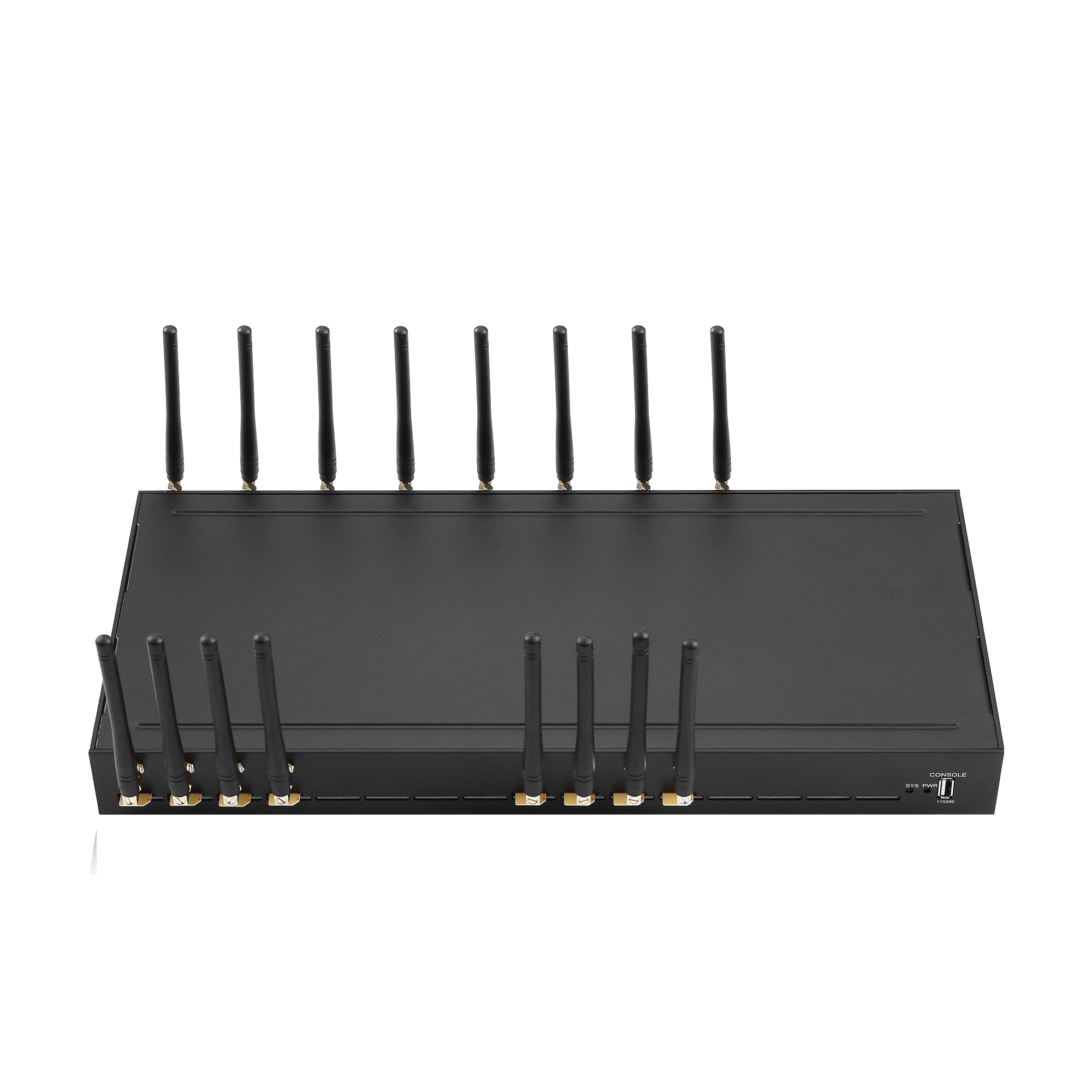
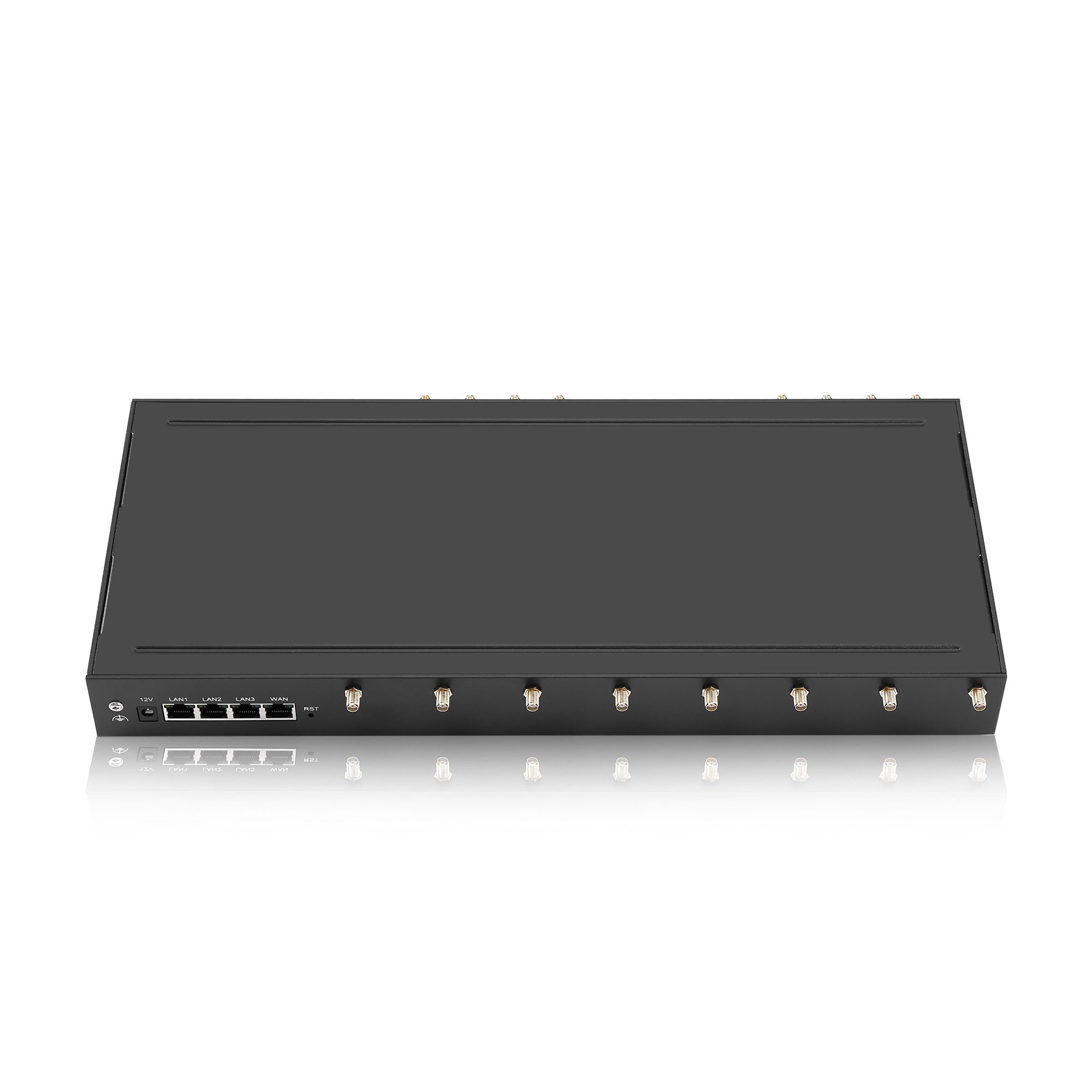
Compare on management path and attribution, not on form factor. Send your segmentation model, authentication requirements and retention rule to service@telarvo.com, or review the published configurations on the proxy gateway range and the proxy gateway solution page. Telarvo publishes the SK Multi WAN proxy gateway models on its product pages, and the configurations referenced above come from those listings.
FAQ
Is proxy hardware more secure than software?
Not inherently. An appliance reduces the attack surface by running one purpose on a minimal system, and it makes segmentation a physical decision, which is a real advantage. Software on a hardened host with nothing else installed can achieve the same reduction. The deciding factor is usually who is responsible for patching, because the model that gets maintained well is the more secure one in practice.
Why would an attacker target a proxy server?
Because a proxy concentrates two valuable things: a route into other networks and a set of credentials. An attacker who obtains the proxy credentials can use the reputation and identity of the deployment, and an attacker who reaches the management interface can change how traffic is routed. That is why segmentation and per-identity authentication matter more than the throughput specification.
What is the most secure proxy configuration?
One that minimises the software on the device, restricts the management interface to a separate segment, authenticates individual users or services rather than sharing a password, records identity with every connection, exports those records to a system the proxy cannot modify, and has a named owner for updates with a tested rollback. Those controls matter more than whether the proxy runs on an appliance or on a server.
Is using a proxy server legal?
That depends on what the deployment does and where it operates, and it is a question for your compliance owner rather than for an equipment vendor. Proxying is a standard networking technique with legitimate uses, and the same technique can be applied to purposes that are not permitted. This article describes the engineering controls; it does not evaluate whether a particular use is allowed.