Updated
The useful purchase decision is whether profile management reduces a documented operating problem without introducing unacceptable dependencies. Treat the eSIM, cellular modem, carrier plan, provisioning service and SIP interface as one deployment chain. This guide explains how to specify that chain and test it before migrating business voice lines.
What does an eSIM VoIP gateway change for voice operations?
It changes subscriber provisioning within the voice system.
A supported eUICC can hold remotely managed operator profiles, while the gateway still needs compatible radios, authorised carrier voice service and a working SIP/media connection to the PBX.
The practical change is how a subscription is installed and managed at the cellular endpoint. Instead of relying exclusively on inserting another card, a supported system can use profile-management operations. That can help a remote site where physical card replacement is inconvenient, but only within the supported provisioning arrangement.
The Android Open Source Project eSIM implementation guide explains one implementation involving the eUICC, local profile assistant and remote profile service. It illustrates why provisioning requires more than an eSIM label; it does not establish that a particular gateway uses Android or that architecture. Ask which implementation the gateway supports before assuming a phone’s activation process will work on a rack-mounted device.
Keep the scope precise: eSIM does not replace the PBX, create additional radio channels or make a data-only subscription support cellular voice. It provides a different subscriber-management mechanism whose value depends on the rest of the approved system.
Verify the hardware, profile and service as separate layers
A successful deployment needs more than an eSIM-capable component. The eUICC must support the intended provisioning arrangement, the cellular module must support the required network service, and the carrier must permit the subscription in that equipment. Each layer can be compatible individually while the complete combination remains unsupported.
Request the gateway model and hardware revision, the cellular module identifier, eUICC implementation and supported provisioning workflow. Ask which software or external platform performs profile download, enablement, disablement and deletion. Obtain the versions and operational roles rather than an assurance that the gateway is simply eSIM-ready.
The ETSI UICC-terminal interface specification addresses physical and logical characteristics of the card-terminal interface. It is not evidence that a particular gateway can use every remotely provisioned profile. Likewise, conformity to an eSIM architecture would not establish permission for a specific voice-termination workload.
Build a compatibility matrix for the supplied configuration: gateway revision, module, profile provider, carrier, country, voice mode and firmware. Use the same matrix in the quotation and pilot record. If any component changes, identify which service checks must be repeated before releasing the revised configuration.
Can a data-only eSIM provide SIM-based voice to a PBX?
No; internet access is not cellular voice entitlement.
A data profile can carry IP traffic, including an unrelated SIP service, but native SIM-backed mobile calling needs the carrier’s supported voice subscription and the gateway’s compatible radio implementation.
Distinguish two architectures when reviewing a proposal. In the first, the cellular module originates or receives mobile-network voice using its subscription, and the gateway bridges that call to the PBX. In the second, cellular data supplies internet access while a separate SIP provider delivers the voice service. Both can involve an eSIM, but they have different number ownership, billing and failure dependencies.
Ask where the called mobile number is provisioned and which service receives an incoming call to it. A data allowance and a working internet connection do not answer that question. Confirm outbound presentation and inbound reachability with the actual profile rather than a marketing description of global connectivity.
For the IP side, RFC 3261 defines SIP session control. Its presence does not establish the cellular voice service underneath. The procurement requirement should state whether the project needs native mobile voice, data transport for a hosted trunk, or both, so suppliers quote the correct architecture.
Stored profiles, enabled profiles and active calls are different capacities
An eUICC can have a profile-storage limit, while the modem and provisioning arrangement determine which profiles can be enabled and used. The gateway’s cellular channels determine voice concurrency. Do not convert a claim about stored profiles into a claim about simultaneous reachable numbers or calls.
Ask the supplier to define every capacity figure. How many profiles can be installed on each eUICC? Which can be enabled concurrently? How are those identities associated with individual radio channels? What happens to incoming calls addressed to a profile that is installed but not enabled?
For a hypothetical system with several stored profiles behind one active radio, the inventory can exceed live calling capacity. The actual supported enablement and assignment behaviour must be confirmed; the example is not a specification for any Telarvo model. A number becoming available after a profile switch is different from that number remaining continuously reachable.
Plan inventory using the numbers the business must retain, and plan channels using the concurrent workload. If several departments require uninterrupted inbound access to distinct numbers, make that requirement explicit. Profile storage alone is not a substitute for enough active, carrier-registered paths serving those numbers at the same time.
How does switching affect calls, numbers and registration?
Treat switching as a service transition requiring a test.
Enabling another profile can change the subscription, number and carrier attachment. Existing calls and inbound reachability may be interrupted; the actual behaviour depends on the supported implementation.
Test the transition as a sequence: the request is accepted, the intended profile becomes enabled, the module attaches to the carrier, voice service becomes usable, and the PBX route behaves correctly. Record those events independently. A successful profile-management command is not evidence that the replacement number can already receive a call.
Do not describe profile switching as number portability. Changing a subscription can change the number, while retaining or transferring an existing number involves the carrier’s supported process. Similarly, copying a profile to another gateway is not a general entitlement; transfer or reissue behaviour depends on the provisioning service and subscription terms.
For production changes, define whether the channel must be idle, whether inbound service requires another route during the transition and who authorises the operation. Test restoration after an interrupted switch before automating it. Recovery should be specified for subsequent calls separately from any requirement to preserve a call already in progress.
Compare physical SIM, remote SIM bank and eSIM architectures
These options solve different operating problems. A physical card provides a local subscriber interface; a compatible SIM bank centralizes card inventory and assignment; eSIM introduces a supported profile lifecycle. Compare them against the required operating task rather than treating one as universally newer or better.
| Decision factor | Local physical SIM | Compatible remote SIM bank | Supported eSIM arrangement |
|---|---|---|---|
| Subscriber change | Card handling | Controller assignment of a stored card | Profile lifecycle operation |
| Main dependency | Site access and local radio | Bank/controller link and gateway compatibility | Provisioning service, eUICC and carrier support |
| Inventory evidence | Card and subscription records | Slot-to-channel allocation records | Profile-to-device lifecycle records |
| Voice concurrency | Radio-channel limit | Connected radios, not stored slots | Radios and supported active-profile arrangement |
| Recovery question | Replacement card and device access | Reassignment and carrier reattachment | Reissue/enablement and service restoration |
A remote SIM bank does not become an eSIM provisioning platform because it manages identities centrally. Likewise, an eSIM gateway does not automatically accept a physical fallback card. Ask whether the quoted design supports both and what the switch between them entails.
Choose the arrangement that removes the expensive or unreliable task in your operation. For an accessible, stable site, card replacement may be manageable. For difficult remote access, a tested profile-management workflow may justify extra provisioning dependencies.
Define ownership and bootstrap connectivity before rollout
Remote provisioning needs a supported way to reach the provisioning service. Determine how the gateway obtains that connectivity before the intended operational profile is active, and what remains available after a failed operation. A bootstrap arrangement can be an important dependency rather than a detail resolved after installation.
Ask who owns the carrier account, profile-management credentials and device association. Confirm who can request a new profile, revoke a subscription, authorise a transfer and recover a locked account. If a distributor manages the platform, establish what access remains when the commercial relationship ends.
Record identifiers appropriate to the system, including the device/eUICC reference, profile record, carrier account and associated business number. Do not treat a spreadsheet containing account passwords as a lifecycle-management system. Keep credentials separate and grant operational roles according to the tasks staff need to perform.
For a remote site, test the loss of the operational profile’s connectivity without assuming that another service is still reachable. Verify the documented recovery path, its owner and any need for onsite intervention. A remote feature delivers operational value only when the team can recover it under the failures that actually occur.
Protect profile-management authority separately from call access
A person who can enable, disable or delete a profile can affect the business number’s availability even without permission to make PBX calls. Protect those controls as a distinct administrative role. Use individual accounts where supported, restrict remote access and retain an audit trail for lifecycle changes.
NIST’s digital identity guidance distinguishes stronger authentication methods from restricted telephone-network out-of-band authentication. Apply an appropriate administrative authentication policy to the platforms controlling the fleet; do not rely exclusively on a code delivered through the same line being managed if that creates a recovery dependency.
Ask which links use authenticated encryption and how credentials or certificates are rotated. RFC 8446 specifies TLS 1.3, but a standard reference does not prove the gateway, portal or API implements it. Browser security and protection of every management link are separate checks.
Limit temporary supplier access to an authorised maintenance window. Review exported configurations and logs before sharing them, since they can expose device identifiers, subscription records or secrets. The objective is controlled profile authority and recoverable access, not a vague claim that eSIM makes all communications secure.
Evaluate the business case using a complete migration cost
Compare the documented physical-handling workload with the new provisioning workload. Include equipment, approved subscriptions, provisioning licences, integration, support, network access and recovery effort. Avoid assuming every profile can be provisioned instantly or that removal of a plastic card eliminates operating cost.
List the activities the current team performs: ordering cards, verifying account ownership, shipping to sites, inserting replacements and updating inventory. Then list the proposed activities: obtaining profiles, associating devices, enabling service, verifying numbers, administering credentials and recovering failed operations. The change should reduce a real constraint rather than simply move it to a supplier portal.
Use like-for-like service requirements when comparing quotations. An eSIM data offer is not comparable with a voice-enabled subscription merely because both use profiles. A low recurring rate can also exclude management functions or support needed by the gateway deployment.
Keep one-time migration and steady-state costs separate. Include a rollback or coexistence period if the business numbers cannot tolerate an immediate change. Approve savings only against the pilot’s actual workload and the quoted commercial terms, rather than inventing a universal payback period for eSIM equipment.
Run a voice pilot before migrating important numbers
Begin with an authorised test subscription and the exact quoted hardware revision. Establish provisioning, carrier attachment, incoming voice, outgoing voice, caller presentation, audio and hangup. Then test a controlled profile change and a recovery operation. Preserve timestamps and observed results rather than declaring the system successful from a portal screenshot.
Use a compact acceptance record:
- The intended profile is associated with the intended device.
- The carrier permits the equipment and proposed voice use.
- Incoming calls reach the correct PBX destination.
- Outgoing calls use the expected service and permitted presentation.
- The channel is released after either party hangs up.
- Profile changes and interrupted operations recover as documented.
- Administrative access and rollback ownership are established.
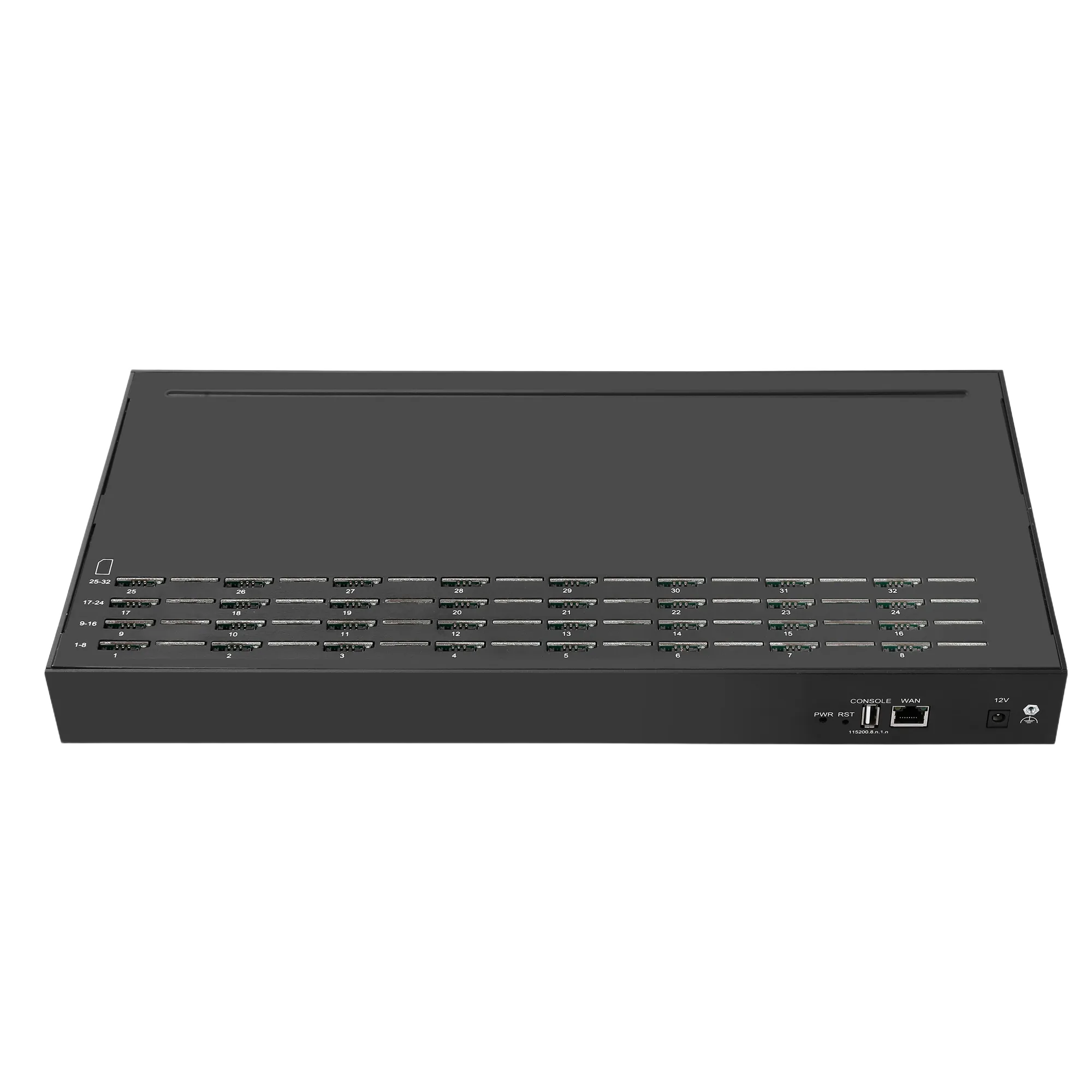
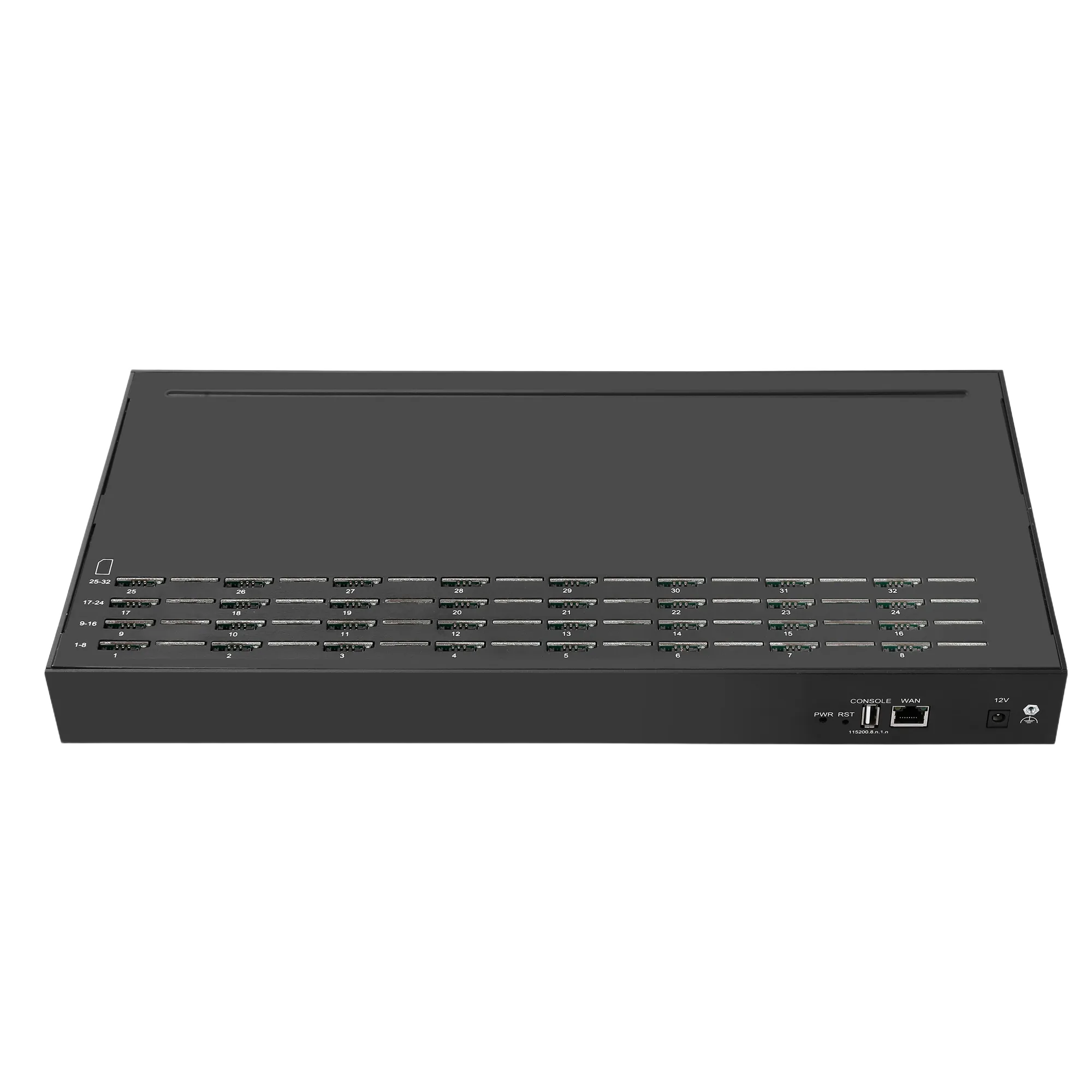
The Telarvo VoIP gateway collection includes the SK-VOIP Gateway-32E-SIM eSIM option. That identifies an eSIM product option, not a verified GSMA architecture, carrier matrix or profile-switching result. Obtain those product-specific details for the proposed deployment.
Use the VoIP gateway solution for integration context. Where physical inventory remains part of the design, review the appropriate SIM pool collection separately rather than assuming accessory interoperability.
Choose eSIM where the lifecycle advantage is demonstrable
Consider a proposed remote-office migration as a planning example. The office needs eight simultaneous voice channels, retains existing customer-facing numbers and has limited local technical support. The RFQ should require eight usable voice services under the intended carrier arrangement; a catalogue showing many stored profiles does not satisfy that requirement. The number-retention procedure must also be documented separately from profile installation.
For this example, compare a routine subscription change and a failed-device replacement. Record who authorises each action, which connectivity path the operation needs, how the PBX learns the resulting route, and how staff confirm that inbound service has returned. If an operation still needs a site visit, include that visit in the operating-cost comparison. If a replacement requires carrier reissue, include the expected process and support responsibility rather than assuming a spare chassis completes recovery.
These are proposed evaluation steps, not measurements from a Telarvo installation. Their purpose is to turn a broad remote-management benefit into two reviewable operating procedures that the quoted equipment and subscription arrangement can actually support.
An eSIM voice purchase is justified when the supported provisioning workflow improves an identified task and the complete carrier/radio/PBX combination passes its tests. Profile inventory, number retention and simultaneous calls remain different requirements. Remote control helps only when authority, connectivity and recovery are understood.
For an accessible site with stable subscriptions, physical SIMs can remain a practical choice. For remote deployments with repeated authorised provisioning changes, eSIM can be worth evaluating. A mixed design is also possible where the exact equipment supports it, but it should be specified rather than presented as a default capability of every gateway.
Before approving migration, require a compatibility matrix, a complete cost schedule and a tested lifecycle/recovery plan. Preserve the pilot configuration as the baseline for future changes. This makes the decision reviewable by telecom operations, IT security and procurement without depending on claims of universal carrier support or seamless switching.
Request a Telarvo eSIM voice feasibility review with your target carriers, countries, required numbers, active channels and provisioning requirements. Ask for the exact supported hardware and profile-management arrangement before placing an order.
FAQ
Can an existing physical-SIM gateway become an eSIM gateway through firmware?
Not merely because new firmware adds a menu. The device needs an appropriate subscriber interface and a supported provisioning implementation, which may depend on its hardware and module revision. Some specific upgrade paths may exist, but they must be documented for the actual unit. Ask the supplier to identify the required components and retained functions. Do not assume that software alone changes every physical-SIM gateway, or that an unrelated eSIM adapter provides the full remote-management workflow required by the deployment.
Can the same business number be retained when changing profiles?
Only through a carrier-supported subscription or number-transfer arrangement. Enabling another profile can introduce another number, and moving a profile is not the same operation as porting a number. Confirm ownership, transfer eligibility, downtime and inbound routing before changing a production line. Test the resulting number behaviour with the PBX. Keep important account recovery and customer-contact dependencies in the migration plan so a successful profile download does not hide an unintended change to the business identity.
What happens if the provisioning platform is unavailable?
That depends on which operations require the platform and what the installed service can do independently. Ask separately about existing voice service, new profile installation, profile changes and device recovery. Test or obtain documented behaviour for each case. Do not assume a portal outage stops all calls, or that existing calls prove future provisioning will work. The quotation should identify platform ownership, support and any fallback procedure needed when a remote site cannot complete a lifecycle operation.
Does eSIM eliminate the need for spare gateway hardware?
No. Remote subscriber management does not replace failed radios, power supplies, network interfaces or the gateway itself. A replacement also needs a supported way to obtain or reissue the required service and restore PBX routing. Plan hardware recovery and profile recovery as separate tasks, with responsible owners for both. Keep the accepted hardware revision and provisioning requirements in the replacement specification so a spare chassis can restore the intended configuration rather than only provide nominally similar capacity.