A renewal notice is not a reminder to be sent when convenient. It is a communication with a date attached to it, and the date is set by the policy rather than by the marketing calendar.
This article sets out why renewal messaging is time-bound, how it differs from marketing under the same platform, how escalation and records work when a policy depends on the notice being received, and how volume behaves at renewal peaks.
Why is an insurance renewal notification SMS time-bound?
Because the policy terms and the notice period are linked.
A renewal notice has to arrive early enough for the policyholder to act, and the interval is set by the product and by the framework rather than by the messaging team.
That makes the delivery window part of the obligation rather than an operational preference. A notice that arrives late may leave the policyholder unable to change cover, renew elsewhere or decline in time, and the consequence is a complaint or a dispute rather than a late message. The engineering response is to treat the delivery time as a measured quantity with a distribution, and to keep the tail of that distribution inside the window rather than to report an average.
Two properties make the timing harder than it appears. Renewals cluster, so the volume arrives in peaks rather than evenly. And the notice often has to be followed by further communications, including a reminder and a confirmation, each with its own interval. The message layer is the same in all cases, defined in ETSI TS 123 040, and what differs is the schedule and the record.
| Communication | Timing driver | What the record has to show |
|---|---|---|
| First notice | The notice period in the policy terms | Sent, delivered, and when |
| Reminder | A defined interval before expiry | Sent after the first notice |
| Confirmation | On renewal or lapse | Which outcome it records |
| Non-renewal notice | Set by the framework in the market | That the required interval was met |
How does renewal notification differ from marketing?
It concerns a product the recipient already holds.
A notice about a policy in force is a service communication, while an offer of additional cover is marketing, and the two need different permissions.
The distinction is not only a legal one; it also governs the design. A service notice about an existing policy is expected by the recipient and is sent to the whole book of business, while a marketing message is sent to those who agreed to receive it. Mixing the two in one campaign produces messages that are either unwelcome or unactionable, and it makes the consent position impossible to explain later.
The practical arrangement is to classify every template as service or marketing when it is written, and to have the platform enforce the classification. A service notice should be sendable regardless of marketing preferences, because the recipient holds the policy; a marketing message should not be, because the recipient may have declined it. Where the processing falls within the European framework, the reference points are the regulation on EUR-Lex and the guidance collected by the European Data Protection Board; the equivalent framework differs in other markets.
Message content under a regulated regime
Identify the policy, state the action, and stop there.
The recipient needs to know which policy is affected and what to do, and the message should not carry more than that.
Three content rules follow from the fact that the message is read on a device the insurer does not control. It should identify the policy by a reference that is meaningless to a third party rather than by a description of the cover. It should state the date that matters, because the date is the reason the message exists. And it should avoid any wording that could be read as a decision about the policy, since wording that appears to make a determination is the kind of content that a regulator or an ombudsman will examine.
Two exclusions are worth enforcing in the template library rather than in a style guide. A notice should not include claims content, because a message about a medical or property condition discloses information that the recipient may not want on a shared device. And it should not require a click to be useful, because the recipient may be offline and because a link in an unexpected message is the pattern used by fraud. Where a payment is required, the message should direct the recipient to the insurer’s own authenticated channel rather than to a link.
Escalation when no response arrives
The escalation path should be defined before the first renewal cycle.
Where a notice is the mechanism by which a policy is renewed or lapsed, the absence of a response has to be handled deliberately rather than left to the system.
A workable escalation has three steps with defined intervals: the notice, a reminder, and a final communication through a different channel. Each step should have its own deadline relative to the policy date rather than relative to the previous message, so that a delay in one step does not push the whole path past the deadline. The final step should also produce a record that the recipient was unreachable, because that record is what an insurer relies on when a policyholder later disputes the outcome.
The escalation also has a contact-preference dimension. A policyholder who has asked not to be messaged should be reached by the channel they have accepted, which may be post or a call, and the record should show which channel was used at each step. Record-keeping practice for the logs that establish the sequence is covered in NIST SP 800-92, and access-control objectives that structure who may see a policyholder record are organised in NIST SP 800-53 Rev. 5.

Records that demonstrate the notification
The record is what shows the notice was sent, and it has to survive the platform.
Three fields make the record usable: the policy reference, the delivery outcome with its timestamp, and the template version that produced the message.
The template version matters more than it sounds, because a dispute about wording is answered by the text that was actually sent rather than by the current template. Keeping a version identifier against every send allows the exact content to be reconstructed without storing the whole message indefinitely, which is useful where retention rules limit what may be kept. Where the message text itself is kept, its retention should follow the same decision as the rest of the policyholder record rather than the shorter retention used for operational logs.
The record also has to reach the people who need it. A renewals team that can retrieve the notice for one policy without an engineering request will use the record, while a team that has to ask will not, and a record that is not used is not a control. Where the insurer operates through brokers, the record should be visible to the broker for their own book, with the same fields and the same retention.
Volume patterns at renewal peaks
Renewals cluster, and the clusters are predictable.
Policies written in the same month renew in the same month, so the volume follows the sales pattern rather than a smooth curve.
Two consequences follow for the estate. The peak is higher than the annual average by a factor that depends on how the book was built, and the peak is also concentrated within the month, because notices go out on a schedule tied to policy dates. Sizing on the monthly average therefore produces an estate that is saturated on the days the notices actually go out, which is a scheduling problem more often than a hardware one.
The practical approach is to record the peak day and the peak hour, and to shape the schedule so that notices are spread within the permitted window rather than all sent on the same morning. Where the window is tight, the estate has to be sized from the rate the window requires, which is the same calculation that applies to any time-bounded send. The numbering conventions that keep the policyholder record consistent are described in ITU-T E.164, and the operational discipline behind a scheduled send is the same one described in the deployment guidance summarised on the about page.
A workflow outline
The outline follows a renewal notice from the policy data to the delivery record, with the rules that apply at each step. It is written around the notice period rather than the template, because the obligation is about timing and evidence as much as about wording.
- Classify each template as service or marketing, and enforce the classification in the platform.
- Record the notice period and the reminder interval per product, from the policy terms.
- Set each escalation step against the policy date rather than the previous message.
- Restrict message content to a reference, the date and the action.
- Keep the template version identifier with every send.
- Measure the delivery time distribution and keep the tail inside the notice period.
- Size the estate from the peak day and the peak hour, and shape the schedule within the window.
- Make the record retrievable by the renewals team and by brokers for their own book.
Scope note: this article describes engineering data flows and workflow design, not legal or regulatory advice. The notice periods, the content rules and the consent position for insurance communications differ by market and by product, and they belong with the organisation’s compliance owner and its counsel.
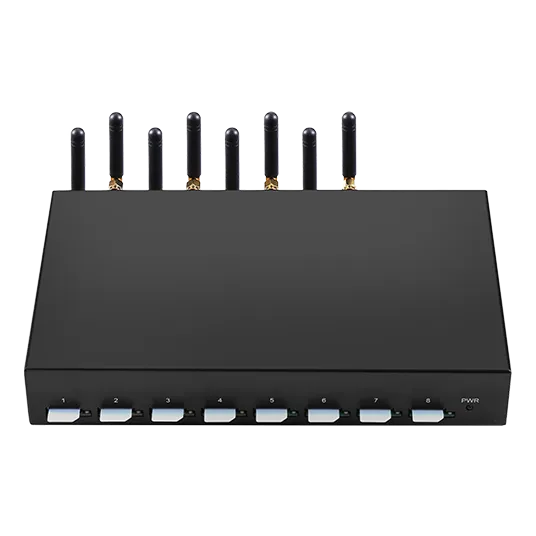
Classify the template before you write it. Send your notice periods, escalation path and record requirements to service@telarvo.com, or review the published configurations on the SMS gateway solution page and the SK-SMS Gateway range. Telarvo publishes the SK-SMS gateway range, the TYH modem pools and the TGW SMS machine on its product pages, and the configurations referenced above come from those listings.
FAQ
What is an insurance renewal notice?
It is a communication telling the policyholder that a policy is due to renew and what they need to do, sent within the period the policy terms and the market framework require. In engineering terms it is a time-bounded service message whose delivery has to be demonstrated rather than assumed. Record the notice period the policy requires and demonstrate delivery against it, because the evidence is what the arrangement is judged on.
Does a renewal reminder need marketing consent?
A notice about a policy the recipient already holds is normally a service communication, while an offer of additional cover is marketing. The two should be classified separately in the platform, and the position for each market should be confirmed with the compliance owner rather than inferred. Keep the classification in the platform rather than in the campaign, because it determines which preference record is checked before sending.
How should a renewal message be worded?
Keep it to a policy reference that is meaningless to a third party, the date that matters and the action required. Avoid wording that appears to make a decision about the policy, and avoid including claims or health information, because the message is read on a device the insurer does not control. Review the template wording with the compliance owner before each renewal cycle, because the rules and the wording both change.
What should the record show?
That the notice was sent, when it was delivered, and which template version produced it. The version identifier allows the exact wording to be reconstructed without retaining every message indefinitely, and the delivery timestamp is what demonstrates that the notice period was met. Keep the template version and the delivery timestamp together, because the two are used together whenever a notice is questioned.