Updated
M26 and M66 are GSM/GPRS choices; EC25 is an LTE Cat 4 family with materially different variants. This guide separates verified family specifications from the engineering checks needed for an actual design. It does not assume a particular module is installed in a Telarvo product, and it does not treat a family comparison as proof of pin compatibility or carrier acceptance.
Quectel M26 vs M66 vs EC25: which decision comes first?
Choose supported network service before the module family.
Specify market, carrier, service and lifetime, then select the exact part number. Radio generation, mechanical fit and software compatibility must all satisfy that same deployment.
For an installed GSM design, the question may be maintaining an existing board for a limited service period. For a new product, it may be whether any legacy-network dependency fits the planned life. A voice gateway needs additional service validation beyond a device whose only required function is occasional SMS.
Separate requirements into mandatory and optional fields. Mandatory fields include permitted network access, required messaging or voice functions, a supported electrical design and a practical update path. Optional data or location features should not displace those conditions simply because they make a specification table look stronger.
Build a market matrix before selecting samples. Record the country, carrier, intended subscription, required service, proposed module variant and unresolved approvals. Keep each regional variant distinct. A single row labelled global EC25 cannot establish that every target carrier is covered or that the same software and voice profile work across all markets.
Compare the verified family specifications
Quectel’s M26 product specification, M66 product page and EC25 Series specification V3.0 provide the reference points below. Use the document for the exact supplied revision when reviewing a production design.
These are module facts, not finished-gateway specifications. They do not establish a particular chassis’s antenna arrangement, power budget, application interface or usable message throughput. Procurement should keep the component and finished-equipment records separate.
| Attribute | M26 | M66 | EC25 family |
|---|---|---|---|
| Radio class | GSM/GPRS | GSM/GPRS | LTE Cat 4; other technologies vary by variant |
| Published size | 15.8 × 17.7 × 2.3 mm | 17.7 × 15.8 × 2.3 mm | 29.0 × 32.0 × 2.4 mm for the listed LCC modules |
| GSM band scope | 850/900/1800/1900 MHz | 850/900/1800/1900 MHz | Consult the exact variant’s band row |
| Main selection boundary | GSM service life and exact integration | GSM service life and exact integration | Regional bands, service features and integration |
| Interchangeability | Requires pin and electrical review | Requires pin and electrical review | Requires a separate migration assessment |
M26 and M66 have the same nominal dimensions expressed with the axes in a different order. M66 should therefore not be selected on a claim that its listed footprint is smaller than M26’s.
Treat M26 and M66 as separate supported configurations
Matching dimensions and bands do not prove matching pin assignments, firmware or approval scope. Require the hardware-design documents, exact revision and applicable software manuals for each proposed part. Review the schematic rather than relying on the shape of a module photograph.
A 2019 Quectel support-forum response about M26 and M66 identifies UART pin differences and different market positioning. That dated response is a reason to verify compatibility, not a current certification register. Use current part-specific documents and written supplier confirmation for the production decision.
Review transmit and receive pins, control lines, voltage domains, power sequencing and any audio connections actually used. Then compare the command behaviour required by the application. A board that uses only SMS still needs a reliable startup, registration and recovery sequence.
For maintenance, keep the accepted part number and firmware baseline on the bill of materials. If a supplier proposes another GSM module, require a change record describing affected interfaces and tests. Similar band support cannot replace that review, even when the substitute registers successfully on a bench.
Does every EC25 variant provide the same fallback and voice?
No; EC25 features must be checked by variant.
Compare the exact band and service rows. A family label does not establish GSM fallback, voice capability, supported carrier profiles or optional features for every part.
The EC25 specification illustrates important differences. Its EC25-AF entry does not list GSM/EDGE, while EC25-EU lists GSM bands B3/B8. The North American data-only entries omit the listed voice functions, although SMS is shown. These examples disprove a blanket claim that every EC25 offers every legacy network and cellular voice path.
Specify the required service rather than treating fallback as an automatic safety net. A supported technology is useful only where the carrier and subscription still offer the relevant access. Firmware, provisioning and the finished device’s implementation also need to support the selected path.
For voice, obtain the actual variant and configuration required by the target operator. An optional VoLTE entry is not evidence that a gateway works with every LTE carrier. For SMS, test reception, submission and error handling separately. Avoid assuming that a data-only description means no messaging, or that SMS support necessarily includes voice.
Check the operator roadmap against the product lifetime
The lifetime question is carrier-specific. Identify when the actual subscription can use the required network at the deployment site, including any earlier restrictions on roaming or new activations. A country’s final retirement date does not promise that every operator preserves every service until then.
The UK government’s 2G switch-off guidance gives a 2029–2033 window and directs users to check with their provider. It is a UK source, not a global calendar or a promise of service until 2033. Obtain equivalent information for each market in the project.
For an existing M26 or M66 design, compare the remaining permitted service period with inventory, support and replacement needs. For a new design, price the engineering and field-replacement consequences of retaining that dependency. A lower component quote can be outweighed by a short usable deployment window.
EC25 also requires a service-lifetime assessment. LTE support is not an indefinite guarantee of carrier access or availability of a specific part. Keep supplier lifecycle information, operator service requirements and the system’s maintenance horizon as separate inputs to the decision.
Can LTE data rate predict SMS throughput?
No; data speed does not measure SMS delivery capacity.
Benchmark the actual messaging path, content and carrier service. Module commands, host scheduling and network handling can affect results independently of headline LTE rates.
SMS performance is not established by a comparison of GPRS and LTE internet speeds. An application can be limited by its queue, serial processing, modem command responses, registration behaviour or carrier service. More radio bandwidth does not automatically improve every one of those stages.
It is also too broad to promise identical throughput for all modules simply because each uses a subscription. Different implementations and network paths can produce different results. The defensible conclusion is to measure the required workflow rather than declare a universal winner or universal equality without tests.
Use the same authorised templates, destinations and submission pattern on representative designs. Record command acceptance, any available delivery evidence, queue age and recovery outcomes separately. Keep encoding and segment counts in the workload record. If a comparison reports messages per minute, identify the measurement stage and do not confuse an application queue accepting jobs with completed network delivery.
Review the board and host interfaces before migration
Moving from a GSM module to an LTE design can change the board, host connection and software stack. Obtain pin tables, reference circuitry and supported interfaces for the exact module package. A bare LCC module and a carrier-board or Mini PCIe product are not interchangeable procurement units.
Map the interfaces actually used: command control, data, audio, reset, power control and subscriber connection. Remove unused features from the requirement rather than assuming every interface listed in a family document must be implemented. For USB, specify the intended host driver and operating environment.
Check logic levels and the handling of asynchronous responses. The software should recognise the installed module and firmware before applying its configuration. A successful generic AT response does not prove the rest of the application’s state machine is compatible.
ETSI TS 102 221 defines the UICC-terminal interface. That supports review of the subscriber layer; it does not validate the complete PCB or establish eSIM provisioning architecture. Keep the module interface, subscription arrangement and finished product’s remote-management features distinct.
Design power and thermal conditions from the actual operating modes
Use the module’s hardware-design requirements for supply range, transient demand, sequencing and decoupling. Do not compare only sleep-current entries when the device’s main task requires repeated registration, transmission or voice. The chosen duty cycle and radio conditions belong in the design assessment.
The power budget should cover the module, host and other connected components under the intended load. Measure at the relevant supply point and inspect startup and transmit behaviour. An average current reading can hide a brief supply drop that resets the radio or corrupts the application’s expected sequence.
Thermal assessment likewise needs the final enclosure, installation environment and concurrent workload. Avoid a universal claim that every LTE installation is hotter or that every GSM option uses less energy. Module mode, duty cycle and implementation matter, and the engineering evidence should describe those conditions.
For a multi-channel gateway or modem pool, repeat checks with the concurrent arrangement. A supply that supports one development module is not proof for a chassis containing several active radios. Ask the finished-equipment supplier for the approved power and environmental conditions rather than extrapolating a single module result.
Assess antennas and approval scope at the finished-device level
Select the RF arrangement against the exact supported bands and hardware-design guidance. Include antenna type, placement, ground conditions, connectors and cable losses. The module’s band list is not a performance claim for an antenna installed inside an arbitrary enclosure.
Verify the complete installed configuration at the intended site or representative conditions. Registration on one carrier at one location is a useful test outcome, not proof of every band or market. Preserve the configuration so later replacements can be compared against the same RF arrangement.
Regulatory and carrier evidence must identify the relevant module variant, document scope and finished-product requirements. Do not copy a family-level logo or another part’s certificate into the device approval record. Ask the responsible supplier or conformity specialist what further assessment the end product requires.
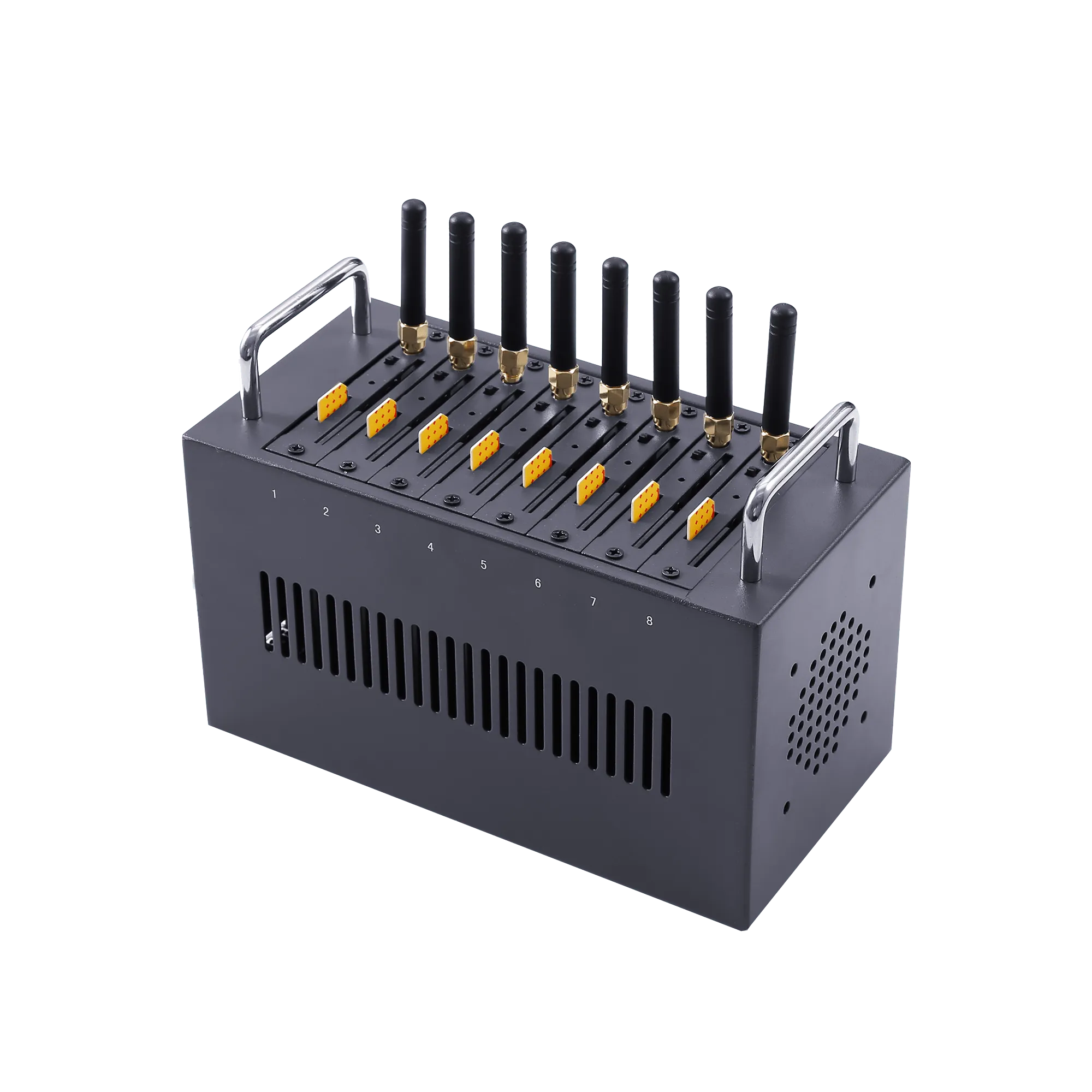
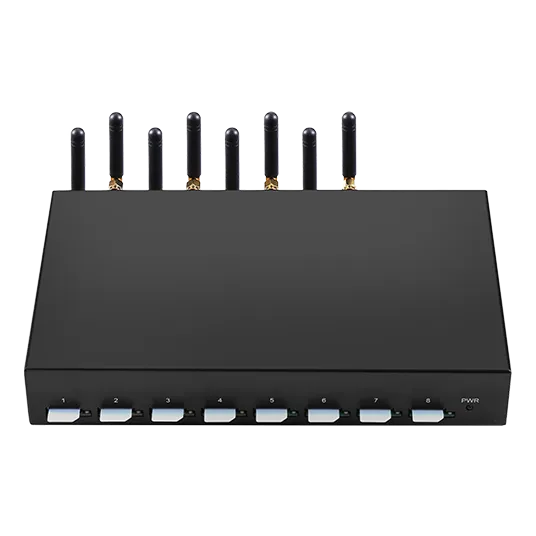
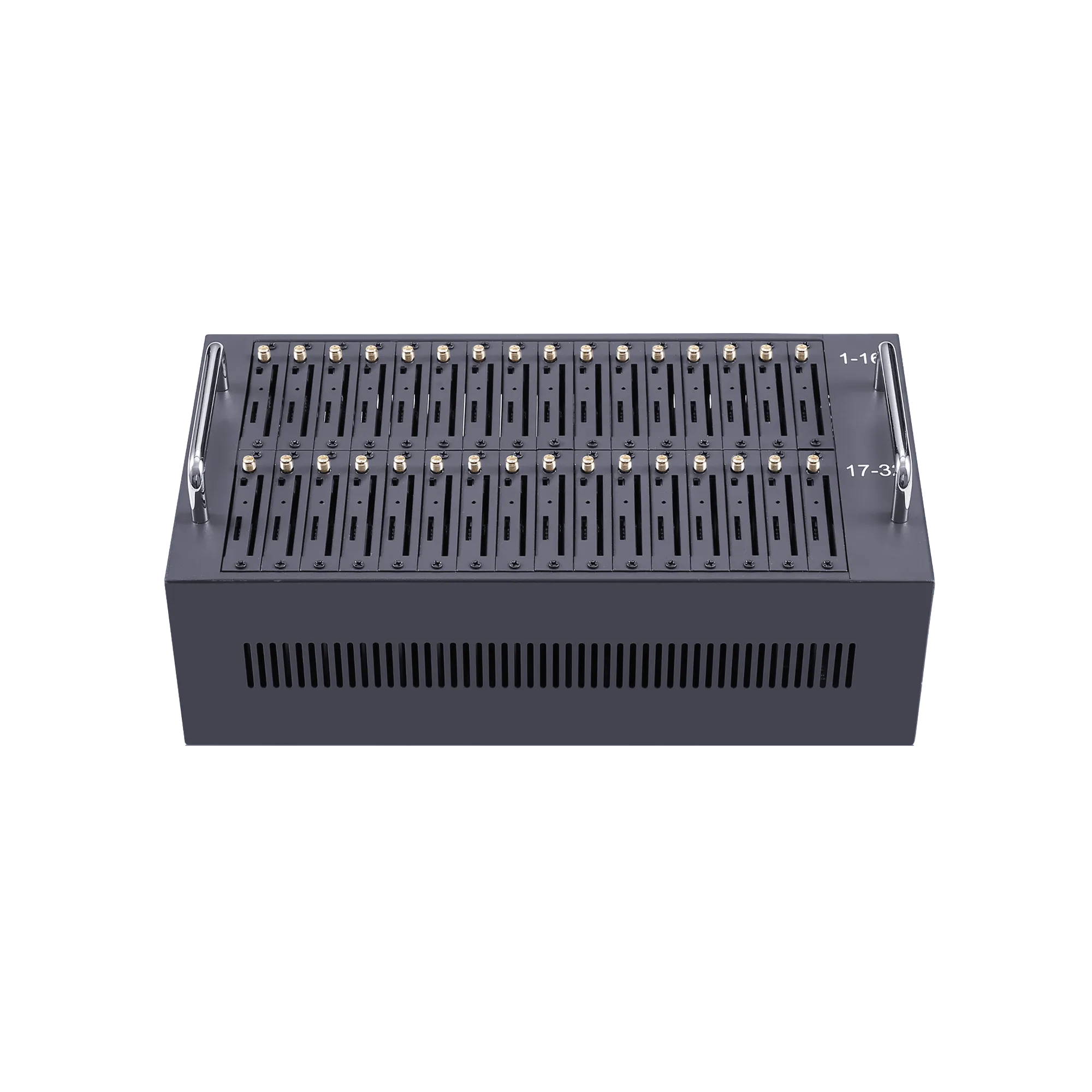
For purchased Telarvo equipment, use the SMS modem collection and SMS gateway collection to identify the product, then request its actual module configuration. The photographs in this guide show finished equipment categories; they are not evidence that M26, M66 or EC25 is installed in a displayed unit.
Build a regression test around the application’s state machine
List the transitions the application depends on: power-up, device discovery, SIM availability, registration, ready state, submission, reception and recovery. Verify those transitions on the proposed module and firmware rather than testing only a single successful send.
Include the SMS functions the application uses, such as text or PDU handling, storage selection, inbound indications and result parsing. Where voice is required, test the full supported audio and call-control workflow separately. Preserve raw diagnostic observations without retaining unnecessary sensitive message content.
Create controlled failures that the software must handle: an unavailable subscription, delayed registration, host restart and an interrupted connection. Establish the expected response and reconciliation procedure. A timeout should not automatically be treated as permission to duplicate a message whose earlier submission remains uncertain.
For a purchased system, the sending-options comparison addresses the host and operating workflow. This module test addresses the component behaviour beneath it. Both layers need compatible results before a migration can be described as complete.
Evaluate lifecycle cost and controlled substitution
Keep a candidate record with the full part number, hardware revision, firmware, document edition and required service tests. Link each unresolved question to the party responsible for answering it. A sample approved for SMS-only use should remain labelled that way if another department later requests voice. This record prevents a narrow engineering result from turning into a broader purchasing assumption and helps procurement identify when a proposed substitute needs a new review rather than an informal approval.
Compare the module price alongside board changes, drivers, engineering effort, validation, approvals and field service. A replacement that is inexpensive per unit can become costly when it requires a redesign or introduces a new support dependency across installed devices.
Request lifecycle status and supply information through the manufacturer’s or authorised supplier’s current process. A live product page is not a stock guarantee, and an older datasheet is not proof of discontinuation. Keep those claims tied to written evidence rather than inferring availability from search results.
Define substitutions in the purchase record. Identify which changes require engineering approval: full part number, firmware, hardware revision, antenna arrangement and relevant accessories. Allowing an unspecified compatible module can undermine the carrier and software tests that justified the original selection.
For a limited maintenance purchase, the existing accepted design may remain the practical choice if service and supply are confirmed. For a new platform, evaluate alternatives against the same requirements instead of treating these three names as the entire available market. The article’s comparison defines a decision method, not a claim that EC25 is the only suitable LTE path.
Select the exact configuration with a documented service path
Choose M26 or M66 only where the required GSM service, integration and planned lifetime are supported. Evaluate EC25 by exact variant when its LTE capabilities fit the project. Neither matching dimensions nor a newer network label eliminates the need for electrical, software and carrier validation.
Keep the accepted part number, document revisions and test results together. The procurement record should explain which conditions were demonstrated and which optional functions were excluded. That makes future substitutions and maintenance decisions reviewable without repeating the entire selection exercise from a family name.
If the project purchases finished equipment rather than a bare module, ask the supplier to identify the installed configuration and its supported services. The gateway’s application interface and the module’s command set are different boundaries; the end user should not assume direct access to a radio because a component datasheet describes it.
Request a Telarvo radio-configuration review with your countries, carriers, required SMS or voice service, host environment and planned lifetime. Ask for the exact installed module part number and the proposed compatibility evidence before selecting equipment.
FAQ
Does a similar AT-command vocabulary make a module replacement software-compatible?
No. Shared command names are only a starting point. The application can also depend on response formats, unsolicited indications, timing, error handling, storage and startup behaviour. Obtain the manuals for the supplied firmware and test the state transitions the application actually uses. Keep the expected and observed results in a regression record. Compatibility should describe that tested workflow, not a broad promise that software written for any Quectel modem will work unchanged on every other family.
Should module approval documents be accepted as approval for the whole gateway?
Not automatically. The document may cover a particular module, revision or configuration, while the finished equipment has its own integration and market requirements. Ask the responsible supplier to identify the scope and any additional assessment needed for the final device. Preserve antenna and installation conditions where relevant. A certificate associated with another variant or a family marketing page should not be assigned to the purchased gateway without evidence that the actual product and configuration are covered.
Can one EC25 sample validate a multi-country product plan?
It can validate only the conditions actually tested. Record the exact variant, firmware, carrier, subscription and required service for each result. Other countries may need different bands, operator profiles or approval evidence, even where the same family appears in a catalogue. Build a separate compatibility entry for each planned market and resolve unsupported conditions before ordering production equipment. A successful sample in one location is useful engineering evidence, but it is not a universal coverage or interoperability result.
Is an older GSM module always the lowest-cost maintenance choice?
No. Its component price must be considered with remaining carrier service, supply, support and the expected replacement work. For a limited installed fleet, retaining an accepted GSM design can be practical when those conditions are confirmed. For a longer service horizon, a migration may reduce later field work even if the initial engineering cost is higher. Compare documented scenarios rather than assuming legacy hardware is always cheaper or that a network-generation change always produces an immediate saving.