A logistics notification that arrives after the parcel does is worse than no notification at all. The operational problem is not whether you can send a message, but whether the message reaches the recipient before the event it describes stops being useful.
Choosing an SMS gateway for logistics notifications therefore starts from timeliness rather than from throughput. This guide maps the notification events in a delivery workflow to the channels that suit them, covers the capacity planning that a peak season demands, and sets out the compliance obligations that apply when a recipient stops wanting to hear from you.
Which delivery events actually need a message?
Four events are worth notifying; the rest are noise.
A delivery workflow contains a dozen moments where a message could be sent, and sending all of them trains recipients to ignore the channel.
The four that carry operational value are dispatch, arrival at the local depot, out-for-delivery, and delivery confirmation. Each changes something the recipient can act on: a dispatch tells them to expect something, an out-for-delivery message tells them to be available, and a confirmation closes the loop. A failed delivery attempt belongs on the list as a fifth where it triggers a reschedule or a collection decision.
Everything else is administrative. Depot transfers, sorting scans and internal milestones are interesting to the operator and not to the recipient. Including them increases volume, raises the proportion of messages that are ignored, and increases the chance that a genuinely important message is dismissed as routine.
The design principle is to notify on state changes the recipient can act upon. Applied consistently, it keeps message volume proportional to the number of parcels rather than to the number of scans, which changes both the cost model and the recipient’s attention.
When is SMS the right channel for a delivery message?
When the recipient may not have the app installed.
SMS is the channel that does not require the recipient to have done anything in advance.
Three properties make it appropriate for delivery notifications. It reaches a handset without an application, an account or a data connection. It is read in the window in which a delivery decision is made. And it works for recipients who are not your customers, which matters for a courier delivering to a person who bought from somebody else.
Its limitations are equally clear. It carries short text, so a message that depends on a link or an image is better suited to a channel that supports them. It has a per-message cost that scales with volume. And it carries expectations about consent and identification that are stricter than those of an order confirmation page.
In practice the useful pattern is a channel ladder: SMS for the events where timeliness decides the outcome, email or application notification for administrative detail, and voice only where a failed delivery attempt needs a decision. Choosing the channel per event, rather than for the whole workflow, produces both better delivery performance and a lower unit cost.
How much capacity does peak season require?
Size for the busiest day, not the average.
Logistics volume is seasonal, and a deployment sized on average volume will fail in the weeks that matter most.
| Input | What to establish | Why it matters |
|---|---|---|
| Peak daily parcel count | The busiest day in the last twelve months, not the average | Sets the message volume ceiling |
| Messages per parcel | How many of the four notifying events each parcel generates | Multiplies the volume |
| Peak-hour concentration | The share of daily volume that falls in the busiest hour | Sets the concurrency requirement rather than the daily total |
| Delivery window commitment | How long a message may wait before it stops being useful | Determines whether queueing is acceptable |
| Per-number policy | The maximum volume you will place from one number | Converts volume into a SIM count |
The fourth row is the one that changes the hardware decision. A deployment that can tolerate a fifteen-minute queue needs fewer channels than one that must deliver within a minute, because the second cannot allow the queue to absorb a peak. Where the commitment is measured in seconds, the port count must cover peak-hour concurrency directly.
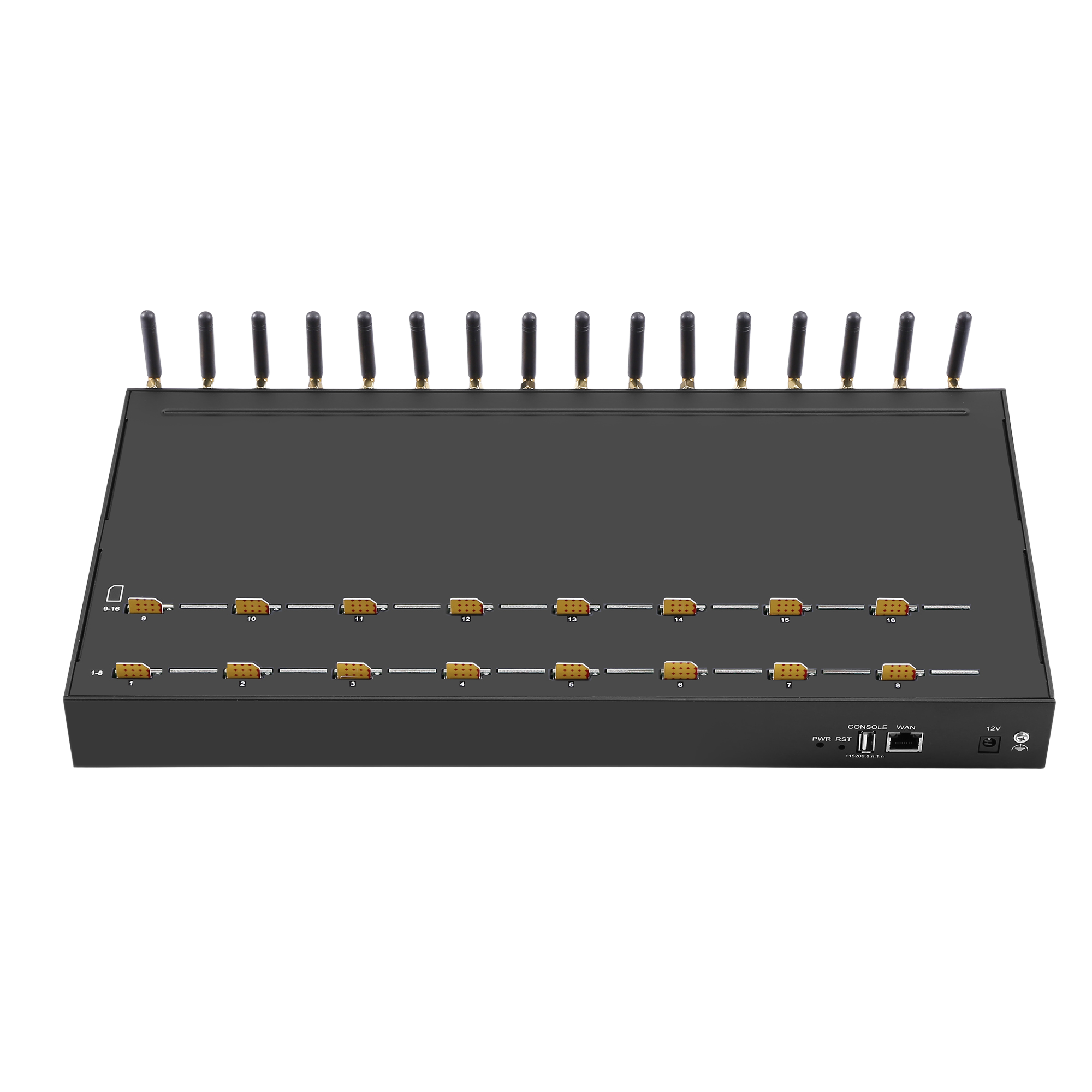
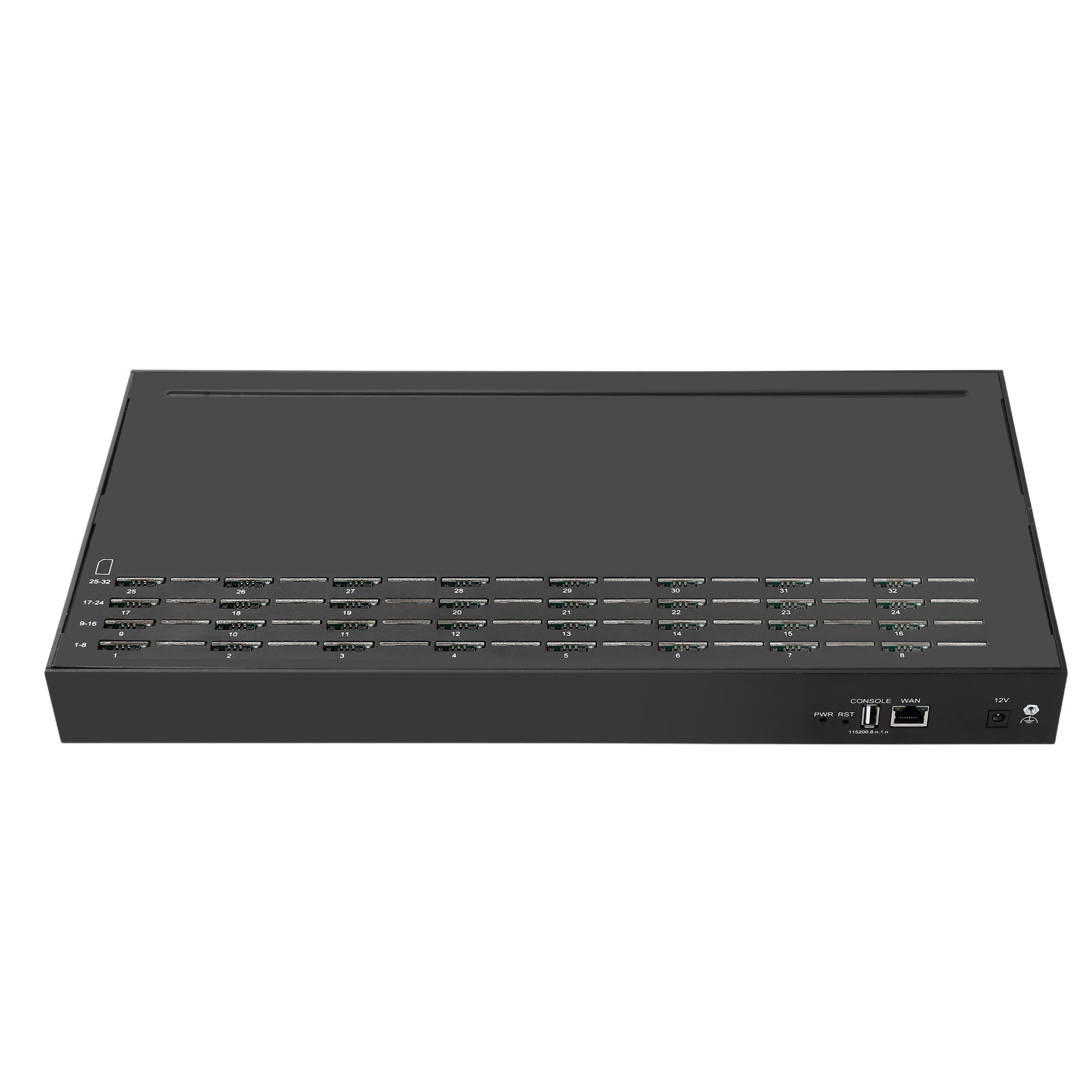
The published SK-SMS Gateway range covers the resulting span, from the 16-port, 16-slot configuration at $645.00 for a mid-size operation to the 32-port, 32-slot configuration at $1,160.00 where peak-hour concurrency is the binding constraint.
How do you keep parallel systems consistent?
One event stream, one message decision, one record.
Logistics messaging breaks when two systems both decide to notify.
The common architecture has a transport management system producing scan events and a separate messaging layer deciding what to send. Where both can trigger a notification, recipients receive duplicates, and the duplication rate rises precisely when volumes are highest and the systems are under load.
Three practices prevent it. Designate one system as the decision point for whether a message is sent, and make the other a producer of events only. Give each notification a deterministic key derived from the parcel and the event type, so that a repeat is recognisable rather than being sent again. And record what was sent against the parcel, so that a support enquiry can be answered from one place.
The deterministic key is the same idempotency pattern that makes inbound message handling reliable, and it is worth applying to outbound notifications for the same reason: retries are normal, and a retry that duplicates a message to a recipient is visible to them.
What are the compliance obligations?
Consent, identification, and a working opt-out path.
Transactional delivery notifications are treated differently from marketing messages in most frameworks, and the difference has to be maintained in practice.
Three obligations apply regardless. The recipient must be able to identify who is messaging, which for a courier delivering on behalf of a retailer usually means identifying the delivery rather than the sender of the original order. The message must relate to the delivery, because mixing promotional content into a transactional notification changes its character. And the recipient must be able to stop receiving messages, which requires an inbound path and a mechanism to act on it.
Market practice guidance such as the material published by M3AAWG and the rules described by bodies such as the CTIA are the practical reference points for how these obligations are expressed in the North American market, and equivalent national frameworks apply elsewhere. Where the deployment operates across borders, the numbering and identification conventions that a recipient sees are standardised through the ITU E.164 numbering plan, while the consent rules remain a matter for each market.
What should be tested before peak season?
Test the peak, the duplicate path, and the opt-out.
A deployment validated at average volume has not been validated for the weeks that matter.
- Peak-hour concurrency. Drive the deployment to the concurrency its busiest hour will require, not to its average.
- Delivery latency against the commitment. Measure from event to handset for the slowest decile, because that is what the recipient notices.
- Duplicate suppression. Replay an event and confirm the deterministic key prevents a second message.
- Opt-out handling. Reply with the opt-out keyword and confirm the record updates automatically and later messages are suppressed.
- Carrier-side failure. Confirm behaviour when one operator is unavailable, since a single-carrier dependency becomes visible at peak.
Items two and five are the ones that predict a bad peak season. A deployment whose slowest decile exceeds the commitment will generate complaints at exactly the moment when support capacity is thinnest, and one that depends on a single operator has no answer when that operator is the constraint.
Where the operation serves several markets, the sender identity and the registration requirements differ by country, and the numbering conventions a recipient sees are standardised through the ITU E.164 numbering plan while the consent rules remain a matter for each market.
A final operational point concerns the recipient’s expectation rather than the technology. A delivery notification is judged against what was promised at the point of order, so the messaging design should be visible to whoever writes that promise. Where the checkout page says the customer will be told when the parcel is out for delivery, the notification stream has an obligation rather than a preference, and the capacity plan has to honour it during the busiest week of the year.
Conclusion
Logistics messaging is a timeliness problem, and the events worth notifying are the ones a recipient can act on. Sizing should follow peak-hour concurrency and the delivery commitment rather than average daily volume, because a queue that is acceptable in a quiet week is not acceptable during a peak. The per-number policy converts volume into a SIM count, and the published range from the 16-port configuration at $645.00 to the 32-port configuration at $1,160.00 covers the span most operations occupy.
Two design decisions prevent most incidents. A single system decides whether a message is sent, with a deterministic key suppressing duplicates when events are replayed. And the opt-out path is automated, because a recipient who cannot stop receiving messages turns a logistics notification into a complaint. Industry guidance from M3AAWG and market rules from organisations such as the CTIA are the practical references for how those obligations are expressed.
Size the deployment for your busiest week, not your average. Send your peak parcel count, notification events and delivery commitment to service@telarvo.com, or review the published models on the SMS gateway solution pages.
FAQ
How many messages should one parcel generate?
Between one and four in most operations, covering dispatch, out-for-delivery, a failed attempt where relevant, and delivery confirmation. Notifying on every scan increases volume and trains recipients to ignore the channel. The design principle is to notify on state changes the recipient can act on, which keeps volume proportional to parcels rather than to scans.
Should delivery notifications use SMS or email?
SMS suits events where timeliness decides the outcome, because it reaches a handset without an application or an installed account. Email suits administrative detail and documents. A channel ladder, with SMS for time-critical events and email for the rest, produces better delivery performance and a lower unit cost than routing the whole workflow through one channel.
Are delivery notifications exempt from consent requirements?
Transactional notifications are usually treated differently from marketing messages, but the difference has to be maintained in practice: the message must relate to the delivery, the recipient must be able to identify who is messaging, and an opt-out must work. Mixing promotional content into a transactional message changes its character, so keep the two separate.
Why do recipients report duplicate delivery messages?
Because two systems can both decide to notify. Where a transport management system and a messaging layer each trigger on the same event, duplicates appear and become more frequent under load. Designate one system as the decision point, derive a deterministic key from the parcel and event type, and record what was sent against the parcel.