School notification systems are sized for an ordinary day and used on the extraordinary one. The number that matters is not the weekly reminder volume but the morning the campus has to reach every parent within twenty minutes.
This article sets out what a single campus actually needs, how to estimate closure-day volume, how number strategy and sender identity affect whether the message is trusted, and when eight ports stop being enough.
What does a single campus actually need from an 8-port SMS modem for school notifications?
A path that reaches every parent inside a defined window.
The requirement is a delivery capability rather than a messaging feature, and it is defined by the size of the parent list and the time available.
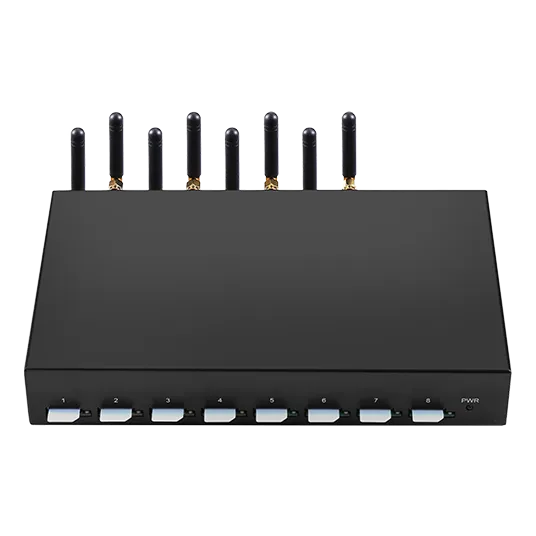
Two figures frame the whole design. The first is the number of recipients who must be reached, which for a school is usually parents and guardians rather than students. The second is the window the school is willing to accept, which for a closure or a safety notice is typically measured in minutes rather than hours. A campus with a thousand contacts and a twenty-minute window needs a delivery rate of fifty messages per minute sustained, and that rate is what the port count has to support.
The rest of the requirement is operational. Notices have to be sendable by people who are not engineers, from a system that is available when the school office is not, and the record of what was sent has to be retrievable afterwards. Those three constraints often matter more than the port count, because a system that requires an engineer to operate it fails on the morning it is needed.
What is peak volume on a closure day?
One message per contact, at once, plus the replies.
A closure or safety notice goes to the whole list in a single action, so peak volume equals the list size and peak rate equals the list size divided by the acceptable window.
The calculation is straightforward and the assumptions inside it are not. A list of a thousand contacts with two guardians each is not a thousand recipients, and duplicate numbers should be removed before the rate is calculated rather than after. Parent replies count as inbound traffic, and a message that invites a reply generates a second peak that a one-way calculation ignores. Providers who deliver to the school’s inbox add a third stream if the account is monitored, which is a reason to keep the reply address separate from the general office account.
A margin belongs in the figure for the same reason it does in any capacity calculation: a port out of service during the notice reduces the achievable rate at exactly the wrong moment. Sizing the estate so that the closure-day peak occupies a defined share of capacity is the simplest way to build that margin in.
| Input | How to obtain it | Why it changes the answer |
|---|---|---|
| Unique parent contacts | De-duplicated contact list | Duplicates overstate the volume |
| Acceptable window | School policy decision | Sets the required rate directly |
| Per-SIM delivery rate | Measured on the operators in use | Converts the rate into a port count |
| Reply expectation | Whether the notice invites a reply | Adds an inbound peak to plan for |
| Headroom | Policy decision | Covers a port being out of service |
Number strategy and sender identity
Parents answer and act on messages they recognise.
The number or identifier the school uses determines whether the notice is read, and that matters more for a safety message than for a routine reminder.
Three options are common, with different consequences. A dedicated school number is recognisable and supports replies, at the cost of one subscription that has to be kept in service. An alphanumeric sender identity is recognisable and does not support replies, and its availability depends on the market and on registration rules. A shared number used for other purposes is cheapest and weakest, because parents cannot tell a genuine notice from something else arriving on the same number.
Whichever is chosen, the identity should be consistent and the message should name the school in its text. Parents who receive a safety notice from an unrecognised number will call the office to check, which converts a notification into a support load at the exact moment the office is least able to handle it. The numbering conventions behind the choice are described in ITU-T E.164.
How should consent and opt-out work for parents?
Separate what parents must receive from what they may.
Safety and closure notices are usually treated differently from event reminders and fundraising messages, and the two should be recorded as separate categories.
The practical arrangement is a consent record that names the category a parent agreed to, so that a withdrawal from event messages does not remove them from safety notices. Where a parent has asked to stop receiving a category, the suppression has to be recorded and applied immediately, and it has to survive a change of platform, because the obligation follows the person rather than the system. The framework that applies depends on the jurisdiction; where the processing is within the European framework, the reference points are the regulation on EUR-Lex and the guidance collected by the European Data Protection Board.
The retention question belongs in the same record. A contact list that keeps the numbers of families who have left the school is data held without a purpose, and the school’s policy on removing them should be documented rather than assumed. Record-keeping practice for the consent and suppression records involved is covered in NIST SP 800-92.
Integration with the student information system
The contact list should come from one place.
Where the notification system keeps its own copy of parent numbers, the two lists diverge, and the divergence is discovered when a notice fails to reach a family.
The reliable arrangement is a scheduled export from the student information system into the messaging platform, with the school’s system treated as the source of truth for contact details and the messaging platform treated as the source of truth for consent and delivery records. That split is easy to state and requires agreement on three points: how often the export runs, what happens when a number changes between exports, and who owns the record when the two disagree.
The export should carry a stable identifier for each family rather than only a number, so that a change of number is recorded as a change rather than as a new contact and a lost one. Where the messaging platform supports it, the same identifier makes the reply routing and the delivery record joinable without matching on phone numbers, which is the field most likely to change. The interface used to submit and confirm messages is standardised in ETSI TS 123 040 and 3GPP TS 24.301.
When should a campus move beyond eight ports?
When the closure-day calculation stops fitting.
The answer follows from the arithmetic rather than from the school’s size, and the same calculation is repeated as the contact list grows.
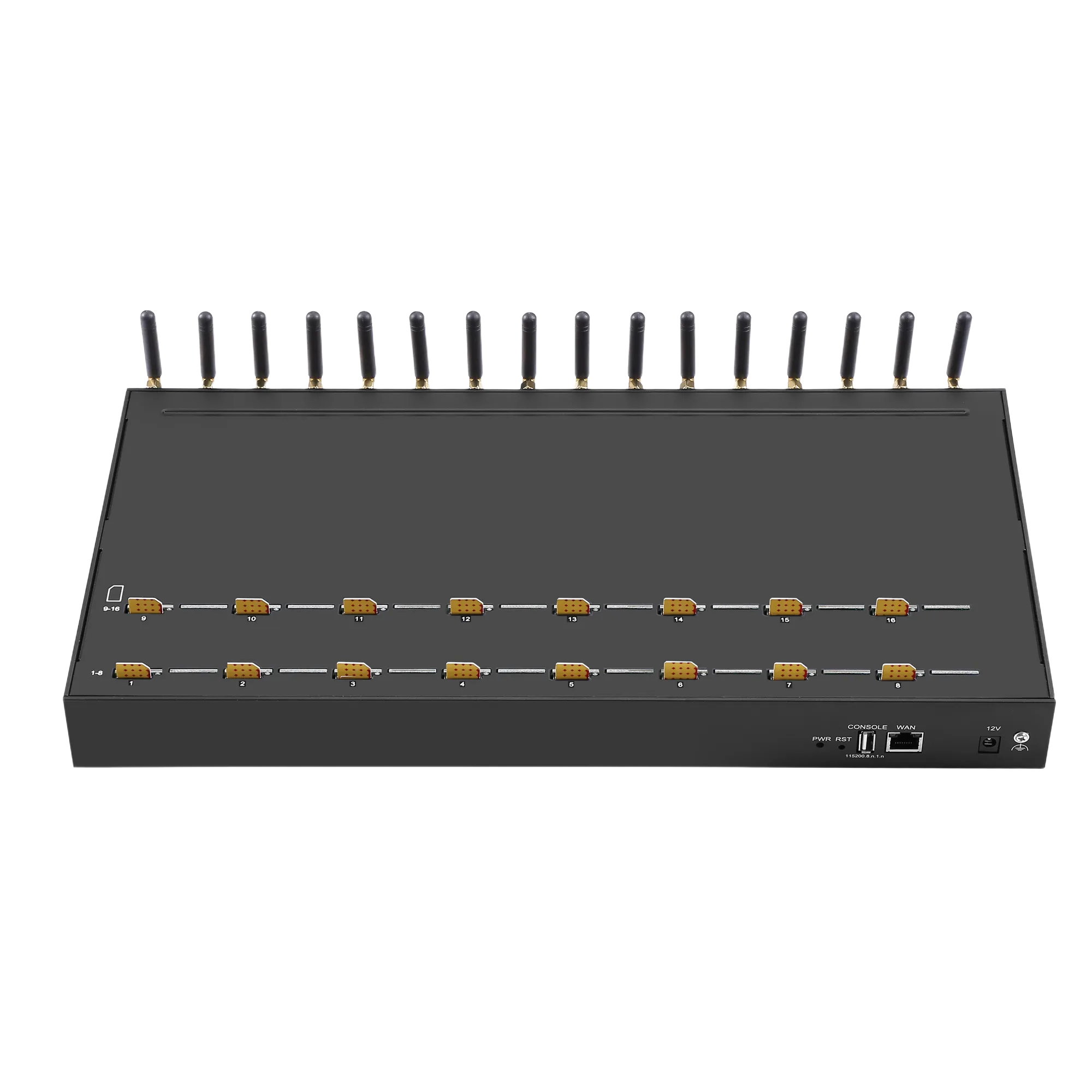
Three triggers are worth watching. The first is list growth: a campus whose contact list doubles will need roughly twice the rate. The second is a shorter acceptable window, which raises the required rate without any change in list size. The third is the addition of a second category of traffic, such as a bus service or a sports programme, which adds messages to the same peak. Any of those can move a campus from adequate to marginal without anyone changing the hardware.
The remedy is not always more ports. Where the per-SIM rate is the constraint, a larger SIM estate or a different operator improves the achievable rate without adding ports, and where the window is the constraint, a decision to accept a longer window may be cheaper than hardware. Re-running the calculation before purchasing is what keeps the answer proportionate.
A sizing outline
The outline sizes the pool from the contact list and the delivery window rather than from a hardware tier. It produces two figures: the number of ports the peak requires, and the number of subscriptions the pool needs to reach that rate on the operators the school uses.
- Count unique parent contacts from the student information system export.
- Agree the acceptable window for a closure notice with the school leadership.
- Compute the required rate: contacts divided by the window.
- Measure the per-SIM rate on the operators the school will use.
- Derive the port count, then add headroom as a policy share.
- Decide the number strategy and record it, including how replies are handled.
- Define consent categories and the suppression that applies to each.
- Test the whole flow with a small group before the first real notice.
The outline ends with a test because the first real notice is the wrong time to discover that the export did not include a field, that the sender identity is unrecognised, or that replies are landing in an unmonitored inbox. A rehearsal with a hundred contacts proves the workflow in a few minutes and costs nothing but a message.
Keep the rehearsal result with the deployment record. It will show what the actual delivery time was for the local operators, whether any contacts failed, and how many replies arrived, and those three figures are the baseline against which a later notice can be compared. A school that has never recorded a rehearsal has no way to judge whether a slow notice is normal or a fault.
Size from the closure-day window, not the weekly volume. Send your contact count, acceptable window and number strategy to service@telarvo.com, or review the published configurations on the SMS modem range and the SMS modem solution page. Telarvo publishes the SK-SMS gateway range, the TYH modem pools and the TGW SMS machine on its product pages, and the configurations referenced above come from those listings.
FAQ
What is an SMS modem and why would a school need one?
It is a device that holds a subscriber identity and exposes an interface for sending and receiving messages. A school uses one to keep notification traffic on hardware it controls, with a sender identity parents recognise and a delivery record the office can retrieve afterwards. Both properties matter when a parent asks whether a notice was sent. The delivery record is what turns a question from a parent into an answer the office can give.
Is there a free way to send bulk SMS to parents?
Free paths exist and generally trade reliability or consent for cost, which is a poor fit for a message that has to arrive on a closure morning. Where the school already owns the hardware, the marginal cost of a notice is the tariff behind each SIM, and the delivery record is the same either way. The difference is what the office can demonstrate afterwards.
How much does bulk messaging cost for a school?
The infrastructure cost depends on the pool and the SIM tariffs rather than on a per-message price, and the recurring cost depends on how often the school sends. As displayed on the site, the TYH modem pools start at $113 for the 8-port model, and the SK-SMS Gateway 8-8 is listed at $355. Confirm those list prices at purchase. Whatever the source of the figure, record the date it was checked, because list prices change.
Can parents opt out of school messages?
They can normally opt out of particular categories rather than of the service entirely, and the categories should be recorded separately so that a withdrawal from event messages does not remove a parent from safety notices. Confirm the applicable rules for your jurisdiction with the school data protection owner. The category list belongs in the enrolment process. Give the office one place to look up which category each parent has agreed to receive.