An industrial modem and a USB dongle can share a radio module and produce identical results on the first day. The difference appears later, when the workload stops being occasional and the enclosure starts being warm.
This article sets out what each device is engineered for, how thermal behaviour and SIM handling diverge under continuous operation, why driver and enumeration stability matter at scale, and when a dongle is genuinely the right answer.
What are industrial modems versus USB dongles each engineered for?
One for occasional use, the other for continuous service.
A dongle is designed to provide a connection while it is needed and to be unplugged afterwards, while an industrial modem is designed to sit in a rack and transmit for years.
The design intent shows up in four places rather than in the radio. The enclosure and thermal path, which determine how the device behaves when it is warm. The card holder, which determines whether a card survives being handled. The power handling, which determines whether the device tolerates the supply conditions of a cabinet. And the management interface, which determines whether the device can be operated as part of a group rather than one at a time.
Because the radio can be the same, a comparison based on network capability will rank the two devices equally, which is why such comparisons are unhelpful. The message framework that both ultimately use is defined in ETSI TS 123 040, and neither the dongle nor the industrial modem changes anything about it.
| Property | USB dongle | Industrial modem |
|---|---|---|
| Design intent | Intermittent personal use | Continuous service |
| Thermal path | Minimal, relies on ambient | Designed for sustained load |
| SIM handling | One card, minimal retention | Multiple cards, serviceable holders |
| Enclosure | Plastic, no mounting | Rack or panel mounting |
| Management | Local, per device | Interface for a group of devices |
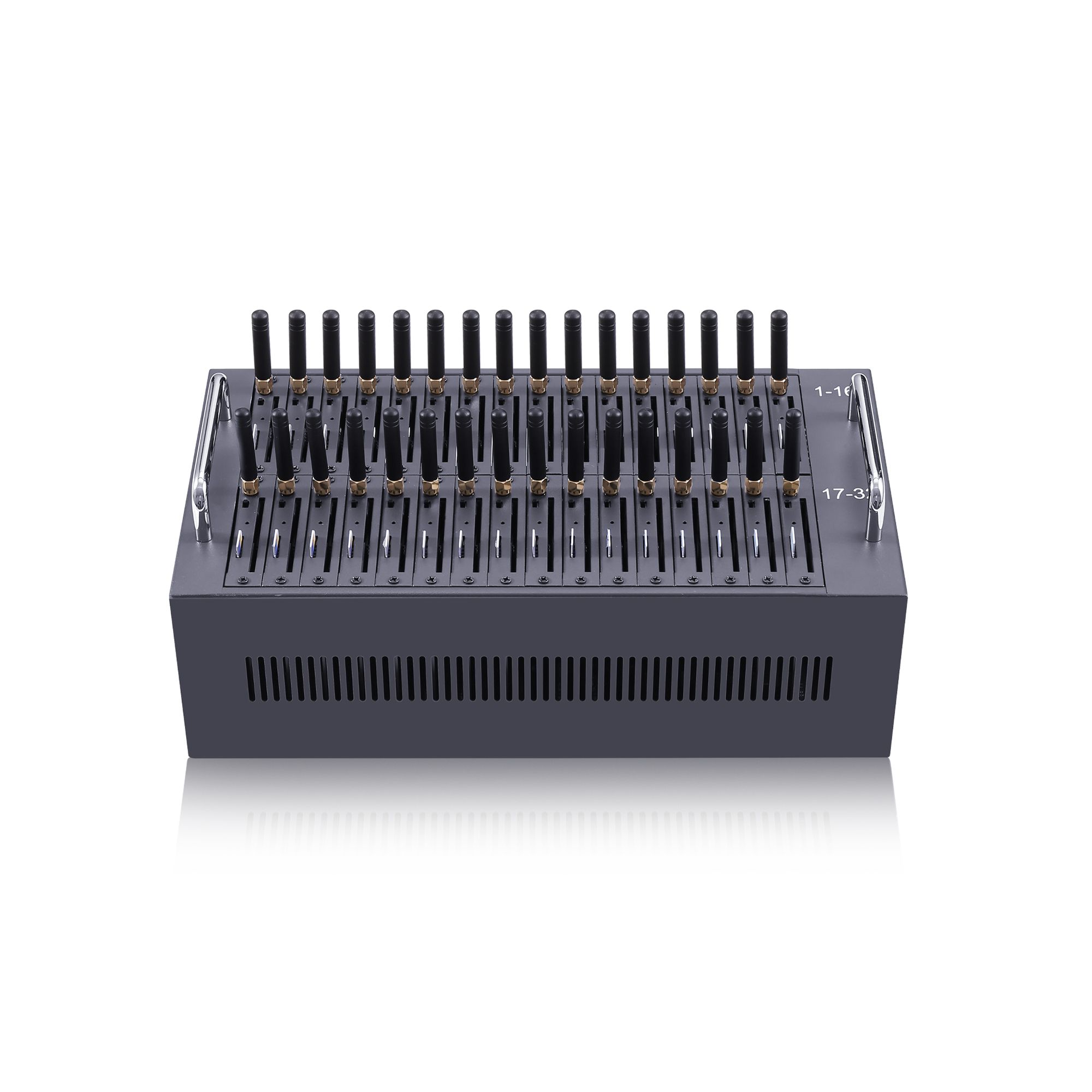
Thermal behaviour under continuous operation
Continuous transmission is the test a dongle was not designed to pass.
A device with little thermal margin works correctly in a cool room and fails intermittently in a warm cabinet, and the failures look like software faults because the device recovers when it cools.
The mechanism is straightforward: radio transmission dominates the power profile, so a device that transmits continuously produces far more heat than one that connects occasionally. A dongle in a rack, with no airflow and no heat spreading, reaches temperatures its enclosure was not designed for, and the result is reduced throughput, dropped connections or resets. The environmental conditions telecommunications equipment may be expected to tolerate are addressed in ITU-T K.21, and the radio characteristics under load are described in 3GPP TS 45.005.
The test that settles the question is a week of continuous operation at the intended load, in the intended location, with the temperature recorded. A dongle that passes that test is a dongle that can be used; one that fails it has failed the only test that matters. Where the equipment claims conformance to a harmonised terminal standard such as ETSI EN 301 511, the conditions behind that claim are the conditions the installation should reproduce.
SIM handling and multi-number work
One card per device is the dongle’s assumption.
Multi-number operation requires an estate that can be addressed, rotated and recorded, which a single-slot consumer device does not provide.
The practical consequences appear as soon as the deployment needs more than a handful of numbers. Rotating traffic across cards requires the platform to know which card is in which slot and to address them individually, which requires per-slot state and the interface that exposes it. Recording which card carried which message requires the same, and without it the per-number delivery ratio that every other control depends on cannot be produced. The command interfaces behind those capabilities are standardised in ETSI TS 127 005 and 3GPP TS 27.005.
Card handling is the second half of the same problem. A dongle holds one card in a holder designed for occasional insertion, while a pool device may see cards changed as part of routine rotation. A holder that was not designed for handling is the component that fails first, and it fails in a way that looks like a network problem until someone inspects the slot.
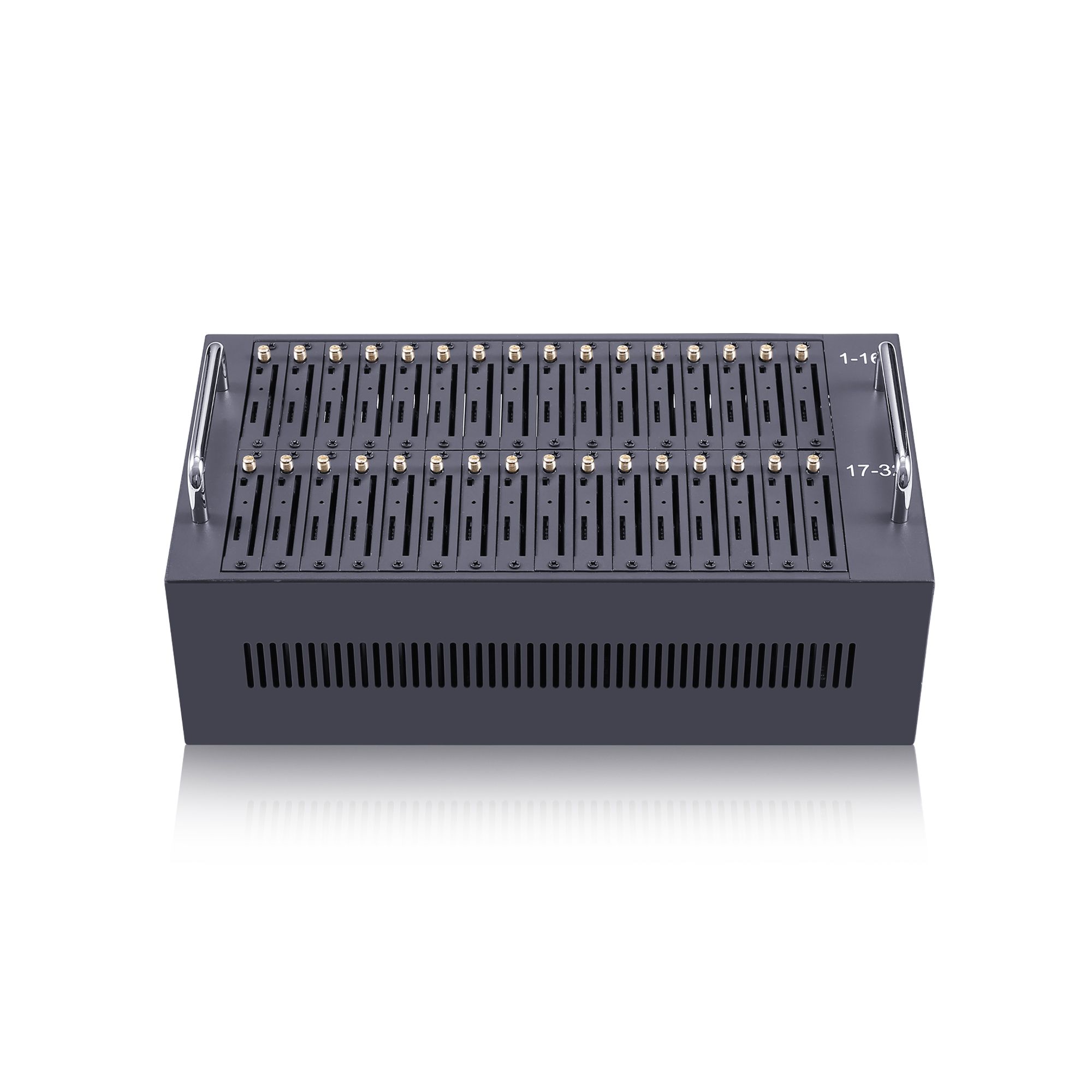
Driver and enumeration stability
Many devices on one host is where dongles become difficult.
Each dongle presents itself as a serial device, and a host with dozens attached accumulates device nodes, hubs and drivers that have to remain stable across restarts.
Three problems appear at that scale. Device names assigned in enumeration order change when hardware is rearranged, so software that stores them eventually addresses the wrong device. Power draw across a shared hub can exceed what the hub supplies, which produces devices that disappear and reappear. And a driver that behaves correctly for one device may behave less well when many are attached to the same controller while transmitting simultaneously. None of these are radio problems, and all of them present as intermittent failures.
A pool device avoids most of them by presenting a single management interface for multiple slots, which eliminates both the enumeration problem and the hub power problem in one step. That is the engineering reason pool hardware exists, and it is a better justification than any claim about individual radios.
Management and monitoring
One device or twenty changes which activities are possible.
Per-device management is manageable for a handful of devices and becomes a role of its own at scale, which is where the operational cost of a dongle estate grows faster than its purchase price suggests.
Three activities have to be performed per device in a dongle estate: monitoring for failure, updating firmware and reconfiguring after a change. In a pool, the same three are performed once for the group, and the difference compounds with the number of devices. The cost is not the time for a single action but the fact that a per-device task is one that gets deferred, and deferred maintenance is what turns an intermittent fault into an outage. Record-keeping practice for the logs that a monitoring scheme depends on is covered in NIST SP 800-92.
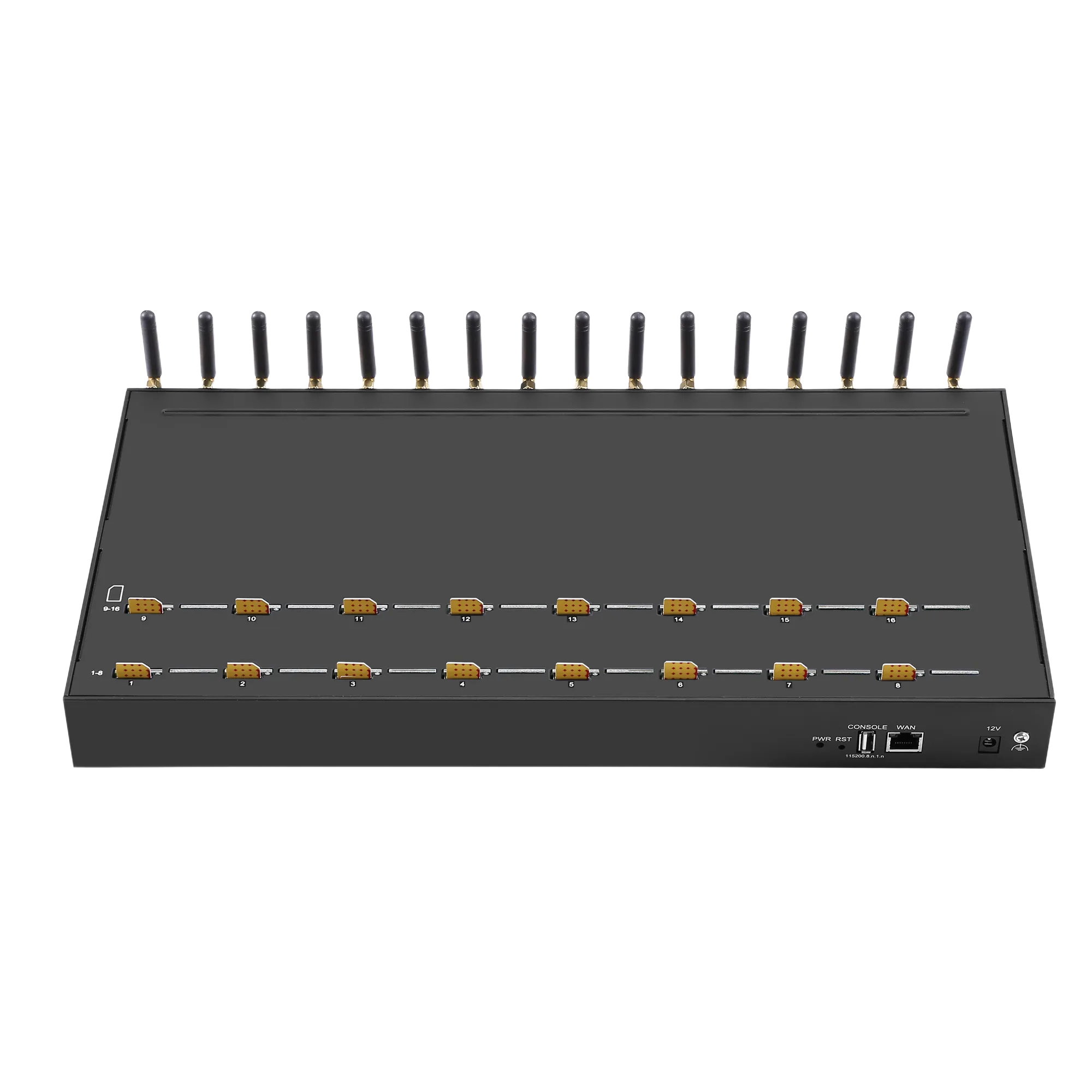
When is a dongle the right answer?
When the workload is small and not depended upon.
A dongle is the correct choice for a single connection, a temporary installation or a backup path that is rarely used, and there is no reason to buy industrial hardware for those cases.
Three cases qualify clearly. A single number carrying low volume, where per-slot state adds nothing. A temporary installation that will be removed before thermal behaviour matters. And a development or test environment where the device is not in a service path at all. In each of those, the industrial device buys capability that will not be exercised, and the honest recommendation is the cheaper one.
The same reasoning applies in reverse to a device that is expected to be in service for years. Where the workload will grow, the cost of replacing a set of consumer devices with pool hardware later is higher than starting with the pool, because the migration includes rebuilding the operational layer rather than only swapping the hardware. Where that transition is foreseeable, the cost belongs in the original comparison rather than in a later project.
Two further checks are worth making before a device is accepted into a service estate. Whether its firmware receives updates on a published schedule, since a device that is no longer supported is a device that will eventually be the oldest component on the network. And whether its configuration can be exported, because a device whose settings exist only on the device cannot be restored after a failure without rebuilding them by hand.
The judgement to avoid is treating a dongle as a modem because both accept a card. The radio may be identical and the rest is not: card handling, thermal margin, enumeration stability and management are the differences that appear after deployment, and they are why an estate that works at ten devices fails at fifty.
A final consideration is the spare strategy, which differs between the two approaches. A dongle estate is covered by holding one or two spare dongles, which is cheap and does not restore the lost capability if the failure is systemic rather than individual. A pool estate is covered by a spare unit or by a service arrangement, which costs more and restores a defined capacity. Which is appropriate depends on what the estate is for: a spare dongle is adequate where the workload can tolerate a partial loss, and a spare unit is required where it cannot.
A comparison table
The table compares the two device classes on the dimensions that decide the answer, with the question each one settles. It is written to be completed against a specific workload rather than as a general ranking, because the deciding dimension changes with the deployment.
- Continuous operation: does the device tolerate the load and the temperature for a week?
- Card handling: is the holder designed for routine changes, and does it retain cards reliably?
- Enumeration: do device names remain stable across restarts and re-cabling?
- Power: can the hub arrangement supply the load without the devices disappearing?
- Management: can monitoring, updates and reconfiguration be performed for a group?
- Attribution: can a message be traced to the slot and card that carried it?
- Support horizon: who publishes updates for the device, and for how long?
The list is short and it is answered by measurement and inspection rather than by specification comparison. A deployment that runs these checks on a sample will know within a week which device suits the workload, and it will know for a reason that can be written down.
Test continuous operation before you scale the estate. Send your device count, load profile and ambient conditions to service@telarvo.com, or review the published configurations on the SMS modem range and the SK-SMS Gateway range. Telarvo publishes the SK-SMS gateway range, the TYH modem pools and the TGW SMS machine on its product pages, and the configurations referenced above come from those listings.
FAQ
Can I use USB dongles for bulk messaging?
For a small volume that is not depended upon, yes. As the estate grows, the constraints are enumeration stability, hub power and per-device management rather than radio capability. Those are the reasons a deployment that works at ten devices becomes unmanageable at fifty. Record the device count at which the arrangement was last reviewed, because the constraints appear as the estate grows rather than at the first unit.
What is the difference between a dongle and a modem?
In common usage a dongle is a small USB device designed for occasional connection, while an industrial modem is designed to operate continuously and to be managed as part of a group. The radio inside can be identical; the difference is the enclosure, the card handling, the power design and the interface. Ask what the device exposes for management, because the difference between the two classes is visible there rather than in the radio.
Why do dongles disconnect after a few hours?
The usual causes are thermal, since a device designed for intermittent use accumulates heat under continuous transmission, and power, since a shared hub may not supply the current several devices draw simultaneously. Both produce devices that disappear and reappear, which is why the pattern is often mistaken for a software fault. Record which hub each device is attached to, because that is the field that turns a set of disappearances into a diagnosis.
Do we need per-slot state for a small deployment?
Only where the deployment rotates numbers, attributes messages or manages more than one card per device. For a single number carrying low volume, none of those apply, and a simpler device is sufficient. The requirement follows from the workload rather than from the hardware. State the requirement before comparing hardware, because the comparison cannot produce an answer until the workload is described.