Firmware can tell you a great deal about the state of a subscription and almost nothing about what the network will do with it next. Knowing which is which is what makes the telemetry worth collecting.
This article separates what a gateway can legitimately report about each SIM from what only the mobile network operator can decide, explains how per-SIM trend data catches a degrading number before it fails, and sets out a monitoring policy that survives contact with a real deployment.
What can firmware SIM health monitoring actually observe on a device?
Only what the modem and the host controller expose.
Firmware reports presence, identity, radio conditions and registration state for each card; it cannot report why a network made a decision.
Firmware sits between the radio module and the application that operates the gateway, so its field of view is the modem’s own status registers plus the state the host maintains for each port. It can report whether a card is present, whether the module has registered, what the received signal level is, and whether the last command completed. It cannot report why a registration attempt was rejected, what a subscription’s standing is with its operator, or how the network classifies the traffic that subscription carries.
That boundary matters because the questions operators ask most often sit on the far side of it. Whether a number is heading for a block, whether a SIM is still in good standing, whether an upstream filter will accept the next batch, are all network-side judgements. The command interface that exposes modem state is standardised, and the AT command set used for SIM and message handling is the one described in 3GPP TS 27.005 and its ETSI TS 127 005 equivalent. Those documents define the vocabulary for reading state; they do not define how a network behaves.
The practical consequence is that any product claiming to predict an operator action is describing an inference rather than a measurement. Inferences can be useful, and a well-built baseline makes them sharp, but they should be labelled as what they are so that nobody plans capacity against a guess.
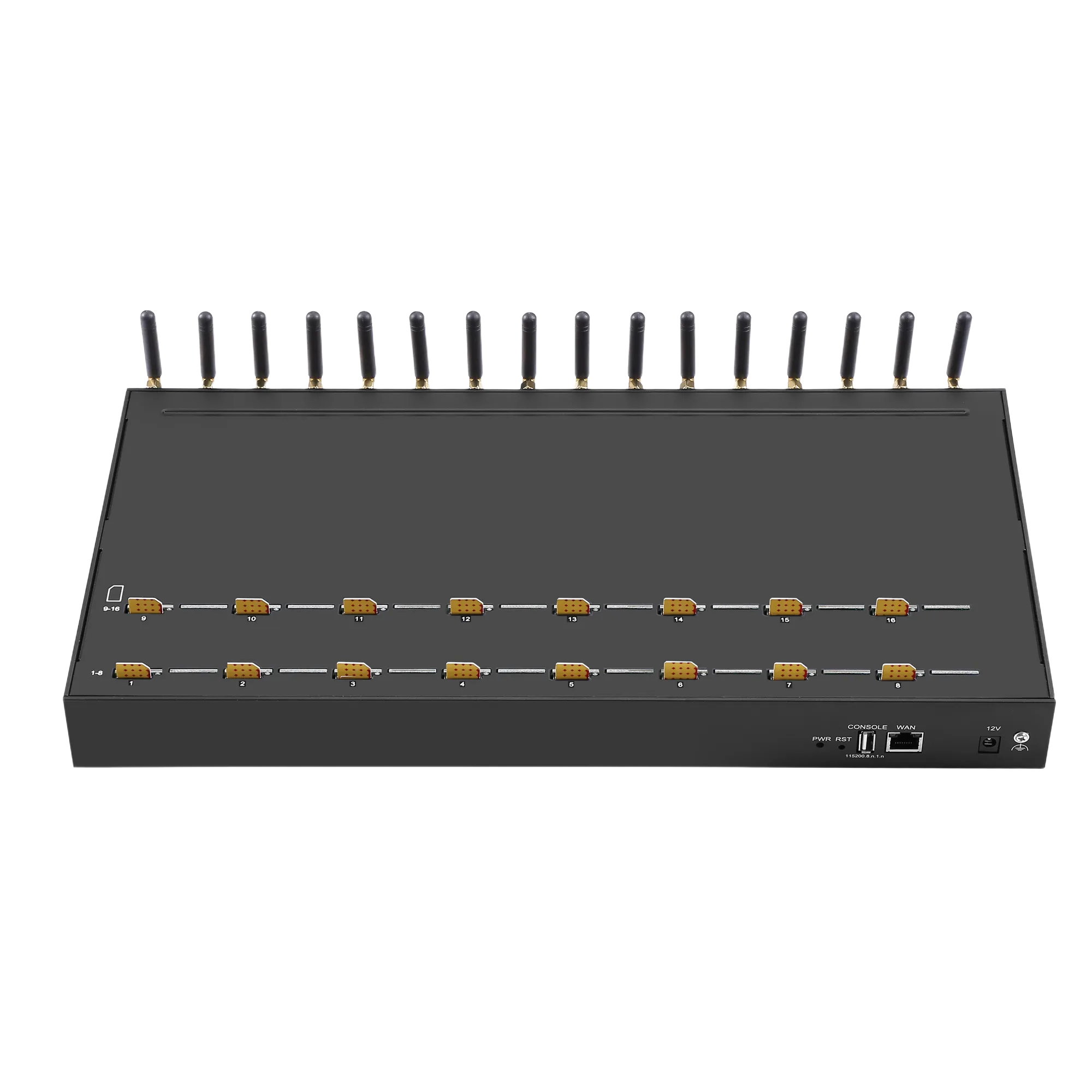
Per-SIM state, signal and registration reporting
The useful unit of reporting is the individual SIM, not the device.
Three classes of observation are available for every card. Presence and identity covers whether the card is detected, whether the module can read it, and which subscription it belongs to; the numbering used to identify a subscriber is defined in ITU-T E.212, and the numbering used to route a call or message is defined in ITU-T E.164. Radio conditions cover the measured signal level and quality on the serving cell. Session state covers registration status and the transitions a module makes between idle, registered and reconnecting states.
Registration behaviour is described in the mobility management procedures of the network itself, and the states a modem reports map onto the vocabulary in 3GPP TS 24.301. Knowing that vocabulary is what turns a log line into a diagnosis, because a module cycling through registration states is telling you something quite different from a module that never registers at all.
Cadence matters as much as content. A value sampled once a minute describes the minute; a value sampled every few seconds, retained for weeks, describes a trend. The second is what catches a degrading number, and it costs almost nothing to keep, because the volume of state data is tiny next to the message traffic itself.
How do you spot a degrading number before it fails?
By watching trends per SIM, not the fleet average.
Alert on a single card whose failure rate, signal or registration diverges from its neighbours, because a fleet average hides exactly that signal.
A number that is about to become a problem rarely announces itself with a clear failure. It degrades in ways that disappear into an aggregate: a slightly higher share of failed sends, a marginally lower signal reading, a longer gap between submission and delivery. Averaged across a pool of thirty-two cards, none of that moves the fleet number enough to be noticed. Tracked per card against that card’s own history, the same data is obvious.
The signals worth alerting on are the ones that separate a radio problem from a subscription problem, because the two lead to different repairs. A single card whose failure rate rises while its neighbours stay flat is usually a subscription or profile matter. A card whose signal falls while its neighbours hold steady points at the antenna path, a connector, or something that changed at the site. A pool whose delivery times drift upward together is a load or upstream question and has nothing to do with any individual card.
| Signal | What it usually indicates | First action |
|---|---|---|
| Failed sends rising on one SIM only | Subscription or profile issue rather than radio | Read that card’s own history before touching the rack |
| Signal falling relative to neighbours | Antenna, connector or a site change | Inspect the antenna path and the connector |
| Registration cycling on one card | Contact, SIM bank power, or operator-side state | Reseat and re-read, then raise it with the operator |
| Delivery time creeping up pool-wide | Load, congestion or a shared upstream limit | Compare against the baseline before changing anything |
The baseline is the part that is usually missing. A trend needs something to be a trend against, so the first week of operation should be recorded and kept, even if no alert fires during it. Deployments that skip this step end up comparing current readings to a feeling, which is how a genuine degradation gets dismissed as normal variation for a fortnight.
Why monitoring is not prevention
Because the decision that ends a subscription is not made by your device.
Monitoring describes; it does not act on the network’s behalf. A gateway can stop sending on a card that looks unhealthy, and that is a genuinely useful response, because it contains the damage to one subscription instead of spreading it across a pool. What a gateway cannot do is change how an operator classifies the traffic that card carries. The classification is made upstream, from behaviour the operator can see and rules the operator owns.
This is also why features marketed as a way to stay ahead of network checks should be treated with caution in a procurement decision. Nothing in a legitimate deployment requires a device to defeat a network’s own controls: where the traffic is compliant and consented, the question does not arise, and where it is not, no hardware feature changes that. A monitoring system is a way to operate well within the rules, not a way around them.
Where the risk concerns how traffic is sent, meaning volume, timing, content and consent, the lever is the operating policy rather than the hardware. The frameworks for deciding that policy sit with the operator and, for regulated sectors, with the regulator. Recording what was sent, when, and on whose authority is a separate discipline with its own guidance, and the log management practice described in NIST SP 800-92 is a reasonable starting reference for the record-keeping half of it.
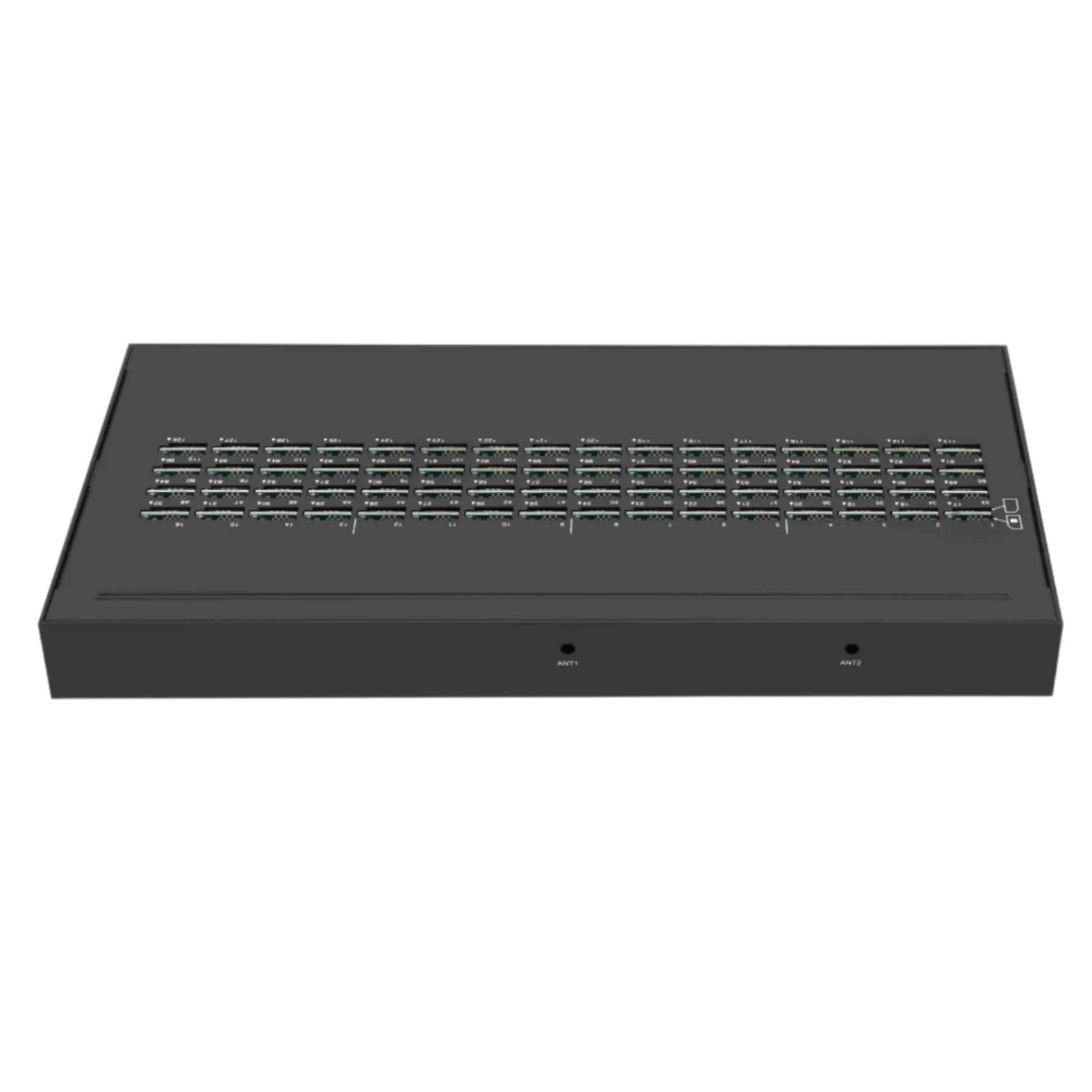
What does the operator decide regardless of your hardware?
Subscription standing, tariffs and usage rules.
Acceptable use, sender identity, opt-out handling and any national restriction sit outside the rack, and the hardware can only enforce what has been written down.
The operator owns the subscription and therefore owns the consequences. Acceptable use conditions, sender identification requirements, the treatment of unsolicited messages, and any national restriction on messaging at particular hours are all set outside your rack. A gateway can be configured to respect those limits, but it cannot negotiate them.
The sensible division of labour is that the operator and your compliance owner define the limits, and the hardware enforces the ones that can be expressed as configuration: which subscriptions may send, at what rate, to which destinations, and with what fallback when a send is refused. Anything that cannot be expressed that way belongs in a written procedure rather than in a device setting, because a setting implies an enforcement that does not exist.
Where a deployment touches a regulated activity, the thresholds and the permission model should come from the compliance owner, and the hardware description should stay strictly on the engineering side. That is the scope of this article: it describes what the equipment reports and how to read it, not what a particular operator, sector or jurisdiction will permit.
Turning monitoring into a policy
Convert each alert into a named owner and a defined action, or drop it.
Three tiers are enough for most deployments. Informational readings are retained and reviewed, but nobody is woken for them. Actionable conditions have an owner, a first step and a time in which the first step is expected, which in practice means the person on shift knows what to do with a single-card failure rate alert. Escalation conditions have a second owner and a threshold beyond which the operator is contacted, because some conditions genuinely cannot be resolved from inside the rack.
A threshold that produces alerts nobody acts on is worse than no threshold at all, because it trains the team to ignore the console. It is better to alert on three things and resolve them than to alert on twenty and triage them by habit. Reviewing which alerts actually led to action after the first quarter is the simplest way to prune the list.
Correlation with a change log closes the loop. Nearly every surprising shift in a telecoms estate follows a change: a firmware update, a moved antenna, a new subscription batch, a routing change upstream. A monitoring system that cannot be read alongside a record of what changed turns a two-minute diagnosis into a two-day one, and the general practice of keeping systems observable is set out in guidance such as the CISA cybersecurity best practices collection.
A monitoring checklist
The checklist covers what has to be collected, retained and acted on for monitoring to change behaviour rather than produce reports. Each item can be verified on a running deployment, and the last two are the ones that decide whether the data is actually used.
- Per-SIM reporting, not per-device averages, for presence, signal and registration state.
- A recorded baseline from the first week of operation, kept for comparison.
- Retention long enough to cover the interval between a change and its visible effect.
- Separate alerting for single-card trends and for pool-wide drift.
- An owner and a first action for every alert that can fire.
- An escalation path for conditions the site cannot resolve, with the operator’s contact recorded.
- A change log readable next to the monitoring history.
The checklist is deliberately short. Its purpose is to make the difference between collecting data and operating a service, and the second one is what a monitoring deployment is actually for.
Ask for per-SIM state reporting, then decide what to alert on. Send the reporting fields you need and the pool size you are planning to service@telarvo.com, or review the published configurations on the SMS gateway range and the SMS gateway solution page. Telarvo publishes the SIMBANK and SIMPOOL ranges on its product pages, and the configurations referenced above come from those listings.
FAQ
Does firmware-level monitoring prevent SIM blocking?
No. Monitoring reports what a modem can observe about a card, such as presence, signal and registration state, and it can help you withdraw a card that looks unhealthy before it affects the rest of a pool. Whether a subscription is restricted is decided upstream by the network operator from behaviour and rules the operator owns, so a monitoring feature describes risk rather than preventing a network-side decision.
What can a gateway firmware actually report about each SIM?
Three classes of state. Presence and identity, meaning whether the card is detected and read. Radio conditions, meaning the measured signal level and quality on the serving cell. And session state, meaning registration status and the transitions between registered, idle and reconnecting states. The command interface used to read these values is standardised, so the vocabulary is the same across hardware that implements it.
How long should SIM state history be retained?
Long enough to cover the interval between a change and its visible effect, which in practice is usually several weeks rather than several days. State data is tiny compared with message traffic, so the cost of retention is negligible. The more useful constraint is a recorded baseline from the first week of operation, because a trend can only be read against something.
Should a gateway automatically stop sending on a SIM that looks unhealthy?
Often yes, with limits. Withdrawing one card from service contains the effect to a single subscription and prevents a marginal card from consuming retries that belong to healthy ones. The automation should be able to be overridden, and the withdrawal should raise a human-visible alert, because an automatic action that silently removes capacity from a pool is its own kind of outage.
{
“@context”: “https://schema.org”,
“@type”: “FAQPage”,
“mainEntity”: [
{
“@type”: “Question”,
“name”: “Does firmware-level monitoring prevent SIM blocking?”,
“acceptedAnswer”: {
“@type”: “Answer”,
“text”: “No. Monitoring reports what a modem can observe about a card, such as presence, signal and registration state, and it can help you withdraw a card that looks unhealthy before it affects the rest of a pool. Whether a subscription is restricted is decided upstream by the network operator from behaviour and rules the operator owns, so a monitoring feature describes risk rather than preventing a network-side decision.”
}
},
{
“@type”: “Question”,
“name”: “What can a gateway firmware actually report about each SIM?”,
“acceptedAnswer”: {
“@type”: “Answer”,
“text”: “Three classes of state. Presence and identity, meaning whether the card is detected and read. Radio conditions, meaning the measured signal level and quality on the serving cell. And session state, meaning registration status and the transitions between registered, idle and reconnecting states. The command interface used to read these values is standardised, so the vocabulary is the same across hardware that implements it.”
}
},
{
“@type”: “Question”,
“name”: “How long should SIM state history be retained?”,
“acceptedAnswer”: {
“@type”: “Answer”,
“text”: “Long enough to cover the interval between a change and its visible effect, which in practice is usually several weeks rather than several days. State data is tiny compared with message traffic, so the cost of retention is negligible. The more useful constraint is a recorded baseline from the first week of operation, because a trend can only be read against something.”
}
},
{
“@type”: “Question”,
“name”: “Should a gateway automatically stop sending on a SIM that looks unhealthy?”,
“acceptedAnswer”: {
“@type”: “Answer”,
“text”: “Often yes, with limits. Withdrawing one card from service contains the effect to a single subscription and prevents a marginal card from consuming retries that belong to healthy ones. The automation should be able to be overridden, and the withdrawal should raise a human-visible alert, because an automatic action that silently removes capacity from a pool is its own kind of outage.”
}
}
]
}