A business voice gateway is chosen for what happens in month nine, not for what the specification sheet shows at the start. The radio can be identical; the difference is whether the device is expected to be in service continuously.
This article sets out the differences that matter for a business deployment, how multi-line management and PBX integration work, what logging and attribution contribute, and where consumer equipment is genuinely sufficient.
Is continuous operation the first difference for an industrial VoIP gateway in business use?
It is, because everything else follows from it.
A device designed for intermittent use has different thermal, power and management design from one expected to carry calls every day.
The consequences appear gradually rather than immediately. A device with little thermal margin works correctly in a cool room and fails intermittently in a warm cabinet, and the failures look like a network fault because the device recovers when it cools. A device with minimal power conditioning tolerates a clean supply and misbehaves on a shared one. And a device designed to be managed by whoever is holding it lacks the interfaces that a business needs to operate a group of gateways rather than one. The environmental expectations for telecommunications equipment are addressed in ITU-T K.21, and they describe the conditions the installation should meet rather than the device alone.
Voice adds one constraint that messaging does not. A call is a real-time conversation, so delay and loss are audible rather than merely logged, and the reference for end-to-end delay in speech applications is ITU-T G.114. A device that holds its sessions but adds delay produces a service that users describe as poor without any component reporting a fault, which is the failure mode that most often drives the move away from consumer equipment.
| Difference | Consumer equipment | Business gateway |
|---|---|---|
| Operation | Intermittent | Continuous |
| Channels | A few, managed locally | Many, managed as a group |
| Integration | None or basic | Signalling interfaces for a PBX |
| Records | Connection events | Per-call detail and attribution |
| Spares | Replace on failure | Defined spare and support path |
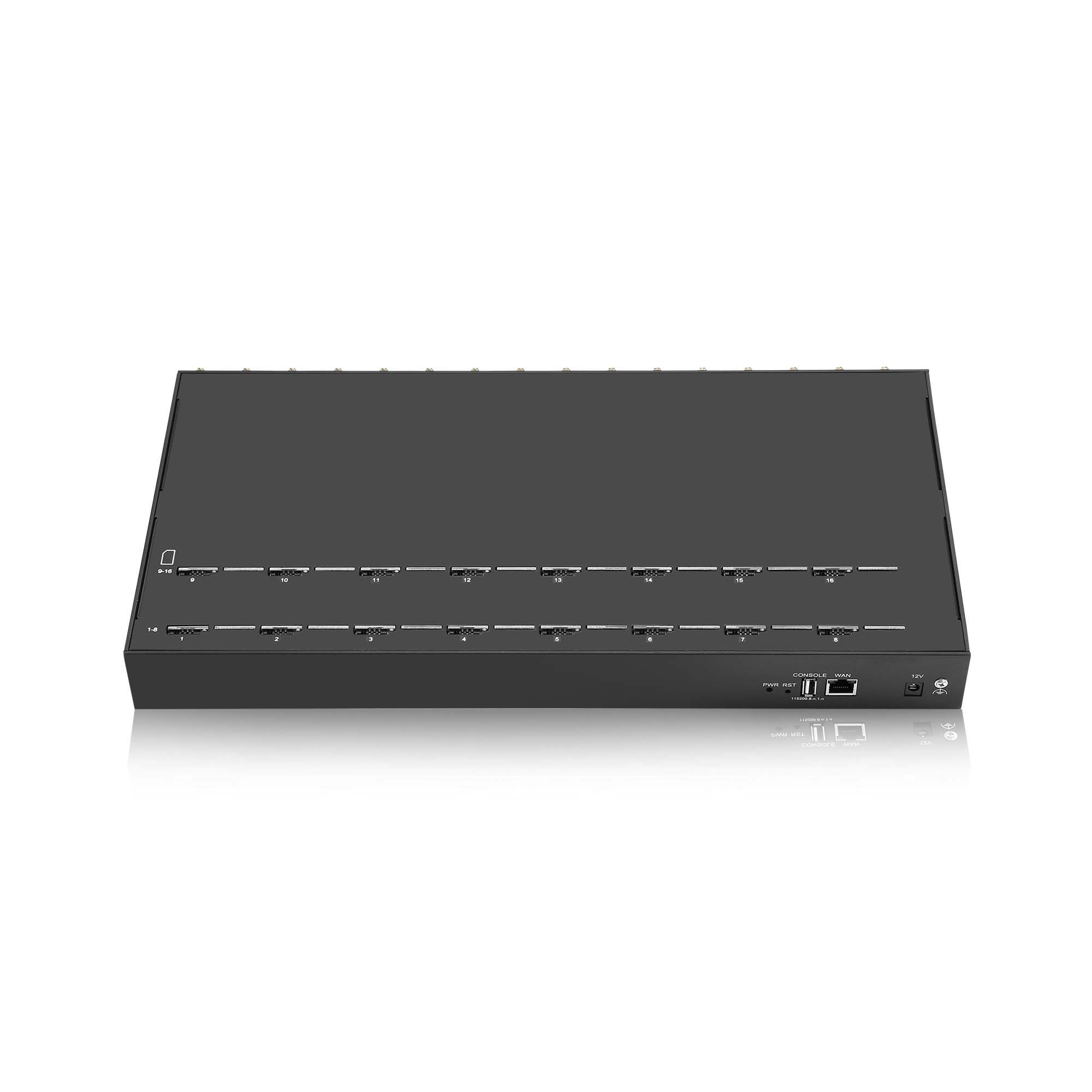
Multi-line and channel management
A business manages a pool of channels rather than a line.
Several channels are used at once, each with its own subscription, and the device has to expose enough state for the pool to be operated.
Three capabilities distinguish a business gateway. Per-channel state, so that a channel which is not registering or is delivering poor quality can be identified rather than inferred from aggregate behaviour. Per-channel concurrency, so that the number of simultaneous calls a given channel carries can be limited. And the ability to take a channel out of service without disturbing the rest, which is what allows maintenance to happen during business hours. The command interfaces that expose this state are standardised in ETSI TS 127 005 and 3GPP TS 27.005.
Pool management also determines how the estate is sized. Where channels are treated as interchangeable capacity, the pool is sized on the peak concurrent call count divided by the channels available, and the number of subscriptions follows from the per-channel limit the operator accepts. Treating the pool as one line produces a deployment that works until several calls coincide, which is the situation the pool exists to serve.
Integration with existing PBX systems
The gateway is a trunk, and it has to behave like one.
Integration means the PBX can route calls to the gateway and receive them, with the signalling behaviour a trunk is expected to provide.
Three aspects decide whether integration is straightforward. The signalling interface the PBX expects, and whether the gateway presents itself in a way the PBX recognises. The dial plan, since a gateway that requires unusual number manipulation adds configuration to a system that is already complex. And the failure behaviour, because a trunk that disappears without a defined response produces calls that fail silently rather than being routed elsewhere. Session establishment is defined in RFC 3261, and the media transport that carries the conversation is described in RFC 3550.
The practical test is a call in each direction, placed through the PBX’s own routing rather than by dialling the gateway directly. That test exercises the dial plan and the trunk definition together, and it is the one that reveals the configuration problems which only appear in production.
Codec behaviour belongs in the same test. Where the PBX and the gateway do not share a codec, the conversation is converted in one of the two devices, and the cost of that conversion is paid on every concurrent call rather than once. A trunk that sounds correct with a single call can degrade as the pool fills, because the conversion load grows with the number of active sessions and competes with the work of carrying them. Recording the offered, selected and converted codecs for a test call in each direction makes the difference visible before it becomes a complaint, and it distinguishes a capacity problem from an interoperability one. Codec negotiation is where the two ends agree on a common format, so the outcome of that negotiation is the detail worth capturing.
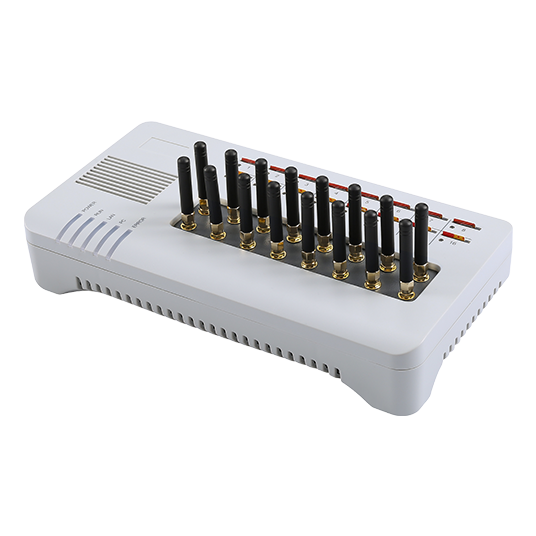
Management, logging and attribution
A business deployment has to answer questions about specific calls.
Per-call records allow a dispute to be resolved from the system rather than from recollection, and they are what makes the deployment auditable.
Three fields are worth requiring. The channel or subscription that carried the call, so that a pattern by number is visible. The outcome and its timestamp, so that a specific call can be placed. And the internal extension or reference that initiated it, so that the call can be attributed to a team rather than to the gateway as a whole. Together they answer the question a business actually asks, which is not how many calls were made but what happened to a particular one. Record-keeping practice for the logs involved is covered in NIST SP 800-92.
Attribution also has a management dimension. Where several departments use the same gateway, the ability to separate their traffic by identity or by trunk allows each to be measured and charged. That separation is a configuration decision rather than a hardware capability, and it is much easier to design before the deployment grows than to retrofit.
Support and spare strategy
A voice gateway is in a service path, so its replacement time matters.
The relevant figure is not the warranty period but how long the business operates at reduced capacity while a replacement is arranged.
Two arrangements cover most deployments. A spare unit held on site, which restores the capability as soon as somebody swaps it, at the cost of a device that sits idle. Or a support arrangement with a defined dispatch time, which is cheaper while everything works and slower when it does not. The choice follows from what the business would do during an outage: where the answer is to route calls elsewhere temporarily, the support arrangement is usually adequate; where the answer is that calls cannot be handled at all, the spare is the practical answer.
Documentation belongs with the spare. A replacement unit is only useful if the configuration can be restored, which means an export that exists outside the device and a record of the version it came from. A device whose settings exist only on the device is a device that has to be rebuilt by hand after a failure, which typically takes longer than the outage the spare was bought to prevent.
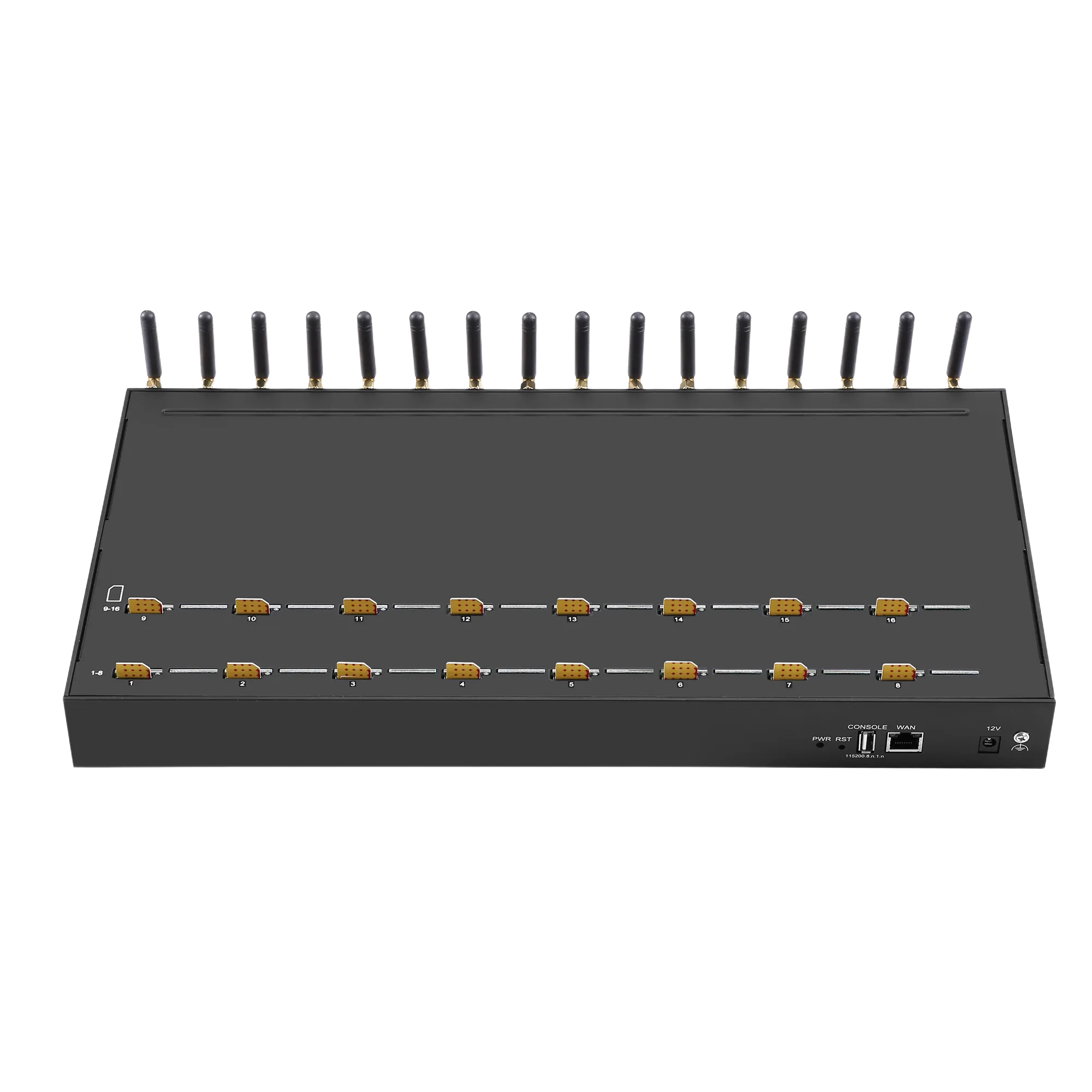
Where is consumer equipment sufficient?
Where the requirement is a connection rather than a service.
A consumer device is adequate for a single line used occasionally and for any case where a failure is an inconvenience rather than an interruption.
Three cases qualify. A small office that makes a handful of calls a day and can fall back to a mobile handset. A temporary installation that will be removed before continuous operation matters. And a backup path that is not in the service path and is exercised rarely. In each of those, an industrial gateway buys capability that will not be used, and the honest recommendation is the simpler device.
The judgement to avoid is treating a gateway as a router with a telephone port. The differences that matter in a business deployment are the ones that appear under continuous load, in the records, and in the ability to manage a pool — and none of them are visible in a specification comparison of ports and protocols. The signalling and subscription states involved are defined in 3GPP TS 24.301, and they are the vocabulary a support conversation uses.
A selection outline
The outline sequences a voice deployment from the peak call profile to the spare strategy. Each line constrains the one after it, and the two that decide the answer are the per-channel limit the operator accepts and the signalling behaviour the PBX expects.
- Peak concurrent calls, and the number of channels required to carry them.
- Per-channel limit the operator accepts, and the resulting subscription count.
- Signalling interface and dial plan compatibility with the existing PBX.
- Per-call record fields, including channel, outcome and originator.
- Thermal and environmental conditions at the installed position.
- Spare strategy and the configuration export that supports it.
- Cost comparison using published list prices, confirmed at purchase.
The outline produces a comparison that can be re-run as the deployment grows, which matters because voice estates tend to expand by adding channels rather than by replacing the gateway. Re-running the first two items after each expansion is what keeps the pool sized to the peak rather than to the original estimate.
One item is deliberately absent from the list: the number of ports on the largest model. Buying the largest chassis to avoid a second purchase is a common decision, and it is defensible when the expansion is already funded and scheduled. It is a poor default when the growth is projected rather than committed, because the unused capacity is paid for at purchase and depreciates while it waits, and because a single large device concentrates the failure that a smaller pair would have contained.
Compare on continuous operation and records, not on ports. Send your peak call profile, PBX type and spare strategy to service@telarvo.com, or review the published configurations on the VoIP gateway range and the VoIP gateway solution page. Telarvo publishes the SK VOIP gateway range and the GoIP models on its product pages, and the configurations referenced above come from those listings.
FAQ
How much does a GSM gateway cost?
As displayed on the site, list prices in the voice family run from $260 for the SK VOIP Gateway 4-4 to $2,520 for the 32-512 model, and the GoIP range is listed at $100 for the GOIP1, $378 for the GOIP8 and $620 for the GOIP16. Those are list prices and should be confirmed at purchase. Confirm the current list price and the model in the family that matches the channel count, because list prices are a starting point rather than a quotation.
How much does VoIP typically cost for a business?
The infrastructure cost is the gateway plus the subscriptions behind it, and the recurring cost is the tariffs on those subscriptions rather than a per-seat licence. That is different from a hosted voice service, where the cost scales with seats and minutes; an owned gateway converts much of that into fixed hardware and local tariffs. Record which costs are fixed and which recur, because that split is what a business case is built from.
What does a VoIP gateway actually do?
It converts between the cellular network and IP telephony, so calls arriving on a subscription can be routed into a PBX and calls from the PBX can be placed over the cellular network. In a business deployment it behaves as a trunk, which is why its signalling and failure behaviour matter as much as its channel count. Test a call in each direction through the PBX routing before acceptance, because that test exercises the dial plan and the trunk together.
Are the best VoIP systems for small businesses the same as for enterprises?
Not necessarily, because the requirements differ. A small business is usually choosing a complete voice service, while an enterprise is choosing hardware to integrate with an existing PBX. The two decisions share the channel count but differ on integration, records and support arrangements. Record the integration, record and support requirements separately, because they are the three items that differ between the two classes of buyer.
{
“@context”: “https://schema.org”,
“@type”: “FAQPage”,
“mainEntity”: [
{
“@type”: “Question”,
“name”: “How much does a GSM gateway cost?”,
“acceptedAnswer”: {
“@type”: “Answer”,
“text”: “As displayed on the site, list prices in the voice family run from $260 for the SK VOIP Gateway 4-4 to $2,520 for the 32-512 model, and the GoIP range is listed at $100 for the GOIP1, $378 for the GOIP8 and $620 for the GOIP16. Those are list prices and should be confirmed at purchase. Confirm the current list price and the model in the family that matches the channel count, because list prices are a starting point rather than a quotation.”
}
},
{
“@type”: “Question”,
“name”: “How much does VoIP typically cost for a business?”,
“acceptedAnswer”: {
“@type”: “Answer”,
“text”: “The infrastructure cost is the gateway plus the subscriptions behind it, and the recurring cost is the tariffs on those subscriptions rather than a per-seat licence. That is different from a hosted voice service, where the cost scales with seats and minutes; an owned gateway converts much of that into fixed hardware and local tariffs. Record which costs are fixed and which recur, because that split is what a business case is built from.”
}
},
{
“@type”: “Question”,
“name”: “What does a VoIP gateway actually do?”,
“acceptedAnswer”: {
“@type”: “Answer”,
“text”: “It converts between the cellular network and IP telephony, so calls arriving on a subscription can be routed into a PBX and calls from the PBX can be placed over the cellular network. In a business deployment it behaves as a trunk, which is why its signalling and failure behaviour matter as much as its channel count. Test a call in each direction through the PBX routing before acceptance, because that test exercises the dial plan and the trunk together.”
}
},
{
“@type”: “Question”,
“name”: “Are the best VoIP systems for small businesses the same as for enterprises?”,
“acceptedAnswer”: {
“@type”: “Answer”,
“text”: “Not necessarily, because the requirements differ. A small business is usually choosing a complete voice service, while an enterprise is choosing hardware to integrate with an existing PBX. The two decisions share the channel count but differ on integration, records and support arrangements. Record the integration, record and support requirements separately, because they are the three items that differ between the two classes of buyer.”
}
}
]
}