The honest answer is that it depends on what you are protecting, and the useful work is in identifying that rather than in choosing a specification. This article separates the four places encryption can apply in an SMS deployment and shows how to decide which of them your deployment needs.
It covers message content, management traffic, transport security for the gateway interfaces, and the records a deployment is obliged to keep, then turns the analysis into a decision and an assessment checklist.
Where hardware encryption for enterprise SMS applies and where it does not
Encryption is a property of a specific path, not of a device.
The common mistake in evaluating secure SMS hardware is to treat encryption as a feature that either exists or does not. In practice there are four distinct paths, and each has its own answer. The path between your application and the gateway carries commands and message content. The path between the gateway and the administration interface carries configuration and state. The path between the radio module and the network is governed by the network itself. And the stored records on the device and in your systems have their own protection requirement.
Only the first, second and fourth paths are yours to secure. The radio path is managed by the operator under the standards the network implements, which is why claims about protecting message content in transit across the cellular network should be read carefully: what a gateway can protect is the traffic it handles, not the segment it does not control.
| Path | Who controls it | What you can do |
|---|---|---|
| Application to gateway | You | Require transport encryption and authenticate the client |
| Gateway administration | You | Restrict access, encrypt the interface, log the sessions |
| Module to network | The operator | Nothing directly; rely on the network and design accordingly |
| Stored records | You | Restrict, encrypt at rest, and set a retention period |
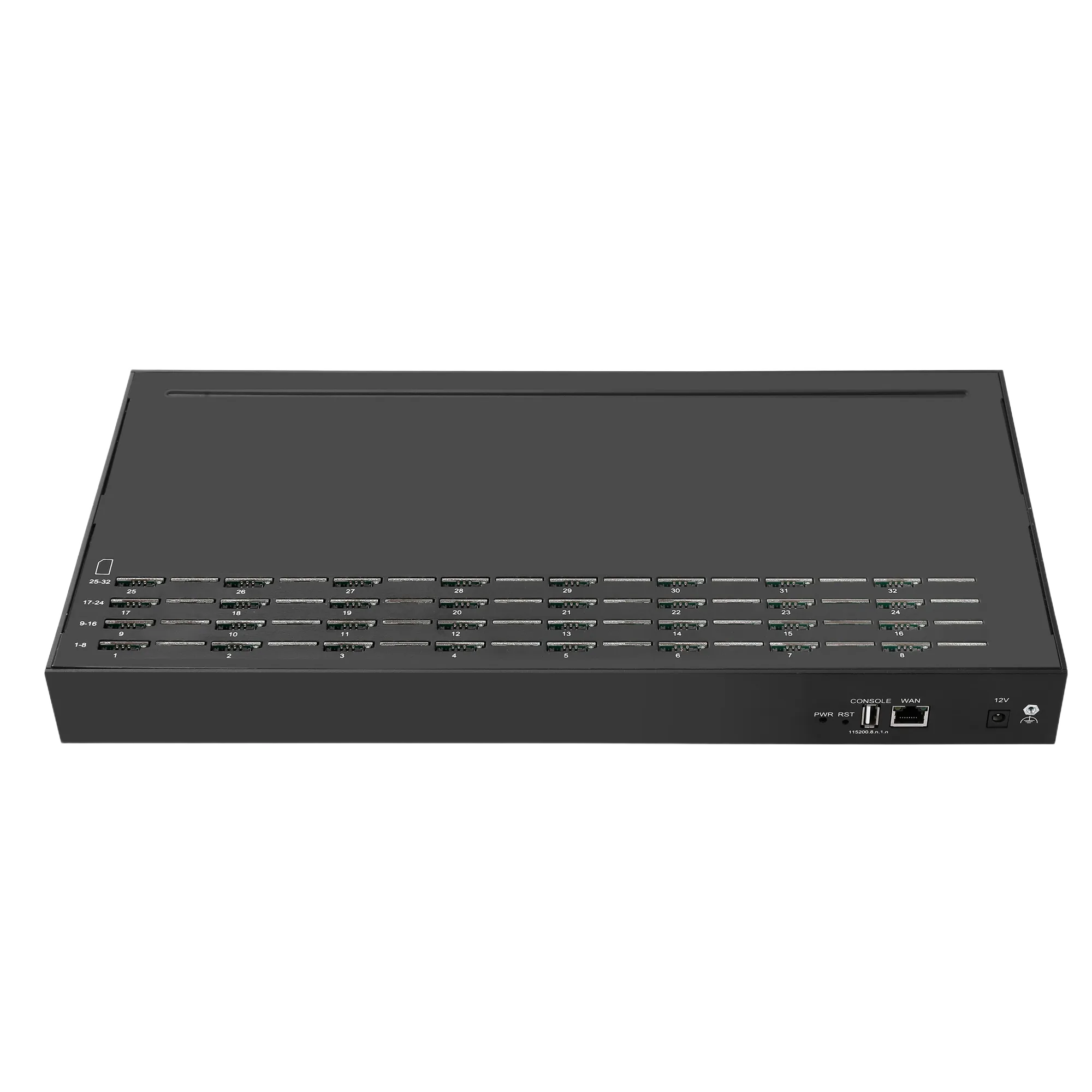
Message content versus management traffic
The two have different sensitivity and therefore different requirements.
Message content is what leaves your organisation and reaches a recipient, so its exposure is a disclosure risk. Management traffic is what configures the gateway, and its exposure is worse in a specific way: an attacker who can read a management session learns how the deployment is structured, and an attacker who can alter one can redirect traffic without touching the application at all. A deployment that encrypts message submission while leaving the administration interface open on a plain port has protected the smaller of the two risks.
The practical ordering follows from that. Authenticate and encrypt the management interface first, because it is the path that controls everything else. Then secure the application interface, which in most deployments is an HTTPS endpoint or an authenticated API. Then consider at-rest protection for stored content, which is a retention question as much as a cryptographic one.
Content protection also depends on where the content is generated. If a message body originates in a system that logs it in plain text, encrypting the last hop changes little. Reviewing the whole path from creation to delivery, rather than the device alone, is what identifies the points that actually matter.
Transport security for the gateway interfaces
Use current TLS, and make the client prove who it is.
Transport encryption for the gateway interfaces means TLS on the management and application endpoints, configured against a current profile rather than the default enabled by a library. The protocol itself is specified in RFC 8446, and the operational guidance for deploying it, including which versions and cipher suites to retire, is set out in RFC 7525. Two details account for most real-world weaknesses: leaving an older protocol version enabled for compatibility, and accepting any client certificate without validating it.
Mutual authentication is the part worth insisting on for an SMS gateway, because a server that accepts any client is protecting the wire and nothing else. Where the deployment spans more than one site, the same logic extends to the certificate inventory: knowing which certificates exist, when they expire, and who renews them is unglamorous and prevents the outage that arrives the week an expiry was missed.
Configuration export and firmware update deserve the same treatment. A gateway that offers a convenient unauthenticated update path has a remote-code-execution surface, and the control families that describe how to select and configure such protections are catalogued in NIST SP 800-53 Rev. 5. Reading the access control and system integrity families is a fast way to build the review list for a procurement question.
At-rest protection for logs and records
Stored records are where most deployments are actually exposed.
Message logs, delivery receipts and audit trails accumulate on the device and in the surrounding systems, and they frequently contain the recipient number and sometimes the message body. Their exposure is not a cryptographic failure during transmission; it is a backup that was copied somewhere convenient, or an export that was emailed to resolve a support case. Encrypting the volume or the database file addresses the first, and a retention rule addresses the second, because a record that no longer exists cannot leak.
The guidance for protecting a general-purpose server holds almost unchanged for the host that runs the gateway or stores its logs, and NIST SP 800-123 covers the hardening questions in a form that maps onto a review checklist. Where messages relate to individuals, the retention period is not purely an engineering choice, and the decision belongs to the data protection owner rather than to the person who happens to administer the hardware.
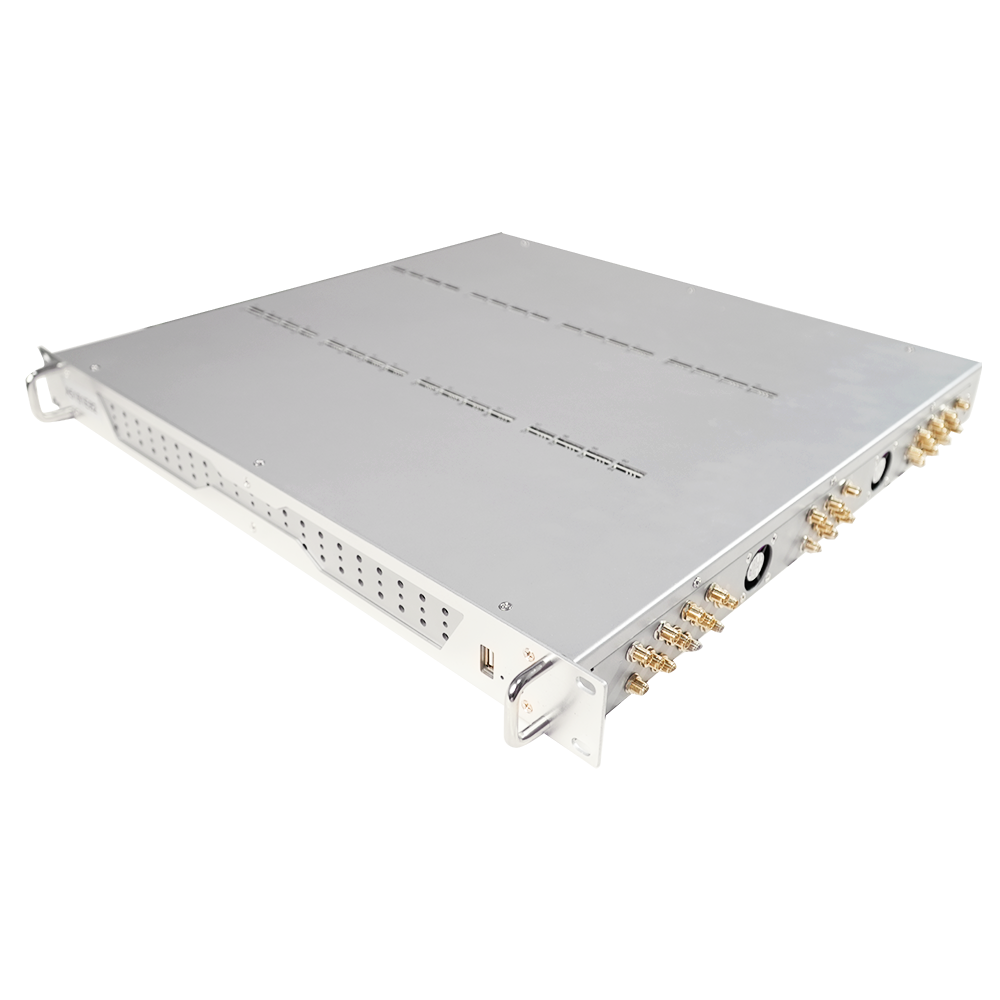
What hardware protection adds
It adds a boundary that software alone cannot create.
The specific contribution of hardware is the separation between the device that holds the subscriptions and the general-purpose systems that generate and store message content. An on-premise gateway keeps the subscription set and the message path inside a device you control, rather than behind a provider’s multi-tenant interface. Where key material or credentials are stored in a dedicated component rather than in the application filesystem, an attacker who compromises the application does not automatically obtain the keys as well.
What hardware protection does not do is compensate for a weak operating practice. A gateway with excellent transport security, left on a management VLAN that is reachable from the whole office with a shared password, is not a secure deployment. Conversely, a modest device with the management interface restricted to a management network, mutual authentication on the application path, and current firmware is doing the thing that actually reduces risk. The UK guidance in the NCSC 10 Steps to Cyber Security frames this as a set of organisational controls rather than a product choice, which is the correct framing here too.
There is also a legitimate argument for hardware in deployments where the subscription set itself is sensitive. Where a pool of numbers is a business asset, keeping the SIM bank inside a controlled room rather than relying on a third-party SIM hosting arrangement is a governance decision with a clear hardware answer.
A risk-based decision
Decide by asking what a disclosure would cost.
Three questions resolve most cases. If the message content is regulated or personal, then in-transit and at-rest protection are both required, and the retention period becomes a documented decision rather than a default. If the content is routine operational traffic with no personal data, then transport encryption on the interfaces plus access control is proportionate, and heavier measures are a cost without a matching risk reduction. If the exposure that worries you is the subscription set itself, the answer is physical and logical separation rather than message-level cryptography.
The distinction that most often gets lost is between protecting a message from your application to the recipient and protecting it as far as the network will carry it. No gateway can extend encryption beyond the point where it hands traffic over. Procurement language that implies otherwise is worth challenging before a purchase, because the expectation it creates is one the hardware cannot meet.
For most enterprise SMS deployments the defensible position is straightforward: encrypt the management and application interfaces with current TLS, authenticate both ends, restrict who can reach the admin plane, encrypt stored records, set a retention period, and keep firmware current. Hardware encryption becomes necessary rather than optional when content is regulated, when the deployment must remain entirely on your premises, or when a policy or contractual obligation requires a boundary that software alone cannot demonstrate.
An assessment checklist
The checklist covers the decisions that determine what a deployment needs to protect, and it is written to be completed before any equipment is compared. Each item produces a statement that a policy or a contract can be checked against, which is what makes the assessment reusable.
- Identify which paths carry regulated or personal data, and which do not.
- Require current TLS on the management interface and retire older protocol versions.
- Require mutual authentication on the application interface rather than server-only.
- Restrict management access to a management network, not the general office network.
- Encrypt stored records and define a retention period with an owner.
- Inventory certificates and firmware versions with an expiry and update plan.
- Confirm in writing whether the deployment must remain entirely on-premise.
- State explicitly that protection extends to the handover point, not beyond it.
Decide what you are protecting before you choose a specification. Send your data classification, deployment model and retention requirement to service@telarvo.com, or review the published configurations on the SMS gateway range and the SMS gateway solution page. Background on the company and its manufacturing scope is on the about page. Telarvo publishes the SK-SMS gateway range, the TYH modem pools and the TGW SMS machine on its product pages, and the configurations referenced above come from those listings.
FAQ
Can SMS messages be encrypted end to end?
Not by a gateway alone. A device can encrypt the paths it controls, which are the application interface, the management interface and stored records. The segment between the radio module and the network is managed by the operator under the standards the network implements, so no gateway can extend protection across it. Where end-to-end protection matters, the alternative is an application-layer scheme that both the sender and the recipient implement.
Is hardware encryption required for an enterprise SMS gateway?
It depends on what the deployment carries. For routine operational traffic with no personal data, current TLS on the interfaces plus access control is usually proportionate. Hardware protection becomes the right choice when content is regulated or personal, when a policy requires the deployment to remain entirely on your premises, or when you need a demonstrable boundary between the subscription set and general-purpose systems.
What is hardware backed encryption?
It means the cryptographic operations and the key material are handled in a dedicated component rather than in the application that runs on the device. The practical benefit is separation: an attacker who compromises the application does not automatically obtain the keys, because the keys do not live in the application filesystem. It is a boundary control, and it complements rather than replaces correct configuration.
Which is more important, encrypting message content or encrypting management traffic?
Management traffic first, in most deployments. The administration interface controls how the gateway behaves, so an attacker who can read it learns the deployment structure and an attacker who can alter it can redirect traffic without touching your application. Encrypting message submission while leaving the admin plane on a plain port secures the smaller of the two exposures. Confirm the point in writing, because it is the assumption every later security decision rests on.