A loyalty programme is a permission to send marketing, and it is the most fragile permission an organisation holds. Members grant it in exchange for something they value, and they withdraw it when the messages stop being worth reading.
This article sets out why loyalty messaging has to be treated as marketing rather than as service, how consent and preferences are captured, how frequency caps protect the channel, and how value is measured without measuring people.
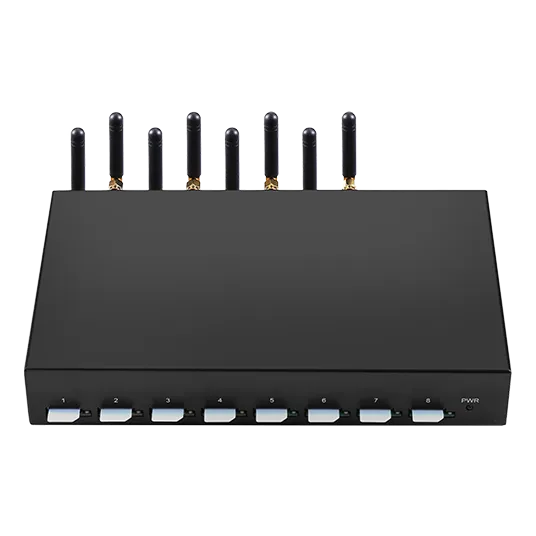
Why do retail loyalty alerts count as marketing, and what must SMS hardware support?
Because the recipient did not ask for that message.
A confirmation for a purchase the member made is a service message; an offer, a points reminder or a new-arrival alert is marketing, even when it comes from a programme the member joined.
The distinction matters because the two categories are governed differently in most markets, and the membership itself is not always sufficient consent for every kind of message. The practical test is whether the message is about something the recipient did, or about something the sender wants. Where it is the second, the marketing rules apply and the consent has to cover that category. Where the processing falls within the European framework, the reference points are the regulation on EUR-Lex and the guidance collected by the European Data Protection Board.
The distinction also determines how the estate is designed. Service messages need to be delivered promptly and are therefore sensitive to queueing, while promotional messages can be scheduled and paced. Running both through one queue means a promotional campaign can delay a purchase confirmation, which is the failure that generates complaints from members who are otherwise happy to receive offers.
| Message | Category | Consent basis |
|---|---|---|
| Order or collection confirmation | Service | The transaction itself |
| Points balance change | Service | The programme terms |
| New arrivals and offers | Marketing | Marketing consent for the channel |
| Reactivation of a lapsed member | Marketing | Marketing consent, honoured on withdrawal |
Consent capture and preference centre design
Capture it once, and make it easy to narrow.
Enrolment is the cheapest moment to record permission, and the preference centre is where it is maintained without a support call.
The capture should be specific about the channel and the content, not a single checkbox for marketing in general. A member who wants order updates and offers on the channel they choose is a member who will stay; a member who receives everything on every channel is a member who withdraws entirely. Recording the permission with a date and a source makes it evidence, and the source is the field that answers a review question.
The preference centre is the other half. It should let a member narrow what they receive rather than only switch everything off, because a member who can turn off offers and keep order updates is a member who remains reachable for the messages that matter. Two design rules make it work: the changes apply immediately to the sending platform rather than to a report, and the member can see what they have agreed to in plain language rather than as a list of codes.
Frequency caps that protect the channel
The cap is a retention control, not a courtesy.
Members who receive too many messages withdraw permission, and the withdrawal is permanent in practice even when it is technically reversible.
The cap should be expressed per member per period rather than per campaign, because a member experiences the total rather than the individual sends. That requires the count to be shared across every system that can send, which is a design requirement for a central platform rather than for each channel. Where several teams send, the cap has to be enforced in one place or it is not enforced at all.
The second control is content weighting. A programme that alternates service and promotional messages can sustain a higher total frequency than one that sends offers continuously, because the service messages are the ones the member expects. Measuring engagement by category and adjusting the mix is more useful than adjusting the cap alone, and it produces the same outcome with fewer withdrawals.
Separating transactional from promotional sends
Two queues, two schedules.
Service messages should be delivered promptly and promotional messages can be paced, so they should not compete for the same capacity.
Three separations make that practical. Separate routing, so that a promotional campaign cannot occupy the queue a confirmation needs. Separate pacing, so that promotional traffic is shaped to the schedule rather than sent at the maximum rate. And separate reporting, so that the delivery rate for each category is visible independently, because a single blended figure hides the one that matters. The message layer behind both is defined in ETSI TS 123 040 and 3GPP TS 23.040.
The separation also simplifies consent. Where the two categories are technically distinguishable, the platform can refuse a promotional send to a member who has withdrawn from marketing without also blocking the confirmation they are expecting. That enforcement is only possible if the category is a property of the message rather than a convention in a template.

Peak periods and capacity
Retail messaging peaks at times nobody chose.
Promotional volume clusters around paydays, seasonal sales and holiday periods, and the peak is usually larger than the average week suggests.
Two properties make retail peaks difficult to plan. They are seasonal, so a pool that is adequate in a quiet month is tight in a sale week. And they are concentrated by hour, because members read messages in the evening. A pool sized on the monthly average will therefore be saturated on the evening the campaign actually runs, which is a test of the schedule rather than of the hardware.
The practical approach is to record the peak week rather than the average, and to size from the evening peak within that week. Where the estate is shared with service messages, the promotional peak has to fit around the capacity reserved for them, which usually means the promotional schedule is shaped rather than expanded. Recording both figures together is what keeps a campaign from consuming the capacity the confirmations need.
One last figure is worth keeping for every programme: the proportion of members who have narrowed rather than withdrawn. A programme whose members are switching options off is adjusting; one whose members are leaving entirely is being over-messaged, and the two require different responses. Measuring both is what distinguishes a frequency problem from a content problem.
Finally, decide who owns the permission. A programme whose consent policy is owned by the marketing team and enforced by the platform team has a gap where the two meet, and that gap is where a campaign reaches a member who withdrew three weeks ago. One named owner for the permission, with the platform enforcing what the owner sets, is the arrangement that closes it.
How do you measure value without over-sending?
Measure the member, not the message.
Redemption, repeat visits and withdrawal rates describe whether the programme is working, while open and click rates describe whether a particular message was noticed.
The distinction matters because the first group is what the programme exists for, and the second group can be improved by sending more, which is the behaviour that eventually destroys the programme. A useful reporting set combines a programme-level measure such as redemption with a channel-level measure such as withdrawal, so that an increase in engagement that comes with an increase in withdrawals is visible as the trade it is.
Record-keeping practice for the consent and suppression records that make the measurement possible is covered in NIST SP 800-92, and the numbering conventions that keep the member record consistent across systems are described in ITU-T E.164. A member record keyed on a normalised number is what allows the same person to be recognised across the store, the website and the messaging platform.
A programme outline
The outline follows a programme from the classification of its messages to the measurement of the channel. It separates service messages from promotional ones at the start, because the consent, the frequency cap and the queue all depend on that classification.
- Classify every message as service or marketing, and record the classification.
- Capture consent at enrolment, specific to channel and content, with a date and a source.
- Provide a preference centre that narrows rather than switches everything off.
- Enforce a per-member frequency cap across every sending system.
- Separate routing, pacing and reporting for service and promotional traffic.
- Size the estate from the peak week and the evening peak, not the monthly average.
- Report redemption, withdrawal and delivery per category.
- Review the consent categories and the cap on a schedule with an owner.
The outline produces a programme that can be scaled without consuming its own permission. Where the deployment measures only engagement, the first sign of trouble is a withdrawal rate that looks like a marketing problem and is actually a frequency problem.
One further practice keeps the programme sustainable: record why each message was sent, in the same record as the consent that permitted it. A campaign whose purpose is not recorded becomes indistinguishable from a service message six months later, which makes the consent position impossible to reconstruct. A short purpose field, written when the message is created, costs nothing and answers the question a review will ask.
Where the programme operates in several markets, keep the consent position per market as well as per member. The rules differ, and a member who is contactable in one market may not be in another under the same permission. Recording which framework applied to each send is what makes the record usable rather than merely complete.
Protect the permission before you scale the campaign. Send your message categories, frequency policy and peak profile to service@telarvo.com, or review the published configurations on the SK-SMS Gateway range and the SMS gateway solution page. Telarvo publishes the SK-SMS gateway range, the TYH modem pools and the TGW SMS machine on its product pages, and the configurations referenced above come from those listings.
FAQ
Is SMS getting phased out for retail marketing?
It is not. Other channels have grown alongside it, and short messages remain the reliable option for a member who has not installed an application. What has changed is the mix of channels rather than the availability of the channel, and the consent rules around marketing messages have tightened in several markets. Record which channel each member has agreed to receive, because the mix is what determines both the cost and the complaint rate.
Does joining a loyalty programme count as marketing consent?
Membership usually covers messages about the programme and the member’s account, and it does not automatically cover every promotional message. Capture marketing permission separately at enrolment, and confirm the position for each market with the compliance owner, because the answer differs between jurisdictions. Keep the marketing permission separate from the membership record, because combining them makes a later withdrawal ambiguous.
How often should a loyalty programme message its members?
There is no universal figure, and the workable approach is a per-member cap set from the observed withdrawal rate rather than from a benchmark. Where withdrawals rise as frequency rises, the cap is too high, whatever the engagement figures show. Review the cap with the mix of service and promotional messages. Review the cap when the promotional calendar changes, because a cap set for a quiet quarter is not a cap for a campaign month.
Should promotional and transactional messages use the same number?
They can, and they should not share a queue. A promotional campaign that occupies the queue delays purchase confirmations, and the member notices the delay rather than the offer. Reserve capacity for service messages and pace the promotional traffic separately, and record which category each message belongs to. Measure the service queue separately from the promotional queue, because a single aggregate figure hides the delay that members notice.