Build quality cannot be read from a specification sheet, because the things that fail first are not usually listed. What a buyer can do is assess the indicators that are verifiable before purchase and inspect the rest on the first unit received.
This article sets out the indicators worth checking, how thermal design and documentation reveal process, the questions that produce useful answers when put to a supplier in writing, and an assessment checklist that produces a decision rather than an impression.
Why do specification sheets not answer the build quality question for GSM gateway brands?
Because they describe capability rather than construction.
A specification lists ports, bands and interfaces, and says nothing about the connectors, the power path or what happens when the unit runs warm for a month.
The gap exists because the two are measured differently. Capability is a set of values that can be copied, and in this market they often are: several vendors describe the same class of device with the same words. Construction is a set of consequences that only appear in service, and those consequences are what a deployment experiences when a connector works loose, a supply sags under load or a module drifts out of specification in a warm cabinet.
That is why the useful assessment is comparative rather than absolute, and why it is done against evidence. Two units of the same model can differ between production batches, so the practical question is not how a brand is rated but what a specific unit, from a specific batch, does under the conditions the deployment will impose.
The standards that constrain the hardware from the outside are a reasonable starting point. The radio characteristics of terminal equipment, including the conditions under which it is specified, are set out in 3GPP TS 45.005, and the harmonised terminal standard for the European market is published as ETSI EN 301 511. Conformity to those standards is a floor, not a differentiator, and it is worth knowing which floor a product claims to meet.
The verifiable indicators: modules, connectors and power design
Three things can be checked without a laboratory.
The radio modules fitted, the quality of the connectors and the design of the power path are all observable, and each is a better predictor of durability than any capability figure.
Modules are the easiest indicator to verify and the most useful, because a module carries its own specification and its own market history. Ask which module family is used, at which hardware revision, and whether the same module is used across the whole family. Where a vendor cannot answer, that is information in itself: a product built from a defined bill of materials can be described, and one assembled around whatever is available cannot.
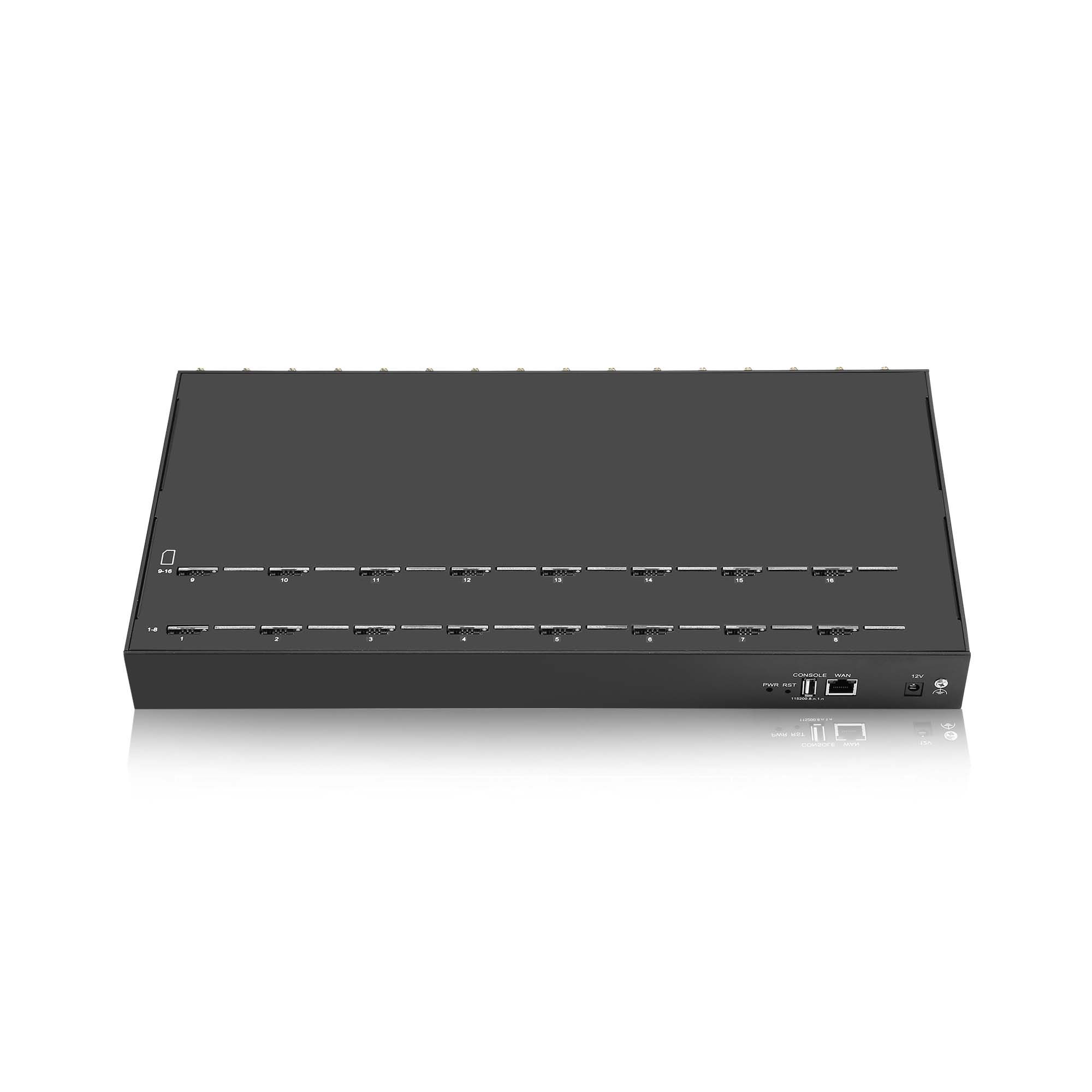
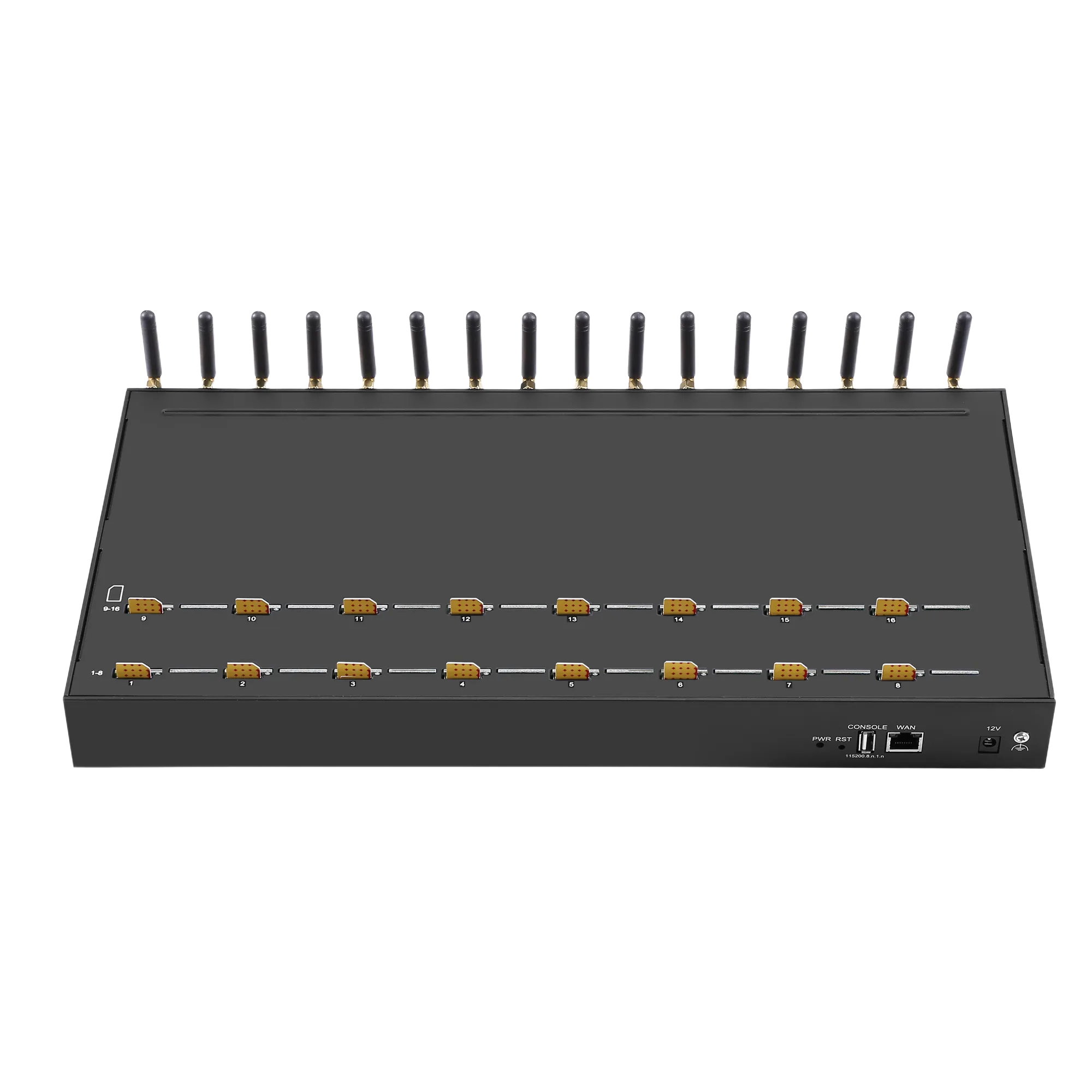
Connectors are the cheapest component and the most common failure. A card holder that grips correctly, a connector that is anchored to the board rather than relying on solder joints alone, and an interface whose plug is retained mechanically all matter more in a rack that is re-cabled than in a unit that is installed once and left. This is inspectable on a sample unit in minutes, and it is the single best use of an evaluation unit.
Power design is the third indicator and the least visible. The questions worth asking are how the supply is arranged, whether the modules share a rail, and what the design does when several modules transmit simultaneously. The resistibility recommendations in ITU-T K.20 and ITU-T K.21, with the test regime described in ITU-T K.44, define the environments equipment may be expected to tolerate, and they are a fair basis for asking how a design behaves at peak draw.
| Indicator | How to verify | What it predicts |
|---|---|---|
| Module family and revision | Ask for the bill of materials | Whether performance is repeatable between batches |
| Card holder and connector anchoring | Inspect an evaluation unit | Whether slots survive re-cabling |
| Power path and rail sharing | Ask, then measure under load | Whether modules reset when load peaks |
| Thermal arrangement | Measure intake temperature under load | Whether the unit survives continuous operation |
| Documentation set | Request it before purchase | Whether the vendor knows the product |
Thermal design as a quality signal
Thermal margin separates a device built for continuous use from one built to pass a test.
A unit with little margin operates correctly in a cool room and fails intermittently in a warm one, and the failures look like software faults because the device recovers when it cools.
The assessment is straightforward if performed on a sample rather than inferred from appearance. Run the unit at its intended load for a week in the location it will occupy, record the ambient and intake temperatures, and note the time to first fault if one occurs. A device that survives a day on a bench has demonstrated very little; a device that has transmitted continuously for a week at an elevated ambient temperature has demonstrated the property that matters.
The same test reveals how the design behaves at its limits rather than in the middle of its range. Fan-equipped designs, passively cooled enclosures and heat-spreading chassis all have different failure modes, and the failure mode matters more than the maximum rating. A design that reduces throughput when it gets warm is easier to operate than one that resets, because the first is observable and the second is not.
What does documentation reveal about process?
It reveals whether the vendor understands the product.
A vendor that can produce a bill of materials, a revision history and a maintenance procedure has a defined product; one that can only produce a marketing page does not.
The documentation request is useful because it is answerable at low cost and because the answer is difficult to fake. A revision history implies version control. A bill of materials implies a defined build. A procedure for firmware updates, including how to roll back, implies that the vendor has thought about what happens after the sale. Each of those is a process indicator rather than a specification claim.
Where documentation does not exist, the practical consequence is not that the product is poor but that it cannot be planned around. A device whose update process is undocumented cannot be scheduled, and one whose parts are unknown cannot be repaired. That is a procurement finding rather than a technical one, and it belongs in the assessment.
Questions to ask a supplier in writing
Six questions produce answers that can be compared between vendors.
The value of putting them in writing is that the answer becomes part of the record, and a refusal to answer becomes part of it too.
- Which radio module family and hardware revision is used in this model, and does the same one apply across the range?
- How is the power path arranged, and what happens to the modules when several transmit at once?
- What ambient temperature is the unit specified for at continuous load, and how was that verified?
- What does the update process involve, and how is a rollback performed?
- What documentation is supplied with a unit, and what is available on request?
- What is the warranty term, what does it cover, and what is the process for a replacement unit?
The sixth question is the one most often left to the end and it should not be. A warranty that is easy to claim is worth more than a longer term that is difficult to use, and the process matters more than the period in a deployment where a failed unit has to be replaced quickly.
Requesting evidence rather than claims
Ask for records, not adjectives.
A conformance claim, a test report reference and a sample unit are all evidence; “high quality” and “industrial grade” are not.
The evidence that can reasonably be requested before purchase is a conformance statement against the applicable terminal standard, the module supplier’s own documentation for the module family used, and a unit for inspection. The evidence that requires measurement is thermal behaviour under load, power behaviour at peak and the behaviour of the card holders under repeated insertion. Those three belong in an acceptance test on the delivered unit rather than in a claim.
Certification is a separate matter and is often misapplied in this market. A statement about a radio standard covers the radio and not the messaging capability, and a certificate for one model does not extend to a different one. Ask which scope a certificate names, and keep the answer with the assessment record. The message framework that sits above the hardware is defined separately, in ETSI TS 123 040, and it is not covered by a radio conformance claim at all.
An assessment checklist
The checklist produces a comparison rather than a score, which is the right outcome for a decision this subjective. Record the answers for each candidate in the same order, and note where an answer was unavailable.
- Module family and revision, confirmed in writing.
- Bill of materials available, or not.
- Card holders and connectors inspected on a sample unit.
- Power arrangement described, then verified by measurement at peak.
- Thermal behaviour measured over a week at load in the intended location.
- Update and rollback procedure documented.
- Conformance claims stated with their exact scope.
- Warranty process described, including who pays for shipping a replacement.
The result is a record that can be revisited when a unit fails two years later, and it is the reason the exercise is worth doing before purchase rather than after. A deployment that assessed three candidates on these eight items will know why it chose the one it bought, which is more than most procurements can say.
Ask for the bill of materials and inspect a sample. Send your candidate list, load profile and ambient conditions to service@telarvo.com, or review the published configurations on the SK-SMS Gateway range and the TGW gateway page. Telarvo publishes the SK-SMS gateway range, the TYH modem pools and the TGW SMS machine on its product pages, and the configurations referenced above come from those listings.
FAQ
Can build quality be judged from a product photograph?
Only coarsely. A photograph can show enclosure size, connector types and whether the layout looks considered, and it cannot show the card holder mechanism, the power arrangement or the thermal path. Use the photograph to decide whether to request a sample, not to decide between candidates. The three items it cannot show are the three that fail first in service.
Does a certification prove the hardware is good?
It proves conformance within a defined scope, which is not the same thing. A radio conformance statement covers the radio and says nothing about the card holders, the power design or the messaging capability. Ask which scope a certificate names and keep that scope with the assessment. A certificate quoted without its scope is a claim rather than evidence. Note the issuing body and the date as well, because a scope without a date ages badly.
What is the single most useful test to run on a sample?
Continuous transmission at the intended load, in the intended location, for a week. It exercises the thermal margin, the power path and the durability of the connectors at once, and it produces a result that can be compared between candidates rather than described. Record the ambient temperature and the load used, because a result without them cannot be repeated. Repeat the test after any change to the installation, since the result belongs to the position as much as to the unit.
How much weight should price carry in the assessment?
It belongs in the comparison with the operating consequences attached. A lower list price per port that comes with a higher failure rate, an undocumented update process or an unclear warranty path is more expensive over the life of the deployment. Compare the whole record rather than the purchase price alone. The whole record is what the maintenance budget is built from.
{
“@context”: “https://schema.org”,
“@type”: “FAQPage”,
“mainEntity”: [
{
“@type”: “Question”,
“name”: “Can build quality be judged from a product photograph?”,
“acceptedAnswer”: {
“@type”: “Answer”,
“text”: “Only coarsely. A photograph can show enclosure size, connector types and whether the layout looks considered, and it cannot show the card holder mechanism, the power arrangement or the thermal path. Use the photograph to decide whether to request a sample, not to decide between candidates. The three items it cannot show are the three that fail first in service.”
}
},
{
“@type”: “Question”,
“name”: “Does a certification prove the hardware is good?”,
“acceptedAnswer”: {
“@type”: “Answer”,
“text”: “It proves conformance within a defined scope, which is not the same thing. A radio conformance statement covers the radio and says nothing about the card holders, the power design or the messaging capability. Ask which scope a certificate names and keep that scope with the assessment. A certificate quoted without its scope is a claim rather than evidence. Note the issuing body and the date as well, because a scope without a date ages badly.”
}
},
{
“@type”: “Question”,
“name”: “What is the single most useful test to run on a sample?”,
“acceptedAnswer”: {
“@type”: “Answer”,
“text”: “Continuous transmission at the intended load, in the intended location, for a week. It exercises the thermal margin, the power path and the durability of the connectors at once, and it produces a result that can be compared between candidates rather than described. Record the ambient temperature and the load used, because a result without them cannot be repeated. Repeat the test after any change to the installation, since the result belongs to the position as much as to the unit.”
}
},
{
“@type”: “Question”,
“name”: “How much weight should price carry in the assessment?”,
“acceptedAnswer”: {
“@type”: “Answer”,
“text”: “It belongs in the comparison with the operating consequences attached. A lower list price per port that comes with a higher failure rate, an undocumented update process or an unclear warranty path is more expensive over the life of the deployment. Compare the whole record rather than the purchase price alone. The whole record is what the maintenance budget is built from.”
}
}
]
}