Band coverage is the specification that decides whether a gateway works in the country you bought it for, and it is the one specification most purchase orders never state. A device sold as unlocked can still fail to register on a local network, and that failure usually appears after the hardware has cleared customs and been racked.
Treating unlocked GSM gateway hardware as a verification problem rather than a marketing claim changes what you ask before ordering. This guide covers what the word actually means, how to check band support against a named market, what 2G sunset timetables do to device life, and how to test an arrival in ten minutes instead of a week.
What does unlocked actually mean on GSM gateway hardware?
It can mean four different things, and only two matter.
The word is used to describe band support, SIM lock state, firmware restriction and carrier certification, and a vendor may mean any one of them without stating which.
The first meaning is band support: the device can operate on the frequency bands a market uses. This is the meaning that determines whether the hardware works, and it is verifiable from a datasheet. The second is SIM lock: the radio accepts a SIM from any operator rather than only the one the device shipped with. Both of these are engineering facts, and both should be confirmed in writing.
The third meaning is firmware restriction: the device may accept any SIM but limit which network technologies it will attach to, which protocol endpoints it exposes, or which SIM slots it enables without a licence. That restriction may be commercial rather than technical, and it is invisible until you try the feature you assumed you had bought.
The fourth is carrier certification, which has nothing to do with the device being locked and is often confused with it. A device can be fully unlocked and still be uncertified for a specific operator’s network, which in practice affects how that operator treats your traffic rather than whether the radio attaches.
When a supplier says unlocked, ask which of the four they mean. A specific answer is a good sign; a general one tells you to test on arrival.
Which bands does a specific market require?
Start from the market, then work back to the radio.
Band plans differ by region, and the network generation that carries your traffic is not always the newest one available locally.
Two rules save most of the trouble. First, confirm the band is present in the hardware rather than in the marketing description: a device that lists LTE without naming bands may support only the subset used in the market it was designed for. Second, confirm the network generation you plan to use is still operating in the destination. Where 2G has been retired, a 2G-only device is a paperweight regardless of its band list.
| Check | What to confirm | Where the answer comes from |
|---|---|---|
| Frequency bands | The exact bands the radio supports, not the technology name alone | Datasheet, confirmed in writing |
| Network generation | The generation you intend to run, and whether it is still in service locally | Local operator coverage information |
| SIM lock state | That any operator SIM will register | Vendor statement plus arrival test |
| Firmware limits | Which features are enabled on the shipped firmware | Vendor statement, ideally with the release notes |
| Carrier position | How the local operator treats your type of traffic | The operator itself, in writing |
Numbering and signalling frameworks vary by market as well, and the international numbering plan that underlies them is published by the ITU under Recommendation E.164. The radio requirements that sit underneath are standardised by bodies such as 3GPP, which is why a device can meet a standard and still not suit a particular market.
When does 2G sunset take a gateway out of service?
Earlier than the device wears out.
Retirement timetables differ by operator and by country, and the practical effect is that a device purchased for a market with a near-term shutdown has a shorter useful life than its hardware condition suggests.
The procurement consequence is straightforward. Where the destination market has announced a retirement, buy the network generation that will remain. Where the timetable is unclear, buy a device that supports both generations so the decision can be deferred without replacing hardware.
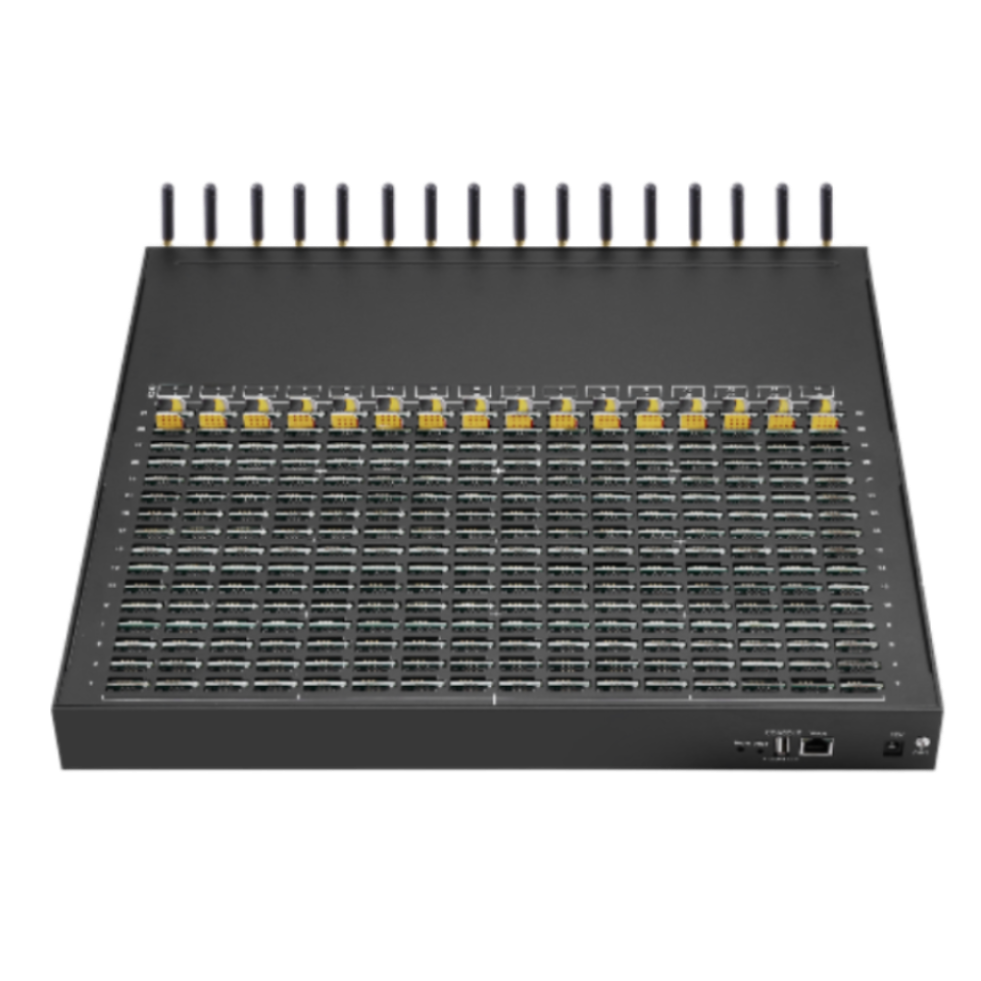
The pricing in the SK-SMS Gateway range makes that hedge visible: a 2G/4G model such as the SK-SMS Gateway 16-512 lists at $1,160.00, while the eSIM variant of the 32-port model lists at $2,550.00 and the 64-port eSIM variant at $4,080.00. The premium buys flexibility in the SIM layer rather than additional ports, which matters when the estate is spread across markets with different rules.
One additional check belongs here: confirm that the local operator still permits the traffic you intend to send on the generation you have chosen. A network that still carries voice may treat application-to-person messaging differently, and that policy is set by the operator rather than by the standard.
How do you check for a SIM lock and firmware restriction?
Insert a SIM from an unrelated operator.
That single action resolves the SIM lock question, and the console output resolves the firmware question if you know which fields to read.
A productive arrival test runs in three passes. In the first, insert a SIM from an operator unrelated to the vendor and confirm the device registers. In the second, open the management console and confirm the network technology actually used, rather than the technology the device claims to prefer; the two differ when a band is missing. In the third, exercise one feature you specifically bought the device for — if protocol access or a slot count is licence-restricted, this is where it shows.
Record what you observe against the serial number. If a device later needs to be replaced, that record is what tells you whether the replacement behaves the same way, and it converts a recurring argument with a supplier into a comparison of two sets of facts.
Where the arrival test fails, escalate with the evidence rather than the symptom. A registration failure with the console log attached, the operator name, and the observed technology is far easier to resolve than a report that the device does not work.
When is an eSIM model the better choice?
When SIM logistics cost more than the premium.
An eSIM deployment removes the physical card from the operating model, which changes three cost lines: acquisition, shipping and replacement.
Acquisition and shipping are obvious. The line teams underestimate is replacement: a physical SIM that fails or is withdrawn needs a person, a courier and a site visit, and in a multi-country estate those add up faster than the port count suggests. An eSIM profile can be reprovisioned without anyone travelling.
The trade is flexibility of supply. Physical SIMs let you shop locally for the best commercial terms; an eSIM programme depends on the profile provider’s catalogue and terms. Where your markets are stable and your volumes are predictable, physical cards usually win on price. Where your markets change frequently, or your sites are remote, the eSIM premium is easier to justify.
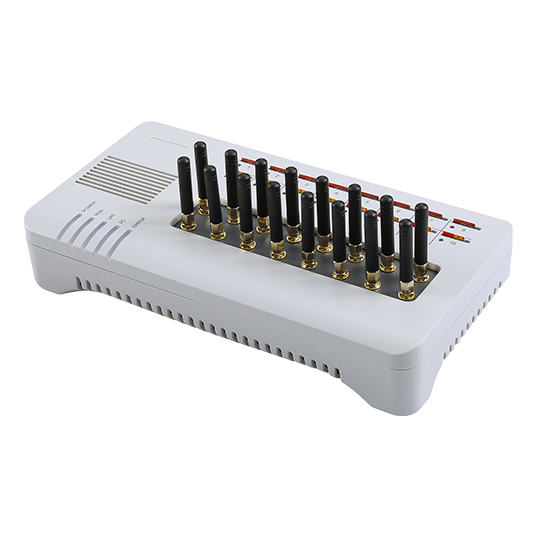
A practical middle path is to run both: physical SIMs for the high-volume, stable markets and eSIM capacity for the markets you are testing or where you cannot easily reach the site. The SK-SMS Gateway range supports that mix, since the 2G/4G models and the eSIM variants sit in the same product family and share the same management approach.
What should you ask before ordering?
Six questions, all answerable in writing.
Asking them in writing is the point; verbal assurances about band support are difficult to act on when hardware arrives and does not register.
- Which bands does this exact model support, and in which network generations? Ask for the datasheet, not the category page.
- Is any SIM lock or operator restriction present on the shipped firmware? Ask for a plain statement covering both.
- Which features are licence-restricted? Confirm the slot count and protocol access you are paying for are enabled as shipped.
- What is the return or replacement position if the device fails to register in our market? Get the answer before, not after.
- Is the firmware field-upgradable, and how are updates distributed? A device with no update path has a fixed life.
- Which documentation ships with the unit? A protocol reference and console guide reduce commissioning time more than any other accessory.
For deployments that will span markets, add a seventh question about the SIM layer: whether the same model family can operate with both physical and eSIM capacity, so that a market decision does not force a hardware decision. That single answer frequently determines which model in the range is the right starting point.
Conclusion
Unlocked is a claim with four possible meanings, and only band support and SIM lock state are engineering facts you can verify quickly. The procurement discipline that follows is simple: name the market, confirm the bands and the network generation in writing, check the retirement timetable before committing to a generation, and test the arrival with a third-party SIM before the hardware enters production. Firms that publish standards, such as ETSI, and component vendors whose modules appear inside these devices, such as Quectel and SIMCom, publish technical documentation that helps you phrase the questions a supplier can actually answer.
Where the estate spans several markets, the SIM layer is where flexibility is cheapest to buy. The published range runs from the SK-SMS Gateway-32E-SIM at $2,550.00 to the SK-SMS Gateway-64E-SIM at $4,080.00, alongside the 2G/4G models from the SK-SMS Gateway 4-4 at $238.00 upward, so a mixed physical and eSIM estate stays within one product family.
Confirm band and lock status for your destination market before ordering. Send the countries you will operate in and the network generations you plan to use to service@telarvo.com, or review the published range on the SK-SMS Gateway pages.
FAQ
Is unlocked hardware the same as carrier-certified hardware?
No. Unlocked describes whether the device accepts SIMs and operates on the bands it supports. Carrier certification is a separate status describing whether an operator has accepted the device for use on its network. A device can be fully unlocked and still be uncertified by the operator you intend to use, so confirm both questions separately with the vendor.
How do I confirm band support before buying?
Ask for the datasheet of the exact model and firmware version, and confirm the frequency bands rather than the technology label. A device described as LTE may cover only the bands used in the market it was designed for. Then confirm which network generations are still operating in your destination before you rely on them.
Does a 2G device still make sense in 2026?
It depends entirely on the destination market. Where 2G remains in service and the traffic volume is modest, a 2G-capable device can be the cheapest way to start. Where retirement has been announced, the remaining service life is shorter than the hardware life, so buying a 2G and 4G model instead defers the replacement decision without changing the ports or slots you need.
Can I mix eSIM and physical SIM capacity in one deployment?
Yes, and it is often the pragmatic answer. Physical SIMs usually win on commercial terms in stable, high-volume markets, while eSIM capacity removes acquisition, shipping and replacement effort in markets you are testing or where sites are hard to reach. Keeping both inside one product family means the operating process stays similar even when the SIM layer differs.