Most voice gateways speak SIP and nothing else. When a deployment needs both voice termination and a direct messaging interface on the same hardware, the constraint is rarely the radio — it is whether the device exposes SMPP at all, and whether your platform can hold that session open through a carrier-side interruption.
This guide covers the specific case of an SMPP-capable GSM VoIP gateway: why the combination appears, how the three bind modes differ in resource cost, what session recovery actually requires, and how to test the result before you depend on it. It assumes you already run a messaging platform and need to know whether this hardware can sit behind it.
Why does SMPP appear on a voice gateway at all?
Because the SIM estate is already there.
A gateway purchased for voice termination already holds SIMs and channels, and adding a messaging interface lets one estate serve both workloads.
The pattern appears in three recognisable situations. The first is an operator consolidating hardware: rather than running separate messaging and voice estates, the team runs one device family and separates the traffic by SIM group. The second is a platform that already speaks SMPP to a provider and wants to point the same integration at self-hosted hardware without rewriting its messaging stack. The third is a deployment where voice is primary and messaging is a secondary requirement — notification of call outcomes, for example — and buying a second device for that purpose is hard to justify.
What makes the combination worth checking rather than assuming is that voice and messaging place different demands on the same radio. A call occupies a channel continuously for its duration; a message occupies it briefly but potentially in bursts. On a device with an ample SIM-to-port ratio, the two coexist comfortably. On a device sized for voice alone, they contend, and the contention shows up as message latency rather than as a dropped call.
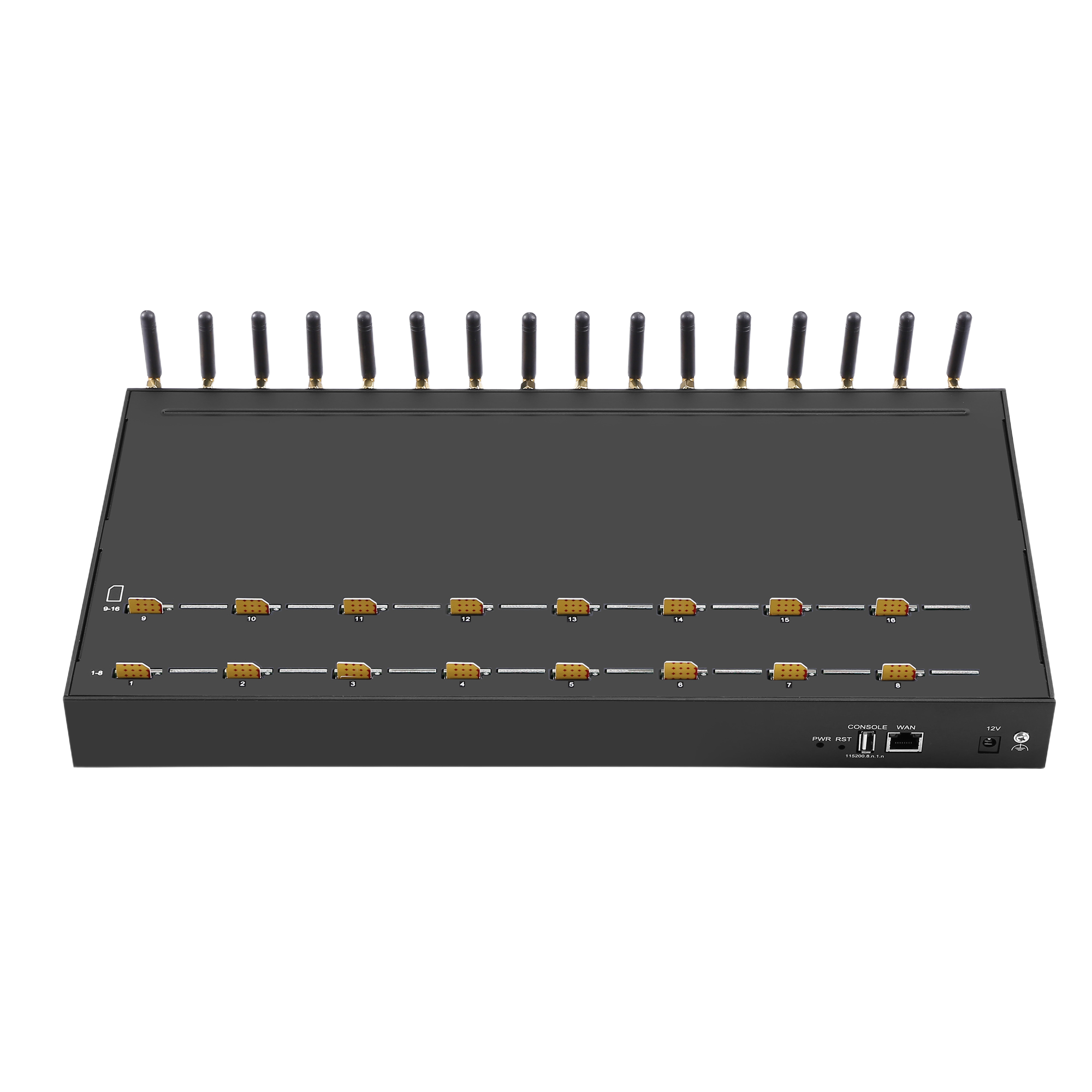
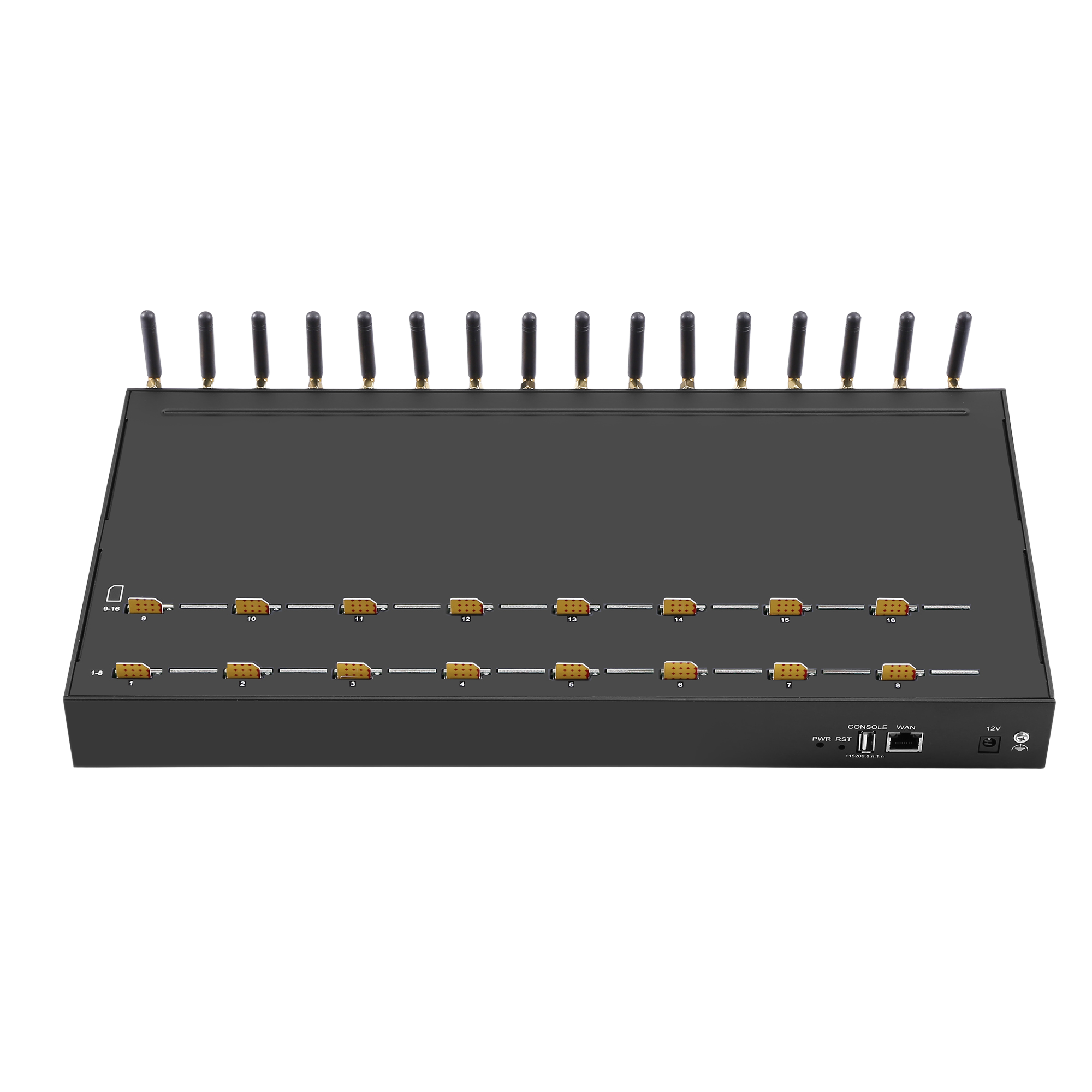
Sizing is therefore the first question, not the protocol. The SK VOIP Gateway range runs from 4 ports and 4 SIM slots to 32 ports and 512 SIM slots, and the ratio you buy determines how much headroom exists for a second workload.
What do the three SMPP bind modes cost you?
Each bind mode trades session count against directionality.
Transmitter, Receiver and Transceiver determine whether you need one session or two for two-way traffic, and that choice affects both resource use and failure behaviour.
Transmitter binds for outbound submission only. It is the cheapest in resource terms and the simplest to reason about, and it is sufficient where the gateway only sends. Its limitation is that delivery receipts and inbound replies need a second session, which means a second bind and a second failure domain.
Receiver binds to receive only. It is used where the platform receives from the device but submits through another path. In practice, running a Receiver bind that never submits is a sign the split between your paths has become confusing.
Transceiver carries both directions on one session. It halves the session count and simplifies recovery, at the cost of coupling the two directions: when the session drops, both stop. For most deployments running both workloads on one gateway, Transceiver is the default choice, and the interesting question becomes what happens when it drops rather than which mode to pick.
One resource note is easy to overlook: SMPP sessions consume connection state on the device, and a device whose stated capacity assumes SIP registrations may behave differently with several SMPP binds held open. Test the combination you intend to run, not each protocol separately.
What does session recovery actually require?
An idle loop, a reconnect policy, and a window.
SMPP sessions drop for ordinary reasons, and recovery is a design property rather than a feature you can assume.
The protocol provides an idle-detection mechanism, commonly referred to as an enquire-link exchange, that lets either side confirm a session is alive. What matters operationally is the interval: set too long, and you discover a dead session by watching messages queue; set too short, and you generate traffic that carrier or device rate limits may treat as abuse. Ask the vendor what the device’s default interval is and whether your platform can override it.
Reconnection needs a policy, not just a retry. A reconnect loop with no backoff turns a brief carrier outage into a bind storm, and a device that limits concurrent binds will start rejecting perfectly valid reconnection attempts. Exponential backoff with a ceiling is the usual answer.
The window is the third piece and the one that decides whether a message survives the gap. If your platform submits while the session is down, the submission has to be held durably somewhere — in your queue, or on the device — and the decision about which one owns that responsibility must be made explicitly. The failure mode to avoid is a platform that assumes the device holds the queue while the device assumes the platform will resubmit.
How does SMPP divide work with the HTTP API?
Let SMPP carry volume and HTTP carry operations.
Almost all hardware in this class exposes both, and using them for different jobs keeps each one simple.
SMPP is designed for sustained submission with delivery receipts on a persistent session, which makes it the natural path for production traffic. HTTP is request-and-response, which makes it better suited to one-off sends, administrative actions, health checks and integrations where maintaining a session is inconvenient. A platform that sends production traffic over HTTP is usually doing so because it never built the session management, and the cost shows up as throughput ceilings rather than as errors.
A useful division is to route operational queries — SIM state, device health, log retrieval — over HTTP while leaving message submission and receipt handling on SMPP. That keeps the persistent session free of incidental traffic and gives your monitoring a path that does not disturb the messaging session.
Where both paths are used for messages, define which one is authoritative for delivery state. Two views of the same message that disagree is the most common source of unproductive incident calls.
How do you test SMPP on this hardware?
Measure the session before you measure throughput.
A SMPP acceptance test that only proves messages send tells you nothing about the behaviour you will actually rely on.
Four tests cover the ground. Bind and hold: establish the session your production mode requires, leave it idle for an hour, and confirm it stays up or recovers cleanly. Forced drop: sever the connection at the network layer and measure how long the device and your platform take to re-establish, and whether any message submitted in the interval was lost, held or rejected. Receipt integrity: submit a batch and reconcile every delivery receipt against your own record, looking for messages with no terminal state. Contention: run voice calls on the same device while submitting messages, and measure message latency against your target.
The forced-drop test is the one that separates a working integration from a demonstrable one. If a message submitted during the gap disappears without a terminal state, your platform and the device disagree about who owns the queue, and that disagreement will recur at the least convenient moment.
For the voice side of the same device, the SIP behaviour you are testing against is defined by RFC 3261 and the call flows in RFC 3665; if your platform is built on an open-source stack, the documentation for Asterisk, FreeSWITCH, Kamailio or OpenSIPS will already describe the recovery behaviour your platform expects. Aligning the device with the behaviour your platform already implements is faster than adapting the platform to the device.
What belongs on the procurement checklist?
Five items to settle before the order.
The checklist exists because SMPP support is frequently described at the product-family level and confirmed only at the model level.
- Which bind modes does this model and firmware support? Confirm Transmitter, Receiver and Transceiver explicitly.
- What is the maximum number of concurrent sessions? Ask for the figure with voice registrations active, not in isolation.
- What is the idle-detection interval, and is it configurable? The default determines how quickly a dead session is noticed.
- How many delivery receipts can be held, and for how long? This determines whether a short platform outage is survivable.
- Does the console or log expose session state history? Without it, every session incident is a reconstruction exercise.
Where a supplier cannot answer item two, treat the SMPP capability as unvalidated and test it during the arrival check. In deployments that run messaging and voice on the same estate, that single test frequently decides whether the consolidation you planned is actually viable or whether the two workloads need separate hardware after all.
Conclusion
An SMPP-capable voice gateway is viable when the SIM estate is sized for two workloads and the session behaviour is designed rather than assumed. Transceiver binding is usually the right default for a device carrying both directions, and the engineering effort belongs in the reconnect policy, the backoff ceiling, and an explicit decision about which system holds a message submitted during a session gap. The HTTP interface remains useful, but for operational queries rather than for sustained submission.
The test that matters is the forced drop, run with voice traffic present. If the session recovers, receipts reconcile, and no message vanishes without a terminal state, the consolidation is safe to depend on. If it does not, the two workloads belong on separate hardware, and the SK VOIP Gateway range from the 8-port SK VOIP Gateway 8-8 at $480.00 upward gives the messaging side a device of its own without changing the management model.
Validate the session behaviour before you consolidate. Send your bind mode, expected session count and voice port requirement to service@telarvo.com, or review the published configurations on the VoIP gateway solution pages.
FAQ
Can a GSM VoIP gateway send and receive SMS over SMPP while handling calls?
It can, provided the SIM-to-port ratio leaves headroom. Voice occupies a channel for the duration of a call while messaging occupies it briefly and in bursts, so a device sized only for its voice load will show the contention as message latency. Test the combined workload on the model you intend to buy rather than testing each protocol separately.
Which SMPP bind mode should a messaging platform use?
Transceiver is the usual choice when both directions run over one gateway, because it halves the session count and simplifies recovery. Transmitter and Receiver remain useful where your platform already separates those roles. Whatever you choose, confirm the device supports that mode on the exact firmware version being shipped, since support is often described at family level.
What happens to messages submitted during an SMPP session drop?
It depends on which system holds the queue, and that should be decided explicitly during design. Either your platform holds the submission until the session recovers and resubmits from its own store, or the device buffers and reports the outcome. The dangerous configuration is one where each side assumes the other is holding the message, because the loss is silent.
Does using SMPP affect call quality on the same device?
Not directly, since the two workloads use the channel rather than the codec. What changes is CPU and session load, which can affect both under heavy concurrent use. If call quality is a contractual commitment, measure it while messaging traffic is at peak rather than on a quiet device, and consider separate hardware where both services carry hard targets.