Global frequency is not a specification, and hardware marketed under the phrase rarely carries one. What a multi-country deployment actually needs is a matrix: for each market, the bands the radio must support, the generation that still carries traffic, and the operator requirement that applies on arrival. That matrix is what turns a vague claim into a purchase decision.
This guide covers how to build it: what the phrase conceals, how to assemble a regional band table, where retirement timetables change the answer, how to test without travelling, and what the procurement record should contain so that a later failure in one market can be traced to a decision rather than to chance.
What does global frequency actually mean?
It usually means the bands the vendor’s home market uses.
The phrase describes an intention rather than a capability, and the capability is a list.
Three things are being conflated when a device is sold as global. Band support is the set of frequency bands the radio can use, and it is a finite list that should appear on a datasheet. Generation support is which network technologies those bands carry, which determines whether the device attaches at all in a market that has retired an earlier generation. And operator acceptance is a separate matter again, because a radio can support a band and still be treated differently by an operator for the traffic you intend to send.
Only the first two are hardware properties, and both are verifiable in writing. A device that supports the bands in use across several markets is genuinely a global device for those markets; one that supports a different set is not, regardless of the marketing. The practical step is to replace the phrase with the list and compare the list against the matrix you need.
How do you build a regional band matrix?
One row per market, one column per requirement.
The matrix is the deliverable that converts a hardware question into a comparison.
| Column | What it records | Source |
|---|---|---|
| Market | The country the device must operate in | Your deployment plan |
| Bands in use | The frequency bands the target operators use | Operator coverage information |
| Generations live | Which network generations remain in service | Operator and regulator announcements |
| Retirement position | Whether a shutdown has been announced and when | Operator and regulator announcements |
| Registration requirement | Whether SIM registration is required and in whose name | National regulator framework |
| Device match | Whether the model under consideration covers the row | Datasheet, confirmed in writing |
The last column is the one that produces the decision. Reading it down the table shows which markets the candidate model covers and which it does not, and that is a more useful output than a claim of global coverage.
Two cautions apply to the sources. Operator information is more current than any published band list, because coverage changes with network investment and spectrum allocation rather than with product cycles. And the international numbering conventions that recipients see are standardised under the ITU Recommendation E.164 numbering plan, while the radio behaviour underneath is specified by 3GPP, which is the reference to cite when a vendor claim has to be verified.
Where does 2G sunset change the answer?
When retirement falls inside the planned service life.
The comparison that matters is the remaining service life of the network against the depreciation period of the hardware.
Three responses follow from the matrix. Where retirement is announced and imminent, the market needs a device on the surviving generation. Where it is announced but distant, a dual-generation model defers the decision without another purchase. Where no timetable is published, a dual-generation model is the safer position, because the announcement may arrive with less notice than a procurement cycle.
The cost of being wrong is asymmetric, and that asymmetry is the argument for the matrix rather than for a general preference. Buying capacity on the surviving generation slightly early costs the price difference between two models. Buying capacity on a generation that is withdrawn early costs the full capital value of the device plus an unplanned replacement project in that market.
Where a market disappears from the matrix entirely because its generation has retired, that is a deployment decision rather than a hardware one, and it belongs in the same document. A market that can only be served on a generation the estate no longer uses is a market the estate has left.
How do you test bands without travelling?
Register a local SIM and read the console.
The test requires a SIM rather than a visit, which makes it feasible to run before committing to a market.
Four steps establish whether a device works in a market. Insert a SIM registered on an operator in that market, and confirm the device attaches. Read the network generation the console reports rather than the one the device prefers, because the two differ when a band is missing. Place one call and send one message, because attachment and traffic are different capabilities. And record the observed result against the market row in the matrix.
Two limitations are worth knowing. A successful test in one location does not establish coverage across a country, because band availability is not uniform. And a test on one operator does not establish behaviour on another, because operator acceptance of a traffic type is a policy matter rather than a radio one.
Where the deployment has no access to a SIM in a market, the honest position is that the market is untested, and the matrix should say so rather than being completed from a datasheet. Marking a row as unverified is more useful than filling it with an assumption, because the assumption is what gets quoted in a business case.
How do you run a mixed-generation fleet?
Keep the management model identical across generations.
The risk in a mixed estate is not the radio but the emergence of two ways of doing the same job.
Four practices keep a mixed fleet operable. Keep SIM naming consistent across generations, so a SIM is identified by its role rather than by the device that holds it. Keep the log collection and export path identical, so reporting does not depend on which device produced a record. Keep the mapping documentation in one place, with generation recorded as an attribute rather than as a separate register. And keep the acceptance tests identical, so behaviour is comparable between an existing unit and a new one.
Where the estate is large enough to justify it, migrating a whole market at a time rather than a device at a time shortens the period in which both generations are in production, and it means the matrix has one row changing at a time rather than several.
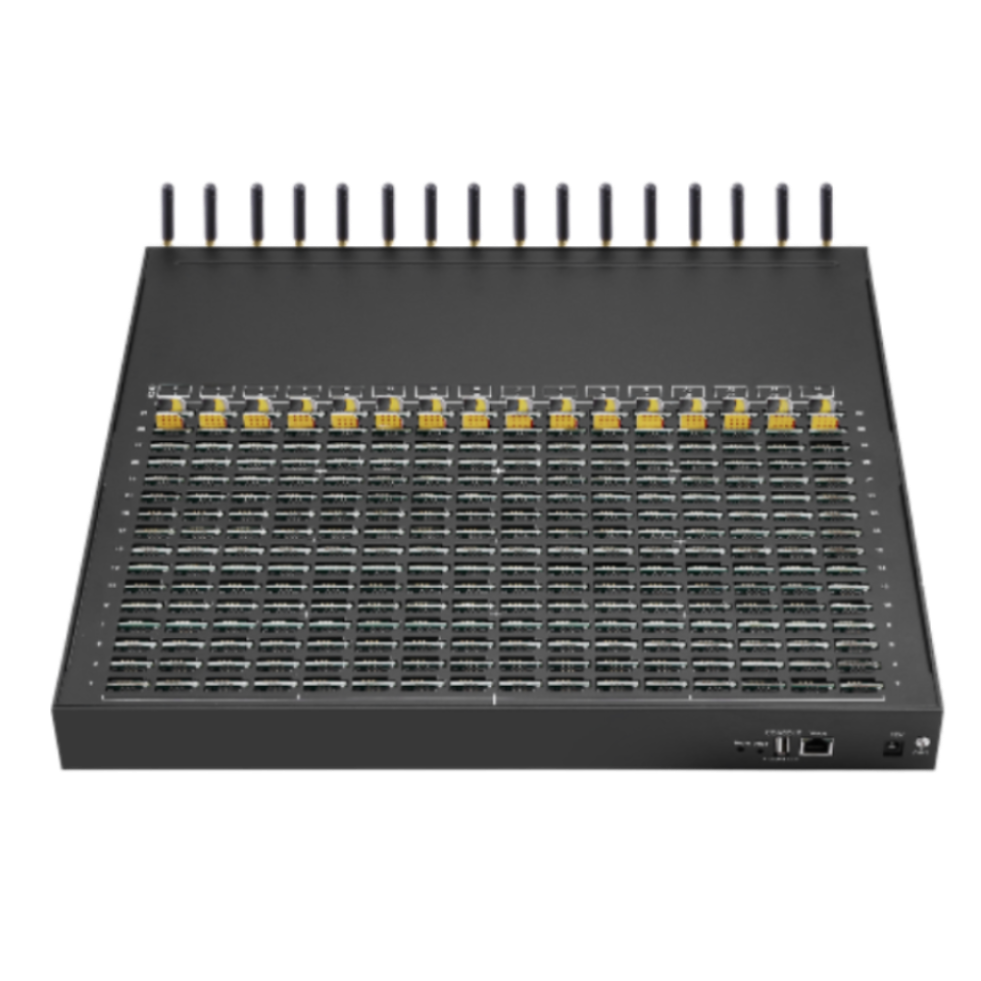
Where the deployment spans markets with different timetables, the fleet will be mixed by necessity rather than by accident. The published SK-SMS Gateway-32E-SIM at $2,550.00 and the 64-port eSIM variant at $4,080.00 are relevant where physical SIM logistics across markets cost more than the hardware premium, because they remove the shipping and replacement step that a multi-country estate otherwise carries.
What should the procurement record contain?
The matrix row, the datasheet, the evidence.
The record is what allows a later failure in one market to be traced to a decision.
- The market row from the matrix, with its source and the date it was established.
- The datasheet for the exact model and firmware, confirming bands rather than technology labels.
- The registration requirement and in whose name, because this determines whether the market can be served at all.
- The retirement position at the date of purchase, so that a later change is visible as a change.
- The operator’s position on the traffic type, in writing, because it is a policy matter the datasheet does not address.
- The arrival test result, recorded against the same row once the device is delivered.
Item four is the one that makes the record worth keeping. A retirement announcement that arrives after purchase is a change in the market rather than a mistake in the procurement, and having the position recorded at the date of purchase is what makes that distinction demonstrable.
Where a datasheet claim has to be verified rather than accepted, the ETSI standards catalogue covers the equipment and network side of the same requirement, and the module documentation published by vendors such as Quectel shows what the radio itself supports. Where the traffic is commercial, M3AAWG describes the operational expectations that apply.
Conclusion
Global frequency is a claim that should be replaced by a list and a matrix. The list is the bands the radio supports, confirmed on a datasheet rather than inferred from marketing. The matrix has one row per market and records bands, live generations, the retirement position, the registration requirement and whether the candidate model covers the row. Reading that column down is the whole of the hardware decision.
2G retirement changes the answer wherever the announcement falls inside the planned service life, and the asymmetry between buying early and buying wrong is what justifies maintaining the matrix rather than expressing a general preference. A market whose row cannot be completed from evidence should be marked unverified rather than filled from an assumption, because the assumption is what gets quoted in a business case and later disproved in the field.
Replace the coverage claim with a matrix before you buy. Send your target markets and the generations you plan to use to service@telarvo.com, or review the published models on the SK-SMS Gateway pages.
FAQ
What does global frequency mean on a gateway datasheet?
It usually means the bands used in the vendor’s home market rather than a universally supported set. Replace the phrase with the list: confirm the exact bands and the network generations from the datasheet of the model and firmware you are buying, then compare that list against the markets you need to serve rather than against the claim.
How do I check whether a gateway works in another country?
Insert a SIM registered on an operator in that market, confirm the device attaches, and read the network generation the console reports rather than the one the device prefers. Then place one call and send one message, because attachment and traffic are different capabilities. A successful test in one location does not establish national coverage, and a test on one operator does not establish another’s behaviour.
When does 2G retirement force a hardware decision?
When the announced date falls inside the planned service life of the device. Compare the retirement position against the depreciation period you intend to use, not against the condition of the hardware. Where the date falls inside, buy the surviving generation; where it falls outside, a dual-generation model keeps the decision open without another purchase.
How should a mixed-generation fleet be managed?
Keep the management model identical and let the devices differ. SIM naming, log export, mapping documentation and acceptance tests should be the same across generations, so reporting does not depend on which device produced a record. Migrating a market at a time rather than a device at a time shortens the period in which both generations are in production.