The hardware SMS gateway versus cloud API decision is usually argued on price and settled on control. Privacy is the part that gets asserted rather than examined, and it is the part that most often decides the answer for regulated senders.
This article separates what actually differs about privacy from what is marketing, sets out where data sits in each model, compares the cost shapes honestly, and covers the cases where a cloud API remains the better answer rather than the one to avoid.
What actually differs for privacy between a hardware SMS gateway and a cloud API?
Who processes the data, and how many parties are involved.
The difference is not that one model is private and the other is not; it is how many organisations handle the message and where the handling occurs.
In a cloud model, a request leaves your infrastructure, is processed by a provider, traverses the carrier network and is delivered. In an on-premise model, the message is generated inside your environment, submitted to the network by equipment you operate, and the record of it stays with you unless you choose to export it. Both models involve third parties, because no messaging path avoids the carrier. What changes is the number of intermediaries and the amount of message content and addressing data each one holds.
That framing matters because it makes the question answerable. Instead of asking which model is more private, an operator can ask what data each party receives, how long they keep it, and on what basis they are permitted to process it. The regulatory vocabulary for that analysis is the same one used for any processing relationship, and the guidance published by the European Data Protection Board is the reference point when the answer has to be defended, alongside the regulation itself on EUR-Lex.
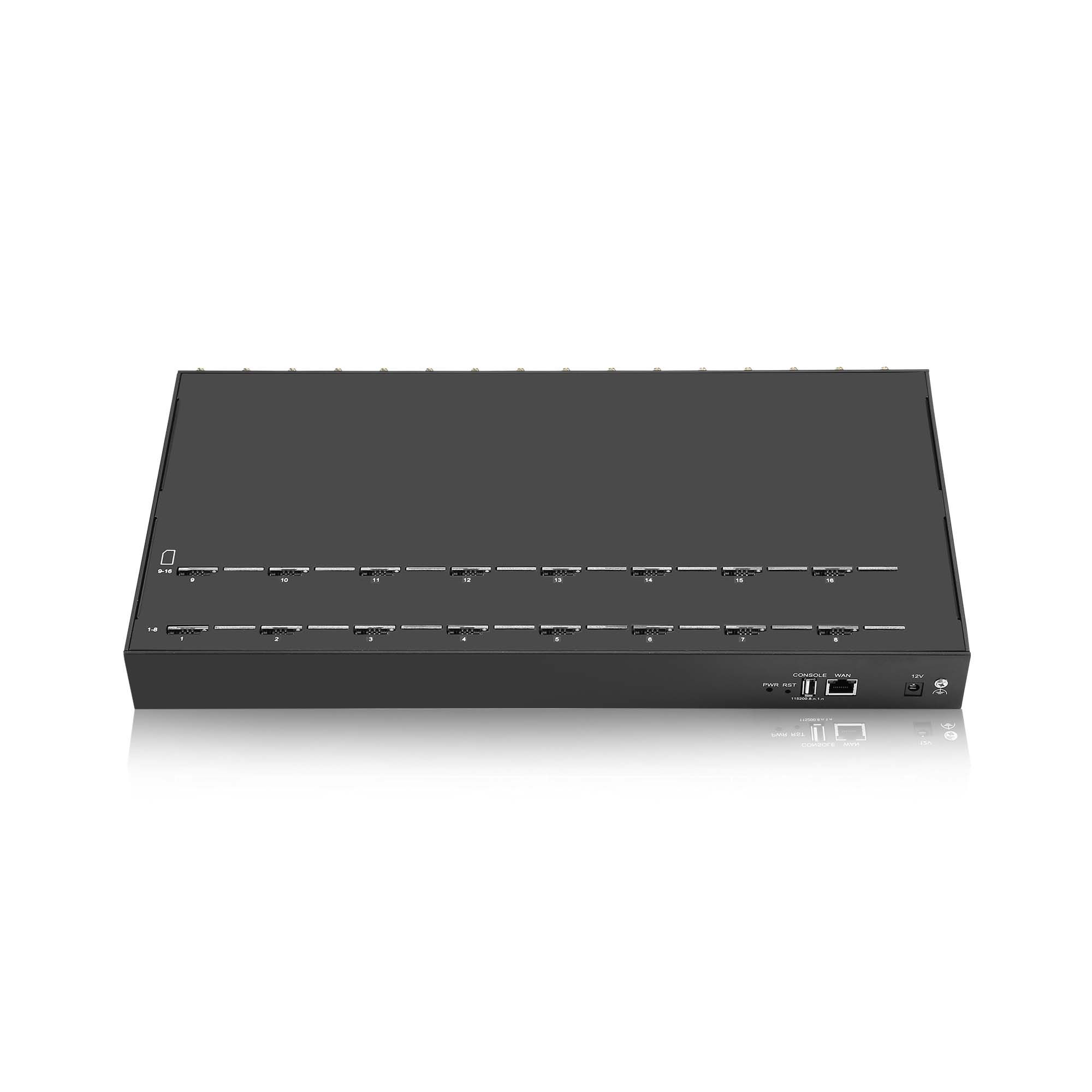
Where does your data sit in each model?
In the cloud model, mostly with someone else.
A cloud path necessarily places message content, recipient numbers and delivery records in a provider’s systems, while an on-premise path places them in yours.
The cloud provider holds the message long enough to submit it, keeps a delivery record for its own reporting, and may retain both for the period its terms specify. Those records are often exactly what an investigation needs, which is the advantage of the model, and exactly what a data-protection review asks about, which is its cost. The provider is normally a processor acting on your instructions, and the obligations that follow are set out in the regulation and interpreted in the guidance cited above.
In the on-premise model, the gateway holds the record and the SIM carries the subscriber identity. That removes an intermediary from the message path but adds obligations that a hosted service would otherwise absorb: retention decisions, access control, secure deletion and the handling of backups. Neither model removes the work; each moves it to a different party. The message path itself, including the role of the short message service centre, is defined in ETSI TS 123 040 and 3GPP TS 23.040, and the operator processes subscriber data in both cases.
| Data | Cloud API | On-premise hardware |
|---|---|---|
| Message content | Held by the provider for the sending window | Held on your equipment |
| Recipient number | Held with the provider’s records | Held in your logs |
| Delivery record | Provider reporting, retained per terms | Device log under your retention policy |
| Subscriber identity | Provider’s or carrier’s SIM estate | Your SIM estate, in your slots |
| Access control | Provider accounts and permissions | Your authentication and logging |
Cost shape: fixed estate against per message
One is capital, the other is consumption.
Hardware converts messaging cost into a fixed estate plus the tariff behind each SIM, while a cloud API converts it into a price per message that scales with volume.
The two curves cross at a volume that depends on the tariff, the message profile and the price negotiated with the provider, and the crossing point is worth calculating rather than assuming. Published list prices make the hardware side concrete: within the SK-SMS Gateway range the ladder runs from the 4-4 model at $238 through the 16-16 at $645 and the 32-32 at $1,160 to the 64-64 at $1,880, with SIM storage and pooling accessories available separately. These are list prices as displayed on the site and should be confirmed at the time of purchase.
The comparison also has to include what the hardware model costs to run: the SIM tariffs, the engineering time to operate and monitor it, the spares, and the cost of the redundancy the availability target requires. Those items are invisible in a per-message price and are the usual reason a hardware deployment that looked cheaper on paper turns out to be comparable in practice at low volume.

Throughput control and the accepted rate
On-premise hardware gives you the throttle; the network still sets the ceiling.
A cloud provider manages pacing for you, while an on-premise deployment gives you direct control over pacing per SIM and per prefix, with the same operator limits applying either way.
Direct control is genuinely useful when the traffic profile changes frequently, because the pacing can be tuned to the campaign rather than to a provider’s policy. It is also genuinely more work, because the tuning has to be done and monitored. Where a deployment sends a steady volume that a provider handles comfortably, the control is worth little; where the traffic is bursty and the acceptance rate is sensitive, it is worth a great deal.
Both models are constrained by the operator. The dial-out and submission interfaces that a gateway exposes are standardised in ETSI TS 127 005 and 3GPP TS 27.005, and the rates they can sustain depend on what the network accepts rather than on what the software allows.
One consequence of the framing is worth stating early: neither model is more private by default, because privacy depends on the handling rather than on the location. A cloud provider with a clear retention commitment and a documented processing agreement can be a better answer than an on-premise deployment whose logs are kept indefinitely because nobody set a window. The comparison has to be made on evidence, and the evidence is the same list of questions in both cases.
Compliance evidence and retention
On-premise makes the evidence local, and the obligation local with it.
Where the record sits with you, an access or erasure request is answered from your systems, and the retention policy is the one you wrote rather than the one you inherited.
That is an advantage for regulated senders, because the ability to demonstrate what was processed and to delete it on request is easier when the data is in your control. It is also a responsibility, since a retention window that is never applied is a compliance exposure that no provider will find for you. Access-control and audit objectives that support the evidence are organised in NIST SP 800-53 Rev. 5, and record-keeping practice for operational logs is covered in NIST SP 800-92.
The practical test for both models is the same: name every party that holds the message, state how long each one keeps it, and show the basis on which each is allowed to process it. A model that cannot answer all three is not compliant because it is local.
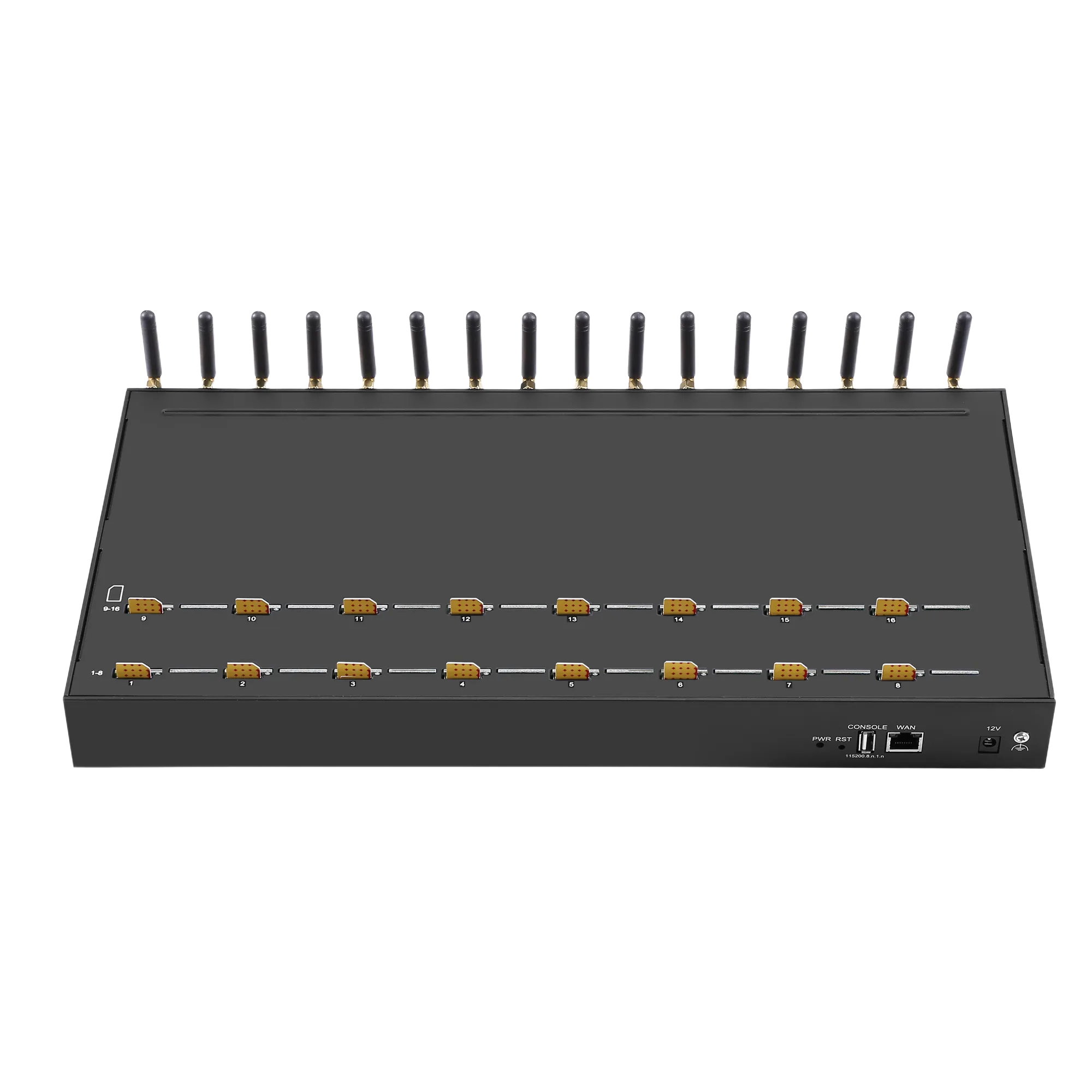
When is the cloud API still the better answer?
When volume is low, variable, or geographically wide.
A cloud API avoids the estate cost entirely at low volume, reaches markets where you have no SIM access, and needs no maintenance window of its own.
Three situations favour it clearly. Low and unpredictable volume, where the fixed cost of an estate is never recovered. Wide geographic reach, where the effort of maintaining SIM relationships in many markets exceeds the benefit. And rapid entry to a new market, where a provider can deliver before hardware has been sourced and installed. In each case the correct answer is to use the API rather than to build an estate for a use case that does not justify one.
Many deployments end up with both, using local hardware for high-frequency domestic traffic and a cloud path for cross-border or overflow. That hybrid is a legitimate architecture rather than a compromise, provided that the queue and the reconciliation logic sit above both paths so that a failure in one does not lose work.
A comparison framework
The framework compares the two models on the factors that decide the answer rather than on the ones that are easy to tabulate. Work through it in order, because the first item, which parties hold the data, constrains everything that follows; a model that fails there does not need to be compared on cost.
- List every party that will hold message content and addressing data, and state the retention period for each.
- Calculate the crossing volume where the hardware estate cost equals the per-message cost at your expected rate.
- Add the operating cost of the estate: tariffs, engineering, spares and the redundancy the availability target requires.
- Decide whether you need direct control of pacing, and whether the traffic profile changes enough for it to matter.
- Check the compliance evidence requirements against what each model actually stores and can delete.
- Decide whether one market or several are in scope, since reach is often the deciding factor.
The framework produces a decision rather than a preference. Where the answer is mixed, the hybrid arrangement is usually the honest one, and the architecture question becomes where the queue lives rather than which path is better.
Compare the two on data flows and crossing volume, not on preference. Send your volume profile, markets and retention requirements to service@telarvo.com, or review the published configurations on the SMS gateway solution page and the SK-SMS Gateway range. Telarvo publishes the SK-SMS gateway range, the TYH modem pools and the TGW SMS machine on its product pages, and the configurations referenced above come from those listings.
FAQ
Is hardware automatically more private than a cloud API?
No. It removes one intermediary and places the record in your environment, which can make compliance easier to demonstrate, but it also puts the retention and access obligations with you. Privacy follows the data flows and the handling, not the location of the equipment. The useful exercise is to draw the flow and mark who can access each stage. Record that access map alongside the data-flow diagram, because it is usually the part a reviewer asks for.
At what volume does hardware become cheaper?
There is no universal figure. The crossing point depends on the SIM tariff, the provider price, the message profile and the operating cost of the estate. Calculate it with your own numbers rather than adopting a rule of thumb, and include the cost of redundancy if your availability target requires it. The result changes when the tariff changes, so date the calculation.
Does an on-premise gateway remove the need for a processing agreement?
Not by itself. Where a supplier processes personal data on your behalf, an agreement is normally required regardless of where the equipment sits. If the supplier genuinely has no access to message content or addressing data, the position is different, and that has to be true of the configuration including remote support. Remote diagnostics are the common exception. Ask the question in writing rather than assuming it, because the answer changes the contract rather than the equipment.
Can we run both models together?
Yes, and many deployments do, using local hardware for high-frequency domestic traffic and a cloud path for cross-border or overflow. The requirement is that the queue and the reconciliation logic sit above both, so a failure in either path leaves the work where the other can collect it. Without that layer, a hybrid is two separate integrations. Test the switch between the two paths, since a hybrid that has never failed over is a single path with paperwork.
{
“@context”: “https://schema.org”,
“@type”: “FAQPage”,
“mainEntity”: [
{
“@type”: “Question”,
“name”: “Is hardware automatically more private than a cloud API?”,
“acceptedAnswer”: {
“@type”: “Answer”,
“text”: “No. It removes one intermediary and places the record in your environment, which can make compliance easier to demonstrate, but it also puts the retention and access obligations with you. Privacy follows the data flows and the handling, not the location of the equipment. The useful exercise is to draw the flow and mark who can access each stage. Record that access map alongside the data-flow diagram, because it is usually the part a reviewer asks for.”
}
},
{
“@type”: “Question”,
“name”: “At what volume does hardware become cheaper?”,
“acceptedAnswer”: {
“@type”: “Answer”,
“text”: “There is no universal figure. The crossing point depends on the SIM tariff, the provider price, the message profile and the operating cost of the estate. Calculate it with your own numbers rather than adopting a rule of thumb, and include the cost of redundancy if your availability target requires it. The result changes when the tariff changes, so date the calculation.”
}
},
{
“@type”: “Question”,
“name”: “Does an on-premise gateway remove the need for a processing agreement?”,
“acceptedAnswer”: {
“@type”: “Answer”,
“text”: “Not by itself. Where a supplier processes personal data on your behalf, an agreement is normally required regardless of where the equipment sits. If the supplier genuinely has no access to message content or addressing data, the position is different, and that has to be true of the configuration including remote support. Remote diagnostics are the common exception. Ask the question in writing rather than assuming it, because the answer changes the contract rather than the equipment.”
}
},
{
“@type”: “Question”,
“name”: “Can we run both models together?”,
“acceptedAnswer”: {
“@type”: “Answer”,
“text”: “Yes, and many deployments do, using local hardware for high-frequency domestic traffic and a cloud path for cross-border or overflow. The requirement is that the queue and the reconciliation logic sit above both, so a failure in either path leaves the work where the other can collect it. Without that layer, a hybrid is two separate integrations. Test the switch between the two paths, since a hybrid that has never failed over is a single path with paperwork.”
}
}
]
}