The procurement decision that delays projects is rarely about capability. It is about how many weeks pass between the purchase order and the first message your application actually sends. An on-premise bulk SMS appliance and a private server built from parts can reach the same place, but they get there on very different schedules and leave you with very different operating burdens.
This comparison treats those two paths seriously and adds the third option that buyers often overlook: software running on virtualised infrastructure with a physical SIM interface. Each has a defensible place, and the way to choose is to work backwards from who operates the system five years from now.
Which on-premise bulk SMS appliance form factor fits your team?
Choose the form that matches who operates it.
An appliance ships finished, a private server is infrastructure you assemble, and a virtualised deployment separates software from SIM hardware.
The three differ mainly in where the integration work lands, and that is the difference that shows up in year three rather than in week one.
The finished appliance arrives with the radio interface, the SIM slots and the management console already integrated. Your team configures routing and connects the API, and the vendor supports the stack end to end. The trade is flexibility: you operate within the vendor’s firmware and feature cadence rather than your own.
The private server gives you control over the operating system, the software stack and the upgrade schedule. It also means that when a SIM stops registering, the first question — whether the fault is in the radio module, the driver, or the application — is yours to answer. Teams that already run hardware in a data centre absorb that cost well; teams that do not, usually underestimate it.
The virtualised deployment keeps the messaging logic in a virtual machine while the SIMs remain in a physical device. It is attractive to organisations with standardised virtual infrastructure, and it is the model that most often creates an ownership gap, because neither the virtualisation team nor the telecom team sees the whole path.
| Dimension | Finished appliance | Private server | Virtualised software plus SIM hardware |
|---|---|---|---|
| Integration work | Routing and API only | OS, drivers, radio, application | Application layer, plus SIM hardware integration |
| Single point of support | Vendor | Internal engineering | Split across two teams |
| Upgrade cadence | Vendor firmware releases | Fully under your control | Software under your control, firmware with the device |
| Typical operational owner | IT or telecom operations | Platform engineering | Virtualisation team plus telecom owner |
Read the table as an ownership map. The column that matches your existing operational structure is the column that will work, because the failure mode in every on-premise deployment is not the technology but an unowned component.
How long does it take to send the first message from an appliance?
As long as the slowest dependency in the sequence.
Time to first message is decided by four steps, and the hardware is rarely the slow one. Physical delivery, SIM activation and network registration usually dominate the timeline.
The sequence runs as follows. Delivery and inspection covers transport and the arrival check, and the published dispatch term of 2 days from order and 5 to 7 days in transit for small quantities determines the start of the clock. SIM readiness covers obtaining the SIMs and completing any carrier registration the destination market requires, which is the step most often underestimated because it depends on a third party. Registration and configuration covers confirming that each SIM registers on the intended network and that the device’s API endpoint is reachable from your application. Application integration covers authentication, the send call, and the delivery-report handler.
The practical advice is to start the SIM step first, because it is the only one you cannot compress by working harder. Ordering hardware and SIMs in the same week, and beginning carrier registration while the device is in transit, removes most of the delay that projects blame on hardware lead time.
Ask the vendor two questions before you order, and ask them in writing. First, what does the device ship with as a working baseline — are the API endpoints and management interface usable on arrival, or does commissioning require vendor involvement? Second, which tasks require a vendor action rather than a local action, because those are the tasks that determine your actual schedule.
What does an on-premise appliance require from your facility?
Power, heat, network and usable signal.
The facility requirements for a compact appliance are modest, but three of them are frequently overlooked, and each produces a failure that looks like a software problem.
Radio coverage in the location where the device sits. This is the requirement that fails most often. A rack inside a metal enclosure or a basement room can leave the device registered but unreliable, and the symptom appears as intermittent delivery rather than as an outage. Decide early where the antennas will physically sit, and if the equipment room has no usable coverage, plan for a remote SIM arrangement or a relocated device rather than a bigger antenna.
Power continuity and quality. A device that restarts loses whatever queue it held. If your delivery window does not tolerate that, the appliance needs the same power protection as the systems it depends on, and the restart behaviour needs to be understood before a power event rather than after.
Thermal behaviour under continuous load. The published guidance for continuous operation of radio hardware and the general environmental envelope for IT equipment are useful references here; ASHRAE publishes widely used thermal guidelines for data processing environments, the mechanical and environmental test standards published by the International Electrotechnical Commission are the normal reference when you need to state a requirement in a procurement document, and the ETSI standards catalogue covers the equipment and network side of the same specification work.
Network path and management access. The device needs an outbound path to the carrier network and an administrative path for your team. Where the two share a network, define which is permitted to fail. The management-plane guidance discussed in the previous article applies here unchanged: a device console should not be reachable from the public internet without an authenticated path in front of it.
What does data sovereignty actually require on premise?
Control of the message record, not merely of the box.
Data sovereignty arguments are usually framed around where hardware sits, which is the least interesting part of the question. What matters is where the message content and metadata are stored, who can access them, and how long they are retained.
An on-premise appliance contributes to sovereignty in three concrete ways. Message content and delivery records can remain inside your network if you choose not to forward them elsewhere. Access control sits with your identity systems rather than a provider’s. Retention follows your data policy, which means a message record can be deleted on your schedule rather than on a vendor’s.
Two qualifications keep the claim honest. First, sovereignty is a property of the whole path, not the endpoint: a deployment that forwards every message to an external analytics service has not kept the data inside your network. Second, the carrier network remains outside your control, and the delivery record held by the carrier is an external record you do not own. The NIST SP 800-145 definition of cloud computing is a useful vocabulary for making these distinctions explicit in a policy document, because it separates the service model from the deployment model.
For organisations with a written data-residency obligation, the practical deliverable is a data-flow diagram that shows every place a message or its metadata is stored, including logs, exports and backups. Producing that diagram is easier before the deployment than after, because retrofitting it usually reveals an export nobody documented. Where the obligation has to be expressed in procurement language, the publications of the ITU Telecommunication Standardization Sector are a useful neutral reference for the terminology.
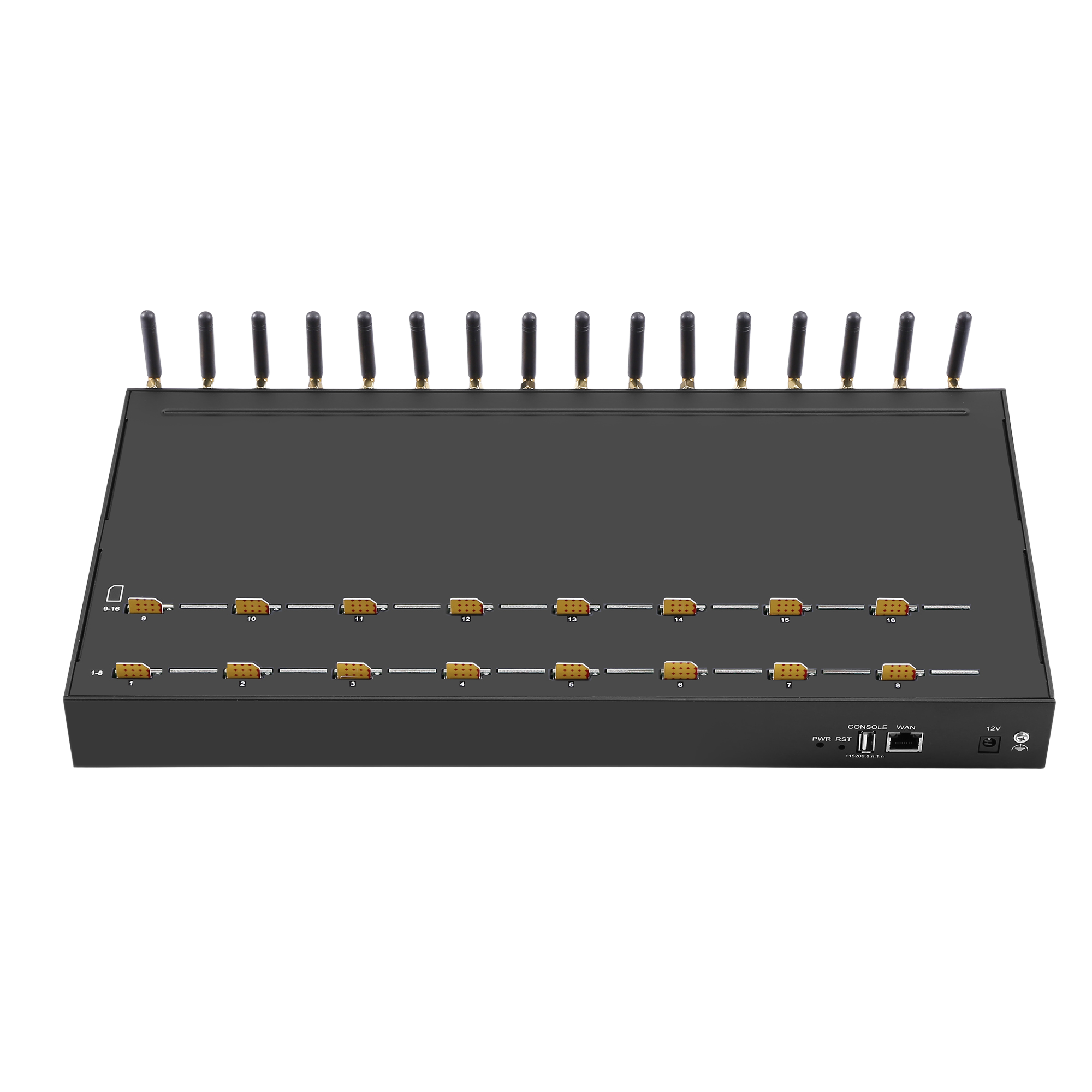
When should you choose an appliance, and when should you build your own?
Choose the appliance when operations owns it.
The decision is about ownership rather than capability. Four questions settle it, and where the answers disagree you can split the estate rather than choose one path.
Who answers the phone at 2am? If the answer is your telecom operations team and they expect a single vendor to call, an appliance is the correct choice. If the answer is a platform engineering group that already runs its own infrastructure and prefers to own the stack, building your own is defensible.
Is the messaging layer a differentiator? If your product’s value depends on messaging behaviour that you intend to customise deeply, control of the software layer matters. If messaging is a supporting capability, the appliance’s supported configuration is worth more than its constraints cost.
How many units will you eventually run? A single device is easy to support either way. A fleet amplifies the advantage of a supported configuration, because configuration drift across self-built units becomes an operational tax that grows with every site.
What is your compliance evidence obligation? Where you must demonstrate a controlled, documented configuration, a vendor-supported stack gives you a coherent artefact. Self-built stacks can meet the same standard, but the evidence has to be assembled internally.
Where the answers point in different directions, split the decision: use an appliance for the sites whose operations you do not want to own, and reserve self-built infrastructure for the one or two locations where custom behaviour genuinely matters.
What does three years of on-premise ownership cost?
Add running costs before comparing with a subscription.
Three-year ownership has four cost components, and only the first appears in a vendor quotation. The other three vary by an order of magnitude between organisations.
Leaving those components as fields to complete is more useful than a finished spreadsheet, because only your own measurements make them meaningful.
| Cost component | What it covers | Source of the figure |
|---|---|---|
| Capital | Gateway hardware at list price, plus a spare unit if the delivery window requires one | Published list price, exactly as quoted for the model chosen |
| Recurring supply | SIM acquisition and replacement, plus any local connectivity used by the site | Your carrier or SIM supplier |
| Operating environment | Rack space, power and cooling attributable to the device | Your own facilities cost model |
| Operations | Engineering time for monitoring, incident response, firmware and SIM logistics | Your own loaded cost per hour, multiplied by measured effort |
For a reference point on the capital line, the range within one product family is wide: the SK-SMS Gateway 4-4 lists at $238.00 and the SK-SMS Gateway 64-512 at $2,480.00, while the TGW-SMS Gateway 64-64 lists at $1,715.00. The operating-environment and operations lines are usually the ones that change a decision, and they are also the ones most often left blank in a business case.
The published service terms worth recording in the model are a 12-month warranty on all products, dispatch within 2 days, and support coverage of 7×12 hours with 1-to-1 handling. Confirm the scope and exclusions of the warranty, and the support hours in your own time zone, before you treat any of them as a planning input.
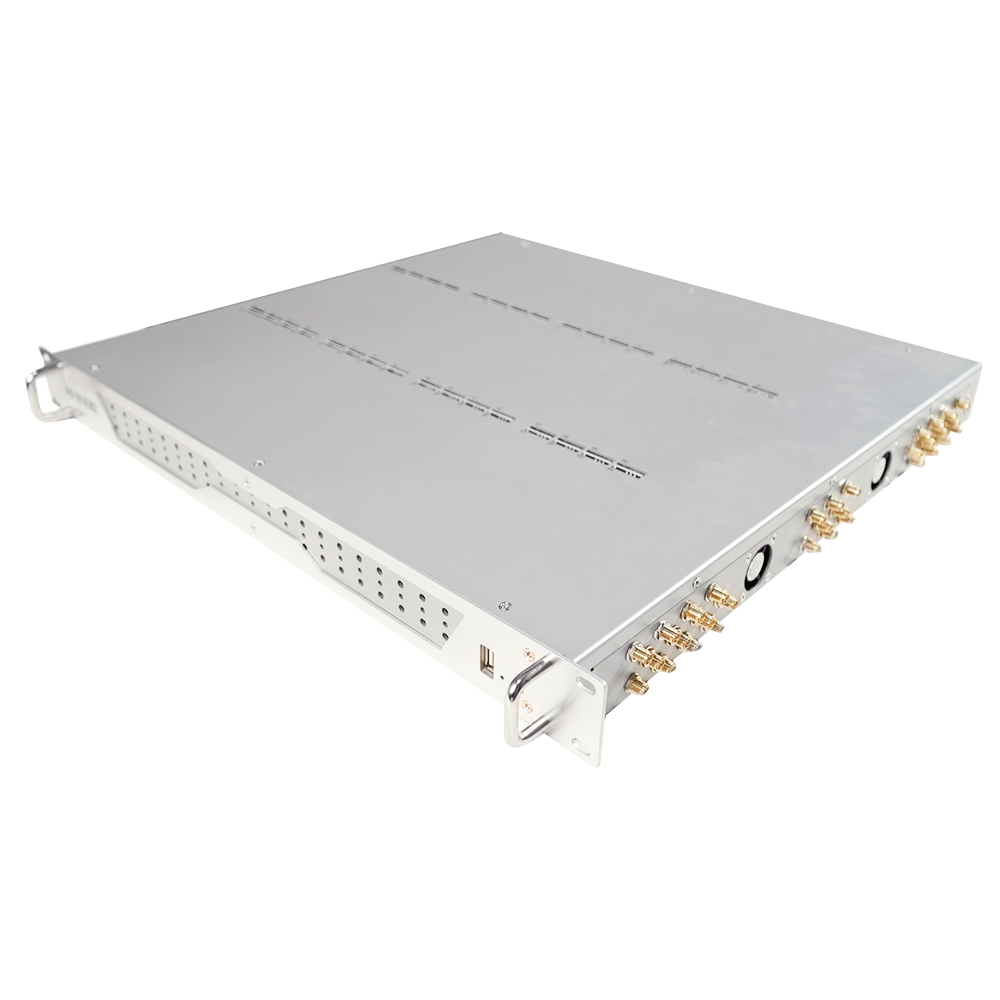
How do you accept an on-premise SMS appliance before go-live?
Test the failure paths, not the demonstration path.
An acceptance test that sends one message and receives one reply proves that the hardware powered on. The checks below exercise the behaviours that determine whether the deployment is supportable, and each one produces an artefact you can hand to whoever inherits the system.
- Shipment and condition. Record what arrived, its condition, and the serial numbers against the purchase documentation.
- Network registration per SIM. Confirm every SIM registers on the intended network and record the network generation observed in each slot.
- API baseline. Send a message through the API your application will use, and confirm the delivery record appears in the management interface with a matching identifier.
- Queue behaviour through a restart. Submit messages, restart the device, and confirm that queued messages are either delivered or explicitly reported as lost rather than disappearing silently.
- Log export. Export the delivery log and open it in your own tooling without manual correction.
- Facility failure. Confirm behaviour on power loss and on loss of the outbound network path, and confirm the device recovers without intervention.
- Remote administration. Reach the management interface through the production path, with the console unreachable from an ordinary internet connection.
- Documentation handover. Record the configuration, the firmware version, the support contact and the escalation path in your own system of record.
Items four and six are the ones that distinguish an appliance from a black box. A device that loses its queue silently on restart, or that requires manual intervention after a power event, will generate the same incident repeatedly once nobody is watching the initial deployment.
Conclusion
Time to first message is governed by the slowest dependency in the sequence, and in on-premise deployments that dependency is almost always SIM readiness and carrier registration rather than hardware lead time. The form-factor decision, by contrast, is governed by ownership: an appliance concentrates integration and support in one place, a private server distributes them to your engineering team, and a virtualised deployment risks leaving the physical SIM path unowned.
Three practical conclusions follow. Start the SIM and registration work before the hardware is ordered. Decide the operational owner in writing before the purchase order, because that decision is what makes the three-year cost model meaningful. And accept the system against its failure paths, not its demonstration path, so that the first power event is a tested scenario rather than a discovery. On the capital line, the published range runs from the SK-SMS Gateway 4-4 at $238.00 to the TGW-SMS Gateway 64-64 at $1,715.00, and the published service terms are a 12-month warranty on all products, dispatch within 2 days, and 7×12 support.
Confirm the commissioning scope before you commit to a schedule. Send your site conditions, SIM requirements and delivery target to service@telarvo.com, or review the published appliance configurations on the SK-SMS Gateway range.
FAQ
How do you send a thousand messages at once from on-premise hardware?
Submit the batch to the gateway API rather than to a mailbox or a spreadsheet. Let the device queue and pace the sends across its channels, and read delivery states back from the log. The practical constraint is not the submission but the pacing, because each SIM is a single cellular channel. Cap concurrency per SIM so the queue drains at a sustainable rate, and measure the result rather than assuming it.
Is an on-premise appliance the same as a private SMS server?
They reach similar outcomes by different routes. An appliance arrives with the radio interface, SIM slots and management console integrated and supported as one product. A private server is infrastructure you assemble and own, which gives you control over the software stack and puts responsibility for diagnosing radio and driver faults on your own team.
What warranty and support terms should be recorded in the business case?
Record the warranty period, what it excludes, the dispatch term, and the support window in your own time zone, because all four affect the operations line rather than the capital line. The published terms for this range are a 12-month warranty on all products, dispatch within 2 days, and 7×12 hour support with 1-to-1 service. Confirm scope and local coverage with the vendor in writing before relying on them.
Can an on-premise appliance sit in a normal office rather than a data centre?
Often yes, provided the location has usable cellular coverage and reasonable power and thermal conditions. Coverage is the constraint that catches teams out, because it fails intermittently rather than completely. If the intended location has no reliable signal, plan for a remote SIM arrangement or relocate the device rather than assuming a larger antenna will solve it.