The phrase supports SMS appears in almost every voice gateway datasheet, and it can mean three materially different things. Buyers discover which one they bought when a device that sends messages perfectly well turns out never to have received one.
The distinction matters because the two directions serve different purposes. Outbound SMS from a voice gateway is usually an operational convenience. Inbound SMS is the part that supports reply-based flows, opt-out handling and any process where the recipient initiates. This guide sets out the three levels, how to verify which one a device provides, and where a VoIP gateway with SMS support stops being the right tool.
What are the three levels of SMS support on a voice gateway?
Not supported, send only, and full two-way messaging.
The three levels differ in whether the device can receive, and the difference is not always visible in the product description.
Level one is no SMS capability at all. The radio attaches to the network and carries voice, and any messaging function is absent rather than disabled. A gateway in this class is often described with a generic feature list that mentions messaging because the product family includes other models that do support it.
Level two is outbound only. The device submits messages over its cellular channels, commonly through an HTTP call, and does not deliver inbound messages to your platform. This level is sufficient for notifications where no reply is expected, and it is the level most often mistaken for full support because outbound submission works on the first test.
Level three is two-way. The device both submits and receives, and exposes inbound messages through an API or protocol so your platform can consume them. This is the level required by any process where the recipient replies, including opt-out handling.
The gap between levels two and three is where projects fail. A team that specifies messaging support, receives a device, confirms that a test message arrives on a handset, and then discovers that replies go nowhere has bought level two while needing level three. Confirming the level in writing before the order is far cheaper than discovering it afterwards.
Why does the difference between sending and receiving matter?
Because replies are where the obligations live.
Inbound capability is what lets a recipient stop receiving messages, and that capability is a compliance requirement in most commercial messaging frameworks.
A messaging flow that cannot receive has no way to honour a reply of STOP or its local equivalent. Where the flow is transactional and the recipient is not expected to reply, that gap may be acceptable. Where the flow is promotional, or where the recipient may respond to change or cancel something, the inability to receive turns a routine request into a support contact at best and a complaint at worst.
The operational consequences extend beyond compliance. Replies carry information: a delivery problem, a wrong number, a customer who wants a different channel. A deployment that cannot receive discards that information, and the team running it usually compensates by adding a support queue, which is a cost that never appears in the hardware business case.
For processes where out-of-band confirmation is intended to prove possession of a device, the inbound path is the security-relevant part rather than the outbound one, and NIST SP 800-63B treats that distinction explicitly. Reading it before choosing a channel clarifies why send-only hardware cannot substitute for a two-way path in those flows.
How do you verify the level before buying?
Test both directions with a handset on arrival.
Verification takes minutes and settles a question that product descriptions usually leave open.
Three tests, in order. Send: submit a message through the interface you will use in production and confirm it arrives. This proves level two at best. Receive: reply from the handset and confirm the message reaches your platform, not merely the device console. A device that stores an inbound message and exposes it nowhere your platform can read is still level two for practical purposes. Log: confirm the inbound message appears in the device log with a timestamp and originating address, because that record is what you will need when a recipient claims they opted out.
Ask for the verification in writing as well, phrased as a question about the interface: which API or protocol carries inbound messages, and what the delivery format is. A supplier who can answer that has the capability; one who describes it in general terms may be describing the family rather than the model.
Where the hardware is part of a larger platform, confirm which direction your platform consumes. A platform built only around outbound submission will not use inbound messages even if the device provides them, in which case the additional capability changes nothing until the platform is extended.
What happens when voice and SMS share a channel?
They contend, invisibly until volume rises.
A SIM slot is a single cellular channel, so a call in progress occupies the channel that a message would otherwise use.
The practical effect depends on the ratio between ports and SIM slots. A device with a one-to-one ratio and moderate call volume will show little contention. A device carrying continuous call traffic will queue messages behind calls, and the queue grows fastest at exactly the moment both workloads peak. If messaging carries a time-bounded purpose such as a verification code, a queued message is a failed message rather than a delayed one.
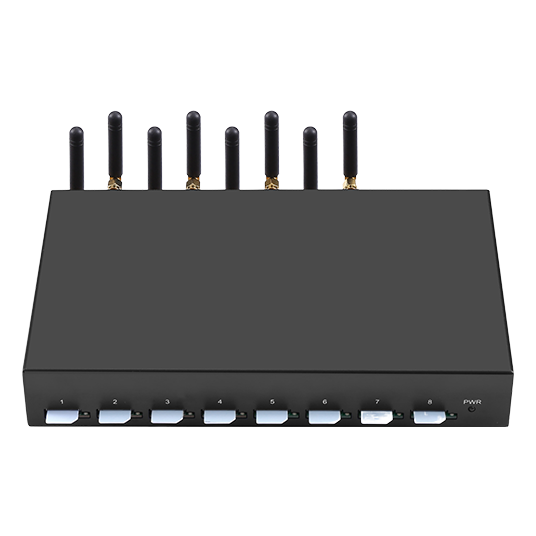
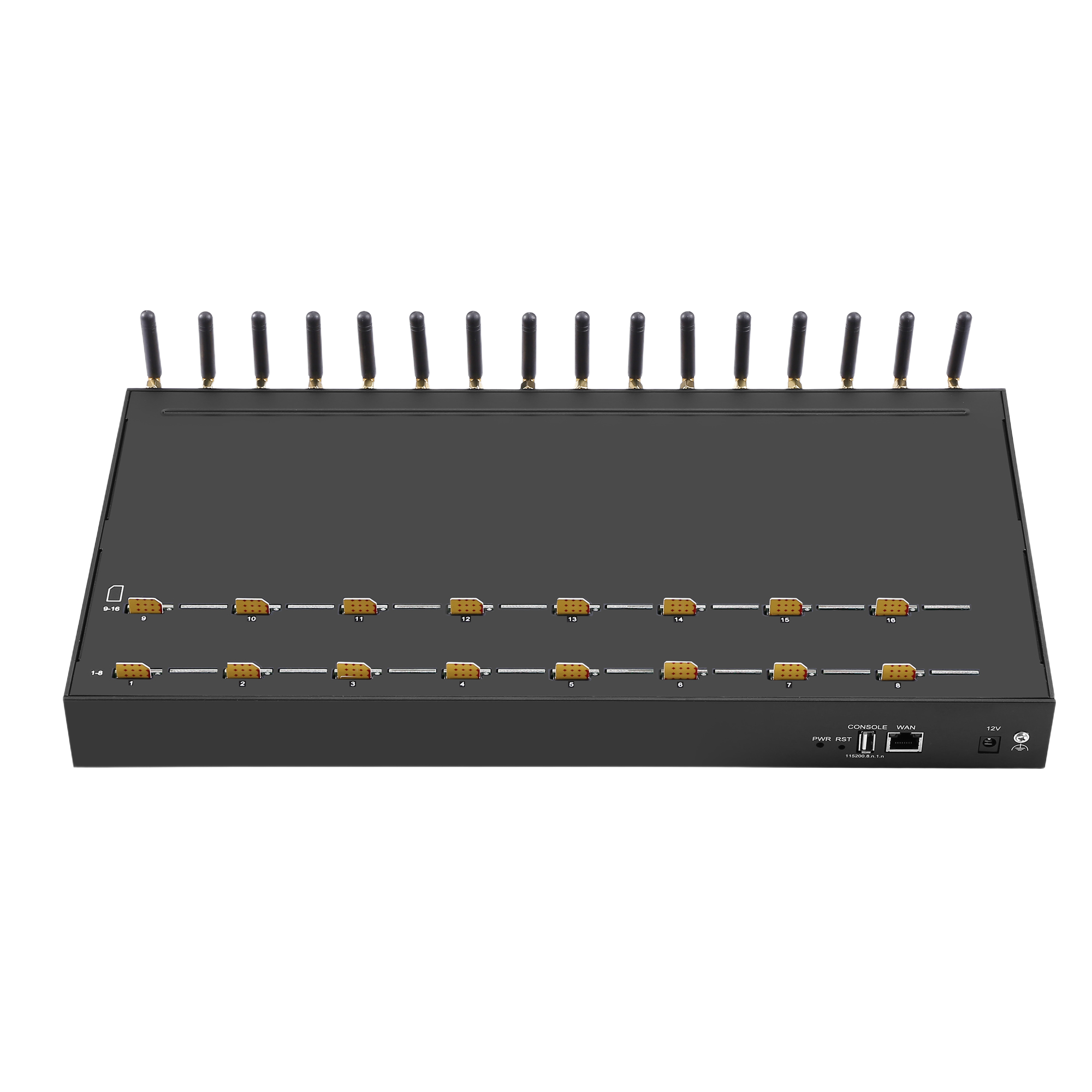
Two mitigations are available. The first is physical: reserve a subset of SIM slots for messaging so calls cannot occupy them, which is why the SIM-to-port ratio in the SK VOIP Gateway range matters for a mixed deployment. The second is scheduling: cap concurrent calls below the port maximum so that a channel or two remains available for messaging.
When should you buy a dedicated SMS gateway instead?
When messaging carries its own delivery commitment.
A combined device is economical while messaging is secondary, and it becomes a liability once messaging has its own targets.
Three signals indicate the split is due. The first is a published delivery window for messages that voice traffic can consume. The second is a volume where messaging alone would justify its own hardware. The third is a compliance requirement that the messaging path be independently observable, which is difficult when the same console serves two workloads with different logs.
Where any of the three applies, the cheaper long-term choice is usually to separate the workloads and keep both inside one management model. The SK-SMS Gateway range starts at the 4-port SK-SMS Gateway 4-4 at $238.00, so a dedicated messaging device adds a small amount of capital compared with the cost of a delivery commitment that cannot be met. The reverse split also works: keep messaging on its own device and let voice carry only the calls it is sized for.
What belongs on the procurement checklist?
Five questions, all answerable before the order is raised.
They are phrased to force a model-level answer rather than a family-level one.
- Does this exact model support SMS, and in which directions? Ask for send and receive separately.
- Which interface carries inbound messages? An API or protocol name, not a general statement.
- What is the inbound message format? Confirm the fields your platform will need, including originating address.
- How many channels remain available for messaging under full voice load? Ask for the figure with calls active.
- How long are inbound messages retained, and is that the same limit as outbound logs? Retention often differs by direction.
Two claims deserve scepticism when they appear without detail. The first is that the device supports messaging because the family does; the second is that receiving is available in a future firmware release. Neither is verifiable at the point of purchase, and both leave you with hardware that cannot do the job you specified.
Where the deployment must satisfy a market-specific equipment framework rather than only an internal requirement, the ETSI standards catalogue is a neutral reference for the test and specification documents that apply to the equipment and the network side of the same requirement.
Conclusion
SMS support on a voice gateway comes in three levels, and the level that matters is almost always the third. Outbound capability is easy to demonstrate and proves little; inbound capability is what supports replies, opt-out handling and any process where the recipient initiates. Verification takes minutes with a handset and should be done on the exact model, because family-level capability statements are the most common source of this particular purchasing error.
The second decision is capacity. Voice and messaging contend for the same cellular channel, so a mixed deployment needs either a generous SIM-to-port ratio or a reserved subset of slots for messaging. Where messaging has its own delivery commitment, the workload belongs on its own device, and the published SK-SMS Gateway range from $238.00 upward gives it one without changing how the estate is managed. The standards underlying the messaging path itself are maintained by 3GPP, and the numbering and identification rules that apply to commercial messaging are the subject of guidance from bodies such as M3AAWG and the CTIA.
Confirm both directions and the channel headroom before you buy. Send your call volumes, messaging volumes and reply expectations to service@telarvo.com, or review the published configurations on the VoIP gateway solution pages.
FAQ
Can a VoIP gateway receive SMS as well as send it?
Some models can, and some can only send. The distinction is not always visible in a product description because capability is often stated at family level. Verify on the exact model by sending a message and then replying from a handset, confirming that the reply reaches your platform rather than only the device console.
Do we need SMS on a voice gateway if we only send notifications?
Send-only is sufficient where no reply is expected and no recipient can reasonably respond. The moment a recipient might reply with a question, a change of preference or an opt-out, the deployment needs inbound capability. Confirm which case applies before purchase, because adding inbound support afterwards usually means replacing hardware rather than changing a setting.
Will messaging degrade call quality on a shared gateway?
Messaging competes for the cellular channel rather than the codec, so the effect appears as message latency rather than degraded audio. Under full call load, messages queue behind calls. If messaging carries a time-bounded purpose such as a verification code, reserve SIM slots for messaging or cap concurrent calls so that a channel remains available.
Is a free SMS API a substitute for gateway-based messaging?
Not for a deployment with a delivery commitment. Free tiers are useful for validating an integration and for low-volume development, but they carry throughput limits, sender identity restrictions and terms that change without notice. Production messaging needs a sender identity you control, documented consent from recipients and a path whose capacity you can state to your own customers.