The comparison between buying proxy hardware and subscribing to a proxy service is usually written as a price question, and price is the least decisive of the differences. The one that changes operations is continuity: what happens on the day a provider changes its terms, withdraws a market, or has an outage that lasts longer than your tolerance.
This guide compares the two on the dimensions that decide the outcome: what a standalone appliance changes, how the costs behave over three years, what continuity means in practice, where a subscription remains the better answer, and how to run a comparison on your own workload rather than on a feature table.
What does a standalone appliance change?
It removes the provider from the traffic path.
The change is structural rather than commercial, and it affects what you control and what you depend on.
Three things change. The addresses terminate on equipment you operate, obtained through a cellular network rather than allocated by a provider. The rotation policy is yours, with triggers and exclusions you define rather than a provider’s schedule. And the records are yours, retained for as long as your policy requires rather than for as long as a service retains them.
Two dependencies are added in exchange. The equipment requires a site with usable coverage and power, so the deployment acquires a physical dependency that a subscription does not have. And the estate requires operational attention: cards, registration, monitoring and replacement. Neither is large, and both are real, and a comparison that omits them is a comparison of purchase price rather than of cost.
How do the costs behave over three years?
Fixed capital against a recurring subscription.
The shapes of the two cost curves differ, and the crossover depends on the workload rather than on the market.
| Cost line | Standalone appliance | Subscription service |
|---|---|---|
| Acquisition | Gateway from $410.00 for four ports | None |
| Recurring | SIM supply, site power and connectivity | Per-address or per-volume charge |
| Operations | Monitoring, replacement and card handling | Provider’s responsibility |
| Scaling | Additional hardware at known prices | Additional addresses at published rates |
| Continuity | Bounded by your own operations | Bounded by the provider’s terms and availability |
The line that changes decisions is the third, and it is the one most often estimated rather than measured. A deployment whose operations are genuinely light will recover the capital cost quickly; one whose estate requires regular card handling may not. Where the operation already maintains SIMs for messaging, however, those operational habits exist and the marginal cost of adding proxy work is small.
The fourth line is worth noting because it is where subscriptions are often assumed to be cheaper. Additional addresses are priced per unit, which means cost grows in proportion to the estate, whereas additional hardware is a step function. A deployment that grows steadily may cross the crossover later than a per-address comparison suggests.
What does continuity mean in practice?
The service continues when a provider does not.
Continuity has three components, and a subscription addresses only one of them.
Availability is the first: whether addresses remain usable. A provider carries this responsibility, and carries it imperfectly. Terms are the second: whether the service you bought remains the service you have, since terms change and a change can remove a market or an address type you depend on. Access is the third: whether you can keep operating at all if the relationship ends, which for a subscription means migrating an entire workload to another provider.
A standalone appliance bounds the second and third and does not bound the first, because the cellular network is still an external dependency. What it gives you is that the failure modes are ones you can see and respond to: a carrier change, a card failure, a site problem. Those are operational events rather than commercial ones, and they are usually easier to plan for than a change of terms.
Where the workload has a contractual commitment attached, the second and third components usually decide the architecture. A service that could be withdrawn at a month’s notice is difficult to build a commitment on, regardless of its price.
Where does a subscription remain the better answer?
Where reach matters more than address control.
The condition is specific, and it describes a large share of deployments.
Three situations favour subscribing. Where the workload needs addresses in many markets at low volume, because the administrative cost of obtaining SIMs in each market exceeds any per-address saving. Where the requirement is intermittent, because a fixed estate sits idle for most of the year and still requires maintenance. And where the team has no operational owner for hardware, because an appliance nobody monitors is worse than a service somebody else does.
A fourth case is worth naming because it is common in early stages: where the requirement is not yet understood. A subscription lets a workload run for a month and produces the data needed to size an appliance properly, including the concurrency and rotation requirements that a specification exercise tends to guess at.

How do you compare them on control?
Control of rotation, attribution and retention.
Three capabilities differ, and each has an operational consequence rather than a commercial one.
Rotation determines when an address changes, and with an appliance the trigger, granularity and cooldown are yours. That matters where the workload has state, because a rotation you did not schedule is indistinguishable from a failure. Attribution determines whether activity can be traced to a user and an address, which with an appliance is a function of how you allocate ports rather than of what a provider exposes. And retention determines how far back a question can be answered, which with an appliance is a storage decision rather than a service tier.
The protocol behaviour itself is unchanged either way. A standalone appliance implements the connection-level proxy defined in RFC 1928, and the private addressing on the internal side follows the ranges defined in RFC 1918. The difference is who holds the estate rather than what the protocol does.
What should be tested before committing?
One representative workload on each path.
A comparison on your own traffic produces a better answer than any table.
- Run the workload on the subscription for a representative period and record success rate, latency and any address changes.
- Run the same workload on the appliance and record the same three figures.
- Compare the operational effort over the same period, including any card handling and monitoring time.
- Test the rotation path on the appliance and confirm that stateful work is unaffected by excluding its ports.
- Record the costs for both paths over the period, including the address charges incurred on the subscription.
Item three is the one that decides most comparisons, and it is the one that cannot be estimated from a price list. Where the effort is materially lower than assumed, the appliance wins; where it is higher, the subscription does, and the result is specific to the operation rather than general.
A third comparison input is the growth path. A subscription scales by adding addresses at a published rate, so cost tracks the estate; an appliance scales in steps, so capacity arrives ahead of demand and is paid for once. Where growth is steady and predictable, the two behave similarly over three years; where growth is variable, the subscription tracks it more closely and the appliance provides headroom that may sit unused.
That difference is worth stating in the business case rather than resolving in advance, because it changes which path looks cheaper depending on how the estate is expected to develop.
Where several consumers are served, the estate can be drawn from the SIM layer directly, using the capacity described in the SIMPOOL range from 128 slots at $1,800.00 upward.
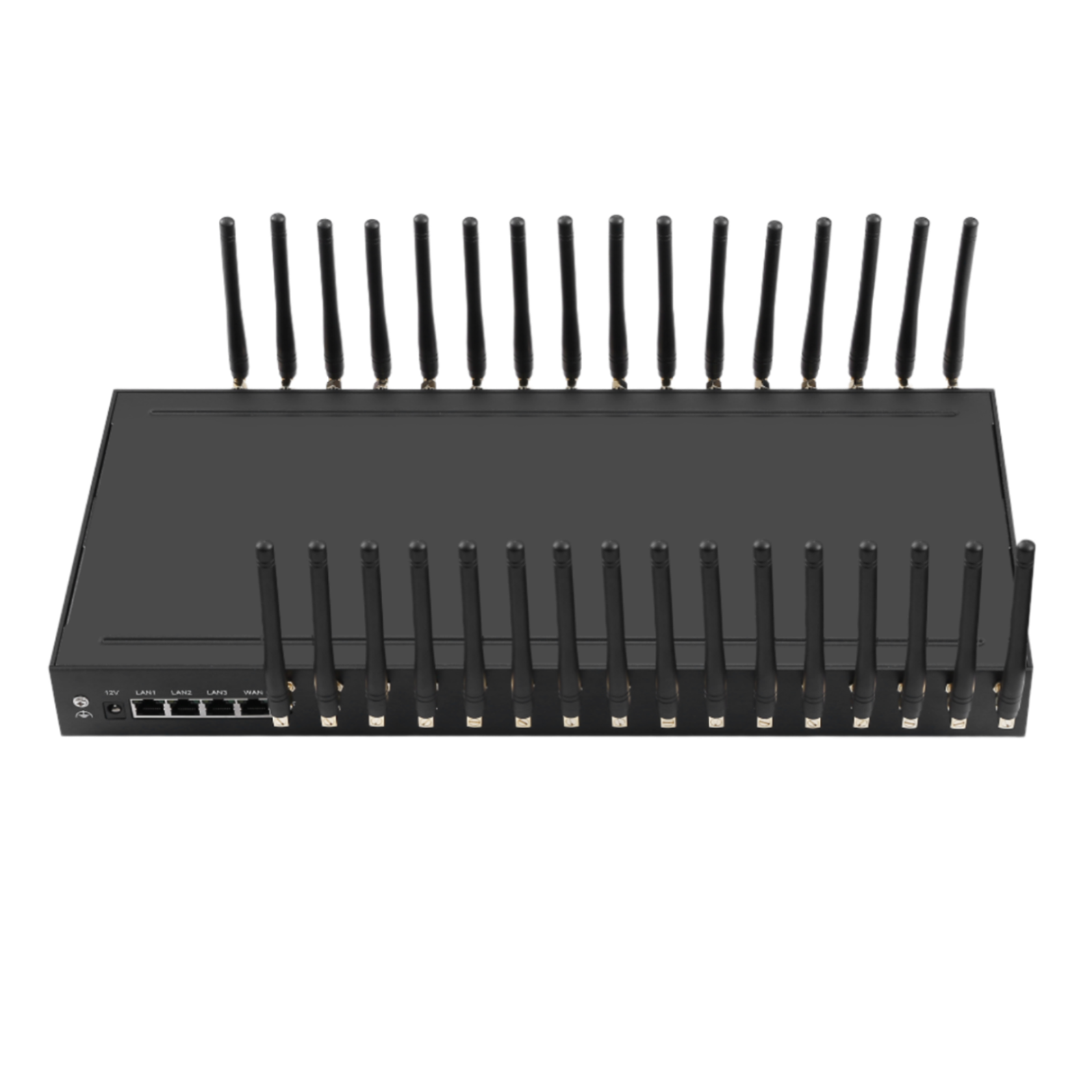
Where the deployment carries commercial messaging alongside proxy work, the consent and identification expectations described by M3AAWG and, for the North American market, by the CTIA apply to the message. Where an equipment framework applies, the ETSI standards catalogue covers the network and equipment side.
Where the two paths are run side by side, keep the workload identical between them so the comparison measures the paths rather than the workloads.
Conclusion
A standalone appliance and a proxy subscription differ in continuity more than in price. The appliance bounds the risk that terms change or that a relationship ends, and leaves the cellular network as the remaining external dependency; the subscription carries the operational burden and exposes the workload to commercial change. The cost comparison turns on operational effort, which is measurable on your own workload rather than estimable from a price list.
A subscription remains the better answer where reach matters more than address control: many markets at low volume, intermittent requirements, or a team with no operational owner for hardware. Where the operation already maintains a SIM estate for messaging, the marginal cost of adding proxy work is small, and the published range from the four-port configuration at $410.00 upward is inexpensive enough to run as a measured comparison rather than as a decision made in advance.
Run both paths on your own workload before deciding. Send your market coverage, address count and operational ownership to service@telarvo.com, or review the published models on the proxy gateway solution pages.
FAQ
Is buying proxy hardware cheaper than subscribing?
It depends on operational effort rather than on price alone. The appliance converts a recurring per-address charge into capital plus SIM supply and monitoring, so the comparison turns on how much operating effort the estate consumes. Run both paths on a representative workload and compare success rate, latency and effort over the same period rather than comparing price lists.
What does a standalone appliance not solve?
The cellular network remains an external dependency, so carrier outages and registration issues are not removed by owning the equipment. What ownership changes is that the failure modes become operational events you can see and respond to, rather than commercial changes such as altered terms or a withdrawn market that a subscription can impose without notice.
When is a subscription the better choice?
Where reach matters more than address control: many markets at low volume, where obtaining SIMs locally costs more than the per-address saving; intermittent requirements, where a fixed estate sits idle and still needs maintenance; or a team with no operational owner for hardware. It is also useful before a requirement is understood, because it produces the data needed to size an appliance.
How does control differ between the two?
Rotation, attribution and retention are all under your control with an appliance. You choose the trigger, granularity and cooldown; attribution follows from how you allocate ports rather than from what a provider exposes; and retention is a storage decision rather than a service tier. The protocol behaviour is identical either way, so the difference is who holds the estate.