At four ports, a mobile proxy appliance is a desktop device. At sixteen, it is infrastructure: the aggregate bandwidth of sixteen cellular radios has to leave the building, the enclosure has to dissipate what sixteen radios produce, and the placement that worked for one device may not carry sixteen.
This guide covers the planning that sits between choosing a sixteen-port appliance and operating one: how to budget aggregate bandwidth, how switching and routing should be arranged, why radio frequency planning decides whether the deployment works, what power and thermal limits apply, and the checks worth completing before the order rather than after delivery.
How much bandwidth does sixteen ports require?
Plan for aggregate peak, not the sum of maxima.
Sixteen radios rarely deliver their advertised rates simultaneously, and planning on the sum produces an over-specified circuit.
A workable method is to measure one port’s sustained throughput on the target network and apply a concurrency factor measured on the same network rather than assumed. The factor depends on how many radios transmit simultaneously and how the operator schedules them, and on many networks it sits well below the port count. Add headroom for management traffic, which should have its own path rather than competing with the workload.
The larger planning error is the reverse of over-specification: sizing the path for the average and discovering the ceiling during a peak. Cellular throughput varies with time of day and with conditions at the installed position, so the figure worth planning against is the worst sustained value you measured, not the best.
Connection count is a separate budget from bandwidth. Sixteen radios can carry a very large number of simultaneous TCP connections, and the constraint is usually the session table on the routing device rather than the cellular link. A router sized for throughput alone will drop connections under a high session count even when bandwidth is available, which presents as intermittent failures that look like network problems.
How should switching and routing be arranged?
One segment for workload, one for management.
The arrangement determines whether you can diagnose a fault without taking the deployment down.
Three principles apply. Keep the appliance and its clients on a dedicated segment so that unrelated traffic cannot affect it. Reach the management interface through a controlled path rather than exposing it, since an appliance console is an administrative interface attached to infrastructure that acts on your behalf. And define what translates and what does not, because a translation layer that rewrites the source address breaks the deployment’s central premise.
The private address ranges that should stay inside your network are defined in RFC 1918, and translation behaviour is described in RFC 3022. Where the requirement is that the far end observes the mobile address, the translation must preserve it, and the only reliable test is from outside the network with an endpoint that reports the observed address.
Why does RF planning decide the outcome?
Because sixteen radios share one spectrum.
Signal strength is the requirement teams verify; interference between radios is the one they discover later.
Three effects appear at this density. Radios in close proximity can interfere with one another, particularly where they operate on overlapping bands, which reduces effective throughput without reducing the signal reading. The enclosure attenuates signal, so a device that registers on a bench may behave differently inside a cabinet. And placement within a room changes what each radio sees, so a single position that suits one antenna may not suit sixteen.
Verify with the actual appliance at the installed position and with the enclosure closed, then repeat the check under load. A reading taken at idle describes a different situation from one taken while all ports are active, and it is the second that predicts behaviour in service. Antenna arrangement, spacing and orientation are all worth establishing empirically rather than by assumption.
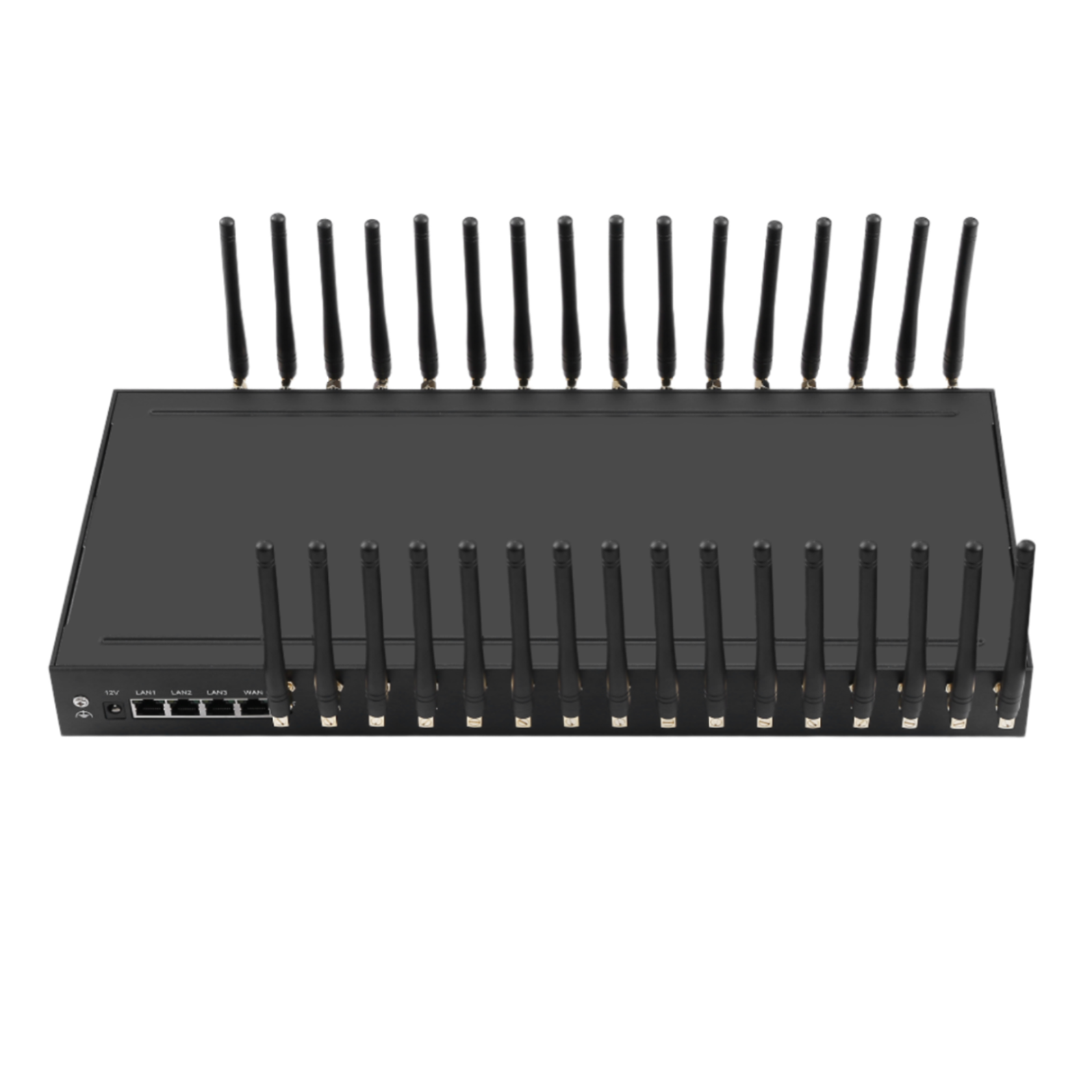
What power and thermal limits apply?
Size from simultaneous transmission.
Both limits produce the same symptom — intermittent loss of individual ports — and neither appears in an idle measurement.
Power should be sized for the case where every radio transmits at once, because that is what happens when a workload peaks. A supply sized for idle draw experiences a voltage dip during those peaks, and radios that see the dip deregister rather than failing outright, which makes the fault look like a network problem. Supply the appliance from a protected circuit and leave capacity rather than filling it, since these deployments tend to grow.
Thermal behaviour should be verified after the enclosure has reached steady state under load. The widely used environmental guidance for data processing environments published by ASHRAE is a reasonable reference when the operating envelope has to be stated in a specification, and the environmental test standards published by the International Electrotechnical Commission cover the equipment side. Leave vertical space where the appliance is racked, and confirm rack intake temperature rather than room temperature.
What should be checked before ordering?
Eight items, cheaper now than later.
Each one corresponds to a failure mode that appears after installation rather than before.
- Aggregate bandwidth measured on the target network, not assumed.
- Session table capacity of the routing device, since throughput alone does not predict connection behaviour.
- Signal at the installed position with the enclosure closed, verified with the appliance rather than a handset.
- Power budget for simultaneous transmission, with capacity left in the circuit.
- Thermal plan, including rack spacing and intake temperature.
- Management path, reachable through a controlled route and not exposed publicly.
- Translation policy, confirming that mobile addresses survive to the far end.
- Logging detail, sufficient to attribute activity to a port, a user and a time.
The order matters. Items one and three determine whether the deployment can work at the intended capacity; items four and five determine whether it continues to work under continuous load; and items six to eight determine whether you can operate and account for it afterwards.
How does a sixteen-port appliance compare with four?
The four-port unit is a device; sixteen is a deployment.
The difference in effort is larger than the difference in price.
| Item | 4 ports | 16 ports |
|---|---|---|
| Placement | Desktop, straightforward | Requires RF and thermal planning |
| Power | Usually a standard supply | Dedicated circuit with headroom |
| Network | Single path is adequate | Separate workload, management and update paths |
| List price | $410.00 | $1,380.00 |
| Planning effort | Hours | Days |
The step from eight ports at $760.00 to sixteen at $1,380.00 costs $620.00 and doubles the concurrent addresses. Whether that is worth it depends on whether the constraint is the number of addresses or the aggregate throughput, and those are different limits: a deployment that needs many addresses with modest load benefits from the higher tier, while one with heavy load on few addresses does not.
Where the requirement sits between tiers, the eight-port configuration is the sensible starting point. It carries enough capacity to validate the planning assumptions at moderate complexity, and the operational lessons from eight ports apply directly at sixteen.
A migration point belongs in the plan as well: the appliance should be commissioned at the position it will occupy, not on a bench. Signal, interference and thermal behaviour are properties of the installed location, and a device validated elsewhere has not been validated for the deployment. Where the intended position cannot be used during commissioning, record that as an open risk rather than treating the bench result as acceptance.

Where the deployment must satisfy a market or equipment framework, the ETSI standards catalogue covers the network and equipment side of the same specification work, and the operational expectations for commercial traffic are described by M3AAWG.
A commissioning record is worth keeping alongside the planning assumptions, because the two together are what makes a later behaviour change interpretable rather than mysterious.
The order of the planning steps matters as much as their content. Placement and signal come first, because a position with inadequate coverage invalidates every other calculation; power and thermal follow, because they determine whether the design survives continuous operation; and network, management and logging come last, because they determine whether the deployment can be operated once it is running. Working in that order means each step is built on a settled assumption rather than on one that may still change.
Conclusion
A sixteen-port mobile proxy appliance is an infrastructure deployment rather than a device purchase. Bandwidth should be planned from measured aggregate peak rather than from the sum of theoretical maxima, connection count is a separate budget from bandwidth, and radio frequency planning at this density decides whether the deployment performs as intended once the enclosure is closed and every port is active.
Power and thermal limits share a symptom, which is intermittent loss of individual ports under load, and both are verified by testing after steady state rather than at idle. The published range steps from four ports at $410.00 through eight at $760.00 to sixteen at $1,380.00, and the planning effort increases faster than the price. Where the requirement is uncertain, eight ports is the tier that validates the assumptions without committing to the full planning burden of sixteen.
Verify RF and thermal behaviour at the installed position before go-live. Send your site conditions, concurrent address requirement and network to service@telarvo.com, or review the published models on the proxy gateway solution pages.
FAQ
How much bandwidth does a 16-port proxy appliance need?
Plan from a measured aggregate rather than arithmetic. Measure the sustained throughput of one port on the target network, apply a concurrency factor you have measured rather than assumed, and add headroom for management traffic on a separate path. Cellular throughput varies by time of day and position, so plan against the worst sustained figure you observed rather than the best.
Why do some ports drop out under load?
Two common causes produce the same symptom. A power supply sized for idle draw dips when every radio transmits at once, and radios that see the dip deregister rather than failing outright. Alternatively, radios in a dense enclosure interfere with one another, which reduces effective throughput without changing the signal reading. Test after steady state under load to separate the two.
Can a 16-port appliance run in an office rather than a data centre?
Often yes, provided the position has usable signal, adequate power and reasonable thermal conditions with the enclosure closed. The requirements that catch teams out are signal inside the enclosure and thermal behaviour after sustained load. Verify both with the appliance at the installed position, running all ports, rather than with a handset at idle.
Should I buy eight ports or sixteen?
Start from the constraint. Where the limit is the number of concurrent addresses, the higher tier delivers twice as many for $620.00 more. Where the limit is aggregate throughput on a handful of addresses, extra ports add planning burden without adding capability. Where the requirement is uncertain, eight ports validates the planning assumptions at moderate complexity.
{
“@context”: “https://schema.org”,
“@type”: “FAQPage”,
“mainEntity”: [
{
“@type”: “Question”,
“name”: “How much bandwidth does a 16-port proxy appliance need?”,
“acceptedAnswer”: {
“@type”: “Answer”,
“text”: “Plan from a measured aggregate rather than arithmetic. Measure the sustained throughput of one port on the target network, apply a concurrency factor you have measured rather than assumed, and add headroom for management traffic on a separate path. Cellular throughput varies by time of day and position, so plan against the worst sustained figure you observed rather than the best.”
}
},
{
“@type”: “Question”,
“name”: “Why do some ports drop out under load?”,
“acceptedAnswer”: {
“@type”: “Answer”,
“text”: “Two common causes produce the same symptom. A power supply sized for idle draw dips when every radio transmits at once, and radios that see the dip deregister rather than failing outright. Alternatively, radios in a dense enclosure interfere with one another, which reduces effective throughput without changing the signal reading. Test after steady state under load to separate the two.”
}
},
{
“@type”: “Question”,
“name”: “Can a 16-port appliance run in an office rather than a data centre?”,
“acceptedAnswer”: {
“@type”: “Answer”,
“text”: “Often yes, provided the position has usable signal, adequate power and reasonable thermal conditions with the enclosure closed. The requirements that catch teams out are signal inside the enclosure and thermal behaviour after sustained load. Verify both with the appliance at the installed position, running all ports, rather than with a handset at idle.”
}
},
{
“@type”: “Question”,
“name”: “Should I buy eight ports or sixteen?”,
“acceptedAnswer”: {
“@type”: “Answer”,
“text”: “Start from the constraint. Where the limit is the number of concurrent addresses, the higher tier delivers twice as many for $620.00 more. Where the limit is aggregate throughput on a handful of addresses, extra ports add planning burden without adding capability. Where the requirement is uncertain, eight ports validates the planning assumptions at moderate complexity.”
}
}
]
}