A modem pool works on a shelf and behaves differently in a rack. The messaging logic is unchanged; what changes is that the rack supplies power from a protected circuit, encloses the radios in metal, and sits in a room nobody visits casually. Each of those is an operational difference rather than a technical one.
This guide is the purchase-side companion to a full rack deployment guide. It covers what a rack form factor actually buys, how to budget space and power, why antenna routing decides whether the deployment works, what thermal behaviour at rack density implies, and when the rack is not the right answer at all.
What changes when a pool moves into a rack?
It has to fit a rack, not a desk.
The change is in four constraints, none of which existed when the pool sat on a shelf.
Power comes from a protected circuit rather than a wall socket, which is an improvement, and the wiring is less forgiving of being extended. Access becomes slower, because reaching the equipment means entering a controlled space. Thermal conditions are warmer, because rack intake air is warmer than office air in a populated cabinet. And radio conditions become worse, because a metal enclosure attenuates the signal the pool depends on.
The consequence is that a rack deployment is a facilities project with a messaging component, and the failures it produces are different in kind from desktop failures. A desktop pool that loses a module is visible; a rack pool that loses one during a batch may be noticed only when a campaign underdelivers.
How much rack space and power does it need?
Rack units set space; power sets the circuit.
The published unit count is the starting point, and the figure that determines the circuit is the peak draw.
| Input | What to establish | Source |
|---|---|---|
| Rack units | Height of the populated pool plus associated equipment | Product documentation |
| Steady-state power | Consumption at idle | Product documentation |
| Peak power | Consumption with all modules transmitting | Confirm with the vendor rather than inferring |
| Circuit capacity | Total draw with headroom, on a protected circuit | Your facilities load calculation |
| Thermal load | Heat rejected into the rack, converted from peak power | Your facilities calculation |
The distinction between idle and peak is what catches deployments out. Modules draw substantially more when transmitting, and a pool whose circuit was sized for idle draw behaves unpredictably during a batch. Confirm the peak figure with the vendor rather than deriving it from the steady-state specification, because the ratio between the two varies by module generation.
Leave capacity in the circuit rather than filling it. Pools are frequently expanded, and a circuit at its limit cannot accommodate the next chassis without work in a live environment. The published TYH range runs from the 8-port model at $113.00 to the 64-port model at $579.00, so the expansion step is inexpensive in hardware terms and expensive only in facilities work if the circuit was filled.
How should antennas be routed out of the enclosure?
Bring the signal out of the enclosure.
Antenna placement decides whether a rack deployment works, and it is the requirement most often treated as an afterthought.
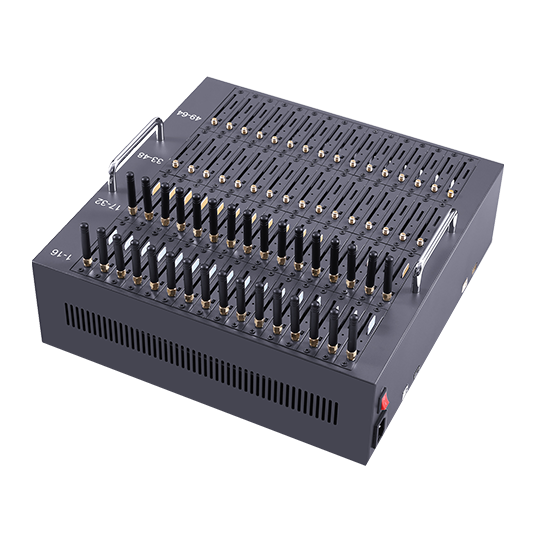
Three arrangements exist in descending order of simplicity. Internal antennas in an open rack work where the room has usable coverage and the chassis is not inside a secondary cabinet. External antennas mounted outside the enclosure re-establish signal where an enclosed rack attenuates it, and require planning for cable routing and for where the antenna physically sits. Remote radio placement moves the radio to a location with coverage and keeps the SIM estate in the rack, which is the approach where the equipment room genuinely has no usable signal.
The verification is done with the actual device at the installed position and with the enclosure closed. A handset that shows adequate signal in the room does not predict what the pool will see inside the cabinet, because both the enclosure and the chassis attenuate. Recording the observed registration state per module at installation gives a baseline against which later degradation can be compared.
Where the room has no usable coverage at all, no antenna arrangement creates it. That is the point at which remote radio placement or a different site becomes the only realistic option, and it is worth establishing before the hardware is purchased rather than after.
What thermal conditions apply at rack density?
Warm air, not room temperature, sets the limit.
A module that runs warmer than its design envelope may deregister or throttle, and the symptom appears as an intermittent network issue.
Three practices reduce the risk. Leave vertical space between populated units so air can move rather than being trapped. Confirm the rack intake temperature rather than the room temperature, because the two differ substantially in a populated cabinet. And verify behaviour after a sustained load run at the installed position rather than extrapolating from a bench test. The widely used environmental guidance for data processing environments published by ASHRAE is a reasonable reference when the operating envelope has to be stated in a specification, and the environmental test standards published by the International Electrotechnical Commission cover the equipment side.
Where a specification has to name a conformity scheme rather than an environmental envelope, the certification bodies that operate those schemes publish their scope, and the equipment side of the same work is covered by the ETSI standards catalogue. Confirm which scheme applies to the model and market you are buying for, and confirm it with the vendor in writing rather than assuming a family-wide position.
How does SIM access work in a data centre?
Access overhead dominates; document the mapping.
Entering a controlled space takes longer than reaching a shelf, which changes the cost of every SIM operation.
Three practices make the difference. Batch operations, replacing or rotating SIMs in planned groups rather than one at a time, because each visit carries the same access overhead regardless of how many cards are changed. Documented mapping, recording which SIM sits in which slot in a system readable remotely, so that a fault can be diagnosed without opening the rack. And spares on site, keeping a small stock of known-good cards at the facility, because waiting for a delivery extends an outage by the transit time rather than by the repair time.
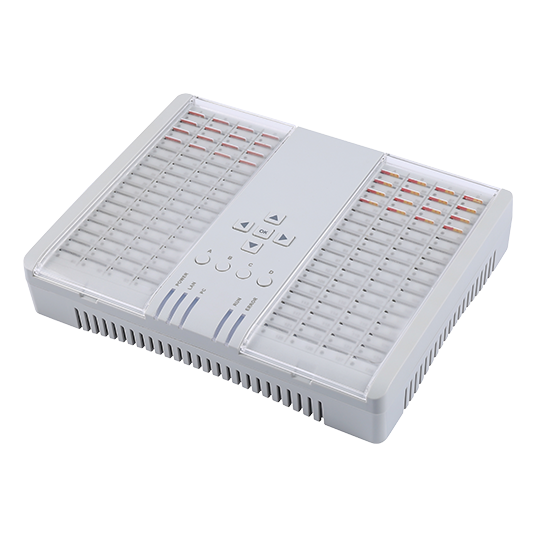
Where the estate is large enough, separating the SIM layer from the radio removes the access problem entirely. The SIMBANK128 at $1,600.00 provides hot-swapping and dynamic allocation for GoIP gateways, and the SIMPOOL range provides integrated storage from 128 slots at $1,800.00 to 512 slots at $5,400.00 with compatibility stated for the SK gateway range.
When is the rack form factor not worth it?
When the site has no usable coverage.
The rack brings protected power and controlled access, and it takes away signal, which is the resource the pool exists to use.
Three situations argue against it. Where the equipment room has no usable coverage and no practical antenna route, the deployment will underperform regardless of how well it is powered. Where the estate is small enough that a shelf in an office with good signal would carry it, the rack adds access overhead without adding capability. And where the requirement is a short-lived test rather than a production deployment, a desktop pool reaches the same result without the facilities work.
A fourth case is worth noting because it is common: where the SIM estate will need frequent physical handling, the rack is the wrong layer for it, and the correct design places the estate in a bank and the radios where coverage exists. That arrangement uses the rack for what it is good at, which is protecting equipment, rather than for what it is not, which is providing radio conditions.
What should be verified at the installed position?
Signal, thermal behaviour, and channel count.
A pool verified on a bench and then racked has not been verified.
- Registered channel count at the installed position. Compare against the bench figure and investigate any shortfall before go-live.
- Thermal behaviour after a sustained run. Run a defined batch for long enough that the rack reaches steady state, then re-check the count.
- Power stability during a batch. Watch the registered count during transmission rather than before it.
- Slot mapping accuracy. Confirm each slot holds the SIM the documentation says it holds.
- Recovery after a power event. Confirm the pool returns to service without manual intervention.
- Remote diagnosis. Confirm a fault can be identified from the recorded mapping and the log without entering the room.
Item two is the one usually skipped and most often decisive, because a thermal problem at rack density appears only after the equipment has run long enough to reach temperature. Item six is the one that pays for itself, because it converts every later fault into a remote exercise rather than a site visit.
Where the deployment has to reference the numbering or interconnection conventions the carrier expects, the publications of the ITU Telecommunication Standardization Sector provide a neutral reference point, and the messaging standards behind the traffic are published by 3GPP.
Conclusion
A rack form factor buys protected power and controlled access, and it costs signal, thermal headroom and access speed. The deployment works when power is sized for simultaneous transmission, antennas are arranged so that signal reaches the modules inside the enclosure, thermal behaviour is verified after a steady-state run, and the slot mapping is documented well enough to diagnose a fault without opening the rack.
Where the estate needs frequent physical SIM handling, the rack is the wrong layer and the correct design separates the SIM bank from the radios. The published TYH range from the 8-port model at $113.00 to the 64-port model at $579.00 makes the hardware step inexpensive; the facilities work is where the cost sits, which is why the planning belongs before the purchase rather than after it.
Verify signal and thermal behaviour at the installed position before go-live. Send your rack environment, coverage conditions and pool size to service@telarvo.com, or review the published models on the SMS modem solution pages.
FAQ
Will a modem pool work inside a closed rack cabinet?
It will work if signal reaches the modules, which depends on the enclosure rather than on the pool. A closed metal cabinet attenuates radio, so verify registration with the device installed and the cabinet closed. Where signal is inadequate, external antennas or remote radio placement are the options; no antenna arrangement creates coverage in a room that has none.
How much power does a rack-mounted pool need?
Size the circuit from the peak figure with every module transmitting, and confirm that figure with the vendor rather than deriving it from an idle specification. The difference between idle and peak is what causes deployments to fail during a batch. Leave capacity in the circuit rather than filling it, because pools are frequently expanded and facilities work on a live circuit is disruptive.
Should the SIM estate stay in the rack?
Only where SIM handling is infrequent. Access to a controlled space carries overhead regardless of how many cards are changed, and that overhead dominates once the estate grows. Separating the SIM layer into a bank or pool allows the estate to sit where access is controlled while the radios sit where coverage is adequate, at the cost of one more link in the failure domain.
What should be verified before the deployment goes live?
Registered channel count at the installed position, thermal behaviour after a sustained run rather than at switch-on, power stability during a batch, slot mapping accuracy, recovery after a power event, and whether a fault can be diagnosed remotely from the mapping record and log. The thermal check is the one usually skipped and the one that predicts behaviour after hours of operation.